March 6, 2022

Kremlinology is the study and analysis of the politics and policies of the Soviet Union while Sovietology is the study of politics and policies of both the Soviet Union and former Communist states more generally. These two terms were synonymous until the dissolution of the Soviet Union. In popular culture, the term is sometimes used to mean any attempt to understand a secretive organization or process, such as plans for upcoming products or events, by interpreting indirect clues.
During the Cold War, lack of reliable information about the country forced Western analysts to ‘read between the lines’ and to use the tiniest tidbits, such as the removal of portraits, the rearranging of chairs, positions at the reviewing stand for parades in Red Square, the choice of capital or small initial letters in phrases such as ‘First Secretary,’ the arrangement of articles on the pages of the party newspaper Pravda and other subtle signs to try to understand what was happening in internal Soviet politics. Continue reading →
Posted in Politics, World |
Leave a Comment »
February 14, 2022
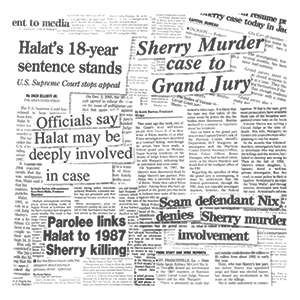
The Dixie Mafia is a criminal organization composed mainly of white Southerners and based in Biloxi, Mississippi, operating primarily throughout the Southern United States since at least the 1970s. The group used each member’s talents in various crime categories to help move stolen merchandise, illegal alcohol, and illegal drugs.
Unlike members of the American Mafia, the members of the Dixie Mafia were not connected by family or country of origin. They were loosely connected individuals of many nationalities with a common goal – to make money and wield control over illegal moneymaking operations by any means, including influence peddling, bribery of public officials, and murder. Continue reading →
Posted in Drugs, Money, Politics |
Leave a Comment »
February 6, 2022
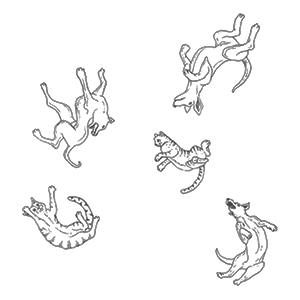
The English-language idiom raining cats and dogs is used to describe particularly heavy rain. It is of unknown etymology. One possible explanation involves the drainage systems on buildings in 17th-century Europe, which were poor and may have disgorged their contents, including the corpses of any animals that had accumulated in them, during heavy showers.
This occurrence is documented in Jonathan Swift’s 1710 poem ‘Description of a City Shower,’ in which he describes: ‘Drowned puppies, stinking sprats, all drenched in mud, Dead cats and turnip-tops come tumbling down the flood.’ Continue reading →
Posted in Language, World |
1 Comment »
January 25, 2022

A hot mic is an error in which a microphone is switched on or remains on, especially without the speaker realizing, allowing unintended listeners to hear parts of conversations not intended for public consumption.
Such errors usually involve live broadcasting in radio or television, and sometimes material is recorded and played back via media outlets. Hot mic events can cause embarrassment for the person or organization involved, sometimes resulting in serious confrontations and employment termination. Continue reading →
Posted in Humor, Technology |
Leave a Comment »
January 16, 2022

In the stock market, a short squeeze is a rapid increase in the price of a stock owing primarily to an excess of short selling of a stock rather than underlying fundamentals. A short squeeze occurs when there is a lack of supply and an excess of demand for the stock due to short sellers having to buy stocks to cover their short positions.
Shorting means to bet that an asset will lose value. This can be done by borrowing the asset, selling it at a higher price, and then returning the asset once you can buy it back at a lower price.
Continue reading →
Posted in Money |
Leave a Comment »
January 11, 2022

‘The High and the Mighty‘ is a 1954 American aviation disaster film, directed by William A. Wellman, and written by Ernest K. Gann, who also wrote the 1953 novel on which his screenplay was based. John Wayne stars as a veteran airline first officer, Dan Roman, whose airliner has a catastrophic engine failure while crossing the Pacific Ocean.
The film was produced nearly two decades before ‘Airport’ and its sequels (along with the ‘Airplane!’ parodies, the first of which featured Robert Stack lampooning himself). The ‘High and the Mighty’ served as a template for later disaster-themed films such as the ‘Airport’ series (1970–79), ‘The Poseidon Adventure’ (1972), ‘The Towering Inferno’ (1974), ‘The Hindenburg’ (1975), and ‘Titanic’ (1997).
Continue reading →
Posted in Art |
Leave a Comment »
January 7, 2022

Birds Aren’t Real is a satirical conspiracy theory which posits that birds are actually drones operated by the U.S. government to spy on American citizens. In 2018, journalist Rachel Roberts described Birds Aren’t Real as ‘a joke that thousands of people are in on.’
The movement argues that all birds in the United States were exterminated by the government between 1959 and 1971 and replaced by drones (the specifics of these theories as reported in news articles are not always consistent, not unlike actual conspiracy theories). They claim that birds sit on power lines to recharge themselves, and that bird poop on cars is a tracking method. Continue reading →
Posted in Humor, Politics |
Leave a Comment »
January 5, 2022

Italian Sounding is a marketing phenomenon consisting of words and images, color combinations (the Italian tricolor) and geographical references for brands that are evocative of Italy to promote and market products – especially but not exclusively agri-food – that are not actually Made in Italy.
The phenomenon is described by the Office of the Ministry of Economic Development (MISE) called ‘Directorate General for the Protection of Industrial Property – Italian Patent and Trademark Office’ (DGTPI-UIBM). Continue reading →
Posted in Money, Politics, World |
Leave a Comment »
January 3, 2022

In 19th-century English maritime folklore, Fiddler’s Green was an afterlife for sailors who had served at least fifty years at sea.
They were rewarded with perpetual mirth, a fiddle that never stopped playing, and dancers who never tired. Continue reading →
Posted in Philosophy, World |
1 Comment »
December 28, 2021

A decentralized autonomous organization (DAO), sometimes called a decentralized autonomous corporation (DAC), is an organization represented by rules encoded as a computer program that is transparent, controlled by the organization members and not influenced by a central government.
A DAO’s financial transaction record and program rules are maintained on a blockchain. The precise legal status of this type of business organization is unclear. Continue reading →
Posted in Money, Politics, Technology |
Leave a Comment »
November 19, 2021

Akhfash’s goat is a Persian parable in which a philosopher trains his pet goat to nod its head when asked if it had understood a book that it was shown.
The term refers to a person who nods along with a conversation that they do not understand. Continue reading →
Posted in Language, Money, World |
Leave a Comment »
November 15, 2021
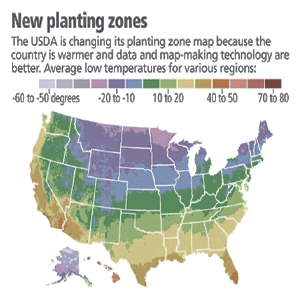
In phenology (the study of cyclic and seasonal natural phenomena), season creep refers to observed changes in the timing of the seasons, such as earlier indications of spring in temperate areas across the Northern Hemisphere.
In Europe, season creep has been associated with the arrival of spring moving up by approximately one week in a recent 30-year period. Climate studies have put the rate of season creep measured by plant phenology in the range of 2–3 days per decade advancement in spring, and 0.3–1.6 days per decade delay in autumn, over the past 30–80 years. Continue reading →
Posted in Science, World |
Leave a Comment »


 The Daily Omnivore