January 8, 2013
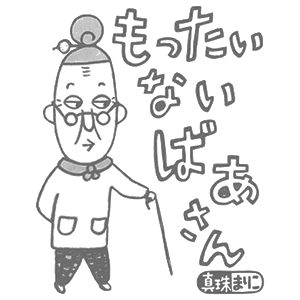
Mottainai is a Japanese term meaning ‘a sense of regret concerning waste when the intrinsic value of an object or resource is not properly utilized.’
The expression can be uttered alone as an exclamation when something useful, such as food or time, is wasted, meaning roughly ‘Oh, what a waste!’ In addition to its primary sense of ‘wasteful,’ the word is also used to mean ‘impious; irreverent’ or ‘more than one deserves.’ Continue reading →
Posted in Language, Money, World |
1 Comment »
January 8, 2013

The Story of Stuff is a 2007 short polemical animated documentary about the lifecycle of material goods. The documentary is critical of excessive consumerism and promotes sustainability. Filmmaker Annie Leonard wrote and narrated the film, which was funded by Tides Foundation, Funders Workgroup for Sustainable Production and Consumption, Free Range Studios and other foundations.
The video divides up the materials economy into a system composed of extraction, production, distribution, consumption, and disposal. To articulate the problems in the system, Leonard adds people, the government, and corporations. Leonard’s thesis, ‘you cannot run a linear system on a finite planet indefinitely’ is supported throughout the video by statistical data. Continue reading →
Posted in Money, Politics, Technology |
Leave a Comment »
January 8, 2013

Philosophy of futility is a phrase coined by Columbia University marketing professor Paul Nystrom to describe the disposition caused by the monotony of the new industrial age.
Nystrom observed the natural effect of this malaise was seeking gratification found in frivolous things, such as fashionable apparel and goods. This tendency, he theorized, could be used to increase consumption of fashionable goods and services, resulting in a vicious circle of dissatisfaction and the desire for new consumer goods. Continue reading →
Posted in Health, Money, Philosophy |
1 Comment »
January 8, 2013

Conspicuous consumption refers to monies spent and goods and services acquired to publicly display economic power—either the buyer’s income or the buyer’s accumulated wealth.
Sociologically, to the conspicuous consumer, such a public display of discretionary economic power is a means either of attaining or of maintaining a given social status. Moreover, ‘invidious consumption,’ a more specialized sociological term, denotes the deliberate conspicuous consumption of goods and services intended to provoke the envy of other people, as a means of displaying the buyer’s superior socio-economic status. Continue reading →
Posted in Money, Politics, Science |
Leave a Comment »
January 8, 2013
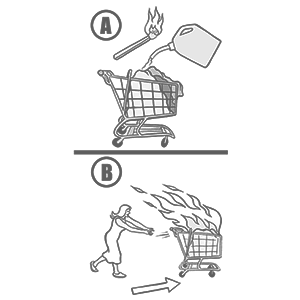
Packard Jennings (b. 1970) is an American artist who appropriates pop culture symbols and references to create new meaning using a variety of media including printmaking, sculpture, animation, video, and pamphleteering.
In his early career he modified billboards, a common practice of culture jammers. Jennings’s work often deals with the philosophy of anarchism, how it’s represented in the media, and the representation of a naive utopia primarily through primitivism, not to be confused with anarchism or anarchy. Continue reading →
Posted in Art, Money, Politics |
Leave a Comment »
January 7, 2013

San Francisco burrito is an Urban Food Log that first became popular during the 1960s in the Mission District of San Francisco. Author Gustavo Arellano classifies the Mission-style burrito as one of three major styles of burritos in the United States, following the earlier, simple burrito consisting of beans, rice, and meat and preceding the California burrito containing cheese and potatoes that was developed in the 1980s.
Originally a Mexican-American food, the San Francisco burrito is distinguished from a regular burrito partly by the amount of rice and other side dishes included in the package, and also by its sheer size. Many taquerias in the Mission and in the greater San Francisco Bay Area specialize in San Francisco burritos. It is typically served in a piece of aluminum foil around a large flour tortilla which is wrapped and folded around a variety of ingredients. Continue reading →
Posted in Food, World |
Leave a Comment »
January 7, 2013

Paralanguage refers to non-verbal elements of spoken communication used to modify meaning and convey emotion, such as change in pitch, volume, or intonation. Paralanguage may be expressed consciously or unconsciously. The term ‘paralanguage’ should not be confused with ‘kinesics,’ or the study of body language. While kinesics is non-linguistic (it is not necessarily related to vocal or written language), paralanguage is. Paralinguistic information, because it is phenomenal, belongs to the external speech signal but not to the arbitrary conventional code of language.
The paralinguistic properties of speech play an important role in human speech communication. There are no utterances or speech signals that lack paralinguistic properties, since speech requires the presence of a voice that can be modulated. This voice must have some properties, and all the properties of a voice as such are paralinguistic. However, the distinction linguistic vs. paralinguistic applies not only to speech but to writing and sign language as well, and it is not bound to any sensory modality. Even vocal language has some paralinguistic as well as linguistic properties that can be seen (lip reading, McGurk effect), and even felt, e.g. by the Tadoma method (a touch based language for the deafblind). Continue reading →
Posted in Health, Language, Science |
Leave a Comment »
January 7, 2013

Nunchi refers to a concept in Korean culture that describes the subtle art and ability to listen and gauge others’ moods. In Western culture, nunchi could be described as the concept of emotional intelligence. In Korea, it is the person’s ‘kibun’ being read, which is his or her pride, mood, or state of mind. It is of central importance to the dynamics of interpersonal relationships in Korean culture.
Nunchi is literally translated as ‘eye-measure.’ It is closely related to the broader concept of paralanguage (non-verbal elements of communication used to modify meaning and convey emotion), however nunchi also relies on an understanding of one’s status relative to the person with whom they’re interacting. It can be seen as the embodiment of skills necessary to communicate effectively in Korea’s high context culture. The concept of nunchi, and one’s abundance or lack thereof, forms the basis of many common expressions and idioms. For example, a socially clumsy person can be described as ‘nunchi eoptta,’ meaning ‘absence of nunchi.’
Posted in Health, Language, World |
Leave a Comment »
January 7, 2013
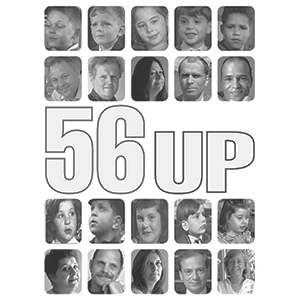
The Up Series is a series of documentary films produced by Granada Television that have followed the lives of fourteen British children since 1964, when they were seven years old. The documentary has had eight episodes spanning 49 years (one episode every seven years) and the documentary has been broadcast on both ITV and BBC.
The children were selected to represent the range of socio-economic backgrounds in Britain at that time, with the explicit assumption that each child’s social class predetermines their future. Every seven years, the director, Michael Apted, films material from those of the fourteen who choose to participate.
Continue reading →
Posted in Art, Money, Science |
Leave a Comment »
January 6, 2013

Black propaganda is false information and material that purports to be from a source on one side of a conflict, but is actually from the opposing side. It is typically used to vilify, embarrass or misrepresent the enemy.
Black propaganda contrasts with grey propaganda, the source of which is not identified, and white propaganda, in which the real source is declared and usually more accurate information is given, albeit slanted, distorted and omissive. Black propaganda is covert in nature in that its aims, identity, significance, and sources are hidden.
Continue reading →
Posted in Language, Politics, War |
Leave a Comment »
January 6, 2013

A typical chain letter consists of a message that attempts to convince the recipient to make a number of copies of the letter and then pass them on to as many recipients as possible. Common methods used in chain letters include emotionally manipulative stories, get-rich-quickly pyramid schemes, and the exploitation of superstition to threaten the recipient with bad luck or even physical violence or death if he or she ‘breaks the chain’ and refuses to adhere to the conditions set out in the letter.
Chain letters started as actual letters that one received in the mail. Today, chain letters are generally no longer actual letters. They are sent through email messages, postings on social network sites, and text messages. Continue reading →
Posted in Language, Money, Technology |
Leave a Comment »
January 6, 2013

Viral phenomena are objects or patterns able to replicate themselves or convert other objects into copies of themselves when these objects are exposed to them.
The concept of something, other than a biological virus, being viral came into vogue just after the Internet became widely popular in the mid-to-late 1990s. An object, even an immaterial object, is considered to be viral when it has the ability to spread copies of itself or change other similar objects to become more like itself when those objects are simply exposed to the viral object. Continue reading →
Posted in Health, Language, Technology |
Leave a Comment »


 The Daily Omnivore