December 17, 2020

Going postal is an American slang phrase referring to becoming extremely and uncontrollably angry, often to the point of violence, and usually in a workplace environment. The expression derives from a series of incidents from 1986 onward in which United States Postal Service (USPS) workers shot and killed managers, fellow workers, and members of the police or general public in acts of mass murder.
Between 1970 and 1997, more than 40 people were killed by current or former employees in at least 20 incidents of workplace rage. Between 1986 and 2011, workplace shootings happened roughly twice per year, with an average of 11.8 people killed per year. Continue reading →
Posted in Death, Politics |
1 Comment »
December 15, 2020

In Japanese cuisine, yoshoku [yoh-shoo-koo] (‘western food’) refers to a style of Western-influenced cooking which originated during the Meiji Restoration (1868, a period of rapid industrialization and Westernization). These are primarily Japanized forms of European dishes, often featuring Western names, and usually written in Japanese. It is an example of fusion cuisine. Another, more contemporary, term in Japan for the Western food is ‘mukokuseki’ (‘no-nationality’ cuisine).
At the beginning of the Meiji Restoration, national seclusion was eliminated and the Meiji Emperor declared Western ideas helpful for Japan’s future progress. As part of the reforms, the Emperor lifted the ban on red meat and promoted Western cuisine, which was viewed as the cause of the Westerners’ greater physical size. Yōshoku thus relies on meat as an ingredient, unlike the typical Japanese cuisine at the time. Additionally, many of the Westerners who started to live in Japan at that time refused to touch traditional Japanese food, and so their private Japanese chefs learned how to cook them Western-style cuisine, often with a Japanese spin. Continue reading →
Posted in Food, World |
1 Comment »
December 12, 2020

Body positivity is a social movement initially created to empower overweight individuals, while also challenging the ways in which society presents and views the physical body. The movement advocates the acceptance of all bodies regardless of physical ability, size, gender, race, or appearance.
Body-positive activists believe that size, like race, gender, sexuality, and physical capability, is one of the many ways that our bodies are placed in a power and desirability hierarchy. The movement aims to challenge beauty standards, build positive body image, and improve self-confidence. Continue reading →
Posted in Health, Politics |
Leave a Comment »
December 8, 2020
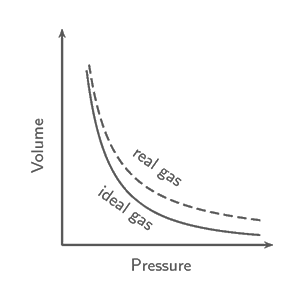
‘All models are wrong‘ is a common aphorism in statistics; it is often expanded as ‘All models are wrong, but some are useful.’ It is usually considered to be applicable to not only statistical models, but to scientific models generally. The aphorism recognizes that statistical or scientific models always fall short of the complexities of reality but can still be of use.
The aphorism is generally attributed to the statistician George Box, although the underlying concept predates Box’s writings. He offered the ‘ideal gas law’ as an example: ‘PV = RT relating pressure P, volume V and temperature T of an ‘ideal’ gas via a constant R is not exactly true for any real gas, but it frequently provides a useful approximation and furthermore its structure is informative since it springs from a physical view of the behavior of gas molecules.’ Continue reading →
Posted in Education, Philosophy, Science |
Leave a Comment »
December 1, 2020

Jewish nose is a caricature of Jews with hooked noses with a convex nasal bridge and a downward turn of the tip of the nose that emerged in 13th century Europe. The stereotype persists despite the fact that this nose type is as common in the general population as it is among Jews in countries where it is prevalent, such as in the Mediterranean.
Around the middle of the 19th century, and lasting for more than a century, the term ‘Jewish nose’ was commonly used in scientific literature to describe a particular shape of nose which thought to be a race-based deformity characteristic of people with Jewish ancestry (which by unwitting efforts of plastic surgeons of early 20th century started to be viewed as a pathology to be corrected). Continue reading →
Posted in Philosophy, Politics, World |
Leave a Comment »
November 30, 2020

The term physics envy is a phrase used to criticize modern writing and research of academics working in areas such as ‘softer sciences,’ liberal arts, business studies, and humanities. The term argues that writing and working practices in these disciplines have overused, confusing jargon and complicated mathematics to seem more ‘rigorous’ and more like mathematics-based subjects like physics.
The success of physics in ‘mathematicizing’ itself, particularly since Isaac Newton’s ‘Principia Mathematica,’ is generally considered remarkable and often disproportionate compared to other areas of inquiry. ‘Physics envy’ refers to the envy (perceived or real) of scholars in other disciplines for the mathematical precision of fundamental concepts obtained by physicists. Continue reading →
Posted in Science |
1 Comment »
November 28, 2020

Cancel culture (or ‘call-out culture’) is a modern form of ostracism in which someone is thrust out of social or professional circles – either online on social media, in the real world, or both. Those who are subject to this ostracism are said to be ‘canceled.’ The expression ‘cancel culture’ has mostly negative connotations and is commonly used in debates on free speech and censorship.
Former U.S. President Barack Obama warned against social media call-out culture, saying ‘People who do really good stuff have flaws. People who you are fighting may love their kids and, you know, share certain things with you.’ Continue reading →
Posted in Politics |
1 Comment »
November 19, 2020

Russian political jokes can be grouped into the major time periods: Imperial Russia, Soviet Union, post-Soviet Russia. Quite a few political themes can be found among other standard categories of Russian joke, most notably Rabinovich jokes (short fictional Russian stories or dialogs with a punch line) and Radio Yerevan, also known as the Armenian Radio jokes, which mocked the ‘Question & Answer’ series of the Armenian Radio.
A typical format of a joke was: ‘Radio Yerevan was asked,’ and ‘Radio Yerevan answered.’ For example: Radio Yerevan was asked: ‘Comrades, will there be war?’ Radio Yerevan answered: ‘No, but there will be such a struggle for peace that everything will be razed to the ground.’ Continue reading →
Posted in Humor, Politics, World |
Leave a Comment »
November 16, 2020

Hipgnosis Songs Fund is a British Guernsey-registered music IP investment and song management company founded in 2018 by Canadian–American music industry executive and entrepreneur Merck Mercuriadis and co-founded by Chic guitarist Nile Rodgers, Mercuriadis’ former client.
Focused on songs and associated musical intellectual property rights, it was founded on the premise that hit songs are long-term predictable assets unaffected by economic cycles that will increase in value as the worldwide music streaming market grows. In addition to acquiring songs and songwriter catalogues, the company manages the playlist, cover, interpolation, and synchronization revenues of its IP. Continue reading →
Posted in Art, Money |
Leave a Comment »
November 15, 2020

Mentalism [men-tl-iz-uhm] is a performing art in which its practitioners, known as mentalists, appear to demonstrate highly developed mental or intuitive abilities. Performances may appear to include hypnosis, telepathy, clairvoyance, divination, precognition, psychokinesis, mediumship, mind control, memory feats, deduction, and rapid mathematics.
Mentalists are sometimes categorized as psychic entertainers, although that category also contains non-mentalist performers such as psychic readers and bizarrists (magicians they rely heavily on wordplay). Notable mentalists include Derren Brown, Uri Geller, and the Amazing Kreskin.
Continue reading →
Posted in Art, Philosophy |
Leave a Comment »
November 12, 2020
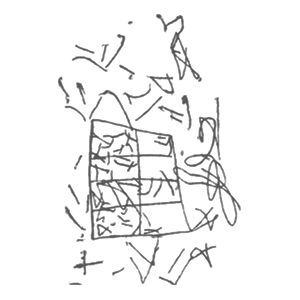
Speaking in tongues, also known as glossolalia, is a practice in which people utter words or speech-like sounds that some believe to be languages unknown to the speaker.
One definition used by linguists is the fluid vocalizing of speech-like syllables that lack any readily comprehended meaning, in some cases as part of religious practice in which some believe it to be a divine language unknown to the speaker. Glossolalia is practiced in Pentecostal and charismatic Christianity as well as in other religions. Continue reading →
Posted in Language, Philosophy |
1 Comment »
November 10, 2020

Hyperion [hahy-peer-ee-uhn] is a coast redwood (Sequoia sempervirens) in California that was measured at 380.1 ft, which ranks it as the world’s tallest known living tree. Hyperion was discovered August 25, 2006, by naturalists Chris Atkins and Michael Taylor.
The tree was found in a remote area of Redwood National and State Parks purchased in 1978. The Park also houses the second tallest tree Helios, and the third tallest Icarus. Sillett estimates Hyperion to be 600 years old while others report it to be roughly 700–800 years old. The exact location of Hyperion is kept secret to protect the tree from damage. Researchers stated that woodpecker damage at the top may have prevented the tree from growing taller.
Posted in Science |
Leave a Comment »


 The Daily Omnivore