April 10, 2012

Dr. Horrible’s Sing-Along Blog is a 2008 musical tragicomedy miniseries in three acts, produced exclusively for Internet distribution. Filmed and set in Los Angeles, the show tells the story of Dr. Horrible (played by Neil Patrick Harris), an aspiring supervillain; Captain Hammer (Nathan Fillion), his nemesis; and Penny (Felicia Day), their shared love interest.
The movie was written by writer/director Joss Whedon, his brothers Zack Whedon (a television writer) and Jed Whedon (a composer), and Jed’s wife, actress Maurissa Tancharoen. The team wrote the musical during the 2007–2008 Writers Guild of America strike. The idea was to create something small and inexpensive, yet professionally done, in a way that would circumvent the issues that were being protested during the strike.
Posted in Art, Humor, Money |
1 Comment »
April 10, 2012

The Second City is an improvisational comedy enterprise which originated in Chicago’s Old Town neighborhood. The Second City Theatre opened in late 1959 and has since expanded its presence to several other cities, including Toronto and Los Angeles.
The Second City has produced television programs in both the United States and Canada including ‘SCTV,’ ‘Second City Presents’, and ‘Next Comedy Legend,’ as well as being heavily involved in the creation of the satirical 1969 science fiction film ‘The Monitors.’ Since its debut, the Second City has consistently been a starting point for comedians, award winning actors, directors, and others in show business. Continue reading →
Posted in Art, Games, Humor |
Leave a Comment »
April 10, 2012

The Compass Players (or Compass Theater) was a cabaret revue show started by alumni, dropouts and hangers-on from the University of Chicago from 1955-1958 in Chicago and St. Louis. Several of the members went on to form The Second City Theater in 1959. Founded by David Shepherd, the original idea was to produce a new play derived through improvisation from outlines (in the tradition of the Italian commedia dell’arte) or scenarios written by members of the ensemble.
Shepherd turned to director Paul Sills to head this venture based on his experience working with Sills on an earlier Chicago theater effort. He noticed that Sills in rehearsal employed theater games, structures designed to create spontaneous theatrical play between actors that had been developed and named by Sills’ mother, Viola Spolin (who would later author the ‘bible’ of theater games, ‘Improvisation for the Theatre’). Continue reading →
Posted in Art, Games, Humor |
Leave a Comment »
April 10, 2012

Viola Spolin (1906 — 1994) was an important innovator of the American theater in the 20th century. She created directorial techniques to help actors to be focused in the present moment and to find choices improvisationally, as if in real life. These acting exercises she later called ‘Theater Games’ and formed the first body of work that enabled other directors and actors to create improvisational theater.
Her book, ‘Improvisation for the Theater,’ which published these techniques, includes her philosophy, as well as her teaching and coaching methods and is considered the ‘bible of improvisational theater.’ Spolin’s contributions were seminal to the improvisational theater movement in the U.S. She is considered to be the mother of Improvisational theater. Her work has influenced American theater, television and film by providing new tools and techniques that are now used by actors, directors and writers.
Continue reading →
Posted in Art, Games, Humor |
Leave a Comment »
April 10, 2012


The Groundlings are an improvisational comedy troupe based in Los Angeles formed by Gary Austin in 1974. It uses an improv format influenced by Viola Spolin to produce sketches and improvised scenes. Its name is taken from ‘Hamlet’: ‘…to split the ears of the groundlings, who for the most part are capable of nothing but inexplicable dumbshows and noise.’ The Groundlings School holds new sessions every six weeks with over 300 students per session, with over 2,000 students per year going through the program. The competitive program consists of 4 levels (Basic, Intermediate, Writing Lab and Advanced).
Participants must be successfully advanced from each level by the instructor. After completing the Advanced level, one may be voted into the Sunday Company, which performs every Sunday at 7:30pm. Members of the Main Company are selected from members of the Sunday Company. The Main Company (now capped at no more than 30 members at any time) collectively acts as the organization’s artistic director, democratically making business and creative decisions as a group. Notable alumni include: Adam Carolla, Abby Elliott, Jimmy Fallon, Will Ferrell, Will Forte, Ana Gasteyer, Kathy Griffin, Rachael Harris, Phil Hartman, Cheryl Hines, Chris Kattan, Lisa Kudrow, Jon Lovitz, Pat Morita, Conan O’Brien, Cheri Oteri, Paul Reubens, Maya Rudolph, Dax Shepard, and Kristen Wiig.
Posted in Art, Humor, Language |
Leave a Comment »
April 10, 2012

Q is a fictional character in the James Bond novels and films. Q (standing for Quartermaster), like M, is a job title rather than a name. He is the head of Q Branch (or later Q Division), the fictional research and development division of the British Secret Service.
The character actually appears only fleetingly in Ian Fleming’s novels, but comes into his own in the successful Bond film series; he is also mentioned in the continuation novels of John Gardner and Raymond Benson. Q has appeared in 20 of 23 Eon Bond films; all except ‘Live and Let Die,’ ‘Casino Royale,’ and ‘Quantum of Solace.’ The character was also featured in the non-official Bond films ‘Casino Royale’ (1967) and ‘Never Say Never Again.’ Continue reading →
Posted in Language, Technology, War |
Leave a Comment »
April 10, 2012
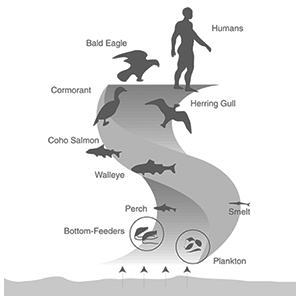
Bioaccumulation refers to the accumulation of substances, such as pesticides, or other organic chemicals in an organism. Bioaccumulation occurs when an organism absorbs a toxic substance at a rate greater than that at which the substance is lost. Thus, the longer the biological half-life of the substance the greater the risk of chronic poisoning, even if environmental levels of the toxin are not very high.
Bioconcentration is a related but more specific term, referring to uptake and accumulation of a substance from water alone. By contrast, bioaccumulation refers to uptake from all sources combined (e.g. water, food, air, etc.). Continue reading →
Posted in Food, Health, Politics |
Leave a Comment »
April 10, 2012
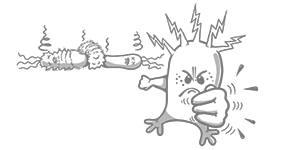

Triclosan [trik-loh-san] is an antibacterial and antifungal agent found in consumer products, including toothpaste, soaps, detergents, toys, and surgical cleaning treatments. In 2016, the FDA announced that effective September 2017, it would prohibit the sale of ‘consumer antiseptic washes’ containing triclosan or 18 other ingredients marketed as antimicrobials due to the FDA’s findings of the lack of efficacy in these products.
Despite being used in many consumer products, beyond its use in toothpaste to prevent gingivitis, there is no evidence according to the FDA that triclosan provides an extra benefit to health in other consumer products. A comprehensive analysis from the University of Michigan School of Public Health indicated that plain soaps are just as effective as consumer-grade antibacterial soaps with triclosan in preventing illness and removing bacteria from the hands. Continue reading →
Posted in Drugs, Health, Money |
Leave a Comment »
April 10, 2012
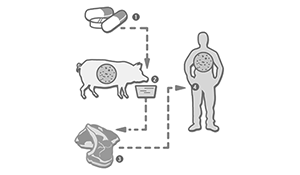

Antibiotic overuse is a contributing factor to the creation of multidrug-resistant bacteria, informally called ‘super bugs’: relatively harmless bacteria can develop resistance to multiple antibiotics and cause life-threatening infections. Though antibiotics are required to treat severe bacterial infections, misuse has contributed to a rise in bacterial resistance. The overuse of fluoroquinolone (a family of antibiotics) and other antibiotics fuels antibiotic resistance in bacteria, which can inhibit the treatment antibiotic-resistant infections. Their excessive use in children with otitis media (ear infection) has given rise to a breed of bacteria resistant to antibiotics entirely.
Widespread use of fluoroquinolones as a first-line antibiotic has led to decreased antibiotic sensitivity, with negative implications for serious bacterial infections such as those associated with cystic fibrosis, where quinolones are among the few viable antibiotics. Antibiotics have no effect on viral infections such as the common cold. They are also ineffective against sore throats, which are usually viral and self-resolving. Most cases of bronchitis (90–95%) are viral as well, passing after a few weeks—the use of antibiotics such as ofloxacin against bronchitis is superfluous and can put the patient at risk of suffering adverse reactions.
Continue reading →
Posted in Drugs, Food, Health |
Leave a Comment »
April 9, 2012

Orgasm Inc. (2009) is the first feature documentary by award-winning director Liz Canner. It premiered at the Hot Docs Documentary Film Festival. In the documentary, filmmaker Liz Canner takes a job editing erotic movies for a drug trial for a pharmaceutical company called Vivus. Her employer is developing what they hope will be the first Viagra drug for women that wins FDA approval to treat a new disease: female sexual arousal disorder (FSD). Initially, she plans to create a movie about science and pleasure but she soon begins to suspect that her employer, along with a cadre of other medical companies, might be trying to take advantage of women (and potentially endanger their health) in pursuit of billion dollar profits.
The film continues from Vivus onto the more general question of whether there is a solid scientific foundation to medical industry claims about what constitutes ‘healthy’ female sexuality and whether drugs and surgery are a suitable first-line approach to obtaining it. The film documents an emerging medical industry intent on convincing women that they have medical problems, and that those problems are best solved by expensive and dangerous medical treatments.
Posted in Drugs, Money, Sex |
1 Comment »
April 9, 2012

In sexuality, the refractory period is the recovery phase after (normally male) orgasm during which it is physiologically impossible for an individual to have additional orgasms. Most men are unable to maintain or achieve an erection during this time, and many perceive a psychological feeling of ‘satiation’ and are temporarily uninterested in further sexual activity. The penis may be hypersensitive and further sexual stimulation may even feel painful during this time frame.
The refractory period varies widely among individuals and across species, ranging from minutes to days. An increased infusion of the hormone oxytocin during ejaculation is believed to be chiefly responsible for the refractory period and the amount by which oxytocin is increased may affect the length of each refractory period. Another chemical which is considered to be responsible for this effect is prolactin, which represses dopamine, which is responsible for sexual arousal. Continue reading →
Posted in Drugs, Health, Sex |
Leave a Comment »
April 9, 2012

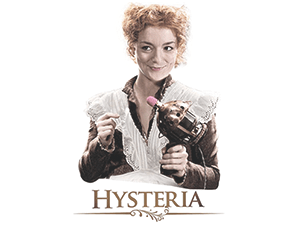
Orgasm (from Greek: ‘to swell’) is the sudden discharge of accumulated sexual tension during the sexual response cycle, resulting in rhythmic muscular contractions in the pelvic region characterized by an intense sensation of pleasure. Experienced by males and females, orgasms are controlled by the involuntary, or autonomic, limbic system.
They are often associated with other involuntary actions, including muscular spasms in multiple areas of the body, a general euphoric sensation, and, frequently, body movements and vocalizations are expressed. The period after orgasm (known as a refractory period) is often a relaxing experience, attributed to the release of the neurohormones oxytocin and prolactin. Continue reading →
Posted in Health, Sex |
1 Comment »



