May 4, 2020
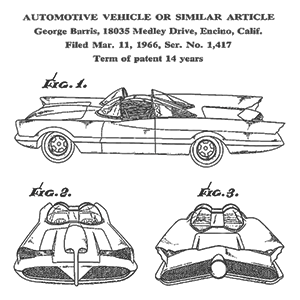
George Barris (1925 – 2015) was an American designer and builder of many famous Hollywood custom cars, most notably the Munster Koach and 1966 Batmobile.
George and his brother Sam were born in Chicago in the 1920s. Barris was three years old when their father, a Greek immigrant from Chios, sent the brothers to live with an uncle and his wife in Roseville, California, following the death of their mother. By age 7, Barris was making models of cars employing balsa wood and modifying their design and appearance with careful attention to details so his entries won contests sponsored by hobby shops. Continue reading →
Posted in Art, Technology |
Leave a Comment »
April 30, 2020
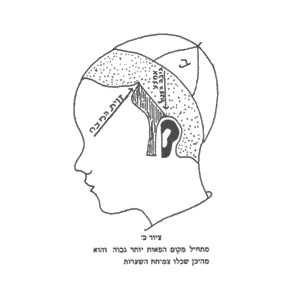
Payot [pey-oht] is the Hebrew word for sidelocks or sideburns. Payot are worn by some men and boys in the Orthodox Jewish community based on an interpretation of the Biblical injunction against shaving the ‘corners’ of one’s head. Literally, ‘pe’ah’ means ‘corner, side, edge.’
There are different styles of payot among Hasidic, Yemenite, and Chardal (Zionist Israeli) Jews. Yemenite Jews call their sidelocks ‘simonim,’ literally, ‘signs,’ because their long-curled sidelocks served as a distinguishing feature in the Yemenite society (differentiating them from their non-Jewish neighbors). Continue reading →
Posted in Philosophy |
Leave a Comment »
April 26, 2020
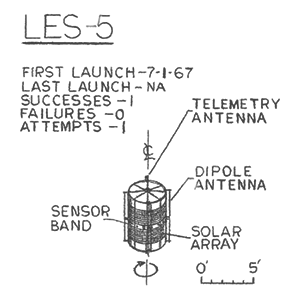
A zombie satellite is a satellite that is no longer under human control due to an extended malfunction. At the end of their service life, the majority of satellites suffer from orbital decay and are destroyed by the heat of atmospheric entry. Zombie satellites, however, maintain a stable orbit but are either partially or completely inoperable, preventing operators from communicating with them.
One of the oldest known zombie satellites is Transit 5B-5, which was launched in 1965 as part of the Transit system. Also known as NAVSAT or NNSS (for Navy Navigation Satellite System), it is one of the first satellite navigation systems (or satnav). Transit 5B-5 is nuclear powered and still in a stable polar orbit, though operators are unable to control it. Continue reading →
Posted in Technology, World |
Leave a Comment »
April 20, 2020
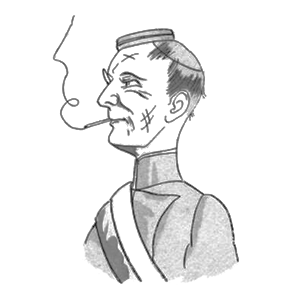
Dueling scars have been seen as a ‘badge of honor’ since as early as 1825. Known variously as ‘Mensur scars,’ ‘the bragging scar,’ ‘smite,’ or ‘Schmitte,’ dueling scars were popular among upper-class Austrians and Germans involved in academic fencing at the start of the 20th century.
Among university students, it was seen as a mark of their class and honor. It is an early example of scarification (body modification) in European society. The practice of dueling and the associated scars was also present to some extent in the German military. Continue reading →
Posted in Education, Games, World |
Leave a Comment »
April 16, 2020
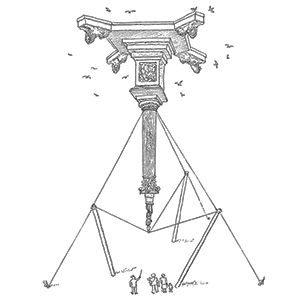
Tensegrity [ten-seg-ri-tee], tensional integrity or floating compression is a structural principle based on a system of isolated components under compression inside a network of continuous tension, and arranged in such a way that the compressed members (usually bars or struts) do not touch each other while the prestressed tensioned members (usually cables or tendons) delineate the system spatially.
The term was coined by inventor Buckminster Fuller in the 1960s as a portmanteau of ‘tensional integrity.’ The other denomination of tensegrity, floating compression, was used mainly by the constructivist artist Kenneth Snelson. Shorter columns or struts in compression are stronger than longer ones. This in turn led Fuller to make claims that tensegrity structures could be scaled up to cover whole cities. Continue reading →
Posted in Art, Science, Technology |
Leave a Comment »
April 15, 2020
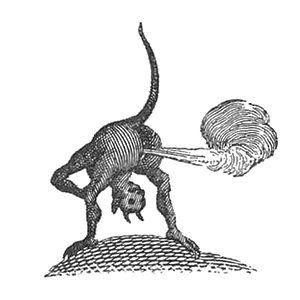
Pumpernickel [puhm-per-nik-uhl] is a typically heavy, slightly sweet rye bread traditionally made with sourdough starter and coarsely ground rye. It is often made today with a combination of rye flour and whole rye grains.
Some mass produced pumpernickel in North America may incorporate natural colorants such as molasses, caramel color, coffee, or cocoa powder among others to imitate the various shades of brown of traditional German pumpernickel, which is derived from long baking times and the maillard reaction (a chemical reaction between amino acids and reducing sugars). Continue reading →
Posted in Food, World |
Leave a Comment »
April 9, 2020
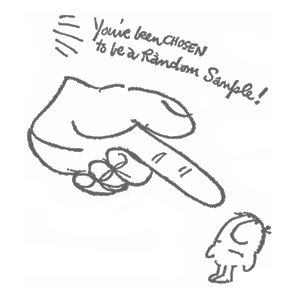
‘Lies, damned lies, and statistics‘ is a phrase describing the persuasive power of numbers, particularly the use of statistics to bolster weak arguments. It is also used colloquially to doubt statistics cited to prove an opponent’s point.
The phrase derives from the full sentence, ‘There are three kinds of lies: lies, damned lies, and statistics.’ It was popularized by Mark Twain and others, who mistakenly attributed it to the British prime minister Benjamin Disraeli. The true originator is uncertain, but it has, at times, been attributed to an anonymous writer in mid-1891 and later that year to English politician Sir Charles Dilke. Continue reading →
Posted in Humor, Language, Politics |
Leave a Comment »
April 7, 2020
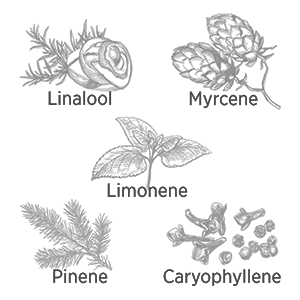
Terpenes [tur-peens] are a large and diverse class of organic compounds (carbon-based chemicals), produced by a variety of plants, particularly conifers (evergreens), and by some insects. They often have a strong odor and may protect the plants that produce them by deterring herbivores and by attracting predators and parasites of herbivores.
Terpenes have gained public awareness through the growth and education of medical and recreational cannabis. Organizations and companies operating in cannabis markets have pushed education and marketing of terpenes in their products as a way to differentiate taste and effects of cannabis. The entourage effect, which describes the synergy of cannabinoids, terpenes, and other plant compounds, has also helped further awareness and demand for terpenes in cannabis products. Continue reading →
Posted in Drugs, Science |
Leave a Comment »
April 4, 2020


Saturday night special is a colloquial term for inexpensive, compact, small-caliber handguns of perceived low quality. Some states define these junk guns by means of composition or material strength. In the late 19th century and early 20th century, they were commonly referred to as ‘suicide specials.’ Although the term implies such a gun is for use in crime, studies show that criminals prefer high-quality guns, in the largest caliber they can easily conceal.
The legal definition of a ‘junk gun’ usually specifies the materials used in its manufacture, targeting zinc castings, low melting points (usually 800 degrees Fahrenheit), powder metallurgy, and other low-cost manufacturing techniques. Nearly all guns made this way are chambered for low-pressure cartridges. The low-strength materials and cheap construction result in poor durability and marginal accuracy at longer ranges, but as most of these guns are sold for use in self-defense, accuracy and durability are not primary design goals. Continue reading →
Posted in Money |
Leave a Comment »
March 30, 2020

The Smurfette principle is the practice in media, such as film and television, to include only one woman in an otherwise entirely male ensemble. It establishes a male-dominated narrative, where the woman is the exception and exists only in reference to the men.
The term was coined by American poet and critic Katha Pollitt in 1991 in ‘The New York Times’: ‘Contemporary shows are either essentially all-male, like ‘Garfield,’ or are organized on what I call the ‘Smurfette principle’: a group of male buddies will be accented by a lone female, stereotypically defined… The message is clear. Boys are the norm, girls the variation; boys are central, girls peripheral; boys are individuals, girls types. Boys define the group, its story and its code of values. Girls exist only in relation to boys.’ Continue reading →
Posted in Art, Politics, Sex |
Leave a Comment »
March 29, 2020
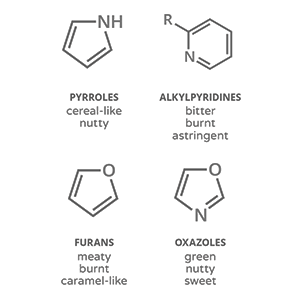
The Maillard reaction is a chemical reaction between amino acids and reducing sugars that gives browned food its distinctive flavor. Seared steaks, fried dumplings, cookies, and other kinds of breads, toasted marshmallows, and many other foods undergo this reaction. It is named after French chemist Louis-Camille Maillard, who first described it in 1912 while attempting to reproduce biological protein synthesis (how the body combines amino acids to form proteins).
The reaction is a form of non-enzymatic browning which typically proceeds rapidly from around 280 to 330 °F. Many recipes call for an oven temperature high enough to ensure that a Maillard reaction occurs. At higher temperatures, caramelization (the browning of sugars, a distinct process) and subsequently pyrolysis (final breakdown leading to burning) become more pronounced. Continue reading →
Posted in Food, Science |
Leave a Comment »
March 28, 2020
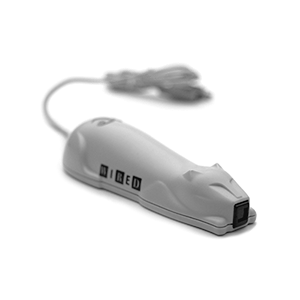
The CueCat, styled :CueCat with a leading colon, is a cat-shaped handheld barcode reader that was given away free to Internet users starting in 2000 by the now-defunct Digital Convergence Corporation. It enabled a user to open a link to an Internet URL by scanning a barcode — called a ‘cue’ by Digital Convergence — appearing in an article or catalog or on some other printed matter.
The company asserted that the ability of the device to direct users to a specific URL, rather than a domain name, was valuable. In addition, television broadcasters could use an audio tone in programs or commercials that, if a TV was connected to a computer via an audio cable, acted as a web address shortcut. Continue reading →
Posted in Money, Technology |
Leave a Comment »



