November 29, 2011
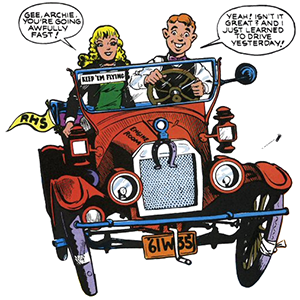
A jalopy [juh-lop-ee] (also clunker or hooptie or beater) is a decrepit car, often old and in a barely functional state. A jalopy is not a well kept antique car, but a car which is mostly rundown or beaten up.
As a slang term in American English, ‘jalopy’ was noted in 1924 but is now slightly passé. The term was used extensively in the book ‘On the Road’ by Jack Kerouac, first published in 1957, although written from 1947. The equivalent English term is old banger, often shortened to banger, a reference to older poorly maintained vehicles’ tendency to backfire. Continue reading →
Posted in Language, Money, Technology |
1 Comment »
November 28, 2011
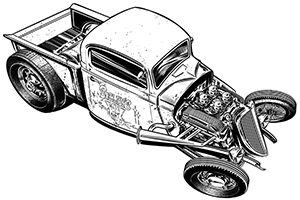
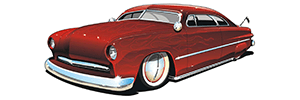
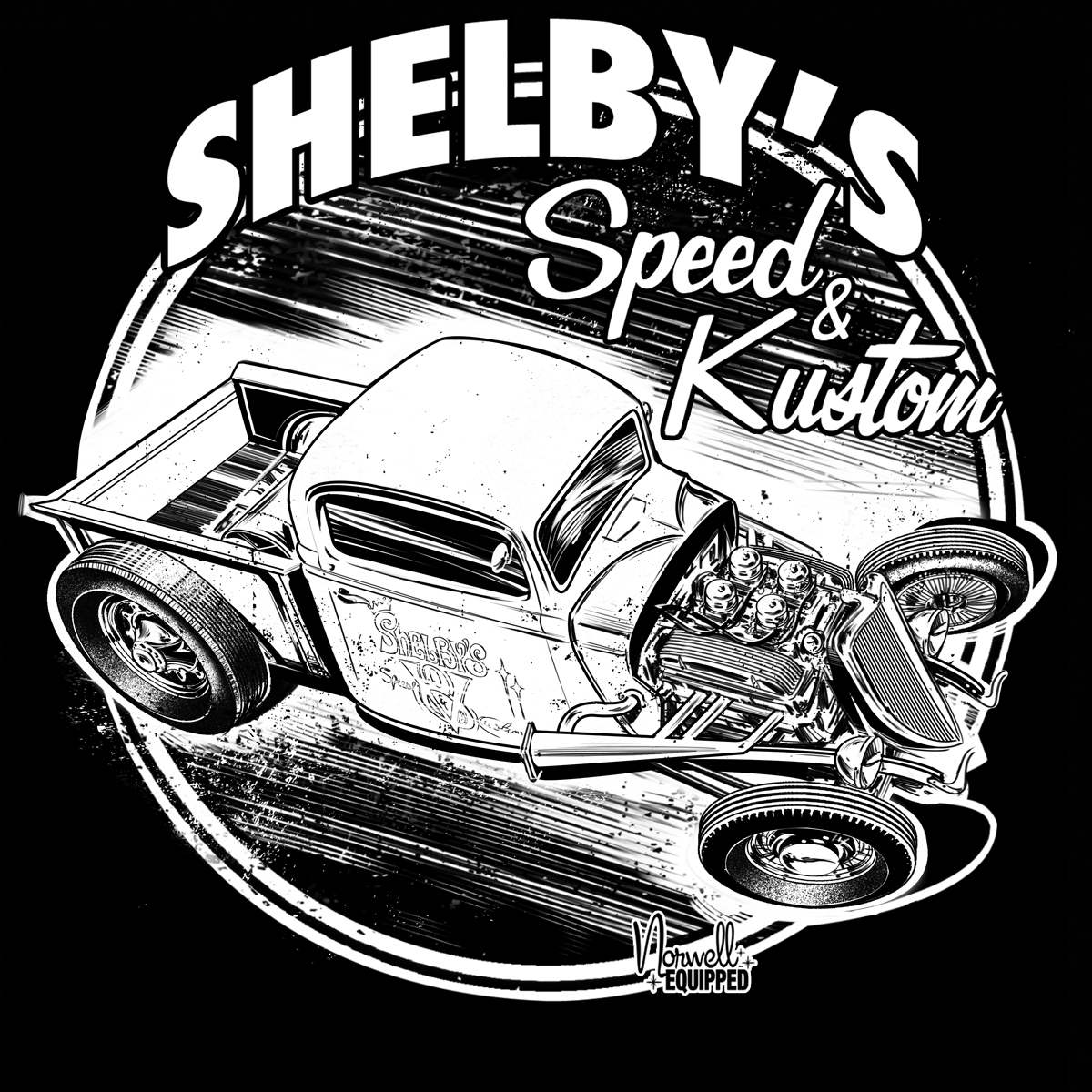
Kustoms are modified cars from the 1930s to the early 1960s, done in the customizing styles of that time period. The usage of a ‘K’ rather than a ‘C,’ is believed to have originated with car designer George Barris.
This style generally consists of, but it not limited to starting with a 2-door coupe; lowering the suspension; chopping down the roof line (usually chopped more in the rear to give a ‘raked back’ look, with B-pillars also commonly leaned to enhance this look); sectioning and/or channeling the body (removing a section from the center); certain pieces of side trim are usually removed or ‘shaved’ to make the car look longer, lower and smoother; often bits and pieces of trim from other model cars, are cut, spliced and added to give the car a totally new and interesting ‘line’ to lead the eye in the direction that the Kustomizer wishes it to go; door handles are also ‘shaved’ as well (electric solenoids or cables are installed); buttons are installed in hidden locations and used to open the doors; trunk lids and other pieces of the body can also be altered in this matter. Continue reading →
Posted in Art, Technology |
Leave a Comment »
November 28, 2011
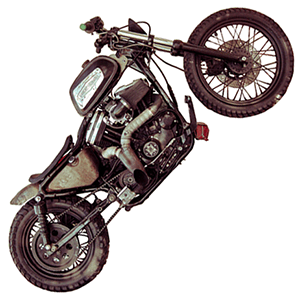
Rat bikes are motorcycles that have fallen apart over time but been kept on the road and maintained for little or no cost by employing kludge (ad hoc) fixes. The concept of keeping a motorcycle in at least minimally operational condition without consideration for appearance has probably characterized motorcycle ownership since its earliest days. The essence of a rat bike is keeping a motorbike on the road for the maximum amount of time while spending as little as possible on it. This calls for adaptation of parts that were not designed to fit the model of bike in question. Most Rat bikes are painted matte black but this is not a requirement.
‘Survival bikes’ are bikes that may appear to be rat bikes, but are not. They are influenced by the ‘Mad Max’ films. The term survival bike itself originated in the British motorcycle press particularly ‘Back Street Heroes,’ and the now-defunct AWoL in the late 1980s and early 1990s.
Posted in Money, Technology |
Leave a Comment »
November 28, 2011

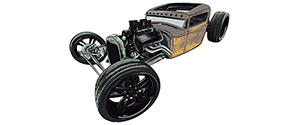
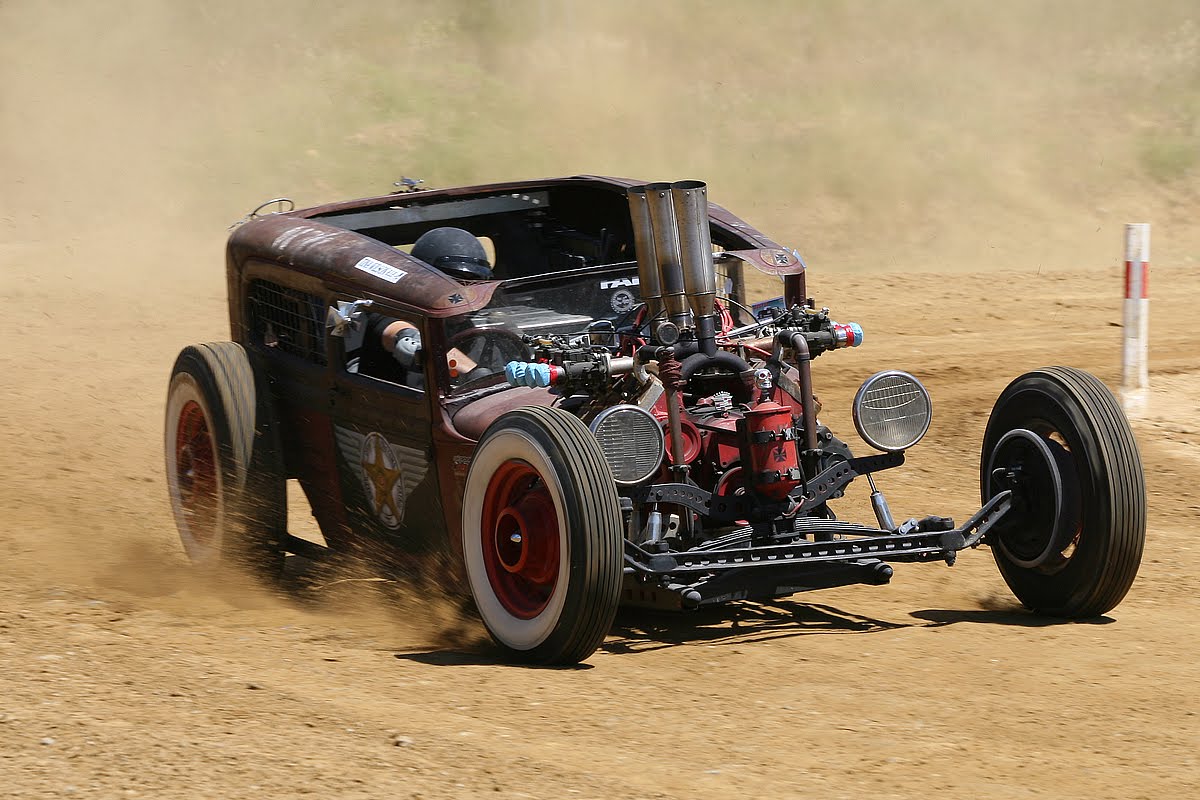
A rat rod is a style of hot rod or custom car that, in most cases, imitates (or exaggerates) the early hot rods of the 40s, 50s, and 60s. It is not to be confused with the somewhat closely related ‘traditional’ hot rod, which is an accurate re-creation or period-correct restoration of a hot rod from the same era.
Most rat rods appear ‘unfinished’ (whether they actually are or not), with just the bare essentials to be driven. The rat rod is the visualization of the idea of function over form. Rat rods are meant to be driven, not shown off. Sometimes the customization will include using spare parts, or parts from another car altogether.
Continue reading →
Posted in Games, Money, Technology |
Leave a Comment »
November 28, 2011

Erotophobia [ih-rot-uh-foh-bee-uh] is a term coined by a number of researchers in the late 1970s and early 1980s to describe one pole on a continuum of attitudes and beliefs about sexuality. The model of the continuum is a basic polarized line, with erotophobia (fear of sex or negative attitudes about sex) at one end and erotophilia (positive feelings/attitudes about sex) at the other end.
Erotophobia has many manifestations. An individual or culture can have one or multiple erotophobic attitudes. Some types of erotophobia include fear of nudity, fear of sexual images, homophobia, fear of sex education, fear of sexual discourse, etc. Continue reading →
Posted in Health, Sex |
Leave a Comment »
November 28, 2011

Love-shyness is a specific type of severe chronic shyness that impairs or prevents intimate relationships. It implies a degree of inhibition and reticence with potential partners that is sufficiently severe to preclude participation in courtship, marriage and family roles.
According to this definition, love-shy people find it difficult if not impossible to be assertive in informal situations involving potential romantic or sexual partners. For example, a heterosexual love-shy man will have trouble initiating conversations with women because of strong feelings of social anxiety.
Continue reading →
Posted in Health, Love |
Leave a Comment »
November 28, 2011
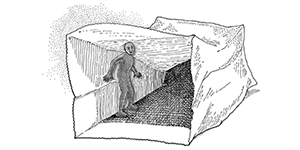
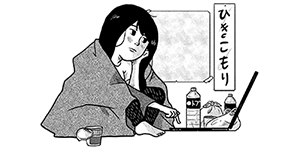
Avoidant personality disorder (or anxious personality disorder) is a personality disorder recognized in the Diagnostic and Statistical Manual of Mental Disorders handbook in a person characterized by a pervasive pattern of social inhibition, feelings of inadequacy, extreme sensitivity to negative evaluation, and avoidance of social interaction.
People with avoidant personality disorder often consider themselves to be socially inept or personally unappealing and avoid social interaction for fear of being ridiculed, humiliated, rejected, or disliked. Avoidant personality disorder is usually first noticed in early adulthood. Childhood emotional neglect and peer group rejection (e.g. bullying) are both associated with an increased risk for the development of AvPD. Continue reading →
Posted in Health |
Leave a Comment »
November 28, 2011

A highly sensitive person (HSP) is a person having the innate trait of high psychological sensitivity (or innate sensitiveness as Carl Jung originally coined it). According to American pyschologist Elaine N. Aron, who coined the term, highly sensitive people comprise about a fifth of the population, and process sensory data much more deeply and thoroughly due to a biological difference in their nervous systems.
This is a specific trait with key consequences that in the past has often been confused with innate shyness, social anxiety problems, inhibitedness, or even social phobia and innate fearfulness, introversion, and so on. The existence of the trait of innate sensitivity was demonstrated using a test that was shown to have both internal and external validity. Although the term is primarily used to describe humans, the trait is present in nearly all higher animals.
Continue reading →
Posted in Health, Language, Philosophy |
Leave a Comment »
November 28, 2011

Novelty architecture is a type of architecture in which buildings and other structures are given unusual shapes as a novelty, such as advertising, notoriety as a landmark, or simple eccentricity of the owner or architect. Many examples of novelty architecture take the form of buildings that resemble the products sold inside to attract drive-by customers.
Others are attractions all by themselves, such as giant animals, fruits, and vegetables, or replicas of famous buildings. And others are merely unusual shapes or made of unusual building materials. Continue reading →
Posted in Art, Humor, Money |
1 Comment »
November 28, 2011

A plug (sometimes earplug or earspool), in the context of body modification, is a short, cylindrical piece of jewellery commonly worn in larger-gauge body piercings.
Because of their size—which is often substantially thicker than a standard wire earring—plugs can be made out of almost any material (e.g. acrylic glass, metal, wood, bone, stone, horn, glass, silicone, and porcelain). Continue reading →
Posted in Art, World |
Leave a Comment »
November 28, 2011

A flesh tunnel is a type of body piercing jewelry. It is also sometimes referred to as a spool, fleshy, earlet, expander or eyelet. They are hollow tunnels, usually used in stretched or scalpelled piercings. Some choose to wear them instead of solid flesh plugs because they weigh less. Flesh tunnels may be worn with a captive bead ring or other object passed through them. Flesh tunnels can be made from many materials, including surgical steel, titanium, Pyrex, silicone, acrylic, and a variety of natural materials, including bone, horn, amber, bamboo, stone, and wood.
Flesh tunnels are often worn in the earlobe, but other soft-tissue areas that are pierced can be used such as the nasal septum and nipples. In these cases the length of the tunnel might be different. The actual origin of flesh tunnels, plug piercings, and body plates derived from the many tribal groups of the world. The flesh tunnels symbolize different roles in their societies, for different groups, however, during the ancient Egyptian New Kingdom, both sexes wore a variety of jewelry, including earplugs/tunnels.
Posted in Art, World |
1 Comment »
November 26, 2011
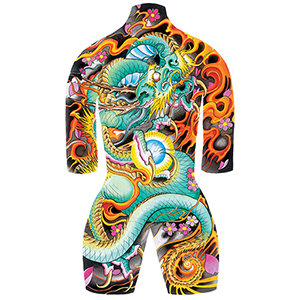
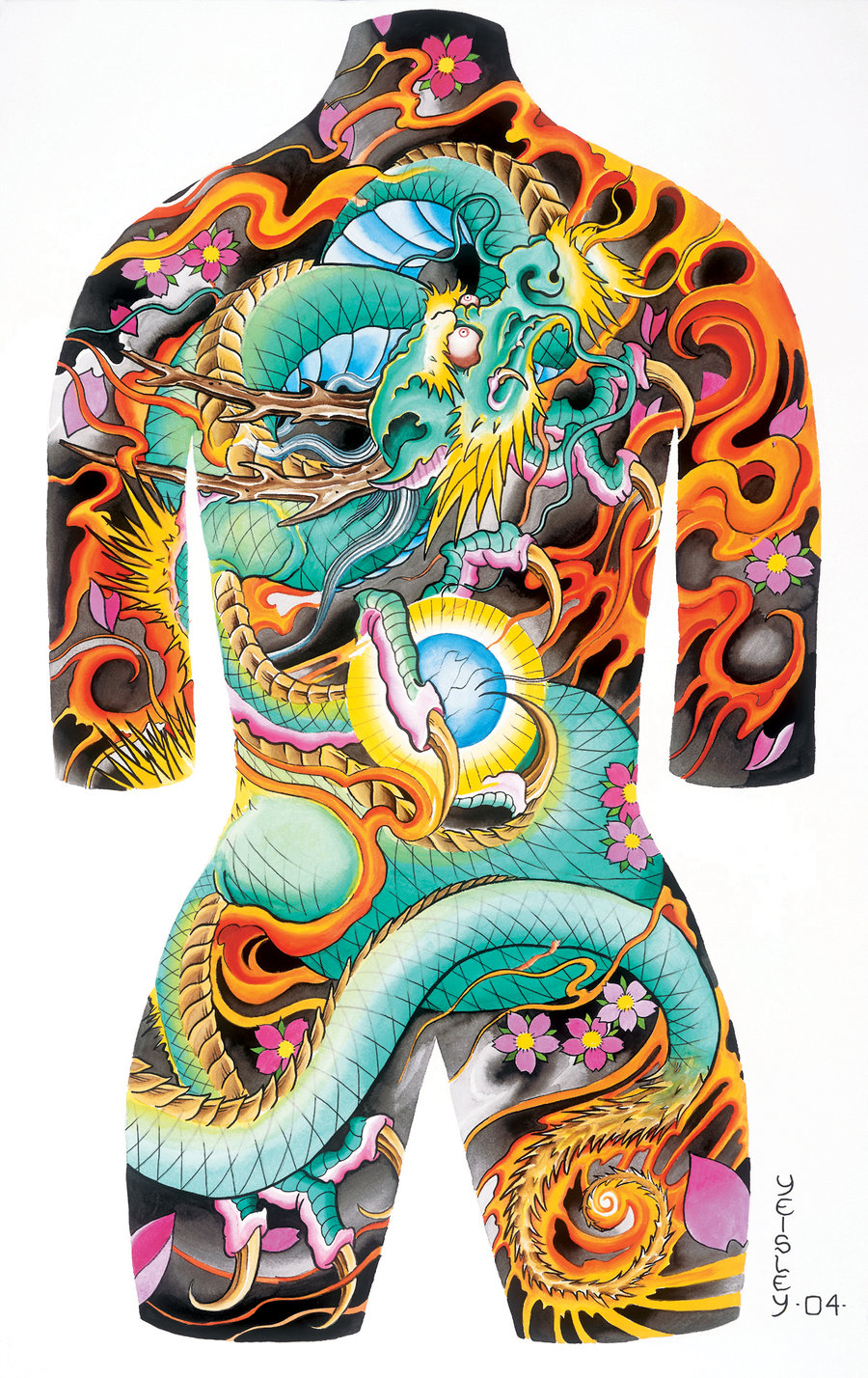
A body suit is an extensive tattoo, usually of a similar pattern, style or theme that covers the entire torso or the entire body. They are associated with freak show and circus performers, as well as with traditional Japanese tattooing.
Such suits are of significant cultural meaning in some traditional cultures, representing a rite of passage, marriage or a social designation.
Posted in Art |
Leave a Comment »