July 18, 2011
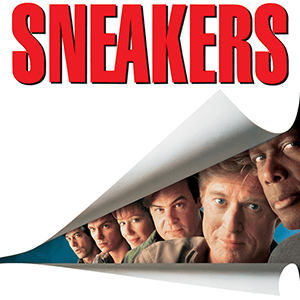
A tiger team is a group of experts assigned to investigate and/or solve technical or systemic problems. The term may have originated in aerospace design but is also used in other settings, including information technology and emergency management. It has been described as ‘a team of undomesticated and uninhibited technical specialists, selected for their experience, energy, and imagination, and assigned to track down relentlessly every possible source of failure in a spacecraft subsystem.’ In security work, a tiger team is a specialized group that tests an organization’s ability to protect its assets by attempting to circumvent, defeat, or otherwise thwart that organization’s internal and external security. The term originated within the military to describe a team whose purpose is to penetrate security of ‘friendly’ installations to test security measures. It now more generally refers to any team that attacks a problem aggressively.
Many tiger teams are informally constituted through managerial edicts. One of these was set up in NASA circa 1966 to solve the ‘Apollo Navigation Problem. Technology at the time was unable to navigate Apollo at the level of precision mandated by the mission planners. Tests using radio tracking data were revealing errors of 2000 meters instead of the 200 that the mission required to safely land Apollo when descending from its lunar orbit. Five tiger teams were set up to find and correct the problem, one at each NASA center, from CalTech JPL in the west to Goddard SFC in the east. The Russians via Luna 10 were also well aware of this problem. The JPL found a solution in 1968; the problem was caused by the unexpectedly large local gravity anomalies on the moon arising from large ringed maria, mountain ranges and craters on the moon. This also led to the construction of the first detailed gravimetric map of a body other than the earth and the discovery of the lunar mass concentrations.
Posted in Language, Politics, Technology |
Leave a Comment »
July 18, 2011

Hack value is the notion among hackers that something is worth doing or is interesting. This is something that hackers often feel intuitively about a problem or solution; the feeling approaches the spiritual for some. An aspect of hack value is performing feats for the sake of showing that they can be done, even if others think it is difficult. Using things in a unique way outside their intended purpose is often perceived as having hack value. Examples are using a matrix printer to produce musical notes, using a flatbed scanner to take ultra-high-resolution photographs or using an optical mouse as barcode reader.
A solution or feat implies hack value if it is done in a way that has finesse or ingenuity. So creativity is an important part of the meaning. For example, picking a difficult lock has hack value; smashing a lock does not. By way of another example, proving Fermat’s last theorem by linking together most of modern mathematics has hack value; solving the four color map problem by exhaustively trying all possibilities does not (both of these have now in fact been proven).
Posted in Language, Technology |
1 Comment »
July 18, 2011

A kludge [klooj] is a workaround, a quick-and-dirty solution, a clumsy or inelegant, yet effective, solution to a problem, typically using parts that are cobbled together. The present word has alternate spellings (kludge and kluge) and pronunciations (rhyming with fudge and stooge respectively), and several proposed etymologies.
Kluge was common Navy slang in the WWII era for any piece of electronics that worked well on shore but consistently failed at sea. In aerospace design a kluge was a temporary design using separate commonly available components that were not flight worthy to proof the design.
Continue reading →
Posted in Humor, Language, Technology |
Leave a Comment »
July 17, 2011

My Neighbor Totoro is a 1988 Japanese animated fantasy film written and directed by Hayao Miyazaki and produced by Studio Ghibli. The film follows the two young daughters of a professor and their interactions with friendly wood spirits in postwar rural Japan. The art director was Kazuo Oga, who was drawn to the film when Hayao Miyazaki showed him an original image of Totoro standing in a satoyama (foothills). Oga’s was recognized as ‘updating the traditional Japanese animist sense of a natural world that is fully, spiritually alive.’ ‘Set in a period that is both modern and nostalgic, the film creates a fantastic, yet strangely believable universe of supernatural creatures coexisting with modernity. A great part of this sense comes from Oga’s evocative backgrounds, which give each tree, hedge and twist in the road an indefinable feeling of warmth that seems ready to spring into sentient life.’ Oga’s style became a trademark style of Studio Ghibli.
As is the case with Disney’s other English dubs of Miyazaki films, the Disney version of Totoro features a star-heavy cast, including Dakota and Elle Fanning as Satsuki and Mei, and Timothy Daly as Mr. Kusakabe. ‘My Neighbor Totoro’ helped bring Japanese animation into the global spotlight, and set its writer-director Hayao Miyazaki on the road to success. The film’s central character, Totoro, is as famous among Japanese children as Winnie-the-Pooh is among British ones.
Posted in Art, World |
Leave a Comment »
July 15, 2011

Grey goo is a hypothetical end-of-the-world scenario involving nanotechnology in which out-of-control self-replicating robots consume all matter on Earth while building more of themselves, a scenario known as ecophagy (‘eating the environment’).
Self-replicating machines of the macroscopic variety were originally described by mathematician John von Neumann, and are sometimes referred to as von Neumann machines. Continue reading →
Posted in Language, Technology |
Leave a Comment »
July 15, 2011

Lysenkoism [li-seng-koh-iz-uhm] is used colloquially to describe the manipulation or distortion of the scientific process as a way to reach a predetermined conclusion as dictated by an ideological bias, often related to social or political objectives. The word is derived from a set of political and social campaigns in science and agriculture by the director of the Soviet Lenin All-Union Academy of Agricultural Sciences, Trofim Lysenko and his followers, which began in the late 1920s and formally ended in 1964.
In 1928, Trofim Lysenko, a previously unknown plant scientist, claimed to have developed an agricultural technique, termed vernalization, which tripled or quadrupled crop yield by exposing wheat seed to high humidity and low temperature. While cold and moisture exposure are a normal part of the life cycle of fall-seeded winter cereals, the vernalization technique claimed to enhance yields by increasing the intensity of exposure, in some cases planting soaked seeds directly into the snow cover of frozen fields. In reality, the technique was neither new (it had been known since 1854, and was extensively studied during the previous twenty years), nor did it produce the yields he promised.
Continue reading →
Posted in Politics, Science, World |
1 Comment »
July 15, 2011


Near-death studies is a school of psychology and psychiatry that studies the phenomenology and after-effects of a Near-death experience (NDE). The NDEs are reported by people who have come close to dying in a medical or non-medical setting.
Some researchers try to study the postulated role of physiological, psychological and transcendental factors associated with the NDE. These factors come together to form an overall pattern when numerous NDE reports are considered together. It is this pattern that is one of the main objects of interest for Near-Death studies. Continue reading →
Posted in Death, Health, Science |
1 Comment »
July 15, 2011


Antiscience is a position that rejects science and the scientific method. People holding antiscientific views are generally skeptical that science is an objective method, as it purports to be, or that it generates universal knowledge.
They also contend that scientific reductionism (reducing complex things to the interactions of their parts, or to simpler or more fundamental things) is a limited means of reaching understanding of the complex world we live in. Antiscience proponents also criticize what they perceive as the unquestioned privilege, power and influence science seems to wield in society, industry and politics; they object to what they regard as an arrogant or closed-minded attitude amongst scientists.
Continue reading →
Posted in Philosophy, Politics, Science |
Leave a Comment »
July 14, 2011

Cyberdelic refers to immersion in cyberspace as a psychedelic experience; the fusion of cyberculture and the psychedelic subculture; psychedelic art created by calculating fractal objects; and trance music parties. Timothy Leary, an advocate of psychedelic drug use who became a cult figure of the hippies in the 1960s, reemerged in the 1980s as a spokesperson of the cyberdelic counterculture, whose adherents called themselves ‘cyberpunks,’ and became one of the most philosophical promoters of personal computers, the Internet, and immersive virtual reality. Leary proclaimed that the ‘PC is the LSD of the 1990s’ and admonished bohemians to ‘turn on, boot up, jack in.’
In contrast to the hippies of the 60s who were decidedly antiscience and antitechnology, the cyberpunks of the 80s and 90s ecstatically embraced technology and the hacker ethic. They believed that high technology (and smart drugs) could help human beings overcome all limits, that it could liberate them from authority and even enable them to transcend space, time, and body. They often expressed their ethos and aesthetics through cyberart and reality hacking.
Posted in Drugs, Language, Technology |
1 Comment »
July 14, 2011


Transhumanism, often abbreviated as H+, is an international intellectual and cultural movement that affirms the possibility and desirability of fundamentally transforming the human condition by developing and making widely available technologies to eliminate aging and to greatly enhance human intellectual, physical, and psychological capacities.
Transhumanist thinkers study the potential benefits and dangers of emerging technologies that could overcome fundamental human limitations, as well as study the ethical matters involved in developing and using such technologies. They predict that human beings may eventually be able to transform themselves into beings with such greatly expanded abilities as to merit the label ‘posthuman.’ Transhumanism is therefore viewed as a subset of philosophical ‘posthumanism.’
Continue reading →
Posted in Philosophy, Politics, Technology |
Leave a Comment »
July 14, 2011

Ray Kurzweil (b. 1948) is an American author, inventor and futurist. He is involved in fields such as optical character recognition (OCR), text-to-speech synthesis, speech recognition technology, and electronic keyboard instruments. He is the author of several books on health, artificial intelligence (AI), transhumanism, the technological singularity, and futurism.
Ray Kurzweil grew up in Queens, NY. He was born to secular Jewish parents who had escaped Austria just before the onset of World War II, and he was exposed via Unitarian Universalism to a diversity of religious faiths during his upbringing. His father was a musician and composer and his mother was a visual artist. His uncle, an engineer at Bell Labs, taught young Ray the basics of computer science. Continue reading →
Posted in Language, Money, Technology |
1 Comment »
July 14, 2011

American author, inventor and futurist Raymond Kurzweil has become well known for predicting the future of artificial intelligence and the human race. His first book, ‘The Age of Intelligent Machines,’ published in 1990, put forth his theories on the results of the increasing use of technology and notably foresaw the explosive growth in the internet, among other predictions.
Later works, 1999’s ‘The Age of Spiritual Machines’ and 2005’s ‘The Singularity is Near’ outlined other theories including the rise of clouds of nano-robots (nanobots) called foglets and the development of Human Body 2.0 and 3.0, whereby nanotechnology is incorporated into many internal organs.
Continue reading →
Posted in Language, Technology |
Leave a Comment »



