June 16, 2011
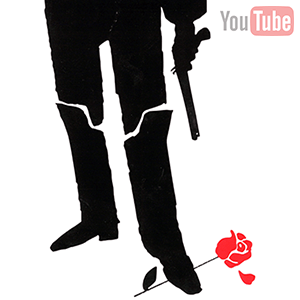
Barry Lyndon is a 1975 period film directed by Stanley Kubrick based on the 1844 novel ‘The Luck of Barry Lyndon’ by William Makepeace Thackeray which recounts the exploits of an 18th century a man of the Irish gentry trying to become a member of the English aristocracy.
The film is divided into two halves each headed with a title card: ‘I. By What Means Redmond Barry Acquired the Style and Title of Barry Lyndon.’ ‘II. Containing an Account of the Misfortunes and Disasters Which Befell Barry Lyndon.’ The epilogue read: ‘It was in the reign of King George III that the aforesaid personages lived and quarreled; good or bad, handsome or ugly, rich or poor, they are all equal now.’ Continue reading →
Posted in Art, Money |
Leave a Comment »
June 16, 2011

Jimmy Joe Roche is an American visual artist and underground filmmaker, based in Baltimore, Maryland. He is a long-time collaborator of the Baltimore-based musician Dan Deacon. His recent collaboration, ‘Ultimate Reality’, with musician Dan Deacon has gained critical attention.
In 2006 he shot and edited the Neil Young ‘Heart of Gold: Behind the Scenes’ featurette. Recently Roche’s short film ‘Baltimore Shopping Network’ was featured on the New Museum’s website Rizhome, and his music video for Deacon’s ‘Crystal Cat’ was featured on the front page of YouTube, gathering over a million views.
Posted in Art, Technology |
Leave a Comment »
June 16, 2011

Tapatío is a hot sauce, produced in Vernon, California, that can be found at many grocery stores in the United States.
It rates 3,000 on the scale of Scoville units (Tabasco sauce is 2100 Scovilles) ‘Tapatío’ is the name given to people from Guadalajara, Jalisco. The company’s founders come from Guadalajara.
Posted in Food, Money |
Leave a Comment »
June 16, 2011

The sun protection factor of a sunscreen is a laboratory measure of the effectiveness of sunscreen — the higher the SPF, the more protection a sunscreen offers against UV-B (the ultraviolet radiation that causes sunburn); it does not measure UV-A (the radiation that causes cancer).
The SPF is the amount of UV radiation required to cause sunburn on skin with the sunscreen on. Sunscreen in general is proven to slow the aging of skin, but not prevent skin cancer.
Continue reading →
Posted in Health, Science |
Leave a Comment »
June 16, 2011

Ghosts I–IV is the sixth studio album by American industrial rock act Nine Inch Nails, released in 2008. The team behind the project included Nine Inch Nails front man Trent Reznor, studio-collaborators Atticus Ross and Alan Moulder, and instrumental contributions from Alessandro Cortini, Adrian Belew, and Brian Viglione.
Reznor described the music of Ghosts as ‘a soundtrack for daydreams,’ a sentiment echoed by many critics who compared it with the work of Brian Eno and Robert Fripp. The songs are unnamed, and are identified only by their track listing and group number.
Continue reading →
Posted in Art |
Leave a Comment »
June 15, 2011

Possibilianism is a philosophy which rejects both the idiosyncratic claims of traditional theism and the positions of certainty in atheism in favor of a middle, exploratory ground.
The term was first defined by neuroscientist David Eagleman in relation to his book of fiction ‘Sum.’ Asked whether he was an atheist or a religious person he replied, ‘I call myself a Possibilian: I’m open to…ideas that we don’t have any way of testing right now’
Continue reading →
Posted in Philosophy |
Leave a Comment »
June 15, 2011


David Eagleman (b. 1971) is a neuroscientist at Baylor College of Medicine, where he directs the Laboratory for Perception and Action and the Initiative on Neuroscience and Law. He is best known for his work on time perception, synesthesia, and neurolaw. He is also an internationally bestselling fiction writer.
An early experience of falling from a roof raised his interest in understanding the neural basis of time perception. Eagleman’s scientific work combines psychophysical, behavioral, and computational approaches to address the relationship between the timing of perception and the timing of neural signals. Continue reading →
Posted in Art, Politics, Science |
Leave a Comment »
June 15, 2011

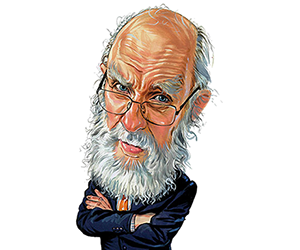
The Brights Movement is a social movement that aims to promote public understanding and acknowledgment of the naturalistic worldview (disbelief of the supernatural), including equal civil rights and acceptance for people who hold a naturalistic worldview. It was co-founded by Paul Geisert and Mynga Futrell in 2003.
The movement aims to create an Internet constituency that will pursue the following aims: Promote public understanding and acknowledgment of the naturalistic worldview, which is free of supernatural and mystical elements. Gain public recognition that persons who hold such a worldview can bring principled actions to bear on matters of civic importance. Educate society toward accepting the full and equitable civic participation of all such people.
Continue reading →
Posted in Philosophy, Politics, Science |
Leave a Comment »
June 15, 2011

Kief [keef] (from Arabic, meaning ‘well-being’ or ‘pleasure’) refers to the resin glands (or trichomes) of cannabis which may accumulate in containers or be sifted from loose dry cannabis buds with a mesh kiefing screen or sieve.
Kief contains a much higher concentration of desired psychoactive cannabinoids, such as THC, than other preparations of cannabis buds from which it is derived. Traditionally kief has been pressed and baked into cakes as hashish for convenience in storage and shipping, but can be vaporized or smoked in its powder form.
Posted in Drugs, Language |
Leave a Comment »
June 15, 2011

Synesthesia [sin-uhs-thee-zhuh] is a condition where the brain mixes up the senses (e.g. sounds can have ‘colors,’ images can have ‘odors,’ etc.). People who have synesthesia are called synesthetes. Synesthesia is usually inherited (called congenital synesthesia), but exactly how people inherit it is unknown.
Synesthesia is sometimes reported by people using psychedelic drugs, after a stroke, or during an epileptic seizure. It is also reported to be a result of blindness or deafness. Synesthesia that comes from events unrelated to genes is called adventitious synesthesia. This synesthesia results from some drugs or a stroke but not blindness or deafness. It involves sound being linked to vision or touch being linked to hearing.
Continue reading →
Posted in Art, Health, Science |
Leave a Comment »
June 15, 2011

BC Bud is a generic term for several varieties of potent cannabis grown in the Canadian province of British Columbia. The term has almost become a brand name, especially in California, Oregon, Alaska, Idaho and Washington, to where most of the province’s cannabis is exported.
The United States Drug Enforcement Administration considers BC production to be a major problem, given the porous United States-Canada border, and has launched several major initiatives to cut down on its flow, including collaborative operations targeting marijuana activists such as Marc Emery.
Continue reading →
Posted in Drugs, Money, Politics |
Leave a Comment »
June 15, 2011
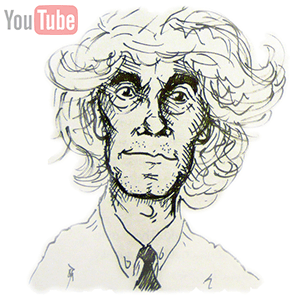
Derek Parfit (b. 1942) is a British philosopher who specializes in problems of personal identity, rationality and ethics, and the relations between them. His 1984 book ‘Reasons and Persons’ has been very influential. His most recent book, ‘On What Matters’ (2011), has already been widely discussed, having circulated in draft form for many years.
He has worked at Oxford for the whole of his academic career, and is presently an Emeritus Senior Research Fellow at All Souls College, Oxford. ‘Reasons and Persons’ is a four-part work, with each successive section building on the last. Parfit believes that nonreligious ethics is a young and fertile field of inquiry. He asks questions about which actions are right or wrong and shies away from meta-ethics, which focuses more on logic and language.
Continue reading →
Posted in Philosophy |
Leave a Comment »




