August 30, 2018

Spud is a tag variant that is best played with a ball in large, open areas. The game begins with each player being assigned a number, in secret, with the highest number corresponding to the number of players. For example, if five people are playing, each player will be assigned one of the numbers one through five.
A player is chosen as ‘It.’ The person who is ‘it’ stands in the approximate center of the playing area, with one foot in front of the other. All of the other players must then touch one of their feet to its inward foot, and then step backwards three paces. This 3-step-backward set-up is required. When all of the players have stepped backward three paces, the person who is ‘it’ throws the ball straight into the air and calls the number of another player. The ball must be thrown straight up. Continue reading →
Posted in Games |
Leave a Comment »
August 28, 2018

In political theory, the horseshoe theory asserts that the far left and the far right, rather than being at opposite and opposing ends of a linear political continuum, in fact closely resemble one another, much like the ends of a horseshoe.
The theory is attributed to French writer Jean-Pierre Faye. Proponents of the theory point to a number of similarities between the far-left and the far-right, including their supposed propensity to gravitate to authoritarianism or totalitarianism. The horseshoe theory competes with the conventional linear left–right continuum system as well as the various multidimensional systems. Continue reading →
Posted in Politics |
Leave a Comment »
August 26, 2018

Deez Nuts was a satirical candidate, portrayed by 15-year-old Brady C. Olson of Wallingford, Iowa, who ran in the 2016 United States presidential election. In polls conducted by Public Policy Polling in Iowa, Minnesota, and North Carolina in mid-August 2015, he polled at 8, 8, and 9-percent respectively, garnering the attention of the media.
On October 11, 2015, Deez Nuts announced on his Facebook page his intention to run for Speaker of the United States House of Representatives, citing his eligibility despite not being a member of the House itself and the scarcity of candidates. A poll performed in mid-August 2016 shows Deez Nuts slightly edging out Harambe (a gorilla killed that year at the Cincinnati Zoo) and Green Party candidate Jill Stein in Texas, with 3% of the vote. Deez Nuts was endorsed by the man behind the original ‘Deez Nuts’ skit, hip-hop artist Warren G. Rapper Ice T also endorsed the candidate.
Posted in Humor, Politics, Sex |
Leave a Comment »
August 16, 2018


Yacht rock (originally known as the ‘West Coast Sound’) is a broad music style and aesthetic identified with soft rock. The term, coined in the 2000s by the makers of the online video series of the same name, was derived from its association with the popular Southern Californian leisure activity of sailing.
The term describes one of the commercially successful genres of its era, existing between the late 1970s and early 1980s. Drawing on sources such as smooth soul, smooth jazz, R&B, funk, and disco, common stylistic traits include high-quality production, clean vocals, and a focus on light, catchy melodies. The genre is often described as having ‘more emphasis on the melody than on the beat’ and ‘light emotions.’ Continue reading →
Posted in Art |
Leave a Comment »
August 13, 2018

A Little League home run is a play in baseball during which a batter scores a run during his plate appearance with the aid of one or more errors committed by the fielding team.
It is so called because the play is presumably evocative of how young children in the process of learning how to play the sport frequently commit fielding and throwing errors that allow batters (as well as runners already on base during the at bat) to take more bases than they might otherwise normally take on the batted ball put into play. The term stems from Little League Baseball, founded in 1939 as an organizing body for local youth baseball and softball leagues throughout the United States and the rest of the world. Continue reading →
Posted in Games, Humor |
Leave a Comment »
August 7, 2018
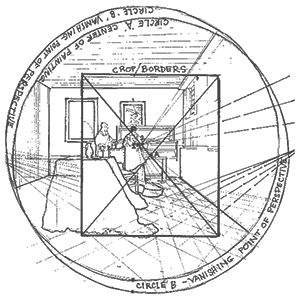
Tim’s Vermeer is a 2013 documentary film, directed by Teller (of the comedy magic duo Penn & Teller), produced by his stage partner Penn Jillette and film producer Farley Ziegler, about inventor Tim Jenison’s efforts to duplicate the painting techniques of Dutch master Johannes Vermeer, in order to test his theory that Vermeer painted with the help of optical devices.
Tim Jenison is the founder of NewTek, a company working in various fields of computer graphics, most notably the 3D modelling software ‘LightWave 3D.’ Jenison, himself both an engineer and art enthusiast, becomes fascinated with the paintings of Johannes Vermeer, the 17th-century Dutch painter, whose paintings have been described as having a photographic quality to them. Continue reading →
Posted in Art, Technology |
Leave a Comment »
August 1, 2018
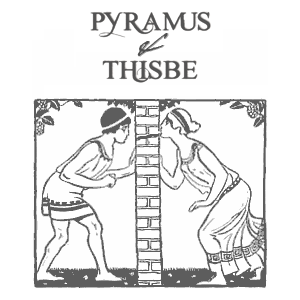
‘Star-crossed‘ or ‘star-crossed lovers’ is a phrase describing a pair of lovers whose relationship is often thwarted by outside forces. The term encompasses other meanings, but originally means the pairing is being ‘thwarted by a malign star’ or that the stars are working against the relationship. Astrological in origin, the phrase stems from the belief that the positions of the stars ruled over people’s fates, and is best known from the play ‘Romeo and Juliet’ by Shakespeare. Such pairings are often said to be doomed from the start.
It also refers to destiny and the inevitability of the two characters’ paths crossing. It usually but not always refers to unlucky outcomes, since Romeo and Juliet’s affair ended tragically. Further, it connotes that the lovers entered into their union without sufficient forethought or preparation; that the lovers may not have had adequate knowledge of each other or that they were not thinking rationally. Continue reading →
Posted in Art, Language, Love |
Leave a Comment »
July 30, 2018

Lügenpresse (lit: ‘lying press’) is a pejorative political term used largely by German political movements for the printed press and the mass media at large, when it is believed not to have the quest for truth at the heart of its coverage.
The Nazis adopted the term for their propaganda against the Jewish, communist, and later the foreign press. Continue reading →
Posted in Language, Politics, World |
1 Comment »
July 13, 2018

A henge is neolithic earthwork featuring a ring bank and ditch, with the ditch inside the bank. Earthworks are artificial changes in land level, typically made from piles of artificially placed or sculpted rocks and soil. Earthworks can themselves be archaeological features, or they can show features beneath the surface
Due to the poor defensive utility of an enclosure with an external bank and an internal ditch, henges are not considered to have served a defensive purpose. England’s famed Stonehenge is an atypical henge in that the ditch is outside the main earthwork bank. Continue reading →
Posted in Philosophy, Technology, World |
Leave a Comment »
July 6, 2018
A slippery slope argument (SSA), in logic, critical thinking, political rhetoric, and caselaw, is a consequentialist logical device in which a party asserts that a relatively small first step leads to a chain of related events culminating in some significant (usually negative) outcome.
The core of the slippery slope argument is that a specific decision under debate is likely to result in unintended consequences. The strength of such an argument depends on the warrant, i.e. whether or not one can demonstrate a process that leads to the significant effect. This type of argument is sometimes used as a form of fear mongering, in which the probable consequences of a given action are exaggerated in an attempt to scare the audience. Continue reading →
Posted in Language, Philosophy, Politics |
Leave a Comment »
July 4, 2018

Marc Maron (b. 1963) is an American stand-up comedian, podcaster, writer and actor.
In 2009, Maron began hosting the twice-weekly podcast ‘WTF with Marc Maron’ where he interviews comedians, authors, musicians, and celebrities in his garage in Highland Park, Los Angeles. From 2013 to 2016, he starred and executive produced in his own IFC television comedy series, ‘Maron,’ a loosely autobiographical show, revolving around his life as a twice-divorced, sober comedian running a comedy podcast out of his garage. Since 2017, he has co-starred in the Netflix comedy series ‘GLOW.’ Continue reading →
Posted in Art, Humor |
Leave a Comment »
July 1, 2018
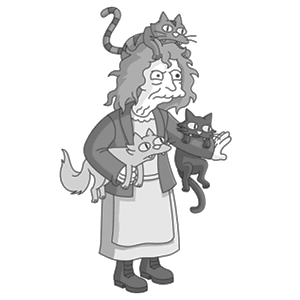
A cat lady is a cultural archetype or a stock character, often depicted as a woman, a middle-aged or elderly spinster, who owns many pet cats. The term can be considered pejorative, though it is sometimes embraced.
A cat lady may also be an animal hoarder who keeps large numbers of cats without having the ability to properly house or care for them. They may be ignorant about their situation, or generally unaware of their situation. People who are aware of it are not normally considered cat ladies. Continue reading →
Posted in Health, Humor |
Leave a Comment »


 The Daily Omnivore