January 17, 2019
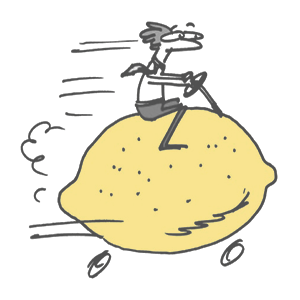
The Market for Lemons: Quality Uncertainty and the Market Mechanism is a well-known 1970 paper by American economist George Akerlof which examines how the quality of goods traded in a market can degrade in the presence of information asymmetry between buyers and sellers, leaving only ‘lemons’ behind (cars or other products that are found to be defective only after they have been bought).
Akerlof’s paper shows how prices can determine the quality of goods traded on the market. Low prices drive away sellers of high-quality goods, leaving only lemons behind. In 2001, Akerlof, along with Michael Spence, and Joseph Stiglitz, jointly received the Nobel Memorial Prize in Economic Sciences, for their research on issues related to asymmetric information. Continue reading →
Posted in Money, Politics |
Leave a Comment »
January 8, 2019
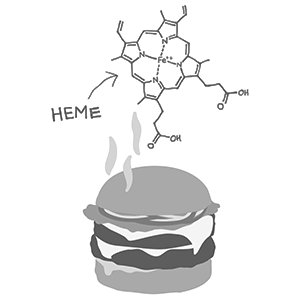
Impossible Foods Inc. is a company that develops plant-based substitutes for meat and dairy products. Headquartered in Redwood City, California, the company aims to give people the taste and nutritional benefits of meat without the negative health and environmental impacts associated with livestock products.
The company researches animal products at the molecular level, then selects specific proteins and nutrients from plants to recreate the experience of meats and dairy products. Its signature product, the Impossible Burger, was launched in 2016. Continue reading →
Posted in Food, Health, Money |
Leave a Comment »
January 6, 2019

Super Dave Osborne was a character created and played by comedian Bob Einstein. Einstein’s comedic depiction is of a naive but optimistic stuntman who frequently appears injured when his stunts go spectacularly wrong.
Super Dave is billed as an ‘accomplished’ stuntman, though he rarely succeeds when performing the stunts depicted on-screen. Typically the character will perform outrageous daredevil stunts which often go disastrously awry and result in the appearance of grievous bodily injury. These include such mishaps as riding inside the hub of a giant yo-yo suspended from a crane (the yo-yo broke free of its string and rolled off a cliff into a ravine) and being flung by a catapult inside a giant football (the catapult malfunctioned and ‘spiked’ the football instead of throwing it). After such a mishap, Super Dave would usually appear torn apart, stretched, or otherwise injured. Continue reading →
Posted in Art, Humor |
Leave a Comment »
January 5, 2019
A gadfly is a person who interferes with the status quo of a society or community by posing novel, potently upsetting questions, usually directed at authorities. The term is originally associated with the ancient Greek philosopher Socrates, in his defense when on trial for his life.
The term ‘gadfly’ was used by Plato in the ‘Apology’ to describe Socrates’s relationship of uncomfortable goad to the Athenian political scene, which he compared to a slow and dimwitted horse. The word may be uttered in a pejorative sense or be accepted as a description of honorable work or civic duty. Continue reading →
Posted in Language, Philosophy, Politics |
Leave a Comment »
January 4, 2019
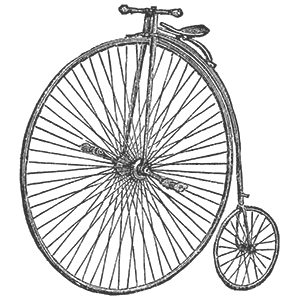
The penny-farthing, also known as a ‘high wheel,’ ‘high wheeler,’ and ‘ordinary,’ was the first machine to be called a ‘bicycle.’ It was popular in the 1870s and 1880s, with its large front wheel providing high speeds (owing to it travelling a large distance for every rotation of the legs) and comfort (the large wheel also provides greater shock absorption). Although the trend was short-lived, the penny-farthing became a symbol of the late Victorian era. Its popularity also coincided with the birth of cycling as a sport.
It became obsolete from the late 1880s with the development of modern bicycles, which provided similar speed amplification via chain-driven gear trains and comfort through pneumatic tyres, and were marketed in comparison to penny-farthings as ‘safety bicycles’ due to the reduced danger of falling and the reduced height to fall from. Continue reading →
Posted in Technology |
Leave a Comment »
January 2, 2019
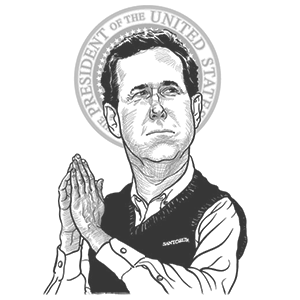
Pennsyltucky is a slang portmanteau of the state names Pennsylvania and Kentucky. It is used to characterize—usually humorously, but sometimes deprecatingly—the rural part of the U.S. state of Pennsylvania outside the Pittsburgh and Philadelphia metropolitan areas, more specifically applied to the local people and culture of its mountainous central Appalachian region.
The term is used more generally to refer to the Appalachian region, particularly its central core, which runs from Pennsylvania to Kentucky, and its people. An actual connection between the two regions was formed after numbers of Western Pennsylvanians left the state for Kentucky following the Whiskey Rebellion. Continue reading →
Posted in Humor, Politics |
Leave a Comment »
December 30, 2018
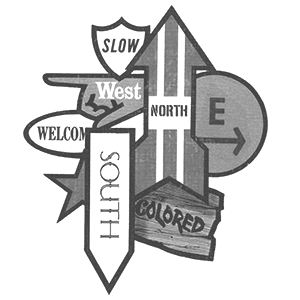
The Negro Motorist Green Book was an annual guidebook for African-American roadtrippers. It was originated and published by New York City mailman Victor Hugo Green from 1936 to 1966, during the era of Jim Crow laws, when open and often legally prescribed discrimination against non-whites was widespread.
Although pervasive racial discrimination and poverty limited black car ownership, the emerging African-American middle class bought automobiles as soon as they could, but faced a variety of dangers and inconveniences along the road, from refusal of food and lodging to arbitrary arrest. In response, Green wrote his guide to services and places relatively friendly to African-Americans, eventually expanding its coverage from the New York area to much of North America, as well as founding a travel agency. Continue reading →
Posted in Language, Money, Politics |
Leave a Comment »
December 26, 2018

Alternative comedy is a term coined in the 1980s for a style of comedy that makes a conscious break with the mainstream comedic style of an era. The phrase has had different connotations in different contexts. In the UK, it was used to describe content which was an ‘alternative’ to the mainstream of live comedy, which often involved racist and sexist material.
In other contexts, it is the nature of the form that is ‘alternative,’ avoiding reliance on a standardized structure of a sequence of jokes with punchlines. American comedian Patton Oswalt has defined it as ‘comedy where the audience has no pre-set expectations about the crowd, and vice versa. In comedy clubs, there tends to be a certain vibe—alternative comedy explores different types of material.’ Continue reading →
Posted in Humor |
Leave a Comment »
December 18, 2018

Emotional labor is the process of managing feelings and expressions to fulfill the emotional requirements of a job. More specifically, workers are expected to regulate their emotions during interactions with customers, co-workers, and superiors.
This includes analysis and decision making in terms of the expression of emotion, whether actually felt or not, as well as its opposite: the suppression of emotions that are felt but not expressed. As nations move from manufacturing to service-based economies, more workers in a variety of occupational fields are expected to manage their emotions according to employer demands. Continue reading →
Posted in Health, Money |
Leave a Comment »
December 12, 2018

Mole people (also known as ‘tunnel people’ or ‘tunnel dwellers’) are homeless people living under large cities in abandoned subway, railroad, flood, sewage tunnels, and heating shafts. The term may also refer to the speculative fiction trope of an entirely subterranean society.
While it is generally accepted that some homeless people in large cities make use of abandoned underground structures for shelter, urban legends persist that make stronger assertions. These include claims that ‘mole people’ have formed small, ordered societies similar to tribes, with members numbering up to the hundreds, living underground year-round. It has also been suggested that they have developed their own cultural traits and even have electricity by illegal hook-up. The subject has attracted some attention from sociologists but is highly controversial due to a lack of evidence. Continue reading →
Posted in Health, Money |
Leave a Comment »
December 10, 2018
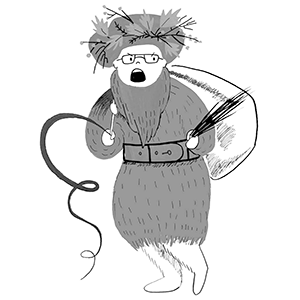
Belsnickel is a crotchety, fur-clad Christmas gift-bringer figure in the folklore of the Palatinate region of southwestern Germany along the Rhine, the Saarland, and the Odenwald area of Baden-Württemberg. The figure is also preserved in Pennsylvania Dutch communities.
Belsnickel is related to other companions of Saint Nicholas in the folklore of German-speaking Europe. He may have been based on another older German myth, ‘Knecht Ruprecht,’ a servant of Saint Nicholas, and a character from northern Germany. Unlike those figures, Belsnickel does not accompany Saint Nicholas but instead visits alone and combines both the threatening and the benign aspects which in other traditions are divided between the Saint Nicholas and the companion figure. Continue reading →
Posted in Humor, Philosophy, World |
1 Comment »
December 5, 2018

Richard Jay Potash (1946 – 2018), known professionally as Ricky Jay, was an American stage magician, actor, bibliophile, and writer. In a profile for ‘The New Yorker,’ Mark Singer called Jay ‘perhaps the most gifted sleight of hand artist alive.’
In addition to sleight of hand, Jay was known for his card tricks, card throwing, memory feats, and stage patter. He also wrote extensively on magic and its history. His acting credits included the films ‘The Prestige,’ ‘The Spanish Prisoner,’ ‘Mystery Men,’ ‘Heist,’ ‘Boogie Nights,’ ‘Tomorrow Never Dies,’ ‘House of Games,’ and ‘Magnolia,’ and the HBO series ‘Deadwood.’ Continue reading →
Posted in Art |
1 Comment »



