September 21, 2018


The Mission School (sometimes called ‘New Folk’ or ‘Urban Rustic’) is an art movement of the 1990s and 2000s, centered in the Mission District in San Francisco.
Artists of the Mission School take their inspiration from the urban, bohemian, ‘street’ culture of the Mission District and are strongly influenced by mural and graffiti art, comic and cartoon art, and folk art forms such as sign painting and hobo art. Continue reading →
Posted in Art |
Leave a Comment »
September 18, 2018
The Pollyanna principle (also called ‘Pollyannaism’ or ‘positivity bias’) is the tendency for people to remember pleasant items more accurately than unpleasant ones. At the subconscious level, the mind typically focuses on the optimistic. At the conscious level, it tends towards the negative.
This subconscious bias towards the positive is often described as the Pollyanna principle and is similar to the ‘Forer’ or ‘Barnum’ effect, a tendency for individuals to give high accuracy ratings to descriptions of their personality that supposedly are tailored specifically to them, that are in fact vague and general enough to apply to a wide range of people (an impulse that fortune tellers and personality tests take advantage of). Continue reading →
Posted in Health, Science |
Leave a Comment »
September 9, 2018

Wojak (Polish: ‘warrior, soldier’), also known as ‘feels guy,’ is a popular internet meme. Depicting a nondescript white man, it is used to generically express emotions such as melancholy, regret, or loneliness. It is often paired with Pepe the Frog.
A variation of Wojak with a gray face, pointy nose and blank expression became a popular visual representation of the ‘NPC meme,’ which gained online notoriety in late 2018. The meme began as a mockery of individuals who appear to lack an internal monologue, comparing them to non-playable characters in video games. The meme gained media attention due to its later usage parodying the alleged herd mentality of liberal activists. This controversial usage of the meme has been attributed to Donald Trump supporters. Continue reading →
Posted in Humor, Politics, Technology |
Leave a Comment »
September 7, 2018

Leucism [loo-kizm] is a condition in which there is partial loss of pigmentation in an animal resulting in white, pale, or patchy coloration of the skin, hair, feathers, scales or cuticle, but not the eyes. Unlike albinism, it is caused by a reduction in multiple types of pigment, not just melanin.
More common than a complete absence of pigment cells is localized or incomplete hypopigmentation, resulting in irregular patches of white on an animal that otherwise has normal coloring and patterning. This partial leucism is known as a ‘pied’ or ‘piebald’ effect; and the ratio of white to normal-colored skin can vary considerably not only between generations, but between different offspring from the same parents, and even between members of the same litter. This is notable in horses, cows, cats, dogs, the urban crow, and the ball python but is also found in many other species.
Posted in Science |
Leave a Comment »
September 6, 2018
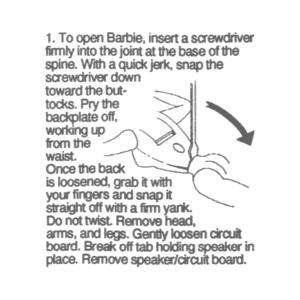
The Barbie Liberation Organization or BLO, sponsored by RTMark (an anti-consumerist activist collective), are a group of artists and activists involved in culture jamming.
They gained notoriety in 1993 by switching the voice boxes on talking G.I. Joes and Barbie dolls. The BLO performed ‘surgery’ on a reported 300–500 dolls and then returned them to the shelves of stores, an action they refer to as reverse shoplifting or ‘shopgiving.’ This action resulted in girls opening their new Teen Talk Barbie to hear it say phrases such as ‘vengeance is mine’ and boys hearing their G.I. Joe say ‘The beach is the place for summer.’ Continue reading →
Posted in Art, Humor, Politics |
Leave a Comment »
September 5, 2018

Trump Derangement Syndrome (TDS) is a neologism used by its adherents to describe a reaction to United States President Donald Trump by liberals, progressives, and anti-Trump conservatives, who are said to respond to Trump’s statements and political actions irrationally, with little regard to Trump’s actual position or action taken.
The use of the term by some on the right has been called part of a broader GOP strategy to discredit criticisms of Trump’s actions, as a way of ‘reframing’ the discussion by suggesting his political opponents are incapable of accurately perceiving the world. However, according to Kathleen Hall Jamieson of Annenberg Public Policy Center, the term could backfire on Trump supporters because people might interpret it to mean that Trump is the one who is ‘deranged,’ rather than those who criticize him. Continue reading →
Posted in Politics |
Leave a Comment »
August 30, 2018

Spud is a tag variant that is best played with a ball in large, open areas. The game begins with each player being assigned a number, in secret, with the highest number corresponding to the number of players. For example, if five people are playing, each player will be assigned one of the numbers one through five.
A player is chosen as ‘It.’ The person who is ‘it’ stands in the approximate center of the playing area, with one foot in front of the other. All of the other players must then touch one of their feet to its inward foot, and then step backwards three paces. This 3-step-backward set-up is required. When all of the players have stepped backward three paces, the person who is ‘it’ throws the ball straight into the air and calls the number of another player. The ball must be thrown straight up. Continue reading →
Posted in Games |
Leave a Comment »
August 28, 2018
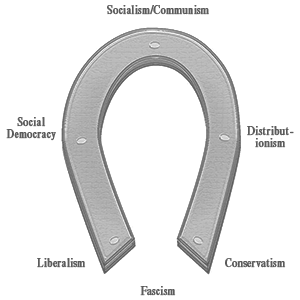
In political theory, the horseshoe theory asserts that the far left and the far right, rather than being at opposite and opposing ends of a linear political continuum, in fact closely resemble one another, much like the ends of a horseshoe.
The theory is attributed to French writer Jean-Pierre Faye. Proponents of the theory point to a number of similarities between the far-left and the far-right, including their supposed propensity to gravitate to authoritarianism or totalitarianism. The horseshoe theory competes with the conventional linear left–right continuum system as well as the various multidimensional systems. Continue reading →
Posted in Politics |
Leave a Comment »
August 26, 2018

Deez Nuts was a satirical candidate, portrayed by 15-year-old Brady C. Olson of Wallingford, Iowa, who ran in the 2016 United States presidential election. In polls conducted by Public Policy Polling in Iowa, Minnesota, and North Carolina in mid-August 2015, he polled at 8, 8, and 9-percent respectively, garnering the attention of the media.
On October 11, 2015, Deez Nuts announced on his Facebook page his intention to run for Speaker of the United States House of Representatives, citing his eligibility despite not being a member of the House itself and the scarcity of candidates. A poll performed in mid-August 2016 shows Deez Nuts slightly edging out Harambe (a gorilla killed that year at the Cincinnati Zoo) and Green Party candidate Jill Stein in Texas, with 3% of the vote. Deez Nuts was endorsed by the man behind the original ‘Deez Nuts’ skit, hip-hop artist Warren G. Rapper Ice T also endorsed the candidate.
Posted in Humor, Politics, Sex |
Leave a Comment »
August 16, 2018


Yacht rock (originally known as the ‘West Coast Sound’) is a broad music style and aesthetic identified with soft rock. The term, coined in the 2000s by the makers of the online video series of the same name, was derived from its association with the popular Southern Californian leisure activity of sailing.
The term describes one of the commercially successful genres of its era, existing between the late 1970s and early 1980s. Drawing on sources such as smooth soul, smooth jazz, R&B, funk, and disco, common stylistic traits include high-quality production, clean vocals, and a focus on light, catchy melodies. The genre is often described as having ‘more emphasis on the melody than on the beat’ and ‘light emotions.’ Continue reading →
Posted in Art |
Leave a Comment »
August 13, 2018

A Little League home run is a play in baseball during which a batter scores a run during his plate appearance with the aid of one or more errors committed by the fielding team.
It is so called because the play is presumably evocative of how young children in the process of learning how to play the sport frequently commit fielding and throwing errors that allow batters (as well as runners already on base during the at bat) to take more bases than they might otherwise normally take on the batted ball put into play. The term stems from Little League Baseball, founded in 1939 as an organizing body for local youth baseball and softball leagues throughout the United States and the rest of the world. Continue reading →
Posted in Games, Humor |
Leave a Comment »
August 7, 2018
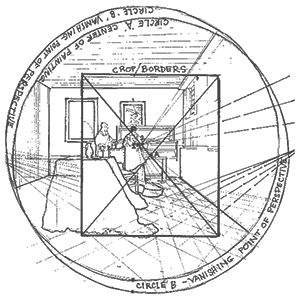
Tim’s Vermeer is a 2013 documentary film, directed by Teller (of the comedy magic duo Penn & Teller), produced by his stage partner Penn Jillette and film producer Farley Ziegler, about inventor Tim Jenison’s efforts to duplicate the painting techniques of Dutch master Johannes Vermeer, in order to test his theory that Vermeer painted with the help of optical devices.
Tim Jenison is the founder of NewTek, a company working in various fields of computer graphics, most notably the 3D modelling software ‘LightWave 3D.’ Jenison, himself both an engineer and art enthusiast, becomes fascinated with the paintings of Johannes Vermeer, the 17th-century Dutch painter, whose paintings have been described as having a photographic quality to them. Continue reading →
Posted in Art, Technology |
Leave a Comment »



