February 23, 2011


Nasser Bouzida (also known as The Bongolian) is a member of Big Boss Man, an electric funk quartet formed in the U.K. in 1998. The original lineup was and still is Bouzida on organs, percussion and occasional vocals, Scott Milsom on the bass guitar, Trevor Harding on the electric guitar and Nick Nicholls on drums.
Posted in Art |
Leave a Comment »
February 23, 2011

Reggie Watts is a New York-based comedian and musician.
Watts’ shows are mostly improvised and consist of stream of consciousness stand-up in various shifting personae, mixed with loop pedal-based a cappella compositions.
Posted in Art, Humor |
Leave a Comment »
February 23, 2011
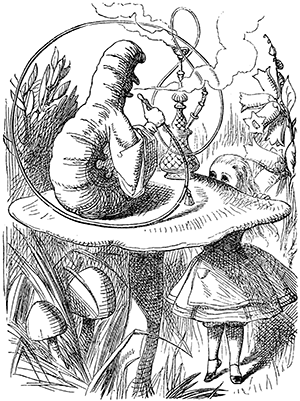
In Douglas Hofstadter’s book ‘Gödel, Escher, Bach,’ Tumbolia is ‘the land of dead hiccups and extinguished light bulbs,’ ‘where dormant software waits for its host hardware to come back up.’ The concept is introduced in the dialogue ‘Little Harmonic Labyrinth’ (based on the piece of the same name by Bach). In a later dialogue ‘A Mu Offering’ (named after Bach’s ‘Musical Offering’), a Tortoise gets rid of a knot in a string by tying a second one, and both disappear to Tumbolia; apparently, this is ‘The Law of Double Nodulation’ (a parody of the law of double negation).
The return of the two knots from Tumbolia prompts the speculation that some ‘layers of Tumbolia’ are more accessible than others. It is mentioned that ‘pushing’ or ‘popping’ potion can be used (drunk by the characters) to navigate up and down the various levels of Tumbolia. Tumbolia is compared to the Zen view of life after death, using the image of a snowflake, a self-contained subsystem of the universe, dissolving into ‘the larger system which once held it.’ Finally, in the book’s last dialogue, Hofstadter (himself appearing as a character) tells us that Tumbolia is where dreamed characters go when the dreamer wakes up.
Posted in Art, Death, Philosophy |
Leave a Comment »
February 23, 2011

‘Gödel, Escher, Bach: An Eternal Golden Braid’ (GEB) is a book by cognitive scientist Douglas Hofstadter, described by the author as ‘a metaphorical fugue on minds and machines in the spirit of Lewis Carroll.’ On its surface, GEB examines logician Kurt Gödel, artist M. C. Escher and composer Johann Sebastian Bach, discussing common themes in their work and lives. At a deeper level, the book is a detailed and subtle exposition of concepts fundamental to mathematics, symmetry, and intelligence. Through illustration and analysis, the book discusses how self-reference and formal rules allow systems to acquire meaning despite being made of ‘meaningless’ elements.
It also discusses what it means to communicate, how knowledge can be represented and stored, the methods and limitations of symbolic representation, and even the fundamental notion of ‘meaning’ itself. In response to confusion over the book’s theme, Hofstadter has emphasized that GEB is not about mathematics, art, and music but rather about how cognition and thinking emerge from well-hidden neurological mechanisms. In the book, he presents an analogy about how the individual neurons of the brain coordinate to create a unified sense of a coherent mind by comparing it to the social organization displayed in a colony of ants.
Posted in Art, Philosophy, Science |
Leave a Comment »
February 22, 2011

Wonder Showzen is an American sketch comedy television series that aired between 2005 and 2006 on MTV2. It was created by John Lee and Vernon Chatman of PFFR, a Brooklyn based art collective. The show’s format is that of educational PBS children’s television shows such as Sesame Street and The Electric Company (e.g. use of stock footage, puppetry, and clips of children being interviewed). However, Wonder Showzen parodies the format in a very adult-oriented manner. In addition to general controversial comedy, it satirizes politics, religion, war, sex, and culture with black comedy.
Posted in Art, Humor |
1 Comment »
February 22, 2011

The EMP Museum (formerly the Experience Music Project) is an a nonprofit institution dedicated to popular culture (from the art of fantasy, horror cinema, and video games to science fiction literature and legendary costumes from screen and stage). Founded by Microsoft co-founder Paul Allen in 2000, the museum has numerous public programs including ‘Sound Off!’ an annual 21 and under battle-of-the-bands that supports the all-ages scene and ‘Pop Conference’ an annual gathering of academics, critics, musicians and music buffs. In addition EMP in collaboration with the Seattle International Film Festival presents the ‘Science Fiction and Fantasy Short Film Festival,’ which takes place annually every winter at the world renowned Seattle Cinerama.
The Science Fiction Museum and Hall of Fame was founded by Paul Allen and Jody Patton in 2004. It incorporated the formerly independent Science Fiction and Fantasy Hall of Fame established in 1996. EMP is located on the campus of Seattle Center, adjacent to the Space Needle and the Seattle Center Monorail, which runs through the building. The structure itself was designed by Frank Gehry, A concert venue capable of holding up to 800 guests, Sky Church (named in honor of Jimi Hendrix) boasts 70-foot ceilings, state-of-the-art sound and lighting, and a mammoth indoor HD LED screen.
Posted in Art |
Leave a Comment »
February 22, 2011

Beatlemania is a term that originated during the 1960s to describe the intense fan frenzy directed toward The Beatles during the early years of their success. It is similar to the much earlier term Lisztomania used to describe fan reaction to the concerts of pianist Franz Liszt. Beatlemania became common in the United States after The Beatles performed on The Ed Sullivan Show in 1964.
It was characterized by intense levels of hysteria demonstrated by fans both at the actual concerts and during the band’s travels to and from hotels, concert venues, and the like. The extent of Beatlemania in the United States is evidenced by their single and album sales. The Beatles had the number one single for 59 weeks during their six and half years spanning from ‘I Want to Hold Your Hand,’ in 1964 to ‘Let It Be’ in 1970.
Posted in Art, Sex |
Leave a Comment »
February 22, 2011
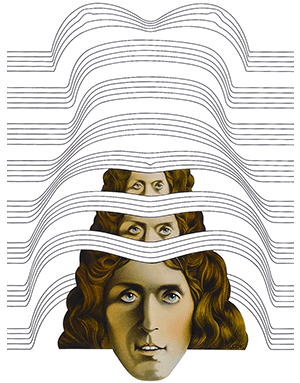
Lisztomania [list-uh-mey-nee-uh] is a term used to describe the intense fan frenzy directed toward Hungarian composer Franz Liszt during his performances. The phenomenon first occurred in Berlin in 1841 and was later coined by German poet Heinrich Heine in a feuilleton (newspaper supplement) in 1844. Liszt’s playing was reported to raise the mood of the audience to a level of mystical ecstasy. Admirers would swarm over him, fighting over his handkerchiefs and gloves. Fans would wear his portrait on brooches and cameos.
Women would try to get locks of his hair, and whenever he broke a piano string, admirers would try to obtain it in order to make a bracelet. Some female admirers would even carry glass vials into which they poured his coffee dregs. According to one report: ‘Liszt once threw away an old cigar stump in the street under the watchful eyes of an infatuated lady-in-waiting, who reverently picked the offensive weed out of the gutter, had it encased in a locket and surrounded with the monogram ‘F.L.’ in diamonds, and went about her courtly duties unaware of the sickly odor it gave forth.’
Posted in Art, Sex |
Leave a Comment »
February 22, 2011

The Machine, the former Alpha Rho chapter of Theta Nu Epsilon at the University of Alabama, is a coalition of traditionally white fraternities and sororities which formed a secret society with some degree of influence over campus and Alabama state politics.
The group, which has operated in varying degrees of secrecy since 1914, is credited with selecting and ensuring the election of candidates for Student Government Association, Homecoming Queen, and other influential on-campus and off-campus offices. It was first publicly noted as ‘ political machine’ in 1928 by Alabama’s campus newspaper, ‘The Crimson White.’
Posted in Politics |
Leave a Comment »
February 22, 2011

The Fellowship, also known as The Family, is a U.S.-based religious and political organization founded in 1935 by Abraham Vereide, a Methodist clergyman and founder of Goodwill Industries. Its stated purpose is to provide a forum for decision makers to share in Bible studies, prayer meetings, worship experiences, and to experience spiritual affirmation and support. It has been described as one of the most politically well-connected ministries in the US. The organization shuns publicity and its members share a vow of secrecy. Fellowship leader Doug Coe and others cites biblical admonitions against public displays of good works, insisting they would not be able to tackle diplomatically sensitive missions if they drew public attention.
Although the organization is secretive, it holds one regular public event each year, the ‘National Prayer Breakfast’ held in Washington, D.C. Every sitting president since Dwight D. Eisenhower, up to Barack Obama, has participated in at least one National Prayer Breakfast during his term. The Fellowship’s known participants include ranking United States government officials, corporate executives, heads of religious and humanitarian aid organizations, and ambassadors and high ranking politicians from across the world. Many United States Senators and Congressmen who have publicly acknowledged working with the Fellowship or are documented as having done so work together to pass or influence legislation.
Posted in Philosophy, Politics |
Leave a Comment »
February 22, 2011
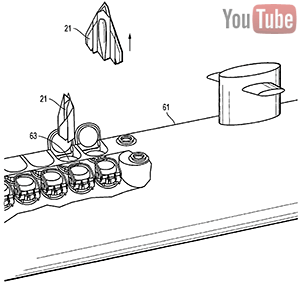

A flying submarine or submersible aircraft is a craft able both to fly or travel under water. The Soviet Union made an unsuccessful attempt at developing a flying submarine during World War II. In 1961 American engineer, Donald Reid designed and built a single-seat craft (32.83 ft length) capable of flight and underwater movement, the Reid Flying Submarine 1 (RSF-1). The first full-cycle flight [underwater at 6.5 feet (2 m) depth, airborne at 33 ft (10 m) altitude] was demonstrated on 9 June 1964.
The US Navy is looking at the Lockheed Martin Cormorant, a drone aircraft launched from a submarine. On launching it floats to the surface and after flight it is retrieved from the water surface; it cannot travel directly underwater. In 2008, DARPA announced that it was preparing to issue contracts for a submersible aircraft.
Posted in Technology, War |
Leave a Comment »
February 22, 2011
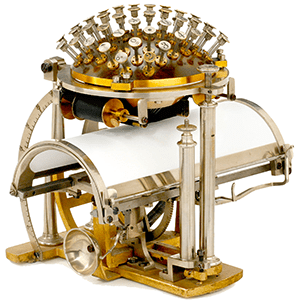
The Hansen Writing Ball was invented in 1865 by the reverend and principal of the Royal Institute for the deaf-mutes in Copenhagen. The writing ball was first patented and entered production in 1870, and was the first commercially produced typewriter. In Danish it was called the skrivekugle. The Hansen ball was a combination of unusual design and ergonomic innovations, but like most of the early 19th century typewriters, it did not allow the paper to be seen as it passed through the device.
Posted in Language, Technology |
1 Comment »



 The Daily Omnivore