February 13, 2011
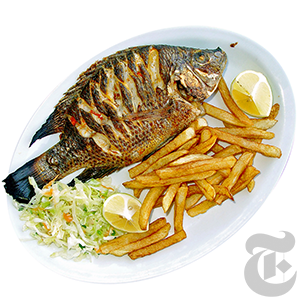
Tilapia [tuh-lah-pee-uh] is the common name for nearly a hundred species of fish. Tilapia inhabit a variety of fresh water habitats including shallow streams, ponds, rivers and lakes. Historically they have been of major importance in artisan fishing in Africa and the Middle East, and are of increasing importance in aquaculture. China is the largest Tilapia producer in the world, followed by Egypt.
Continue reading →
Posted in Food, Health, Money |
Leave a Comment »
February 13, 2011
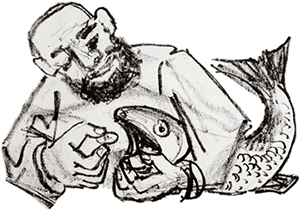

Coin in the fish’s mouth is one of the miracles of Jesus in the Gospels of Matthew. According to the Gospel, after Jesus and his disciples arrived in Capernaum, the collectors of the two-drachma temple tax came to Apostle Peter and asked, ‘Doesn’t your teacher pay the temple tax?’ And Peter replied: ‘Yes, he does.’ When Peter came into the house, Jesus was the first to speak and said: ‘What do you think, Simon?’ he asked. ‘From whom do the kings of the earth collect duty and taxes—from their own children or from others?’ ‘From others,’ Peter answered. ‘Then the children are exempt,’ Jesus said to him.
Then Jesus said: ‘But so that we may not cause offense, go to the lake and throw out your line. Take the first fish you catch; open its mouth and you will find a four-drachma coin. Take it and give it to them for my tax and yours’ The Bible does not name the fish, but Tilapia is sometimes referred to as St. Peter’s fish.
Posted in Philosophy |
Leave a Comment »
February 13, 2011
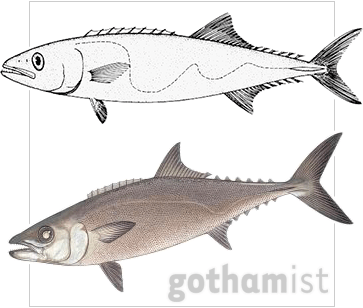
The escolar [es-kuh-lahr] is a species of fish found in deep tropical and temperate waters around the world. It is also known as Snake Mackerel, and sometimes marketed as ‘butterfish,’ ‘oilfish,’ ‘white tuna,’ ‘walu,’ or ‘codfish,’ a controversial practice due to potential health problems related with consumption of the fish. Like its relative the oilfish, escolar cannot metabolize the wax esters naturally found in its diet. This gives the escolar an oil content of 14–25% in its flesh. These wax esters may cause gastrointestinal distress in humans called ‘steatorrhea,’ the onset of which may occur between 30 minutes and 36 hours following consumption.
Symptoms may include stomach cramps, bright orange oil in stool, diarrhea, headaches, nausea, vomiting, and anal leakage. Because of the possible effects of consumption, escolar has been banned from consumption in Japan since 1977, as the Japanese government considers it toxic. It has also been banned in Italy. In 1999, the Swedish and Danish National Food Administrations informed fish trade associations and fish importing companies about the problems escolar and related fish could cause if not prepared properly and issued recommendations.
Posted in Food, Health, Science |
Leave a Comment »
February 13, 2011

Marine Corps Base Camp Lejeune [luh-joon] is a 246-square-mile United States military training facility in North Carolina. The base’s 14 miles of beaches make it a major area for amphibious assault training, and its location between two deep-water ports (Wilmington and Morehead City) allows for fast deployments.
Posted in War |
Leave a Comment »
February 13, 2011

Algebraic geometry is a branch of mathematics which combines techniques of abstract algebra, especially commutative algebra, with the language and the problems of geometry. Initially a study of systems of polynomial equations in several variables, the subject of algebraic geometry starts where equation solving leaves off, and it becomes even more important to understand the intrinsic properties of the totality of solutions of a system of equations, than to find some solution; this leads into some of the deepest waters in the whole of mathematics, both conceptually and in terms of technique.
Posted in Education, Science |
Leave a Comment »
February 13, 2011

Coin-operated-locker babies is a type of child abuse found primarily in Japan in the 1970s and 1980s. In these cases, unwanted babies are left in public lockers in the belief (often erroneous) that such lockers are regularly checked by attendants and so the infant will be found quickly. Used in this manner, lockers serve as an unofficial sort of baby hatch, often with disastrous results.
Posted in World |
Leave a Comment »
February 12, 2011


The Chitlin’ Circuit was the collective name given to the string of performance venues throughout the eastern and southern United States that were safe and acceptable for African American musicians, comedians, and other entertainers to perform during the age of racial segregation in the United States (from at least the late 19th century through the 1960s). The name derives from the soul food item chitterlings (stewed pig intestines).
Posted in Art, Money, Politics |
Leave a Comment »
February 12, 2011


Borscht Belt, or Jewish Alps, is a colloquial term for the mostly defunct summer resorts of the Catskill Mountains in upstate New York that were a popular vacation spot for New York City Jews from the 1920s through the 1960s. The name comes from borscht, a beet soup that is popular in many Central and Eastern European countries and was brought from these regions by Ashkenazi Jewish and Slavic immigrants to the United States, where it remains a popular dish in these ethnic communities as well.
Continue reading →
Posted in Humor, Language, Money |
Leave a Comment »
February 12, 2011


The Mormon Corridor, also known as the Jell-O Belt, is a term for the areas of Western North America that were settled between 1850 and approximately 1890 by members of The Church of Jesus Christ of Latter-day Saints (LDS Church), who are commonly known as Mormons. The region’s moniker refers to the Mormon affinity for Jell-O. In support of this image, Jell-O was designated as Utah’s official state snack food in 2001 Utah has been the highest per capita consumer of Jell-O for many years.
Posted in Food, Money, Politics |
Leave a Comment »
February 12, 2011
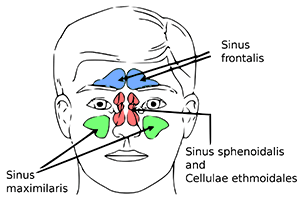

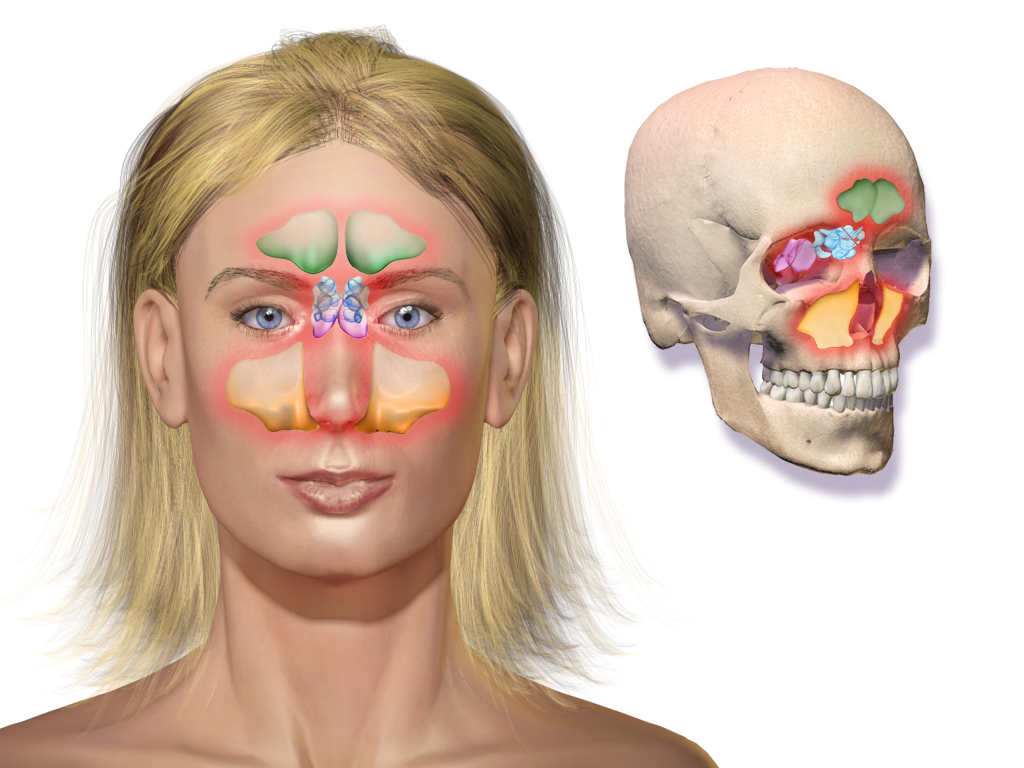
Paranasal sinuses are air-filled spaces, communicating with the nasal cavity, within the bones of the skull and face. Humans possess a number of paranasal sinuses, divided into subgroups that are named according to the bones within which the sinuses lie. Paranasal sinuses occur in a variety of animals (including most mammals, birds, non-avian dinosaurs, and crocodilians). The biological role of the sinuses is debated, but a number of possible functions have been proposed such as decreasing the relative weight of the front of the skull, and especially the bones of the face; increasing resonance of the voice; and providing a buffer against blows to the face.
It has also been suggested they insulate sensitive structures like dental roots and eyes from rapid temperature fluctuations in the nasal cavity, and also serve to humidify and heat inhaled air. The paranasal sinuses are joined to the nasal cavity via small orifices called ostia. These become blocked easily by allergic inflammation, or by swelling in the nasal lining which occurs with a cold. If this happens, normal drainage of mucus within the sinuses is disrupted, and sinusitis may occur. These conditions may be treated with drugs such as pseudoephedrine, which causes vasoconstriction in the sinuses, reducing inflammation, by traditional techniques of nasal irrigation, or by corticosteroid.
Posted in Health, Science |
Leave a Comment »
February 12, 2011

A neti pot is a device used for irrigating the nasal passages. Typically it has a spout attached near the bottom, sometimes with a handle on the opposite side. Neti pots flush out the nasal cavities by using gravity to draw the flow of saline. Some modern variants available from pharmacies are made of flexible plastic and can be compressed to exert additional pressure. In recent years alternative strategies have been developed, including bulb syringes in which the flow is created by squeezing a bulb and more advanced ‘pulsatile devices’ which mechanically pump the saline.
The use of a neti pot requires mixing up a saline solution that will be poured through the nasal passages. A typical saline solution is a mixture of around 500 ml of water with 5 g of salt. Sodium bicarbonate is sometimes added. The neti pot used with a saline solution has been shown to be an effective treatment for hay fever, sinusitis, and other nasal conditions. The origins of nasal irrigation are understood to be in the ancient Hindu practice of Ayurveda whose roots are traced to the Vedas.
Posted in Health, Technology |
Leave a Comment »
February 12, 2011

Magnetic implants are an experimental process in which small magnets are placed under the skin, allowing objects to be magnetically attached to the body, and also enables the wearer to sense electromagnetic fields. They have been used for several years in dentistry and re-constructive surgery, but their use by the body modification community is recent. Having magnets implanted under the skin allows the wearer to attach magnetic items to the outside of the skin, and also enables the wearer to sense electromagnetic fields.
Samppa, a a body modification artist, implanted magnets in himself and close friends in the late 1990’s, but they weren’t very strong and were only capable of picking up small items. Jesse Jarrell and Steve Haworth developed small and powerful neodymium magnets encapsulated in silicone. The procedure is still experimental, and complications are common, including rupturing of the silicone shell.
Posted in Art, Health, Technology |
Leave a Comment »