February 8, 2011
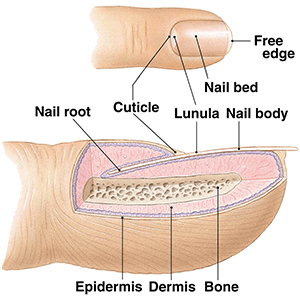
The lunula [loo-nyuh-luh] (‘little moon’ in Latin) is the crescent-shaped whitish area of the bed of a fingernail or toenail. The lunula is the visible part of the nail matrix (i.e. the root of the nail). In humans, it appears by week 14 of gestation, and has a primary structural role in defining the free edge of the distal nail plate (the part of the nail that grows outward). The lunula is most noticeable on the thumb, however, not everyone’s lunula is visible. In some cases, the eponychium may partially or completely cover the lunula.
It is located at the end of the nail (that is closest to the skin of the finger), but it still lies under the nail. It is not actually white, but it only appears so, when it is seen through the nail. Outlining the nail matrix, the lunula is a very delicate part of the nail structure. If one damages the lunula, the nail will permanently be deformed. Even when the totality of the nail is removed, the lunula remains in place and is similar in appearance to another smaller fingernail embedded in the nail bed.
Posted in Health, Language, Science |
Leave a Comment »
February 8, 2011

Schutzhund (German for protection dog) is a dog sport that was developed in Germany in the early 1900s to test whether German Shepherd Dogs exhibit the traits necessary for police-type work, rather than simply evaluating a dog’s appearance. Today, many breeds other than German Shepherds can compete in Schutzhund, but it is a demanding test for any dog and few are able to pass successfully.
Posted in Games, Language, World |
Leave a Comment »
February 8, 2011

Bo Burnham (b. 1990) is an American comedian and musician. He performs satirical songs with a politically incorrect slant, and rose to fame on YouTube.
Posted in Art, Humor |
1 Comment »
February 8, 2011
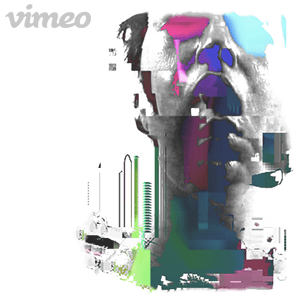
Compression artifacts may intentionally be used as a visual style, sometimes known as glitch art. In still images, an example is Jpegs, by German photographer Thomas Ruff, which intentionally uses JPEG artifacts.
In video art, one technique is datamoshing – mixing two videos sources, or exploiting the way different video codecs process motion and color information. The technique was pioneered by artists Sven König, Takeshi Murata and Paul B. Davis in collaboration with an American art collective called Paperrad.
Posted in Art, Language, Technology |
Leave a Comment »
February 7, 2011

Andreas Gursky (b. 1955) is a German visual artist known for his enormous architecture and landscape color photographs, some ten feet or more wide, and most employing a high point of view. As of early 2007, Gursky holds the record for highest price paid at auction for a single photographic image. His print 99 Cent II, Diptych, sold for GBP 1.7 million (USD $3.3 million) at Sotheby’s, London. Before the 1990s, Gursky did not digitally manipulate his images.
In the years since, Gursky has been frank about his reliance on computers to edit and enhance his pictures, creating an art of spaces larger than the subjects photographed. Visually, Gursky is drawn to large, anonymous, man-made spaces—high-rise facades at night, office lobbies, stock exchanges, the interiors of big box retailers (See his print 99 Cent II Diptychon). His style is described by art critics as enigmatic and deadpan. There is little to no explanation or manipulation on the works. His photography is straightforward.
Posted in Art, Money, Technology |
Leave a Comment »
February 7, 2011
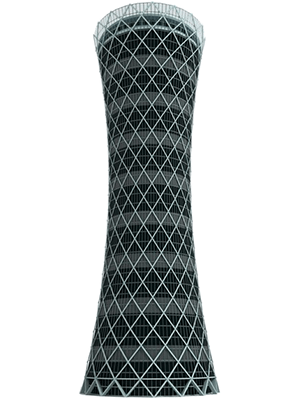
Doha [doh-hah] (Arabic for ‘the big tree’ or ‘the sticky tree’) is the capital city of the state of Qatar. Located on the Persian Gulf, it has a population of around one million. Doha is Qatar’s largest city, with over 80% of the nation’s population residing in the city or its surrounding suburbs, and is also the economic center of the country.
Much of Qatar’s oil and natural gas wealth is visible in Doha, which is home to the headquarters of the country’s largest oil and gas companies. Doha’s economy is built on the revenue the country has made from its oil and natural gas industries, and the Qatari government is rapidly trying to diversify the Qatari economy in order to move away from this dependence on oil. As a result, Doha is currently experiencing a very large boom, with the city developing very rapidly.
Posted in Money, Technology, World |
Leave a Comment »
February 7, 2011

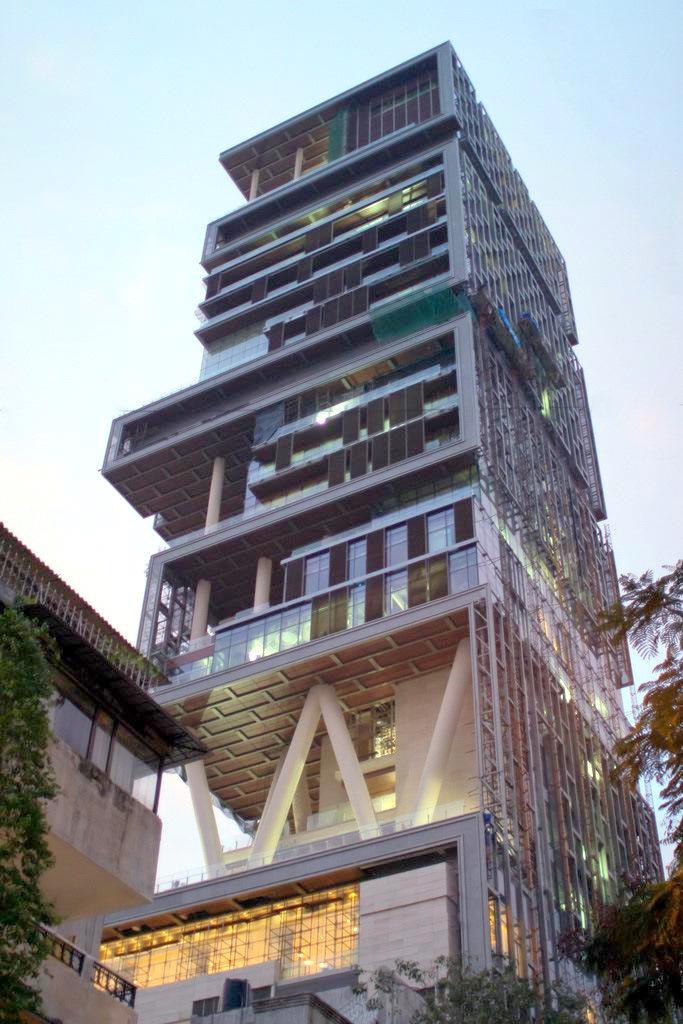
Antilia is the name of a twenty-seven floor personal home in South Mumbai belonging to India’s richest man, Mukesh Ambani, the billionaire Chairman of Reliance Industries (India’s largest private sector conglomerate). The home is staffed by 600 full time employees and houses Ambani, his wife Nita, their three children, and Ambani’s mother. Indian media frequently reported that Antilia is the world’s most expensive home costing US$1 billion. It is named after a mythical island in the Atlantic Ocean. The building is situated on a 4,532 m2 (48,780 sq ft) plot at Altamont Road on the famed Cumballa Hill South Mumbai, where land prices are upward of US$10,000 per square meter.
The structure was designed by U.S. architects using principles of Vaastu, Indian traditional geomancy akin to Chinese feng shui, to maximize ‘positive energy.’ No two floor plans are alike, and the materials used in each level vary widely. The home includes: 400,000 square feet (37,000 m2) of living space; parking space for 168 cars; a one-floor vehicle maintenance facility; 9 elevators in the lobby; 3 helipads and an air traffic control facility; a health spa; a theater with a seating for 50; multiple swimming pools, three floors of hanging gardens, and a ballroom.
Posted in Money, Technology, World |
Leave a Comment »
February 7, 2011
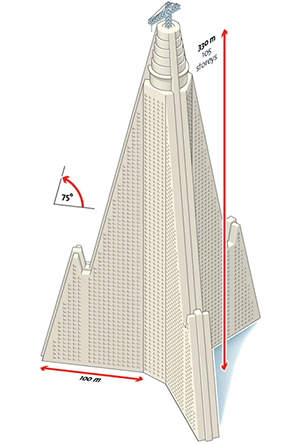
The Ryugyong Hotel is a 105-floor skyscraper under construction in Pyongyang, North Korea. Construction began in 1987, but was halted in 1992 due to the economic disruptions that afflicted the country following the fall of the Soviet Union.
The hotel stood topped out but without windows or interior fittings for the next sixteen years. Construction resumed in April 2008, under the supervision of the Orascom Group of Egypt, which has invested heavily in the North Korean mobile telephony and construction industries.
Posted in Money, Technology, World |
Leave a Comment »
February 7, 2011

A guy-cry film is the masculine version of the chick flick genre, a film that addresses a male audience, but has strong emotional material. Sports films are important to the guy-cry genre, but sports action is not necessarily essential to qualify a film as a genuine guy-cry. Some notable sports films that could be defined as guy-cry would be Field of Dreams, Rudy, Brian’s Song, and The Wrestler.
While it may seem that ‘guy-cry’ is a neologism, it is a genre that has been around for many years and is now receiving critical attention from scholars and trade publications. Early popular guy-cry films date back to the early 1970s with films such as Five Easy Pieces and One Flew Over the Cuckoo’s Nest. Important themes to the guy-cry genre are concepts of brotherhood, sacrifice, loyalty, and family.
Posted in Art, Humor, Language |
Leave a Comment »
February 7, 2011

Full-spectrum light is light that covers the electromagnetic spectrum from infrared through near-ultraviolet, or all wavelengths that are useful to plant or animal life; in particular, sunlight is considered full spectrum, even though the solar spectral distribution reaching Earth changes with time of day, latitude, and atmospheric conditions. ‘Full-spectrum’ is not a technical term when applied to an electrical light bulb but rather a marketing term implying that the product emulates natural light.
Some products marketed as ‘full-spectrum’ may produce light throughout the entire spectrum, but not with an even spectral distribution, and may not even differ substantially from lights not marketed as ‘full-spectrum.’
Continue reading →
Posted in Art, Health, Technology |
Leave a Comment »
February 7, 2011

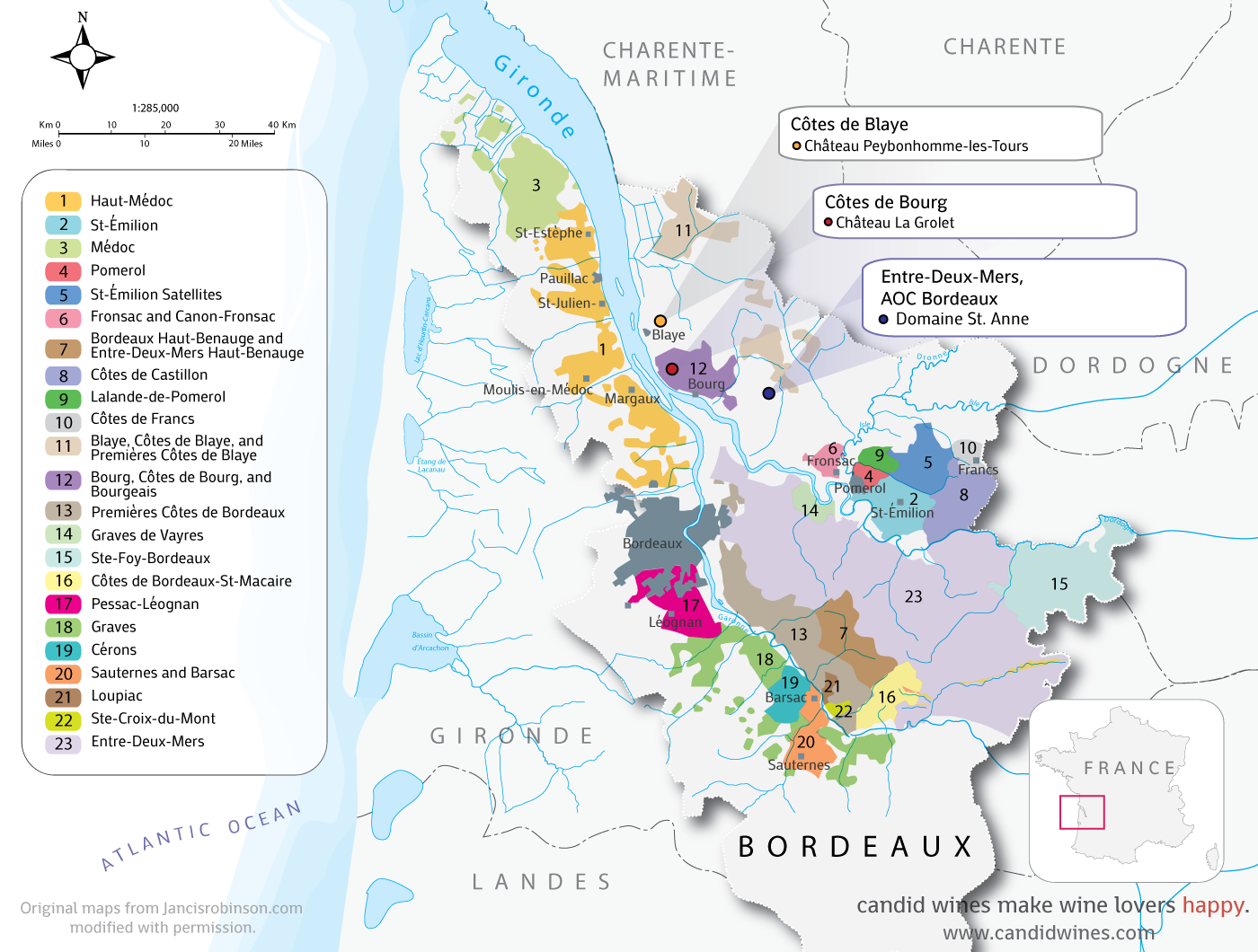
A Bordeaux [bawr-doh] wine is any wine produced in the Bordeaux region of south eastern, France. Average vintages produce over 700 million bottles of Bordeaux wine, ranging from large quantities of everyday table wine, to some of the most expensive and prestigious wines in the world. 89% of wine produced in Bordeaux is red (called ‘claret’ in Britain), with notable sweet white wines such as Chateau d’Yquem, dry whites, rosé and sparkling wines (Crémant de Bordeaux) all making up the remainder.
Continue reading →
Posted in Food, Money, World |
Leave a Comment »
February 7, 2011

Meritage is a proprietary term used to denote Bordeaux-style wines without infringing on the French region’s legally protected designation of origin. Winemakers license the Meritage trademark from its owner, the California-based Meritage Alliance. Most Meritage wines come from California, but there are members in 18 other states and five other countries (Argentina, Australia, Canada, Israel, and Mexico).
Many people, including some wine experts, Frenchify the word ‘Meritage’ by pronouncing its last syllable with a ‘zh’ sound, as in ‘garage,’ but the Meritage Alliance specifically states that the word should be pronounced to rhyme with ‘heritage.’ The Meritage Association was formed in 1988 by a small group of Napa Valley, California vintners increasingly frustrated by regulations stipulating wines contain at least 75% of a specific grape to be labeled as that varietal. Continue reading →
Posted in Food, Language, Money |
Leave a Comment »