January 29, 2011

In Norse mythology, Sleipnir [sleyp-nir] (Old Norse for ‘the slipper’) is a gray colored, eight-legged horse that serves as Odin’s steed.
He is the child of the Trickster God Loki and a famed stallion named Svaðilfari, is described as the best of all horses, and is sometimes ridden to the location of Hel (the Norse underworld).
Posted in Philosophy |
Leave a Comment »
January 29, 2011

The Valknut (Old Norse for ‘slain warriors knot’) is a symbol consisting of three interlocked triangles, and appears on various Germanic objects. A number of theories have been proposed for its significance. The name is an unattested modern invention used to describe the symbol, and was not used contemporaneously when the symbol was used. The Valknut has been compared to the three-horned symbol found on the 9th century Snoldelev runestone and may be related to it.
The symbol plays a role in modern Germanic Neopagan faiths, where numerous explanations and interpretations of the symbol are given. The Swedish paper manufacturer Svenska Cellulosa Aktiebolaget uses a triquetra Valknut as their logo. The symbol has also been used by a number of neo-Nazi groups. It is also represented in the Deutscher Fußball-Bund logo for the Germany national football team.
Posted in Art, Language, Philosophy |
Leave a Comment »
January 29, 2011

Islamism is a set of ideologies holding that Islam is not only a religion but also a political system; that modern Muslims must return to the roots of their religion, and unite politically. It is a controversial term and definitions sometimes vary. Leading Islamist thinkers emphasized the enforcement of sharia (Islamic law) on Muslims; of pan-Islamic political unity; and of the elimination of non-Muslim, particularly western military, economic, political, social, or cultural influences in the Muslim world, which they believe to be incompatible with Islam.
Some observers suggest Islamism’s tenets are less strict and can be defined as a form of identity politics or support for Muslim authenticity, broader regionalism, and revivalism. Still others define it as an Islamic militant, anti-democratic movement, bearing a holistic vision of Islam whose final aim is the restoration of the ‘caliphate.’ Many described as ‘Islamists’ disfavor the term, and claim their political beliefs and goals are simply an expression of Islamic religious belief. Similarly, some scholars favor the term activist ‘Political Islam’ instead.
Posted in Language, Philosophy, Politics |
Leave a Comment »
January 28, 2011
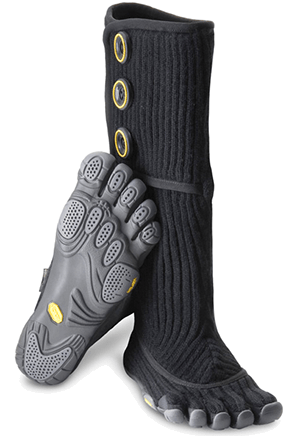
FiveFingers are a type of shoe manufactured by Vibram. Originally developed as a ‘barefoot alternative’ for sailing and climbing, the footwear has thin, flexible soles that are contoured to the shape of the human foot, including visible individual sections for the toes. Vibram FiveFingers are meant to replicate being barefoot and allow for the natural biomechanics of the foot to work.
Posted in Health, Money, Technology |
Leave a Comment »
January 28, 2011

The Heineken WOBO (World Bottle) was a beer bottle designed for use as a building material in the developing world. According to the company, when brewing magnate Alfred Heineken was in Curaçao in 1960 he saw many bottles littering the beach because the island had no economic means of returning them to bottling plants. He was also concerned with the lack of affordable building materials and the inadequate living conditions plaguing Curaçao’s lower-class. Envisioning a solution for these problems, he asked Dutch architect N. John Habraken to design what he called ‘a brick that holds beer.’
The bottle was designed to be interlocking, laid horizontally and bonded with cement mortar with a silicon additive. A 10 ft (3.0 m) x 10 ft (3.0 m) shack would take approximately 1,000 bottles to build. In 1963, 100,000 WOBO’s were produced in two sizes, 350 and 500 mm. This size difference was necessary in order to bond the bottles when building a wall, in the same way as a half brick is necessary when building with bricks. Unfortunately, most of them were destroyed, and they are now very rare and have become a collector’s item.
Posted in Food, Money, Technology |
Leave a Comment »
January 28, 2011

A Mickey Finn (or simply Mickey) is a slang term for a drink laced with a drug (especially chloral hydrate) given to someone without their knowledge in order to incapacitate them. Serving someone a Mickey Finn is most commonly referred to as ‘slipping a mickey.’ The practice is most likely named for the bartender of a Chicago establishment, the Lone Star Saloon and Palm Garden Restaurant.
In December 1903, several newspapers document that a Michael ‘Mickey’ Finn managed the Lone Star Saloon and was accused of using knockout drops to incapacitate and rob some of his customers. Moreover, the first known written example (according to the Oxford English Dictionary) of the use of the term Mickey Finn is in 1915, twelve years after his trial, lending credence to this theory of the origination of the phrase.
Posted in Drugs, Health, Language |
Leave a Comment »
January 28, 2011

To grok is to share the same reality or line of thinking with another physical or conceptual entity. Author Robert A. Heinlein coined the term in his best-selling 1961 book ‘Stranger in a Strange Land.’ Grokking is the intermingling of intelligence that necessarily affects both the observer and the observed. According to the novel: ‘Grok means to understand so thoroughly that the observer becomes a part of the observed—to merge, blend, intermarry, lose identity in group experience. It means almost everything that we mean by religion, philosophy, and science—and it means as little to us (because of our Earthly assumptions) as color means to a blind man.’
To grok something is both to comprehend (relate intellectually) and to apprehend (relate emotionally and spiritually) its quiddity, its essence, its being. In an ideological context, a grokked concept becomes part of the person who contributes to its evolution by improving the doctrine, perpetuating the myth, espousing the belief, adding detail to the social plan, refining the idea or proving the theory.
Posted in Education, Language, Philosophy |
Leave a Comment »
January 28, 2011

In sports science theory, supercompensation [soo-per-kom-puhn-sey-shuhn] is the post training period during which the trained function/parameter has a higher performance capacity than it did prior to the training period. First put forth by Hungarian scientist Nikolai Jakowlew in 1976, this theory is a basic principle of athletic training.
Continue reading →
Posted in Games, Health, Science |
Leave a Comment »
January 28, 2011

Cabinet noir (French for ‘black room’) was the name given in France to the office where the letters of suspected persons were opened and read by public officials before being forwarded to their destination. This practice had been in use since the establishment of posts, and was frequently used by the ministers of Louis XIII and Louis XIV; but it was not until the reign of Louis XV that a separate office for this purpose was created. Although declaimed against at the time of the French Revolution, it was used both by the revolutionary leaders and by Napoleon.
Continue reading →
Posted in Politics, Technology, War |
Leave a Comment »
January 28, 2011

Room 641A is an intercept facility operated by AT&T for the U.S. National Security Agency (NSA), beginning in 2003. It is fed by fiber optic lines from beam splitters installed in fiber optic trunks carrying Internet backbone traffic and, therefore, presumably has access to all Internet traffic that passes through the building.The existence of the room was revealed by a former AT&T technician, Mark Klein, and was the subject of a 2006 class action lawsuit by the Electronic Frontier Foundation (EFF) against AT&T. Klein claims he was told that similar black rooms are operated at other facilities around the country.
The EFF suit accused the telecommunication company of violating the law and the privacy of its customers by collaborating with the NSA in a massive, illegal program to wiretap and data-mine Americans’ communications. Room 641A is located in the SBC Communications building at 611 Folsom Street, San Francisco, three floors of which were occupied by AT&T before SBC purchased AT&T. The room was referred to in internal AT&T documents as the SG3 (Study Group 3) Secure Room. The room measures about 24 by 48 feet (7.3 by 15 m) and contains several racks of equipment, including a Narus STA 6400, a device designed to intercept and analyze Internet communications at very high speeds.
Posted in Politics, Technology, War |
Leave a Comment »
January 26, 2011

The Shard is an 87-story skyscraper in London that forms part of the London Bridge Quarter development. The Shard’s construction began in 2009 and finished in late 2012. Standing approximately 306 metrs (1,004 ft) high, it is currently the tallest building in the European Union. It is the second-tallest freestanding structure in the UK, after the concrete tower at the Emley Moor transmitting station.
It was designed by the Italian architect Renzo Piano, and replaced Southwark Towers, a 24-story office block built on the site in Southwark in 1975. The Shard was developed by Sellar Property on behalf of LBQ Ltd, and is jointly owned by Sellar Property and the State of Qatar.
Posted in Art, Money, Technology |
Leave a Comment »
January 26, 2011

In computer terminology, a honeypot is a trap set to detect, deflect, or in some manner counteract attempts at unauthorized use of information systems. Generally it consists of a computer, data, or a network site that appears to be part of a network, but is actually isolated and monitored, and which seems to contain information or a resource of value to attackers.
A honeypot is valuable as a surveillance and early-warning tool. They should have no production value, and hence should not see any legitimate traffic or activity. Whatever they capture is therefore malicious or unauthorized. One practical application of this is a honeypot that thwarts spam by masquerading as a type of system abused by spammers. Honeypots can carry risks to a network, and must be handled with care. If they are not properly walled off, an attacker can use them to break into a system.
Posted in Language, Money, Technology |
Leave a Comment »




 The Daily Omnivore