January 18, 2011

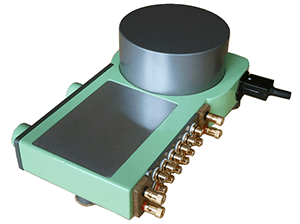
Gainclone or chipamp is a term commonly used to describe a type of audio amplifier made by do-it-yourselfers. The Gainclone is probably the most commonly built and well-known amplifier project amongst hobbyists. It is simple to build and involves only a few readily accessible, inexpensive parts.
In 1999, 47 Labs introduced the Gaincard amplifier, which had fewer parts, less capacitance and simpler construction than anything preceding it. The DIY community started building replicas or ‘clones’ of the Gaincard using integrated circuits from National Semiconductor and other manufacturers. Most designs are very effective and produce high quality sound, even though some audiophiles consider chip-based amplifiers to be inferior to their discrete counterparts.
Posted in Art, Money, Technology |
Leave a Comment »
January 18, 2011


Richard Parker is the name of a person and a fictional character who were shipwrecked and subsequently cannibalised by their fellow seamen. In Edgar Allan Poe’s only novel The Narrative of Arthur Gordon Pym of Nantucket, published in 1838, Richard Parker is a mutinous sailor on the whaling ship Grampus. After the ship capsizes in a storm, he and three other survivors draw lots upon Parker’s suggestion to kill one of them to sustain the others. Parker then gets cannibalized.
In 1884, an actual yacht named Mignonette sank. Four people survived, drifted in a life boat, and finally killed one of them, the cabin boy Richard Parker, for food. the survivors were criminally tried in the case of ‘R v Dudley and Stephens (which established a precedent, throughout the common law world, that necessity is no defence against a charge of murder).
Posted in Death, Food, Politics |
Leave a Comment »
January 18, 2011

Salvation Mountain is a colorful art installation covering much of a small hill north of Calipatria, California, near Slab City (an RV camp) and just several miles from the Salton Sea. It is made from adobe, straw, and thousands of gallons of paint. It was created by Leonard Knight to convey the message ‘God Is Love.’ Steps cut into the side of the hill lead to the summit, which is topped by a cross. Salvation Mountain also features many large straw bale and adobe walls supported by a matrix of logs enclosing several cave-like spaces. Knight lives full-time at the site in a small cabin mounted on the rear of a 1930s Chevrolet.
Like Salvation Mountain, Knight’s ‘Salvation Truck’ and a collection of other vehicles and machinery are entirely covered with paint and Biblical quotes. He estimates that more than 100,000 gallons of paint have gone into the creation of the mountain and that every California-based paint manufacturer has donated paint to the project. Once labeled an environmental hazard, the hill was threatened with removal by Imperial County. In recent years, the furor has died down. Although the project is unauthorized and on state land, Salvation Mountain was placed under protection in 2002 when Senator Barbara Boxer entered it into the Congressional Record as a national treasure.
Posted in Art, Philosophy |
Leave a Comment »
January 18, 2011

Slab City is a camp in the Colorado Desert in southeastern California, used by RV owners and squatters. It takes its name from the concrete slabs and pylons that remain from abandoned World War II Marine barracks (Camp Dunlap). A group of servicemen remained after the base closed, and the place has been inhabited ever since (although the number of residents has declined since the mid 1980s). Several thousand campers, many of them retired, use the site during the winter months. These ‘snowbirds’ stay only for the winter, before migrating north in the spring to cooler climates. The temperatures during the summer are unforgiving; nonetheless, there is a group of around 150 permanent residents.
Most ‘Slabbers’ subsist on welfare and have been driven to the Slabs through poverty. The site is both decommissioned and uncontrolled, and there is no charge for parking. The camp has no electricity, no running water or other services. Many campers use generators or solar panels. Supplies can be purchased in nearby Niland, California, located about three miles away. Located just east of State Route 111, the entrance to Slab City is easily recognized by the colorful Salvation Mountain, a small hill approximately three stories high which is entirely covered in acrylic paint, concrete and adobe and festooned with Bible verses. It is an ongoing project of over two decades by permanent resident Leonard Knight.
Posted in Money, Politics |
Leave a Comment »
January 18, 2011

Sokushinbutsu were Buddhist monks or priests who caused their own deaths in a way that resulted in their mummification. This practice took place almost exclusively in northern Japan around the Yamagata Prefecture. It is believed that many hundreds of monks tried, but only between 16 and 24 such mummifications have been discovered to date. The practice is not advocated or practiced today by any Buddhist sect.
Continue reading →
Posted in Death, Philosophy, World |
Leave a Comment »
January 18, 2011


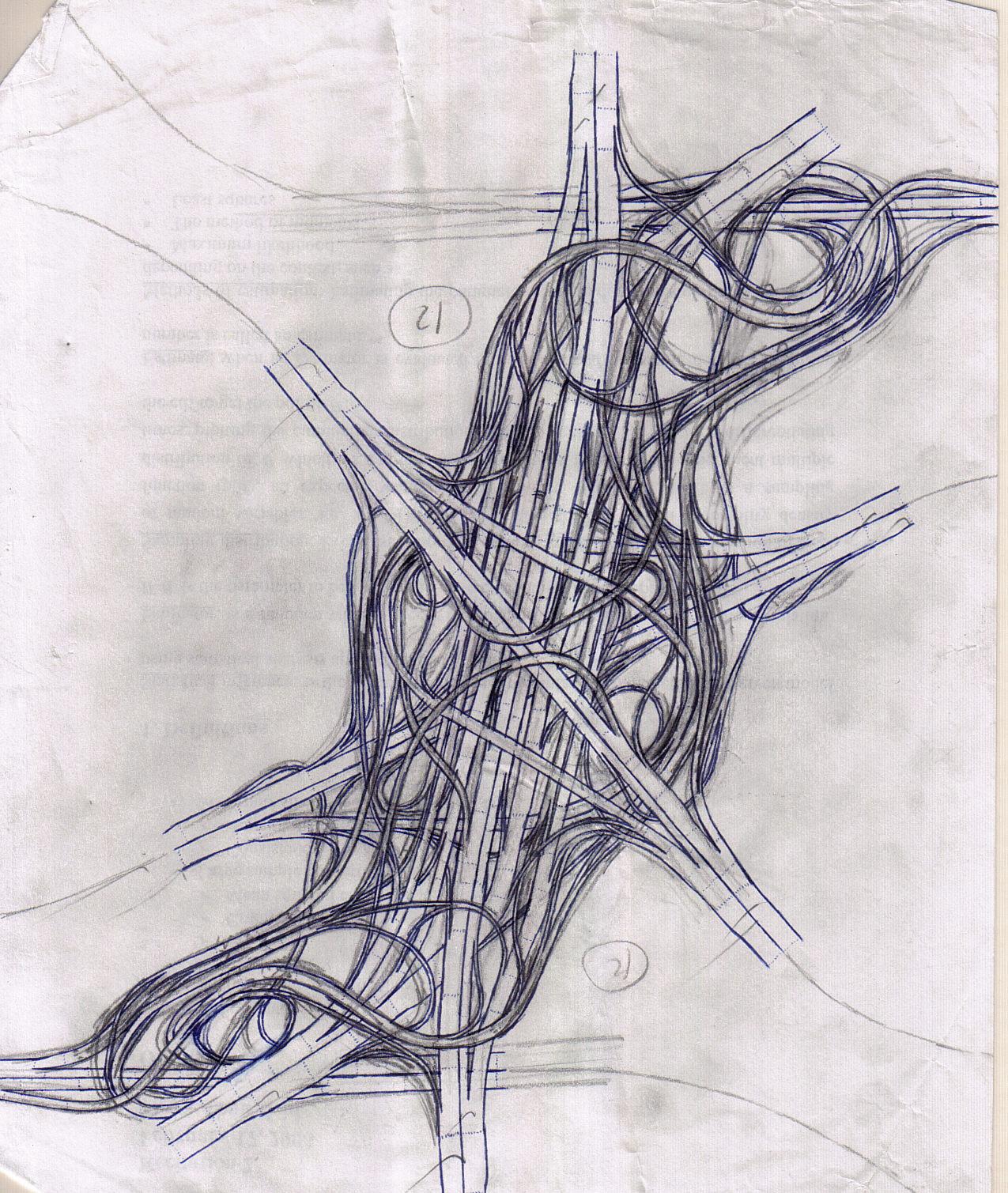
Spaghetti Junction is a nickname sometimes given to a complicated or massively intertwined road traffic interchange that resembles a plate of spaghetti. The term is believed to have been coined by a journalist at the Birmingham Evening Mail in the 1970s to refer to the Gravelly Hill Interchange on the M6 motorway in Birmingham, United Kingdom. Since then many complex interchanges around the world have acquired the nickname.
Posted in Humor, Language, Technology |
Leave a Comment »
January 17, 2011
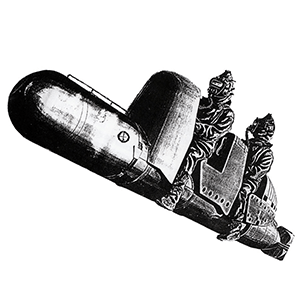
Human torpedoes or manned torpedoes are a type of rideable submarine used as secret naval weapons in World War II. The basic design is still in use today for recreational sport diving. The name is most commonly used to refer to the weapons that Italy, and later Britain, deployed in the Mediterranean and used to attack ships in enemy harbors.
The first human torpedo (the Italian Maiale) was electrically propelled, with two crewmen in diving suits riding astride. They steered the torpedo at slow speed to the enemy ship. The detachable warhead was then used as a limpet mine. They then rode the torpedo away. In operation, the Maiale torpedo was carried by another vessel (usually a normal submarine), and launched near the target. Most manned torpedo operations were at night and during the new moon to cut down the risk of being seen.
Posted in Technology, War |
Leave a Comment »
January 17, 2011

Dead cat bounce is a Wall Street term that refers to a small, brief recovery in the price of a declining stock. The term is derived from the expression: ‘Even a dead cat will bounce if it falls from a great height.’ The earliest record of the phrase dates from a 1985 Financial Times article describing the Singaporean and Malaysian stock markets bounce after a hard fall during the recession of that year. A similar expression has an older history in Cantonese and this may be the origin of the term.
Posted in Humor, Language, Money |
Leave a Comment »
January 17, 2011

Friendly Floatees are plastic bath toys marketed by The First Years, Inc. and made famous by the work of Curtis Ebbesmeyer, an oceanographer who models ocean currents on the basis of flotsam movements including those of a consignment of Friendly Floatees washed into the Pacific Ocean in 1992. The toys themselves have become collector’s items, fetching prices as high as $1,000.
Posted in Money, Science |
Leave a Comment »
January 17, 2011

The EURion constellation is a pattern of symbols found on a number of banknote designs worldwide since about 1996. It is added to help software detect the presence of a banknote in a digital image. Such software can then block the user from reproducing banknotes to prevent counterfeiting using color photocopiers. The system is employed on Euros, U.S., dollars, Japanese Yen, and British pounds sterling.
The name ‘EURion constellation’ was coined by German computer scientist, Markus Kuhn, who uncovered the pattern in early 2002 while experimenting with a Xerox photocopier that refused to reproduce banknotes. Technical details regarding the EURion constellation are kept secret by its inventors and users. A patent application suggests that the pattern and detection algorithm were designed at OMRON Corporation, a Japanese electronics company.
Posted in Money, Technology, World |
Leave a Comment »
January 17, 2011

A narco submarine (also called a Bigfoot submarine) is a type of custom-made ocean-going self-propelled semi-submersible (SPSS) vessel built by drug traffickers to smuggle drugs. They are especially known to be used by Colombian drug cartel members to export cocaine from Colombia to Mexico, which is often then transported overland to the United States. First detected in 1993, they are popularly called submarines, though typically they are semi-submersibles since they cannot dive; most of the craft is submerged with little more than the cockpit and the exhaust gas pipes above the water.
However, in 2010 Ecuadorian authorities seized a fully functional, completely submersible submarine in the jungles bordering Ecuador and Colombia. This diesel electric submarine had a cylindrical fiberglass hull of 31 meters (102 ft) long, a 3 meter conning tower with periscope, and air conditioning. The vessel had the capacity for about 10 metric tons of cargo, a crew of five or six people, the ability to fully submerge down to 65 feet (20 m), and capable of long-range underwater operation.
Posted in Drugs, Politics, Technology |
Leave a Comment »
January 17, 2011
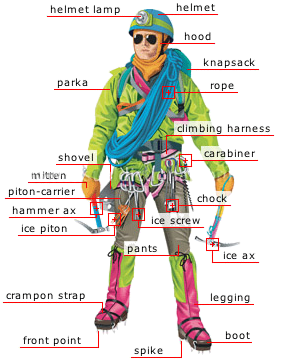
The Explorers Grand Slam is a challenge to reach the North Pole, the South Pole and all of the Seven Summits (the highest mountains of each of the seven continents). Only a dozen people have completed the Explorers Grand Slam. British mountaineer, David Hempleman-Adams became the first to complete this challenge in 1998. In 2005, Park Young Seok of South Korea completed a ‘true Adventurers Grand Slam,’ which additionally includes ascending all 14 peaks above 8,000 meters.
Young-Seok holds the world’s second fastest time (behind Jerzy Kukuczka of Poland) for ascending the 14 Eight-thousanders, the Guinness World Record for climbing six of the 8,000-meter Himalayan peaks within one year, and another record for reaching the South Pole on foot in 44 days, self-sufficient and without any food re-supplies.
Posted in Games, World |
Leave a Comment »








 The Daily Omnivore