January 17, 2011
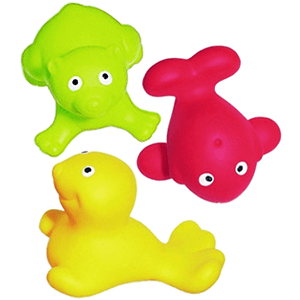
Friendly Floatees are plastic bath toys marketed by The First Years, Inc. and made famous by the work of Curtis Ebbesmeyer, an oceanographer who models ocean currents on the basis of flotsam movements including those of a consignment of Friendly Floatees washed into the Pacific Ocean in 1992. The toys themselves have become collector’s items, fetching prices as high as $1,000.
Posted in Money, Science |
Leave a Comment »
January 17, 2011

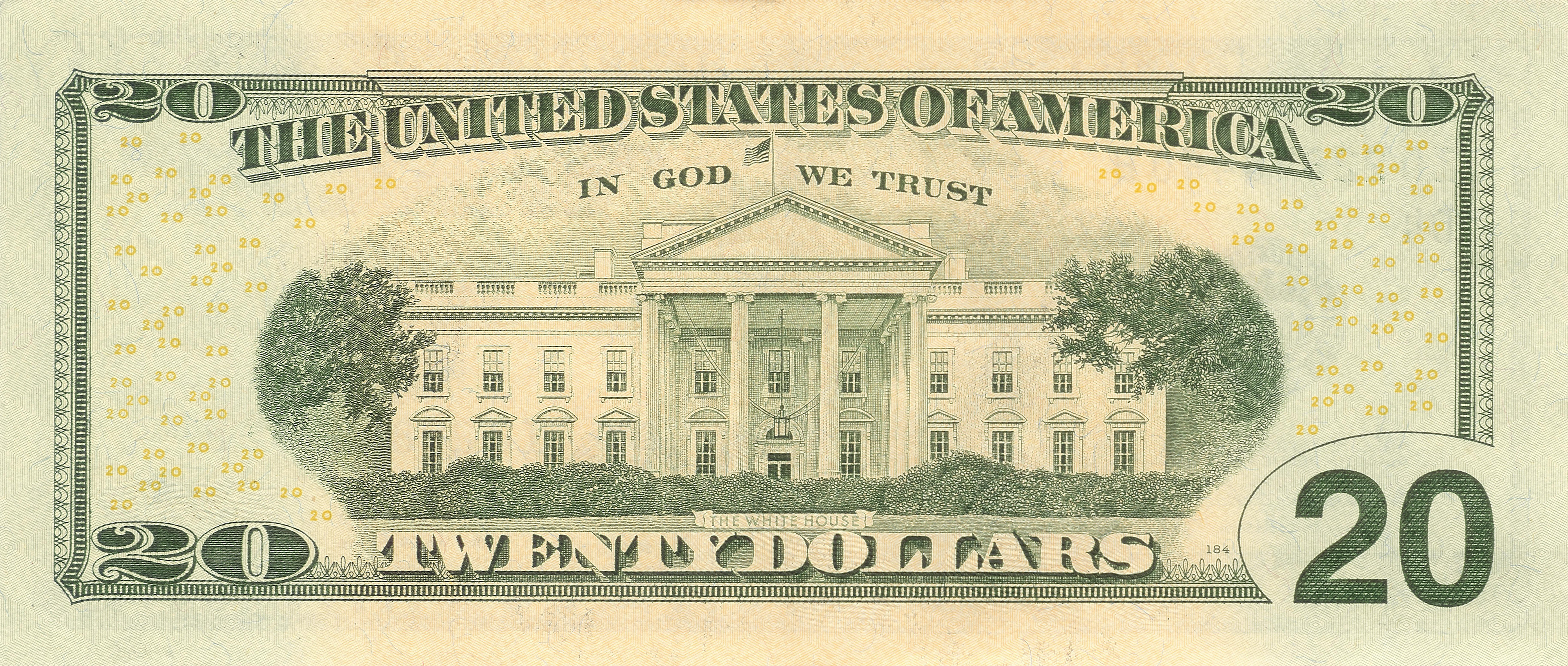
The EURion constellation is a pattern of symbols found on a number of banknote designs worldwide since about 1996. It is added to help software detect the presence of a banknote in a digital image. Such software can then block the user from reproducing banknotes to prevent counterfeiting using color photocopiers. The system is employed on Euros, U.S., dollars, Japanese Yen, and British pounds sterling.
The name ‘EURion constellation’ was coined by German computer scientist, Markus Kuhn, who uncovered the pattern in early 2002 while experimenting with a Xerox photocopier that refused to reproduce banknotes. Technical details regarding the EURion constellation are kept secret by its inventors and users. A patent application suggests that the pattern and detection algorithm were designed at OMRON Corporation, a Japanese electronics company.
Posted in Money, Technology, World |
Leave a Comment »
January 17, 2011

A narco submarine (also called a Bigfoot submarine) is a type of custom-made ocean-going self-propelled semi-submersible (SPSS) vessel built by drug traffickers to smuggle drugs. They are especially known to be used by Colombian drug cartel members to export cocaine from Colombia to Mexico, which is often then transported overland to the United States. First detected in 1993, they are popularly called submarines, though typically they are semi-submersibles since they cannot dive; most of the craft is submerged with little more than the cockpit and the exhaust gas pipes above the water.
However, in 2010 Ecuadorian authorities seized a fully functional, completely submersible submarine in the jungles bordering Ecuador and Colombia. This diesel electric submarine had a cylindrical fiberglass hull of 31 meters (102 ft) long, a 3 meter conning tower with periscope, and air conditioning. The vessel had the capacity for about 10 metric tons of cargo, a crew of five or six people, the ability to fully submerge down to 65 feet (20 m), and capable of long-range underwater operation.
Posted in Drugs, Politics, Technology |
Leave a Comment »
January 17, 2011
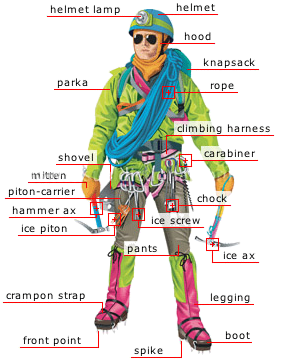
The Explorers Grand Slam is a challenge to reach the North Pole, the South Pole and all of the Seven Summits (the highest mountains of each of the seven continents). Only a dozen people have completed the Explorers Grand Slam. British mountaineer, David Hempleman-Adams became the first to complete this challenge in 1998. In 2005, Park Young Seok of South Korea completed a ‘true Adventurers Grand Slam,’ which additionally includes ascending all 14 peaks above 8,000 meters.
Young-Seok holds the world’s second fastest time (behind Jerzy Kukuczka of Poland) for ascending the 14 Eight-thousanders, the Guinness World Record for climbing six of the 8,000-meter Himalayan peaks within one year, and another record for reaching the South Pole on foot in 44 days, self-sufficient and without any food re-supplies.
Posted in Games, World |
Leave a Comment »
January 17, 2011

Parkinson’s Law of Triviality (also known by the expression ‘color of the bike shed’) is British author, C. Northcote Parkinson’s 1957 argument that organizations give disproportionate weight to trivial issues. Parkinson compares a committee’s deliberations on a nuclear power plant to deliberation on a bicycle shed:
A nuclear reactor is so vastly expensive and complicated that an average person cannot understand it, so they assume that those working on it understand it; even those with strong opinions often withhold them for fear of being shown to be insufficiently informed. On the other hand, everyone understands a bicycle shed (or thinks he or she does), so building one can result in endless discussions because everyone involved wants to add his or her touch and show that they have contributed.
Posted in Humor, Language, Money |
Leave a Comment »
January 17, 2011
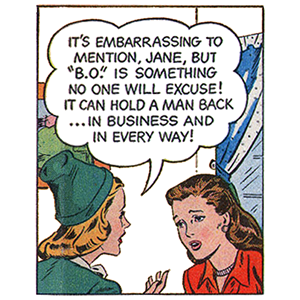
Two Cunts in a Kitchen, or sometimes, less graphically Two Cs in a K, is slang used within the advertising industry for a type of television commercial. Generally, the commercial shows two women in a domestic scene, discussing, using, or otherwise portraying the advertiser’s product in a positive manner.
Posted in Language, Money |
Leave a Comment »
January 17, 2011

The mediocrity principle is the notion that there is nothing special about humans or the Earth. In a broader context, the mediocrity principle states that: life on Earth depends on just a few basic molecules; the elements that make up these molecules are (to a greater or lesser extent) common to all stars, and the laws of science we know apply to the entire universe (and there is no reason to assume that they do not). Thus, given sufficient time – life must have originated elsewhere in the cosmos.
Posted in Philosophy, Science |
Leave a Comment »
January 17, 2011

Schrödinger’s [shroh-ding-ers] cat is a thought experiment in quantum physics, usually described as a paradox, devised by Austrian physicist Erwin Schrödinger in 1935. In the experiment, a cat is placed in a room that is separated from the outside world; a small amount of a radioactive element is in the room.
Within some time, say one hour, one of the atoms of the radioactive material may decay (because the material unstable), or it may not. If the material breaks down, it will release poisonous gas, which will kill the cat. The question now is: at the end of the hour, is the cat alive or dead?
Continue reading →
Posted in Death, Philosophy, Science |
Leave a Comment »
January 13, 2011

Nutraloaf, sometimes called prison loaf, disciplinary loaf, food loaf, confinement loaf, seg loaf, or special management meal, is a food served in United States prisons. It is similar to meatloaf in texture, but has a wider variety of ingredients. Prisoners may be served nutraloaf if they have assaulted prison guards or fellow prisoners with sharpened utensils. Prison loaf is usually exceedingly bland in taste or unpleasant, but prison wardens argue that it provides enough nutrition to keep prisoners healthy without requiring utensils to be issued. However, the American Correctional Association, which accredits prisons, discourages the use of food as a disciplinary measure.
There are many different recipes which include a range of food, from vegetables, fruit, meat, and bread or other grains. Some versions may be vegetarian or completely vegan. The ingredients are blended and baked into a solid loaf form. In some institutions it has no fixed recipe but is simply the regular prison meal (including drink) blended together. In one common version, it is made from a mixture of wheat bread, non-dairy cheese, various vegetables, and mixed with vegetable oil, tomato paste, powdered milk and dehydrated potato flakes.
Posted in Food, Politics |
Leave a Comment »
January 13, 2011

Watson, named after IBM’s founder, Thomas J. Watson, is an artificial intelligence program developed to answer questions posed in natural language. Watson competed on the TV game show ‘Jeopardy!’ in 2011, defeating past champions Ken Jennings and Brad Rutter. During the game, Watson had access to 200 million pages of content, including the full text of Wikipedia. Watson consistently outperformed its human opponents on the game’s signaling device, but had trouble responding to a few categories, notably those having short clues containing only a few words.
The original Watson was made up of a cluster of 2880 POWER7 processor cores and 16 Terabytes of RAM. IBM’s master inventor and senior consultant Tony Pearson estimated Watson’s hardware cost about $3 million and with 80 TeraFLOPs would be placed 94th on the Top 500 Supercomputers list in 2011. In 2013, IBM announced that Watson software system’s first commercial application would be for utilization management decisions in lung cancer treatment at Sloan–Kettering in conjunction with health insurance company WellPoint. Watson’s business chief Manoj Saxena says that 90% of nurses in the field who use Watson now follow its guidance.
Posted in Language, Money, Technology |
Leave a Comment »
January 13, 2011
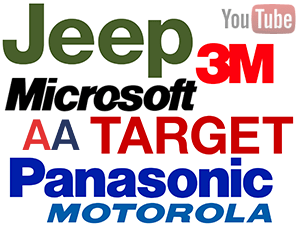

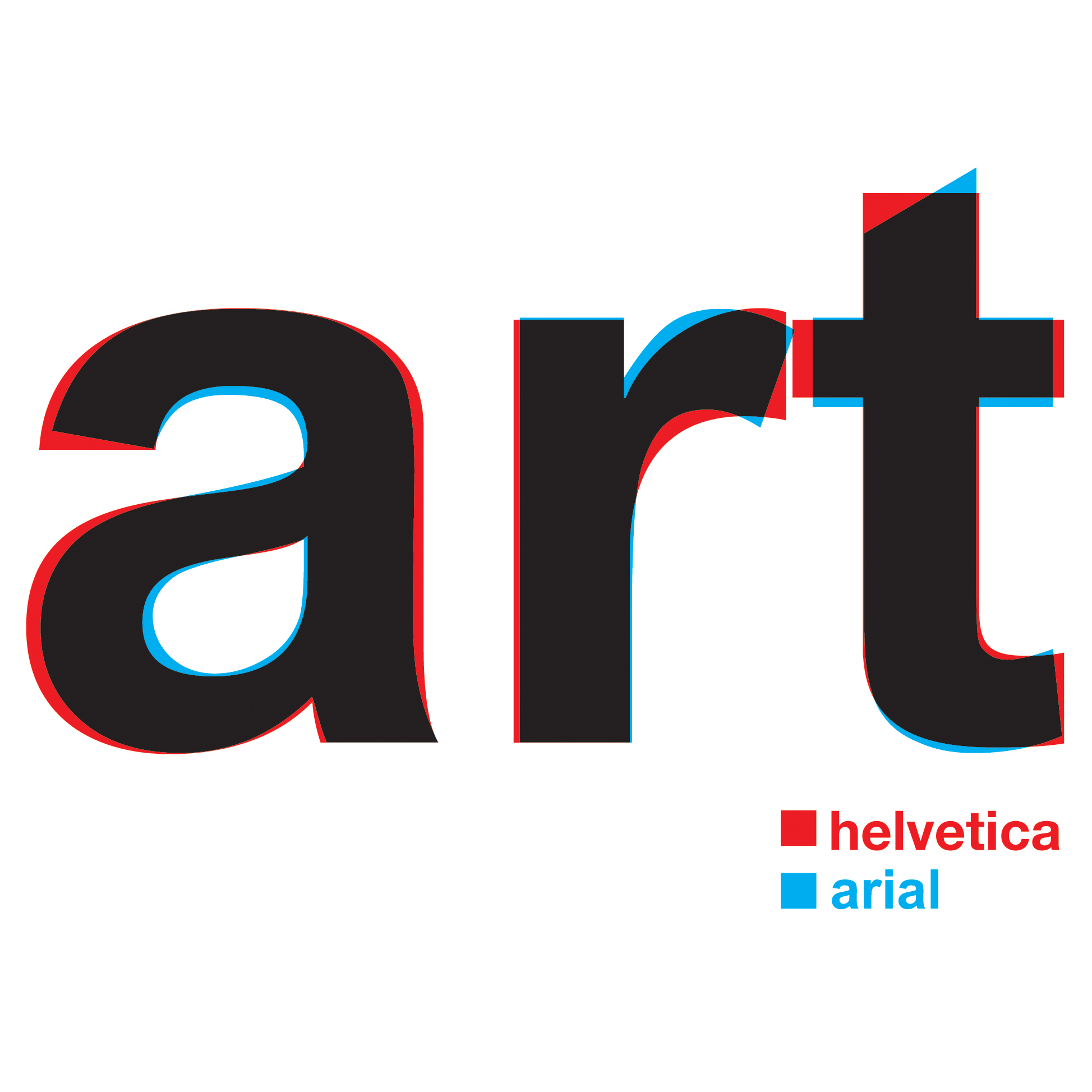
Helvetica is a widely used sans-serif typeface developed in 1957 by Swiss typeface designer Max Miedinger with Eduard Hoffmann to create a neutral typeface that had great clarity, no intrinsic meaning in its form, and could be used on a wide variety of signage. It’s original name was ‘Neue Haas Grotesk’; it was changed to ‘Helvetica’ (the Latin name for Switzerland) in 1960 in order to make it more marketable internationally. Generic versions of Helvetica have been made by various vendors; Monotype’s Arial, designed in 1982 has identical character widths and is indistinguishable by most non-specialists.
Helvetica is a popular choice for commercial wordmarks, including: 3M, American Airlines, American Apparel, BMW, Jeep, JCPenney, Lufthansa, Microsoft, Target, RE/MAX, Toyota, Panasonic, Motorola, Kawasaki, and Verizon Wireless. Apple Inc. has used Helvetica widely in its software. Helvetica is also widely used by the U.S. government; for example, federal income tax forms are set in Helvetica, and NASA uses the type on the Space Shuttle orbiter. New York City has been using Helvetica since 1989 for many of its subway signs. In 2007, director Gary Hustwit released a documentary, ‘Helvetica,’ to coincide with the fiftieth anniversary of the typeface.
Posted in Art, Language, Money |
Leave a Comment »
January 13, 2011

A toy library is a library from which toys, puzzles, and games are lent out, functioning like a lending library. Toy libraries offer play sessions for families and a wide range of toys appropriate for children at different stages in their development.
Toy libraries provide children with new toys every week or two, saving parents money and keeping children from getting bored. Popular in the French-speaking world, toy libraries are called ludothèques. A lekotek is a toy and play library with a specific focus on children with special needs.
Posted in Games, Health, Money |
Leave a Comment »