November 22, 2010

Tribadism [trib-uh-diz-uhm] (also known as tribbing or scissoring) is a form of non-penetrative sex in which a woman rubs her vulva against her partner’s body for sexual stimulation. This may involve female-to-female genital contact or a female rubbing her vulva against her partner’s thigh, arm, palm or stomach, and does not always reflect a scissoring motion (a missionary position may also be acted upon); the term can also refer to a masturbation technique in which a woman rubs her vulva against an inanimate object such as a bolster, in an effort to achieve orgasm.
In the sexuality of the ancient Romans, a tribas (a Greek loan-word) was a woman or hermaphrodite who actively penetrated another woman. Until the 20th century, the term was used to refer to lesbian sexual practices in general. Therefore, lesbians were occasionally called tribades. This position is not exclusive to humans. Female bonobo monkeys, found in the Democratic Republic of the Congo, also engage in female-female genital sex, usually known as GG rubbing (genito-genital).
Posted in Language, Sex |
Leave a Comment »
November 22, 2010

Theosophy [thee-os-uh-fee] is a doctrine of religious philosophy and mysticism that holds that all religions are attempts by the ‘Spiritual Hierarchy’ to help humanity in evolving to greater perfection, and that each religion therefore has a portion of the truth. The founding members, Helena Petrovna Blavatsky, Henry Steel Olcott, and William Quan Judge, established the Theosophical Society in New York City in 1875. The present-day New Age movement is to a considerable extent based on the teachings of Blavatsky. The three declared objectives of the original Theosophical Society were to form a nucleus of the Universal Brotherhood of Humanity, without distinction of race, creed, sex, caste, or color; to encourage the study of comparative religion, philosophy, and science; and to investigate the unexplained laws of nature and the powers latent in man.
Theosophical writings propose that human civilizations, like all other parts of the universe, develop cyclically through seven stages. Blavatsky posited that humanity evolves through a series of seven ‘Root Races.’ In the first age, humans were pure spirit; in the second age, they were sexless beings inhabiting the now lost continent of Hyperborea; in the third age Lemurians were endowed with human consciousness and sexual reproduction. Modern humans finally developed on the continent of Atlantis and since Atlantis was the nadir of the cycle, the present fifth age is a time of reawakening humanity’s psychic gifts.
Posted in Philosophy |
Leave a Comment »
November 22, 2010
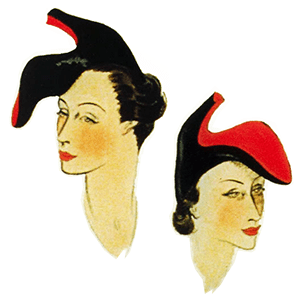
Elsa Schiaparelli [skap-uh-rel-ee] (1890 — 1973) was an Italian fashion designer. Along with Coco Chanel, her greatest rival, she is regarded as one of the most prominent figures in fashion in the early 20th century. Starting with knitwear, Schiaparelli’s designs were heavily influenced by surrealists like her collaborators Salvador Dalí and Alberto Giacometti. Her clients included the heiress Daisy Fellowes and actress Mae West. Schiaparelli did not adapt to the changes in fashion following World War II and her business closed in 1954.
Continue reading →
Posted in Art, Money, World |
Leave a Comment »
November 22, 2010

Givaudan is a Swiss manufacturer of flavorings and fragrances. As of 2008, it is the world’s largest company in the industry. The company’s scents and flavors are developed most often for food and beverage makers, but they are also used frequently in household goods, as well as grooming and personal care products.
Givaudan’s flavors and solutions are usually custom-made and, like their competitors’ formulas, always sold under strict confidentiality agreements. Major competitors include Firmenich, International Flavors and Fragrances, and Symrise. Givaudan was founded as a perfumery company in 1895 in Zurich by Leon and Xavier Givaudan, although some parts of the modern company date back as far as 1796.
Posted in Money, Technology, World |
Leave a Comment »
November 20, 2010

Zero Halliburton is a company which manufactures hard-wearing travel cases and briefcases, mainly out of aluminum that have appeared in over 200 Hollywood movies and television shows, often as a MacGuffin (plot element). In addition to aluminum, Zero Halliburton cases are available in polycarbonate and Texalium (an aluminum-coated fiberglass). Famously, the Nuclear Football, the briefcase containing the launch codes the President of the United States would use to order a nuclear strike, is a modified Zero Halliburton case.
It was originally a Los Angeles metal fabrication company called Zierold, which in 1946 changed its name to Zero Corporation. In 1952 Zero, which until then had no relation to Halliburton, bought the luggage division of Halliburton, the Texas oilfield services company. Today, Zero Halliburton is a wholly-owned subsidiary of Japanese luggage manufacturer ACE. Erle P. Halliburton, the founder of Halliburton, had commissioned the aluminum case in 1938 from aircraft engineers because other luggage could not endure the rough travel through Texas oil fields in a pickup truck. In addition to being more durable than a leather or cloth case due to its rigidity, the aluminum case seals tightly against dust and water.
Posted in Money, Technology |
Leave a Comment »
November 19, 2010

Stephen Wozniak (b. 1950) is an American computer engineer who co-founded Apple Computer, Inc. with Steve Jobs and Ronald Wayne. His inventions and machines are credited with contributing significantly to the personal computer revolution of the 1970s. Wozniak created the Apple I and Apple II computers in the mid-1970s. Wozniak lives in Los Gatos, California. He is a member of a Segway Polo team, the Silicon Valley Aftershocks. His favorite video game is Tetris.] In the 1990s he submitted so many high scores for the game to Nintendo Power that they would no longer print his scores, so he started sending them in under the alphabetically reversed ‘Evets Kainzow.’
In 1980, Apple went public and made Jobs and Wozniak multimillionaires. However, Jobs had refused to allow some employees of Apple to receive stock options, so Wozniak decided to share some of his founder stock with the rest of the team by either giving them away for free or at a heavily discounted price. This was dubbed ‘The Woz Plan.’ Wozniak permanently ended his full-time employment with Apple in 1987, 12 years after creating the company. He still remains an employee (and receives a paycheck) and is a shareholder. He presently works for Fusion-io, a data storage and server company, in Salt Lake City, Utah as their chief scientist.
Posted in Money, Technology |
Leave a Comment »
November 19, 2010

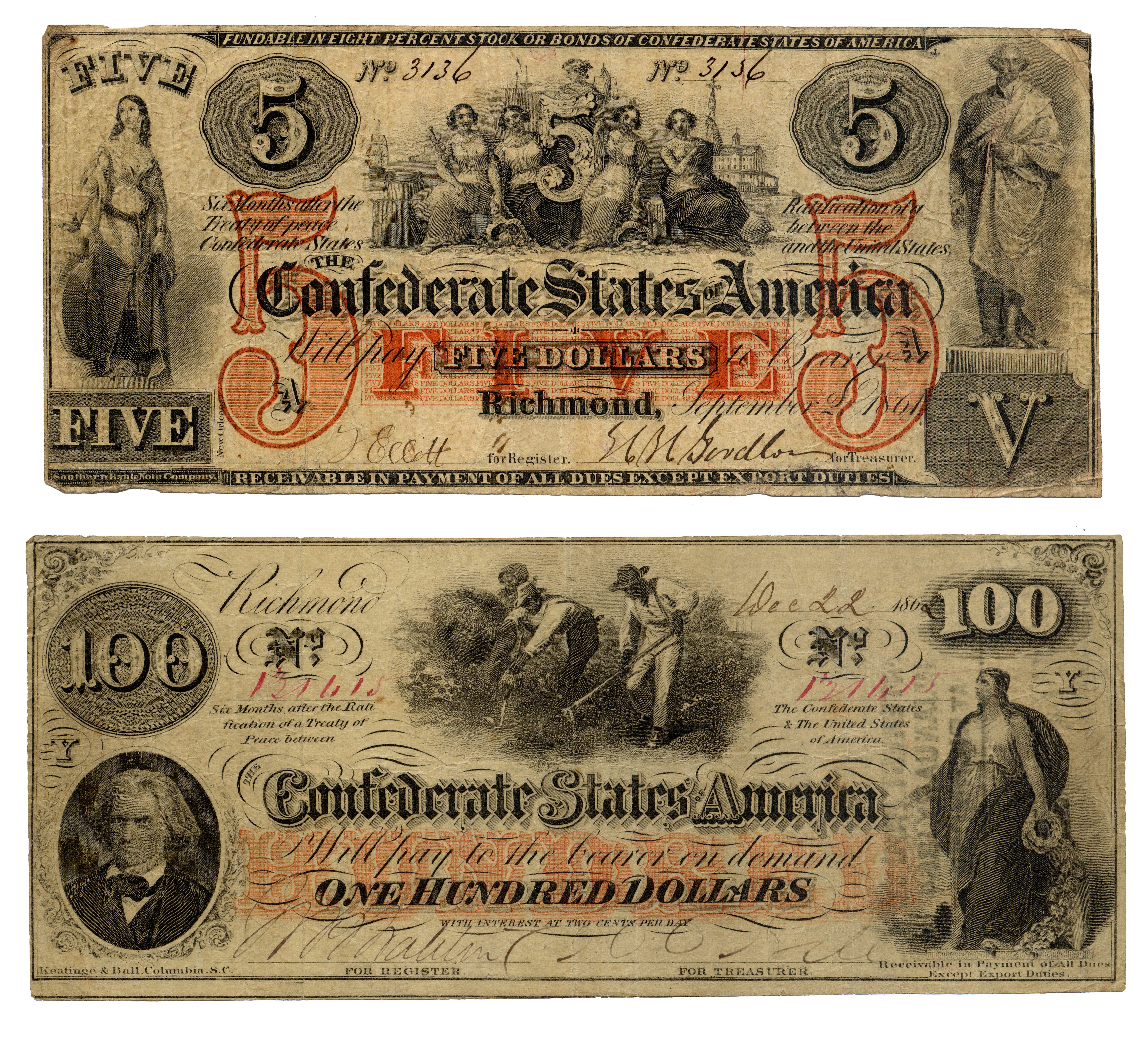
The Confederate States of America dollar was first issued into circulation in April 1861, when the Confederacy was only two months old, and on the eve of the outbreak of the Civil War. At first, Confederate currency was accepted throughout the South as a medium of exchange with high purchasing power. As the war progressed, however, confidence in the ultimate success waned, the amount of paper money increased, and their dates of redemption were extended further into the future.
The inevitable result was depreciation of the currency, and soaring prices characteristic of inflation. For example, by the end of the war, a cake of soap could sell for as much as $50 and an ordinary suit of clothes was $2,700. Near the end of the war, the currency became practically worthless as a medium of exchange. When the Confederacy ceased to exist as a political entity at the end of the war, the money lost all value as fiat currency.
Posted in Money, Politics, War |
3 Comments »
November 18, 2010

Troma Entertainment is an American independent film production and distribution company founded by Lloyd Kaufman and Michael Herz in 1974. The company produces low-budget independent movies that play on 1950s horror with elements of farce. Many Troma films contain social commentary and have developed cult followings. Troma films are B-movies known for their surrealistic nature, along with their use of shocking imagery. They typically contain overt sexuality, graphic violence, gore and nudity, so much that the term ‘Troma Film’ has become synonymous with these characteristics.
Troma’s slogan is ‘Movies of the Future.’ Troma is also known for reusing the same props, actors, and scenes over and over again. Examples include a severed leg, a penis Monster, and the flipping/exploding car filmed for the movie ‘Sgt. Kabukiman, NYPD,’ which is used in place of any other car that needs to crash and explode. Troma produced or acquired many early films featuring several rising talents, such as Carmen Elektra (‘The Chosen One’), Billy Bob Thornton (‘Chopper Chicks in Zombietown’), Vanna White (‘Graduation Day’), Kevin Costner (‘Sizzle Beach, U.S.A.’), Samuel L. Jackson (‘Def by Temptation’), Marisa Tomei (‘The Toxic Avenger’), Vincent D’Onofrio (‘The First Turn-On!’), ‘Paul Sorvino’ (Cry Uncle), Trey Parker and Matt Stone (‘Cannibal! The Musical’), before they were discovered.
Posted in Art, Humor, Money |
Leave a Comment »
November 18, 2010

Cisgender [sis-jen-der] is a neologism that refers to individuals who are comfortable in the gender they were assigned at birth. It contrasts ‘transgender’ on the gender spectrum. A more popular term is ‘gender normative.’ The word has its origin in the Latin-derived prefix cis, meaning ‘on the same side’. In this case, ‘cis’ refers to the alignment of gender identity with assigned gender.
The word was coined in 1995 by Carl Buijs, a transsexual man from the Netherlands. Buijs said in a usenet posting, ‘As for the origin, I just made it up. I just kept running into the problem of what to call non-trans people in various discussions, and one day it just hit me: non-trans equals cis. Therefore, cisgendered.’
Posted in Language, Politics, Sex |
Leave a Comment »
November 18, 2010

An EyeTap is a device that is worn in front of the eye that acts as a camera to record the scene available to the eye as well as a display to superimpose a computer-generated imagery on the original scene. In order to capture what the eye is seeing as accurately as possible, an EyeTap uses a beam splitter to send the same scene (with reduced intensity) to both the eye and a camera. The camera then digitizes the reflected image of the scene and sends it to a computer. The computer processes the image and then sends it to a projector.
The projector sends the image to the other side of the beam splitter so that this computer-generated image is reflected into the eye to be superimposed on the original scene. Stereo EyeTaps modify light passing through both eyes, but many research prototypes (mainly for reasons of ease of construction) only tap one eye. EyeTap is also the name of an organization founded by inventor Steve Mann to develop and promote EyeTap-related technologies such as wearable computing.
Posted in Technology |
Leave a Comment »
November 18, 2010
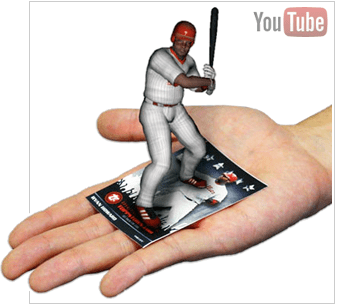

Augmented reality (AR) refers to a display in which simulated imagery, graphics, or symbology is superimposed on a view of the surrounding environment. It is related to a more general concept called mediated reality in which a view of reality is modified (possibly even diminished rather than augmented) by a computer. The term is believed to have been coined in 1990 by Thomas Caudell, an employee of Boeing at the time.
Continue reading →
Posted in Technology, War |
Leave a Comment »
November 18, 2010


The Virtuality Continuum is a phrase used to describe a concept that there is a continuous scale ranging between the completely virtual, a Virtual Reality (VR), and the completely real: Reality. The reality-virtuality continuum therefore encompasses all possible variations and compositions of real and virtual objects. It has been somewhat incorrectly described as a concept in new media and computer science, when in fact it could belong closer to anthropology.
The concept was first introduced by industrial engineer Paul Milgram of the University of Toronto. The area between the two extremes, where both the real and the virtual are mixed, is the so-called Mixed reality. This in turn is said to consist of both Augmented Reality (AR), where the virtual augments the real, and Augmented virtuality, where the real augments the virtual.
Posted in Language, Technology |
Leave a Comment »



 The Daily Omnivore