October 19, 2010
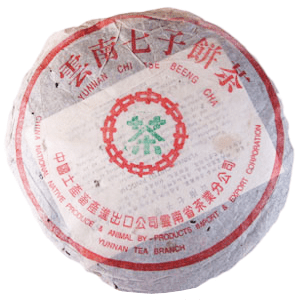
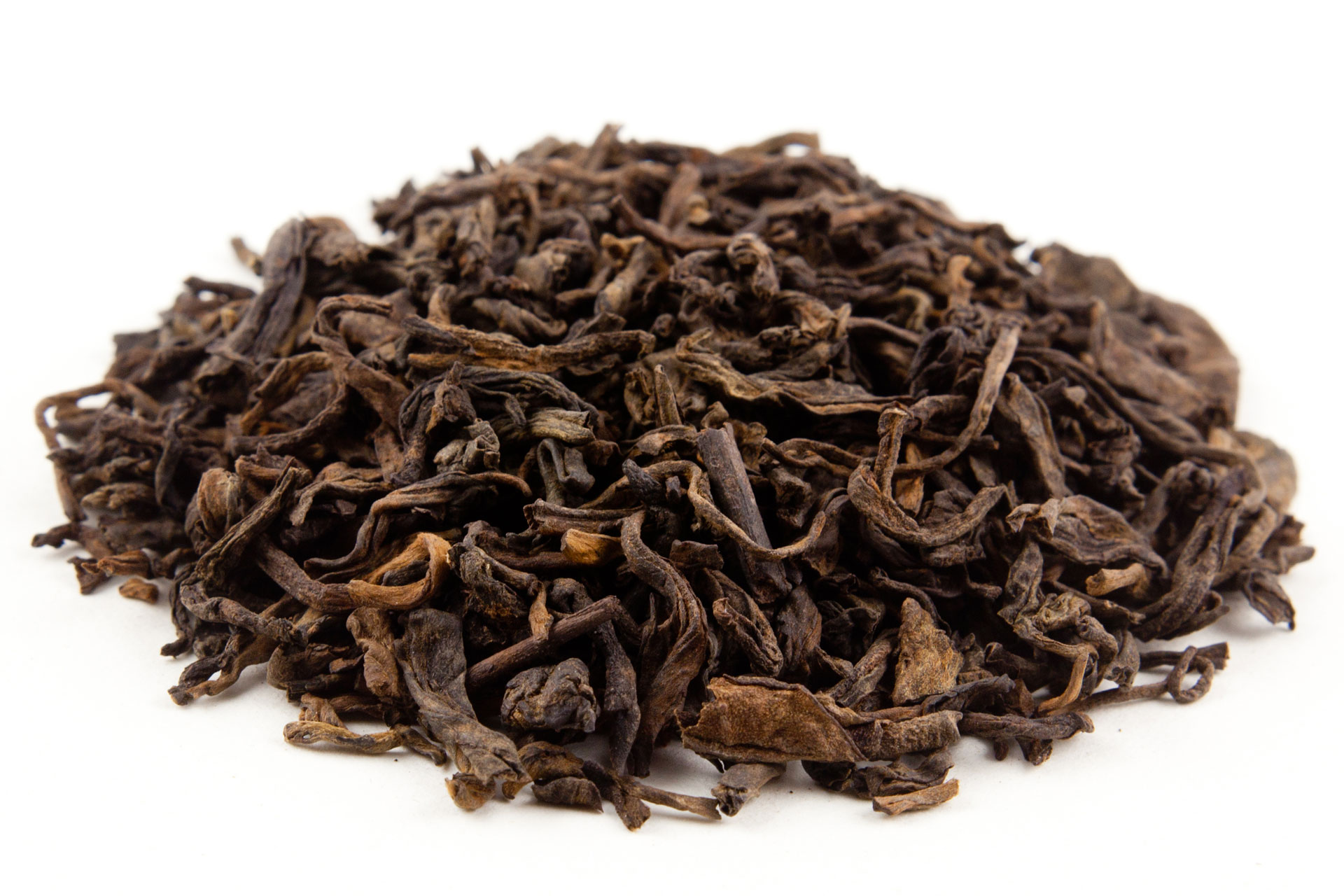
Pu-erh tea or Bolay tea is a type of tea made from a ‘large leaf’ variety of the tea plant Camellia sinensis and named after Pu’er county near Simao, Yunnan, China. Pu-erh tea can be purchased as either raw/green (sheng) or ripened/cooked (shu), depending on processing method or aging. Sheng pu-erh can be roughly classified on the tea oxidation scale as a green tea, and the shou or aged-green variants as post-fermented tea. The fact that pu-erh fits in more than one tea type poses some problems for classification. For this reason, the ‘green tea’ aspect of pu-erh is sometimes ignored, and the tea is regarded solely as a post-fermented product.
Unlike other teas that should ideally be consumed shortly after production, pu-erh can be drunk immediately or aged for many years; pu-erh teas are often now classified by year and region of production much like wine vintages. While there are many counterfeit pu-erhs on the market and real aged pu-erh is difficult to find and identify, it is still possible to find pu-erh that is 10 to 50 years old, as well as a few from the late Qing dynasty (1644–1912). Indeed, tea connoisseurs and speculators are willing to pay high prices for older pu-erh, upwards of thousands of dollars per cake.
Posted in Food, Health, World |
Leave a Comment »
October 19, 2010

Cortisol [kawr-tuh-sawl], also known as hydrocortisone, is a steroid hormone or glucocorticoid produced by the adrenal gland, and is one of the best known ‘stress hormones.’ Stress hormones act by mobilizing energy from storage to muscles, increasing heart rate, blood pressure and breathing rate and shutting down metabolic processes such as digestion, reproduction, growth and immunity.
Posted in Health, Science |
Leave a Comment »
October 19, 2010

Sangfroid [sahn-frwa] is a noun meaning self-possession or imperturbability especially under strain. The word derives from French, c. 1712 and translates literally as, ‘cool blood.’
‘Keep Calm and Carry On’ was a poster produced by the British government in 1939 during the beginning of World War II, to raise the morale of the British public in the case of invasion. It was little known and never used. The poster was rediscovered in 2000 and has been re-issued by a number of private sector companies, and used as the decorative theme for a range of other products.
Posted in Language, World |
Leave a Comment »
October 19, 2010

A saccade [suh-kahd] is a fast movement of an eye, head or other part of an animal’s body or device. It can also be a fast shift in frequency of an emitted signal or other quick change. Saccades are quick, simultaneous movements of both eyes in the same direction. Saccades serve as a mechanism for fixation and rapid eye movement. The word appears to have been coined in the 1880s by French ophthalmologist Émile Javal, who used a mirror on one side of a page to observe eye movement in silent reading, and found that it involves a succession of discontinuous individual movements.
Humans and many other animals do not look at a scene in fixed steadiness (as opposed to e.g., most birds); instead, the eyes move around, locating interesting parts of the scene and building up a mental, three-dimensional ‘map’ corresponding to the scene (as opposed to the graphical map of avians, that often relies upon detection of angular movement on the retina). One reason for the saccadic movement of the human eye is that the central part of the retina—known as the fovea—plays a critical role in resolving objects. By moving the eye so that small parts of a scene can be sensed with greater resolution, body resources can be used more efficiently. Saccades are the fastest movements produced by the human body
Posted in Health, Language |
Leave a Comment »
October 19, 2010

Cymande [sah-mahn-day] were an electric funk band who released several albums throughout the early 1970s. The group was formed in 1971 in London, England by musicians from Guyana and Jamaica. The name Cymande is derived from a Calypso word for Dove, which symbolizes peace and love. The group developed a subtle and complex, deep funk style influenced by calypso rhythms, jazz, African music, American soul and UK rock of the time. Cymande can now be seen as one of the most sophisticated of the funk acts that evolved in the early 1970s.
By the mid-70s the band members were going their separate ways and the group was disbanded in 1974. It wasn’t until 20 years later that they reaped any financial rewards, as their music became a popular source for samplers. Cymande’s original albums are still widely sought-after by DJs and funk aficionados. Perhaps the band’s best known recording is the soulful dancefloor filler called ‘Bra,’ which was later sampled by the American hip-hop group De La Soul and used as a breakbeat record by the godfathers of hip-hop Kool Herc and Grandmaster Flash.
Posted in Art, World |
Leave a Comment »
October 19, 2010

Isabella ‘Issy’ Blow (1958 – 2007) was an English magazine editor and international style icon. The muse of hat designer Philip Treacy, she is credited with discovering the models Stella Tennant and Sophie Dahl as well as the fashion designer Alexander McQueen. Blow battled with depression and bipolar disorder most of her adult life.
In 2006, Blow attempted suicide with an overdose of sleeping pills. Later that year, she again attempted suicide by jumping from the Hammersmith Flyover, which resulted in her breaking both ankles. In 2007, Blow made several more suicide attempts by driving her car into the rear of a truck, by attempting to obtain horse tranquilizers, by drowning in a lake and by overdosing while on a beach in India. She died in May of 2007 after ingesting a weedkiller, in what was later ruled a suicide.
Posted in Art, Language |
Leave a Comment »
October 18, 2010


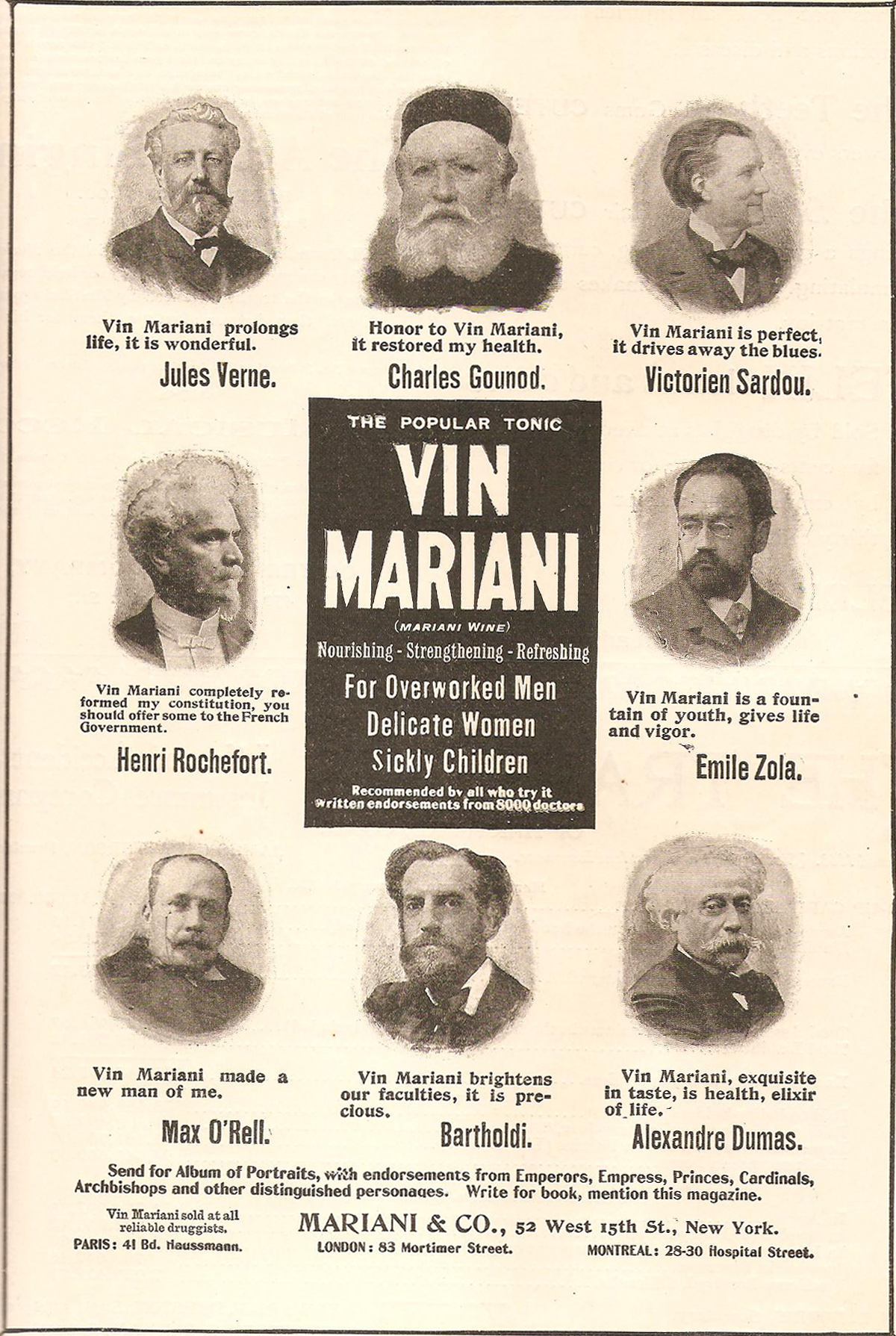
Vin Mariani (French: Mariani’s wine) was a tonic and patent medicine created circa 1863 by Angelo Mariani, a chemist who became intrigued with coca and its economic potential after reading Paolo Mantegazza’s paper on coca’s effects. Mariani started marketing a wine called Vin Tonique Mariani (à la Coca du Pérou) which was made from Bordeaux wine treated with coca leaves.
The ethanol in the wine acted as a solvent and extracted the cocaine from the coca leaves, altering the drink’s effect. It originally contained 6 mg of cocaine per fluid ounce of wine, but Vin Mariani which was to be exported contained 7.2 mg per ounce in order to compete with the higher cocaine content of similar drinks in the United States. Ads for Vin Mariani claimed that it would restore health, strength, energy, and vitality. Continue reading →
Posted in Drugs, Food, Money |
Leave a Comment »
October 18, 2010


Weatherman, known colloquially as the Weathermen and later the Weather Underground Organization (WUO), was an American radical left organization. It originated in 1969 as a faction of Students for a Democratic Society (SDS). Their goal was to create a clandestine revolutionary party for the violent overthrow of the US government and the establishment of a dictatorship of the proletariat. With leadership whose revolutionary positions were characterized by Black separatist rhetoric, the group conducted a campaign of bombings through the mid-1970s, including aiding the jailbreak and escape of Timothy Leary.
Continue reading →
Posted in Politics, War |
Leave a Comment »
October 18, 2010

Wetlook is the enjoyment of a person or people wearing wet clothing. It can also refer to the act of getting wet while wearing clothes or watching others do so. To many, it is a sexual fetish, where pleasure is derived from observation of wet-clothed persons as well as getting wet oneself, but other people enjoy getting wet themselves for entirely non-sexual reasons.
Those enjoying wetlook do so in different ways – some enjoy the act of getting wet, while others enjoy remaining wet. Some enjoy getting wet slowly, while others like the surprise. It can also refer to clothing that is shiny in appearance and thus is termed ‘wet-look.’
Posted in Sex |
Leave a Comment »
October 18, 2010

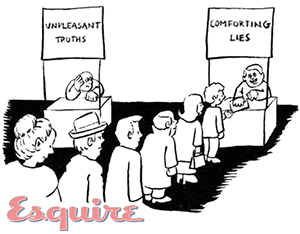
Radical Honesty is a technique and self-improvement program developed by Dr. Brad Blanton. The program asserts that lying is the primary source of modern human stress, and that practitioners will become happier by being more honest, even about painful or taboo subjects. Blanton claims this form of honesty can help all human relationships since it ‘creates an intimacy not possible if you are hiding something for the sake of someone’s feelings.’ The Radical Honesty technique includes having practitioners state their feelings bluntly, directly and in ways typically considered impolite.
People who practice Radical Honesty employ a collection of techniques to shift them out of acceptable norms of ‘white lying’ for the purpose of having a more truthful relationship with themselves and others. The material employed to communicate and teach Radical Honesty through books and workshops is drawn from an eclectic collection of sources including Sufism, clinical psychology, Gestalt therapy and the comic spiritual belief (developed by Blanton) called Futilitarianism. Futilitarianism claims it is futile to have any belief whatsoever.
Posted in Humor, Language, Philosophy |
Leave a Comment »
October 18, 2010


Freeganism is the practice of reclaiming and eating food that has been discarded. Freegans and Freeganism are often seen as part of a wider ‘anti-consumerist’ ideology, and freegans often employ a range of alternative living strategies based on limited participation in the conventional economy and minimal consumption of resources. Freegans ’embrace community, generosity, social concern, freedom, cooperation, and sharing in opposition to a society based on materialism, moral apathy, competition, conformity, and greed.’
The word ‘freegan’ is a portmanteau of ‘free’ and ‘vegan’; not all dumpster divers are vegan, but the ideology of veganism is inherent in freeganism. Freeganism started in the mid 1990s, out of the antiglobalization and environmentalist movements. The movement also has elements of Diggers, an anarchist street theater group based in Haight-Ashbury in San Francisco in the 1960s, that gave away rescued food.
Continue reading →
Posted in Food, Money, Philosophy |
Leave a Comment »
October 18, 2010

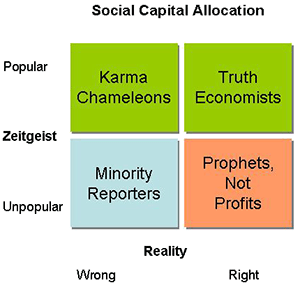
Whuffie is the ephemeral, reputation-based currency of Cory Doctorow’s science fiction novel, ‘Down and Out in the Magic Kingdom.’ This book describes a post-scarcity economy: All the necessities (and most of the luxuries) of life are free for the taking. A person’s current Whuffie is instantly viewable to anyone, as everybody has a brain-implant giving them an interface with the Net. The term has since seen some adoption as a synonym for social capital.
In the novel usual economic incentives have disappeared: Whuffie has replaced money, providing a motivation for people to do useful and creative things. A person’s Whuffie is a general measurement of his or her overall reputation and is gained (or lost) according to a person’s favorable (or unfavorable) actions. Public opinion determines which actions are favorable or unfavorable. Rudely pushing past someone on the sidewalk will cause a loss of points from the person pushed (and possibly from bystanders who witness the incident), while composing a much-loved symphony will earn the composer Whuffie from everyone who enjoyed it.
Posted in Money, Philosophy, Technology |
Leave a Comment »



 The Daily Omnivore