
A hype cycle is a graphic representation of the maturity, adoption and social application of specific technologies. The term was coined by information technology research and advisory firm Gartner.
Everything is Interesting
A hype cycle is a graphic representation of the maturity, adoption and social application of specific technologies. The term was coined by information technology research and advisory firm Gartner.
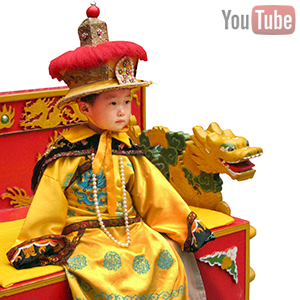
‘Little Emperors‘ is a name that refers to only children in the People’s Republic of China after the one-child policy was implemented. Attributed most frequently to increased spending power within the family unit and the parents’ desire for their child to experience the benefits they were denied, the syndrome results from the children’s sole command of the attention of their parents and grandparents. The Little Emperor effect is primarily an urban phenomenon. The one-child policy is not as rigorously enforced in the countryside as in the urban communities.


A hackerspace or hackspace (also referred to as a hacklab, makerspace or creative space) is a location where people with common interests, usually in computers, technology, or digital or electronic art can meet, socialise and/or collaborate. A hackerspace can be viewed as an open community labs incorporating elements of machine shops, workshops and/or studios where hackers can come together to share resources and knowledge to build and make things. Some hackspaces are freely available, and others charge dues for access to equipment and networks.
One notable hackerspace is the Hacker Dojo, a non-profit community center and hackerspace in Mountain View, California, inspired by nearby facilities like Noisebridge, TechShop, The Crucible, and Coworking locations like Citizen Space, Sandbox Suites, and The Hat Factory. The Dojo is a membership organization – nearly all funds come from $100/month membership subscriptions, though the organization has been sponsored by Google and Microsoft. Membership provides access to the 8180 square foot facility, equipped with computers, electronics, and a high speed network.
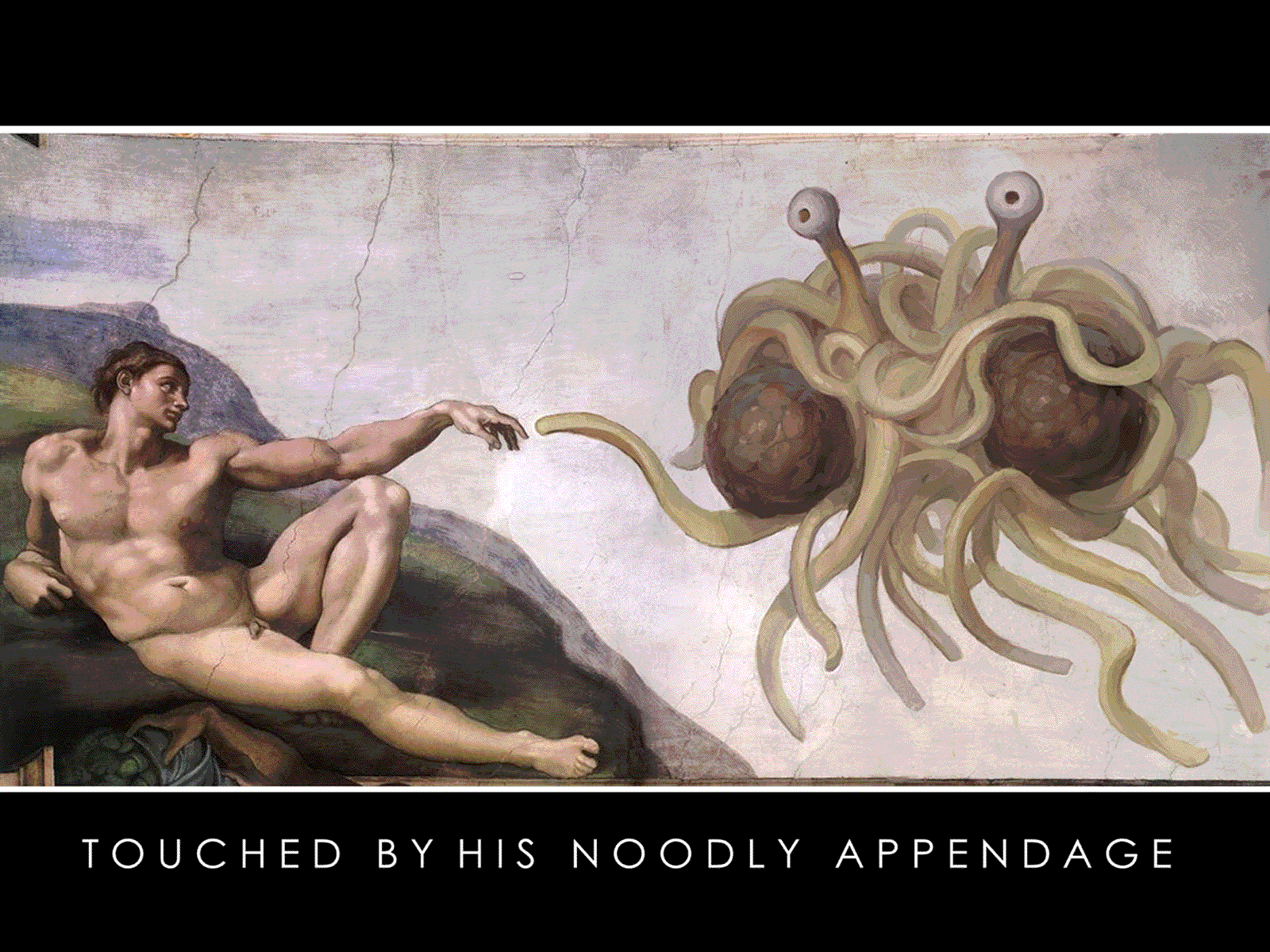
The Flying Spaghetti Monster (FSM) is the deity of the parody religion the Church of the Flying Spaghetti Monster or Pastafarianism, a satirical movement that promotes a light-hearted view of religion and opposes the teaching of intelligent design and creationism in public schools. Created in 2005 by Oregon State physics graduate Bobby Henderson, it was originally intended as a satirical protest against the decision by the Kansas State Board of Education to permit the teaching of intelligent design as an alternative to evolution in public schools. In an open letter, Henderson parodied the concept of intelligent design by professing belief in a supernatural creator which closely resembles spaghetti and meatballs. Henderson further called for his theory of creation to be allotted equal time in science classrooms alongside intelligent design and evolution.
In his letter he wrote, ‘I think we can all look forward to the time when these three theories are given equal time in our science classrooms across the country, and eventually the world; one third time for Intelligent Design, one third time for Flying Spaghetti Monsterism, and one third time for logical conjecture based on overwhelming observable evidence.’
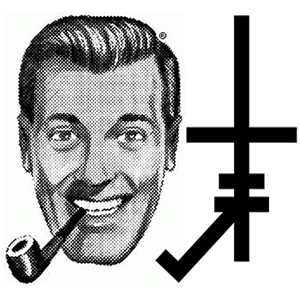
The Church of the SubGenius is a religious organization often seen as a ‘parody religion,’ that satirizes religion, conspiracy theories, Ufology, and popular culture. Originally based in Dallas, Texas, the Church of the SubGenius gained prominence in the 1980s and 1990s subculture and maintains an active presence on the Internet. In 1996 the legal entity SubGenius Foundation was incorporated in Cleveland, Ohio. The Foundation’s president and founder is Ivan Stang. It’s mascot is ‘world’s greatest salesman’ J. R. ‘Bob’ Dobbs. ‘Bob’ is depicted as a cartoon of a Ward Cleaver-like man smoking a pipe. It’s symbol is the ‘Dobb’s Mark,’ a stylized cross with three bars and a pipe, placed in a pattern that matches the eyes, nose, mouth, and pipe of ‘Bob’s’ image.
The central belief in the Church is the pursuit of ‘Slack,’ which generally stands for the sense of freedom, independence, and original thinking that comes when you stop worrying about personal goals. In essence, slack is about finding satisfaction with what you have and who you are, as opposed for searching for satisfaction in accomplishment.
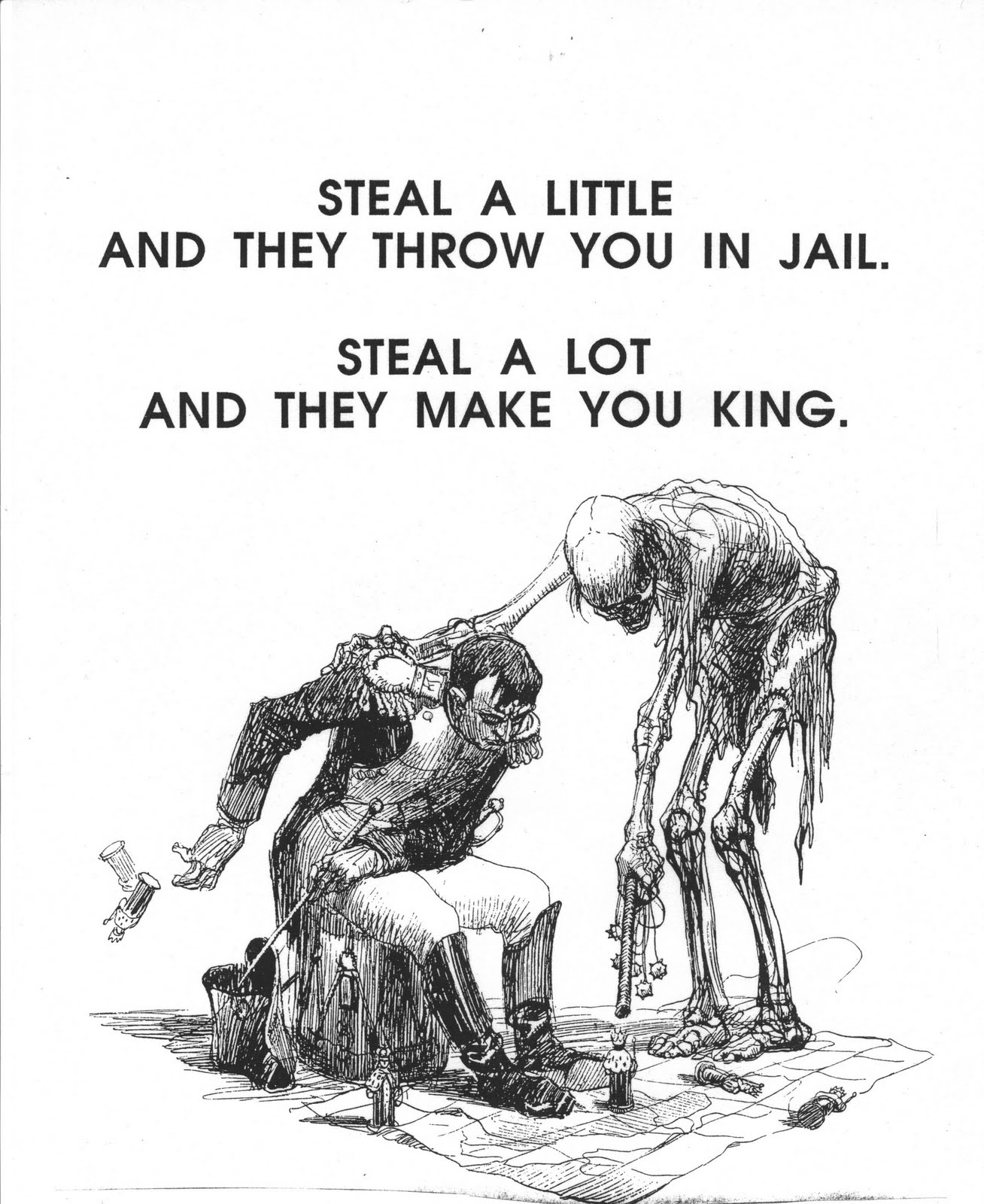
Mammon [mam-uhn] is a term, derived from the Christian Bible, used to describe material wealth or greed, most often personified as a deity.

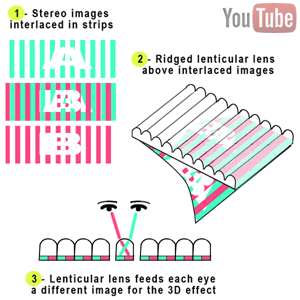
Lenticular [len-tik-yuh-ler] printing is a technology in which a lenticular lens (an array of magnifying lenses, designed so that when viewed from slightly different angles, different images are magnified) is used to produce images with an illusion of depth, or the ability to change or move as the image is viewed from different angles. This technology was created in the 1940s but has evolved in recent years to show more motion and increased depth.
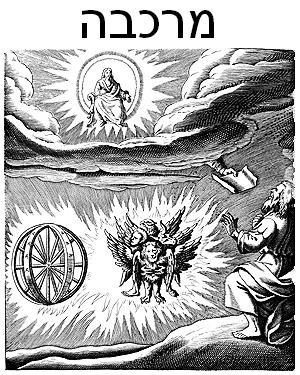
The Hebrew word Merkabah is used in Ezekiel (1:4-26) to refer to the throne-chariot of God, the four-wheeled vehicle driven by four ‘chayot’ (‘living creatures’), each of which has four rings and the four faces of a man, lion, ox, and eagle. Due to the concern of some Torah scholars that misunderstanding these passages as literal descriptions of God’s image might lead to blasphemy and/or idolatry, there was great opposition to studying this topic.
Jewish biblical commentaries emphasize that the imagery of the Merkaba is not meant to be taken literally; rather the chariot and its accompanying angels are analogies for the various ways that God reveals Himself in this world. Hasidic philosophy and Kabbalah discuss at length what each aspect of this vision represents in this world, and how the vision does not imply that God is made up of these forms. Jews customarily read the Biblical passages concerning the Merkaba in their synagogues every year on the holiday of Shavuot, which commemorates the receiving of the Ten Commandments.
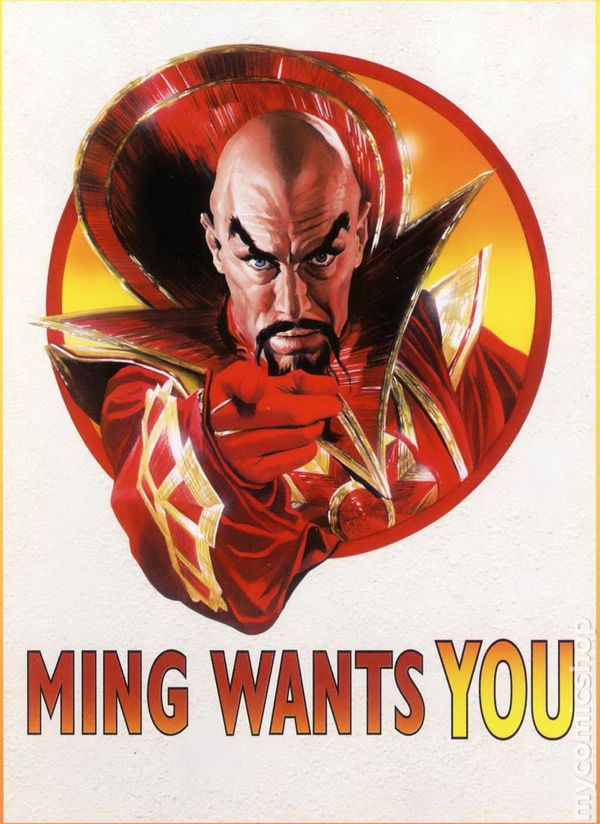
Ming the Merciless is a fictional character who first appeared in the Flash Gordon comic strip in 1934. He has since been the main villain of the strip and its related movie serials, TV shows and film adaptation. The capital of his empire is named ‘Mingo City’ in his honour. In addition to his army, Ming has access to a wide variety of science fiction gadgets, ranging from rocket ships to death rays to robots.


Xenu [zee-noo] was, according to the founder of Scientology and science fiction writer L. Ron Hubbard, the dictator of the ‘Galactic Confederacy’ who, 75 million years ago, brought billions of his people to Earth in a DC-8-like spacecraft, stacked them around volcanoes and killed them using hydrogen bombs. Official Scientology dogma holds that the essences of these many people remained, and that they form around people in modern times, causing them spiritual harm.
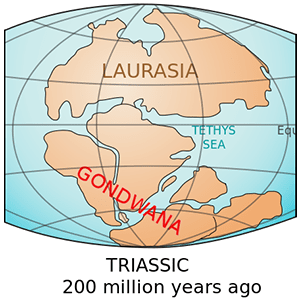

Gondwana [gond-wah-nu], originally Gondwanaland, is the name given to a southern precursor supercontinent. Its final geological suturing occurred between ca. 570 and 510 million years ago, joining East Gondwana to West Gondwana. It later separated from Laurasia 180-200 million years ago during the breakup of the Pangaea supercontinent that existed about 500 to 200 million years ago into two large segments, nearly equal in area. The continent of Gondwana was named by Austrian scientist, Eduard Suess, after the Gondwana region of central northern India
The adjective ‘Gondwanan’ is in common use in biogeography when referring to patterns of distribution of living organisms, typically when the organisms are restricted to two or more of the now-discontinuous regions that were once part of Gondwana, including the Antarctic flora. For example, the Proteaceae, a family of plants that is known only from southern South America, South Africa, and Australia are considered to have a “Gondwanan distribution”. This pattern is often considered to indicate an archaic, or relict, lineage.
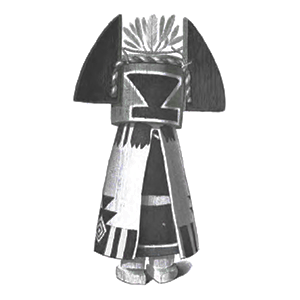
A kachina [kuh-chee-nuh] is a spirit being in the cosmology and religious practices of the Pueblo people of the southwestern U.S.. The term also refers to the kachina dancers, masked members of the tribe who dress up as kachinas for religious ceremonies, and kachina dolls, wooden dolls representing kachinas which are given as gifts to children.
A kachina can represent anything in the natural world or cosmos, from a revered ancestor to an element, a location, a quality, a natural phenomenon, or a concept. Continue reading


 The Daily Omnivore