October 26, 2016

Birdwell, makers of Birdwell Beach Britches, is an American surf clothing company headquartered in Santa Ana, California. Founded by Carrie Birdwell Mann in 1961, the company manufactures and sells customized heavy-duty swimsuits, which are sold internationally. With four basic models, various fabrics, including Surfnyl, Tectyl, heavy nylon, sailcloth, and canvas, more than 40 colors, and various other options, the combinations that can be created are nearly endless. The company’s motto is ‘We don’t build 1000 things. We build one thing 1000 ways.’
The swimsuits themselves, which resemble board shorts, are paneled swimsuits, with waistbands resembling those of boxing trunks, always double-stitched, always with two layers of fabric. These shorts are known and favored among surfers, lifeguards, and paddleboarders, because of their quick-drying design and extreme durability; with an estimated 10 years for average use, and two to five years for more strenuous use. On all of the trunks there is a 2 square inch logo, of a stylized anthropomorphic surfboard, wearing, of course, Birdwell Beach Britches, nicknamed ‘Birdie.’
Posted in Games, Money |
Leave a Comment »
October 25, 2016
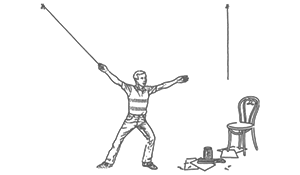

Einstellung [ahyn-stel-luhng] (German: ‘attitude’) is the development of a mechanized state of mind. Often called a ‘problem solving set,’ Einstellung refers to a person’s predisposition to solve a given problem in a specific manner even though better or more appropriate methods of solving the problem exist. The Einstellung effect is the negative effect of previous experience when solving new problems. It has been tested experimentally in many different contexts.
The Einstellung effect occurs when a person is presented with a problem or situation that is similar to problems they have worked through in the past. If the solution (or appropriate behavior) to the problem/situation has been the same in each past experience, the person will likely provide that same response without giving the problem too much thought. This behavior is heuristical (related to mental shortcuts), it is one of the human brain’s ways of finding solutions as efficiently as possible. Continue reading →
Posted in Education, Health, Science |
1 Comment »
October 19, 2016

An epiphany [ih-pif-uh-nee] (from the ancient Greek ‘epiphaneia,’ ‘manifestation,’ ‘striking appearance’) is an experience of sudden and striking realization. Generally the term is used to describe scientific, religious, or philosophical discoveries, but it can apply in any situation in which an enlightening realization allows a problem or situation to be understood from a new and deeper perspective. Epiphanies are studied by psychologists and other scholars, particularly those attempting to study the process of innovation.
Epiphanies are relatively rare occurrences and generally follow a process of significant thought about a problem. Often they are triggered by a new and key piece of information, but importantly, a depth of prior knowledge is required to allow the leap of understanding. Famous epiphanies include Archimedes’s discovery of a method to determine the density of an object (‘Eureka!’) and Isaac Newton’s realization that a falling apple and the orbiting moon are both pulled by the same force. The word epiphany originally referred to insight through the divine. Today, this concept is more often used without such connotations, but a popular implication remains that the epiphany is supernatural, as the discovery seems to come suddenly from the outside. Continue reading →
Posted in Education, Philosophy, Science |
Leave a Comment »
October 17, 2016
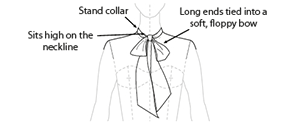
The word pussy is a noun, an adjective, and in rare uses a verb in the English language. It has several meanings, including use as slang, as euphemism, and as vulgarity. Common meanings of the noun include ‘cat,’ ‘coward or weakling,’ and ‘the human vulva or vagina.’ Because of its multiple senses including both innocent and vulgar connotations, ‘pussy’ is often the subject of double entendre, including the late-19th-century vaudeville act the Barrison Sisters, who performed the notorious routine ‘Do You Want To See My Pussy?’ in which they raised their skirts to reveal live kittens.
The etymology of the word is not entirely clear. Several different senses of the word have different histories or origins. The feline variant comes from the Modern English word ‘puss,’ a conventional name or term of address for a pet cat in several Germanic languages, including Dutch (‘poes’) and Middle Low German (pūse). The word puss is attested in English as early as 1533. Earlier etymology is uncertain, but similar words exist in other European languages, including Lithuanian (puižė) and Irish (puisín) as traditional calls to attract a cat. Continue reading →
Posted in Language, Sex, World |
Leave a Comment »
October 15, 2016
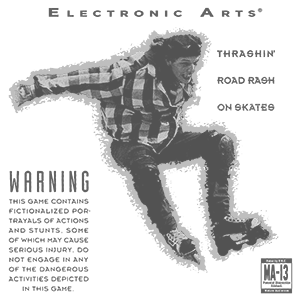
Skitching (‘ski-hitching’ or ‘skate-hitching’) is the act of hitching a ride by holding onto a motor vehicle while riding on a skateboard, roller skates or bicycle. It is also sometimes referred to as ‘bumper hitching,’ ‘bumpershining,’ or ‘poggying.’ When done on icy or snowy streets it’s often called ‘bizzing,’ ‘bumper jumping,’ or ‘hooky bobbing. When a snowboard is used it is called ‘snitching.’ The term ‘skitching’ can refer to a number of related activities. The unifying concept is that the ‘skitcher’ holds onto a motorized vehicle while it is in motion, using the vehicle to propel themselves along.
Skateboard skitching is the most referenced type of skitching in news sources and popular culture, but not the most practiced in reality. It has appeared in films and video games, and is confirmed to be the cause of death for a number of skateboarders. Some drivers are willing participants in skateboard skitching, which can open them up to legal action in the event of an accident. Because skitching is often done in traffic, on inadequate equipment for the speeds traveled, and sometimes without the knowledge of the driver of the vehicle, there is significant potential for injury or death. Skateboarding celebrity Tony Hawk has advocated against the practice of skitching due to the related deaths and injuries. Continue reading →
Posted in Games |
Leave a Comment »
October 11, 2016

Vanity sizing, or ‘size inflation,’ is the phenomenon of ready-to-wear clothing of the same nominal size becoming bigger in physical size over time. This has been documented primarily in the United States and the United Kingdom. Vanity sizing tends to occur where clothing sizes are not standardized, such as the U.S. market. In 2003, a study that measured over 1,000 pairs of women’s pants found that pants from more expensive brands tended to be smaller than those from cheaper brands with the same nominal size.
In Sears’s 1937 catalog, a size 14 dress had a bust size of 32 inches. In 1967, that bust size was used for size 8 dresses. In 2011, it was a size 0. Some argue that vanity sizing is designed to satisfy wearers’ wishes to appear thin and feel better about themselves. Designer Nicole Miller introduced size 0 because of its strong California presence and to satisfy the request of many Asian customers. However, the increasing size of clothing with the same nominal size caused Nicole Miller to introduce size 0, 00, or subzero sizes. Continue reading →
Posted in Health, Money, World |
Leave a Comment »
October 10, 2016

Bicycle wheels are comprised of a tough outer tire, a soft inner tube, and a rim (the stiff outermost-edge which is often supported by spokes). The inner tube is inflated means of a valve stem that opens to let air in and then automatically closes and is kept sealed by the pressure in the chamber. The Presta valve (also called the ‘Sclaverand’ or ‘French’ valve) is a valve commonly found in high pressure (100 psi) road style inner tubes. It is comprised of an outer valve stem and an inner valve body. A lock nut to secure the stem at the wheel rim and a valve cap may also be present.
The outer valve stem is manufactured in various lengths for different applications, and has a narrower diameter at the base (6 mm) than the more common Schrader or American valve (8 mm) and is also used on most automobile tires. Japan, India, Russia, Germany, Britain, and several other countries use a third type of valve for their bicycles, the Dunlop (also called a ‘Woods’ or ‘English’ valve) which also has a wider base than a Presta valve. It is similar enough in size to a Schrader valve to use identically drilled valve holes in rims, but it can be inflated with a Presta valve adapter. Continue reading →
Posted in Games, Technology |
Leave a Comment »
October 5, 2016
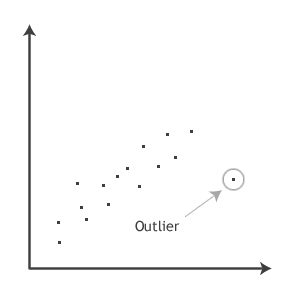
The Roseto effect is the phenomenon by which a close-knit community experiences a reduced rate of heart disease. From 1954 to 1961, the town of Roseto, Pennsylvania had nearly no heart attacks for the otherwise high-risk group of men 55 to 64, and men over 65 enjoyed a death rate of 1% while the national average was 2%. Widowers outnumbered widows, too. These statistics were at odds with a number of other factors observed in the community. They smoked unfiltered cigars, drank wine ‘with seeming abandon’ in lieu of milk and soft drinks, skipped the Mediterranean diet in favor of meatballs and sausages fried in lard with hard and soft cheeses. The men worked in the slate quarries where they contracted illnesses from gases and dust. Roseto also had little to no crime, and very few applications for public assistance.
It was first noticed in 1961 when the local doctor from Roseto encountered Dr. Stewart Wolf, then head of Medicine of the University of Oklahoma, and they discussed, over a couple of beers, the unusually low rate of myocardial infarction in Roseto compared with other locations. Many investigations followed. Wolf attributed Rosetans’ lower heart disease rate to lower stress. ‘The community was very cohesive. There was no keeping up with the Joneses. Houses were very close together, and everyone lived more or less alike.’ Elders were revered and incorporated into community life. Housewives were respected, and fathers ran the families. A 50-year study comparing nearby towns of Bangor and Nazareth found that heart disease rose in the Bangor cohort as it shed their Italian social structure and became more Americanized.
Posted in Health, World |
1 Comment »
September 27, 2016
A logo is a graphic mark, emblem, or symbol commonly used by commercial enterprises, organizations and even individuals to aid and promote instant public recognition. Logos are either purely graphic (symbols/icons) or are composed of the name of the organization (a ‘logotype’ or ‘wordmark’).
In the days of hot metal typesetting, a logotype was one word cast as a single piece of type, e.g. ‘The’ (as opposed to a ‘ligature,’ which is two or more letters joined, but not forming a word). By extension, the term was also used for a uniquely set and arranged typeface or colophon (a brief description of the manuscript or book to which it is attached). At the level of mass communication and in common usage, a company’s logo is today often synonymous with its trademark or brand. Continue reading →
Posted in Art, Language, Money |
Leave a Comment »
September 21, 2016

In educational institutions, safe-space (or safer-space or positive space) originally were terms used to indicate that a teacher, educational institution or student body does not tolerate anti-LGBT violence, harassment or hate speech, thereby creating a safe place for all lesbian, gay, bisexual, and transgender students. The term safe space has been extended to refer to a space for individuals who are marginalized to come together to communicate regarding their experiences with marginalization, typically on a university campus. It has been criticized for being contrary to freedom of speech.
In the U.S. the concept originated in the women’s movement, where it ‘implies a certain license to speak and act freely, form collective strength, and generate strategies for resistance…a means rather than an end and not only a physical space but also a space created by the coming together of women searching for community.’ The first safe spaces were gay bars and consciousness raising groups. Positive Space initiatives are prevalent in post-secondary institutions across Canada including McGill University and the University of Toronto. Continue reading →
Posted in Education, Politics, Sex |
Leave a Comment »
September 15, 2016


Carbonated water (also known as club soda, soda water, sparkling water, seltzer, fizzy water, or water with gas) is water into which carbon dioxide gas under pressure has been dissolved. This process, known as carbonation, is a process that causes the water to become effervescent (form bubbles). Most carbonated water is sold in ready to drink bottles as mineral water and carbonated beverages such as soft drinks. However, it is rather easy to prepare at home with soda makers.
Whether homemade or store-bought, soda water may be identical to plain carbonated water or it may contain a small amount of table salt, sodium citrate, sodium bicarbonate, potassium bicarbonate, potassium citrate, potassium sulfate, or disodium phosphate, depending on the bottler. These additives are often included to emulate the slightly salty taste soda water developed years ago from first using them as preservatives. Naturally occurring processes also produce effervescent mineral water similar to carbonated water in artesian wells, such as in Mihalkovo in the Bulgarian Rhodope Mountains, in Medžitlija in Macedonia, or most notably in Selters in the German Taunus mountains. Continue reading →
Posted in Food |
Leave a Comment »
September 13, 2016


The three wishes joke is a form of joke in which the protagonist is given three wishes by a supernatural being, and fails to make the best use of them. Common scenarios include releasing a genie from confinement – perhaps finding an old oil lamp and rubbing it; catching and agreeing to release a mermaid or magical fish; or crossing paths with the devil.
The protagonist of the joke makes their first two wishes and finds that all is well. Often, the third wish is either misinterpreted, or intentionally granted in an awkwardly literal fashion, and cannot be reversed because it is the final wish, resulting in the punchline of the joke. Alternatively, the wishes are split between three people, with the last person inadvertently or intentionally messing up or undoing the wishes of the others with their wish to form the punchline. Continue reading →
Posted in Humor, Language |
Leave a Comment »



