August 5, 2010

Plumpy’nut is a peanut-based food for use in famine relief which was formulated in 1999 by André Briend, a French paediatric nutritionist. The product is a high protein and high energy peanut-based paste in a foil wrapper. It tastes slightly sweeter than peanut butter. It is categorized by the WHO as a Ready-to-Use Therapeutic Food (RUTF). Plumpy’nut requires no water preparation or refrigeration and has a 2 year shelf life making it easy to deploy in difficult conditions to treat severe acute malnutrition. It can be used as a replacement for infant formula for children who are at least 6 months old.
Plumpy‘nut was first used during the crisis in Darfur in western Sudan. There, it was fed to some 30,000 children and aid officials there say it has helped cut malnutrition rates in half. It has since been used by the UN and humanitarian organizations in Niger, Haiti, and many other countries.
Posted in Food, Health, World |
Leave a Comment »
August 5, 2010


Blindekuh are two restaurants where patrons are served in the dark. The restaurants are located in Basel and Zürich, Switzerland. The name is derived from ‘Blinde Kuh’ (blind cow), the German name for blind man’s bluff. No lights are allowed inside a Blindekuh. Patrons are served by blind and visually impaired people. Both locations offer cultural events such as readings or concerts in the dark.
The first Blindekuh, opened on September 17, 1999 and is claimed to be the world’s first dark restaurant. The concept has subsequently been replicated elsewhere, including in London, Paris, Sydney, Amsterdam, Tel Aviv and Beijing as restaurants and multiple cities in the United States. Some dark restaurants supply night vision equipment to the wait staff.
Posted in Art, Food |
Leave a Comment »
August 5, 2010

A silent disco is a disco where people dance to music listened to on headphones. Rather using than a speaker system, music is broadcast via an FM transmitter with the signal being picked up by wireless headphone receivers worn by the partygoers. Those without the headphones hear no music, giving the effect of a room full of people dancing to nothing. Often two DJs compete for listeners. Silent discos and silent gigs are popular at music festivals as they allow dancing to continue past noise curfews. Similar events are ‘mobile clubbing’ gatherings, where a group of people meet up, often on short notice, to dance to the music on their personal music players.
Posted in Art, Technology |
1 Comment »
August 4, 2010

Rule 34 is a generally accepted internet observation which states: ‘If it exists, there is porn of it. No exceptions.’ It implies that there is a sexual fetish for every conceivable subject matter. It originated from a 2003 webcomic drawn by Peter Morley-Souter to depict his shock at seeing Calvin and Hobbes parody porn. Morley-Souter posted his comic on the United Kingdom website ‘Zoom-Out in 2004,’ and it has been widely reproduced. ‘Boing Boing’ blogger Cory Doctorow writes of the meme: ‘Rule 34 can be thought of as a kind of indictment of the Web as a cesspit of freaks, geeks, and weirdos, but seen through the lens of cosmopolitanism,’ which ‘bespeaks a certain sophistication—a gourmet approach to life.’
The conundrum of finding an Internet pornographic exception to Rule 34’s ‘No exceptions’ led to Rule 35: ‘If no porn is found at the moment, it will be made.’
Posted in Humor, Sex |
Leave a Comment »
August 4, 2010

Godwin’s law is a humorous observation made by Mike Godwin in 1990 which has become an Internet adage. It states: ‘As an online discussion grows longer, the probability of a comparison involving Nazis or Hitler approaches 1.’ In other words, given enough time, all discussions —regardless of topic or scope —inevitably wind up being about Hitler and the Nazis. Also the poster who mentioned Nazis loses all debates/discussions they had in said topic, and their insults are nullified. Godwin’s law is often cited in online discussions as a deterrent against the use of arguments in the widespread reductio ad Hitlerum form.
The rule does not make any statement about whether any particular reference or comparison to Adolf Hitler or the Nazis might be appropriate, but only asserts that the likelihood of such a reference or comparison arising increases as the discussion progresses. It is precisely because such a comparison or reference may sometimes be appropriate, Godwin has argued that overuse of Nazi and Hitler comparisons should be avoided, because it robs the valid comparisons of their impact. Although in one of its early forms Godwin’s law referred specifically to Usenet newsgroup discussions, the law is now applied to any threaded online discussion: electronic mailing lists, message boards, chat rooms, and more recently blog comment threads, wiki talk pages, and social networking sites.
Posted in Humor, Language, War |
Leave a Comment »
August 4, 2010
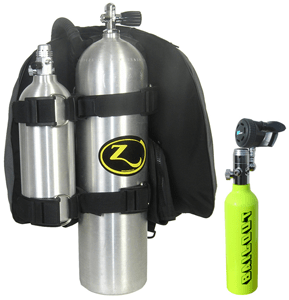
A pony bottle is a small diving cylinder, often of only a few litres capacity, which is filled from a main tank before a dive and fitted with its own independent regulator. In an emergency, such as exhaustion of the diver’s main air supply, it can be used as an alternate air source in place of a controlled emergency swimming ascent. By comparison a bailout bottle, which serves a similar purpose, is both smaller and has a regulator integrated into the cylinder. Since their introduction in the 1980s, bailout bottles have been the subject of debate within the diving community.
The argument against bailout bottles is that they do not have sufficient capacity to get a diver in many emergency situations back to the surface safely, and thus cause divers to feel a false sense of safety. A review carried out by Scuba Diving magazine attempted to give a sense of from what depth bailout bottles of various capacities could get divers to the surface under maximum safe ascent rates. The review found that a 1.7 cubic foot bottle had sufficient air to get the reviewing diver from 45 feet to the surface; a 3 cubic foot bottle from a depth of 70 feet; and a 6 cubic foot bottle from the maximum reviewed depth of 132 feet.
Posted in Health, Technology |
Leave a Comment »
August 3, 2010

Yantra is the Sanskrit word for ‘instrument’ or ‘machine.’ Much like the word instrument itself, it can stand for symbols, processes, automata, machinery or anything that has structure and organization, depending on context. One usage popular in the West is as symbols or geometric figures. Traditionally such symbols are used in Eastern mysticism to balance the mind or focus it on spiritual concepts. The act of wearing, depicting, enacting and/or concentrating on a yantra is held to have spiritual or astrological or magical benefits in the Tantric traditions of the Indian religions.
Posted in World |
Leave a Comment »
August 3, 2010
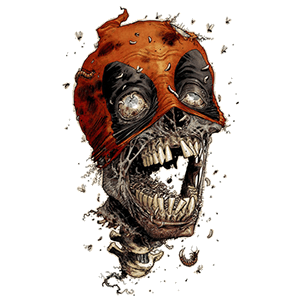
Deadpool is a fictional character and anti-hero appearing in comic books published by Marvel Comics. Created by artist Rob Liefeld and writer Fabian Nicieza, Deadpool first appeared in ‘The New Mutants’ #98 in 1991. A disfigured and mentally unstable mercenary, Deadpool originally appeared as a villain, but the character has since starred in several ongoing series, which is used by writers for humorous effect. The character is famous for his tendency to break the fourth wall and is frequently referred to by the moniker ‘Merc with a Mouth.’
In 1991 Rob Liefeld, a fan of the ‘Teen Titans’ comics, showed his new character to then writer Fabian Nicieza. Upon seeing the costume and noting his characteristics (killer with super agility), Nicieza said, ‘this is Deathstroke from Teen Titans.’ Nicieza gave Deadpool the real name of ‘Wade Wilson’ as an in-joke to being related to ‘Slade Wilson,’ aka Deathstroke. In his first appearance, Deadpool was hired to attack Cable and the New Mutants. After subsequently appearing in ‘X-Force’ as a recurring character, Deadpool began making guest appearances in various different Marvel Comics titles such as the ‘Avengers,’ ‘Daredevil,’ and ‘Heroes for Hire.’
Continue reading →
Posted in Art, Humor |
Leave a Comment »
August 3, 2010
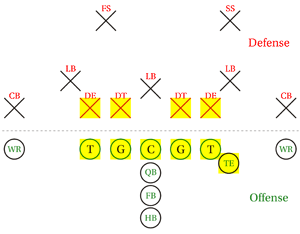
In American football, a lineman is a player who specializes in play at the line of scrimmage. The offensive line consists of the center, who is responsible for putting the ball into play, two guards who flank the center, and two offensive tackles who flank the guards. In addition, an offensive line may also include a tight end outside one or both of the tackles. An offensive lineman’s motion during a play is often limited to just a few quick steps to establish position, followed by a wrestling match similar to sumo. Offensive linemen thus tend to be the largest players on the field, with excellent agility and balance but limited straight-line running speed.
The defensive line consists of one or two defensive tackles and two defensive ends who play outside the defensive tackles. Defensive linemen—particularly defensive ends–are called upon to do more running than offensive linemen, thus they usually tend to be somewhat smaller and faster.
Posted in Games |
Leave a Comment »
August 3, 2010

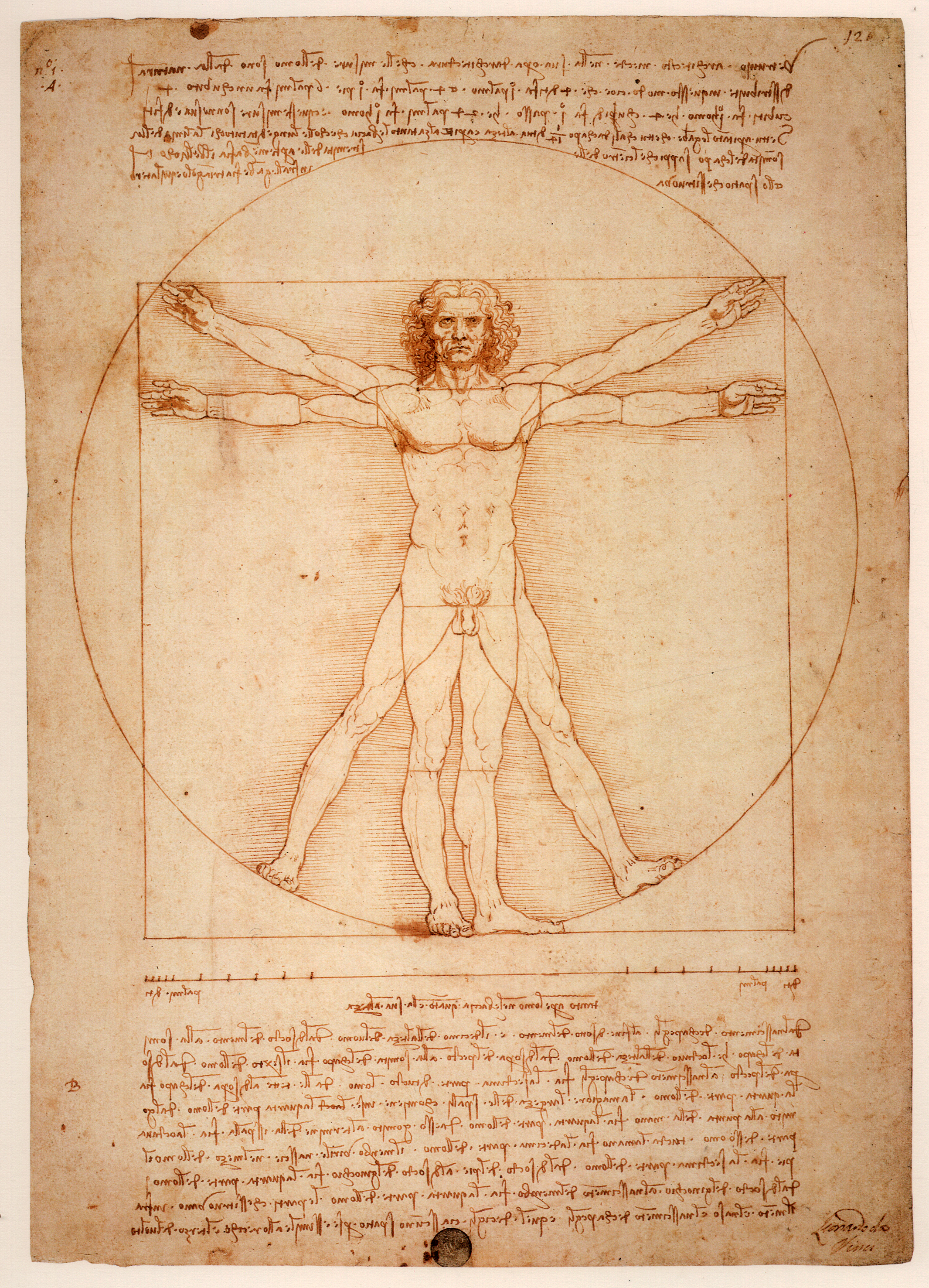
The Vitruvian [vi-troo-vee-uhn] Man is a world-renowned drawing created by Leonardo da Vinci around the year 1487. It is accompanied by notes based on the work of the famed architect, Vitruvius. The drawing, which is in pen and ink on paper, depicts a male figure in two superimposed positions with his arms and legs apart and simultaneously inscribed in a circle and square. The drawing and text are sometimes called the Canon of Proportions or, less often, Proportions of Man. It is stored in the Gallerie dell’Accademia in Venice, Italy, and, like most works on paper, is displayed only occasionally.
The drawing is based on the correlations of ideal human proportions with geometry described by the ancient Roman architect Vitruvius in Book III of his treatise De Architectura. Vitruvius described the human figure as being the principal source of proportion among the Classical orders of architecture. Other artists had attempted to depict this concept, with less success. Leonardo’s drawing is traditionally named in honor of the architect.
Posted in Art, Science |
Leave a Comment »
August 3, 2010

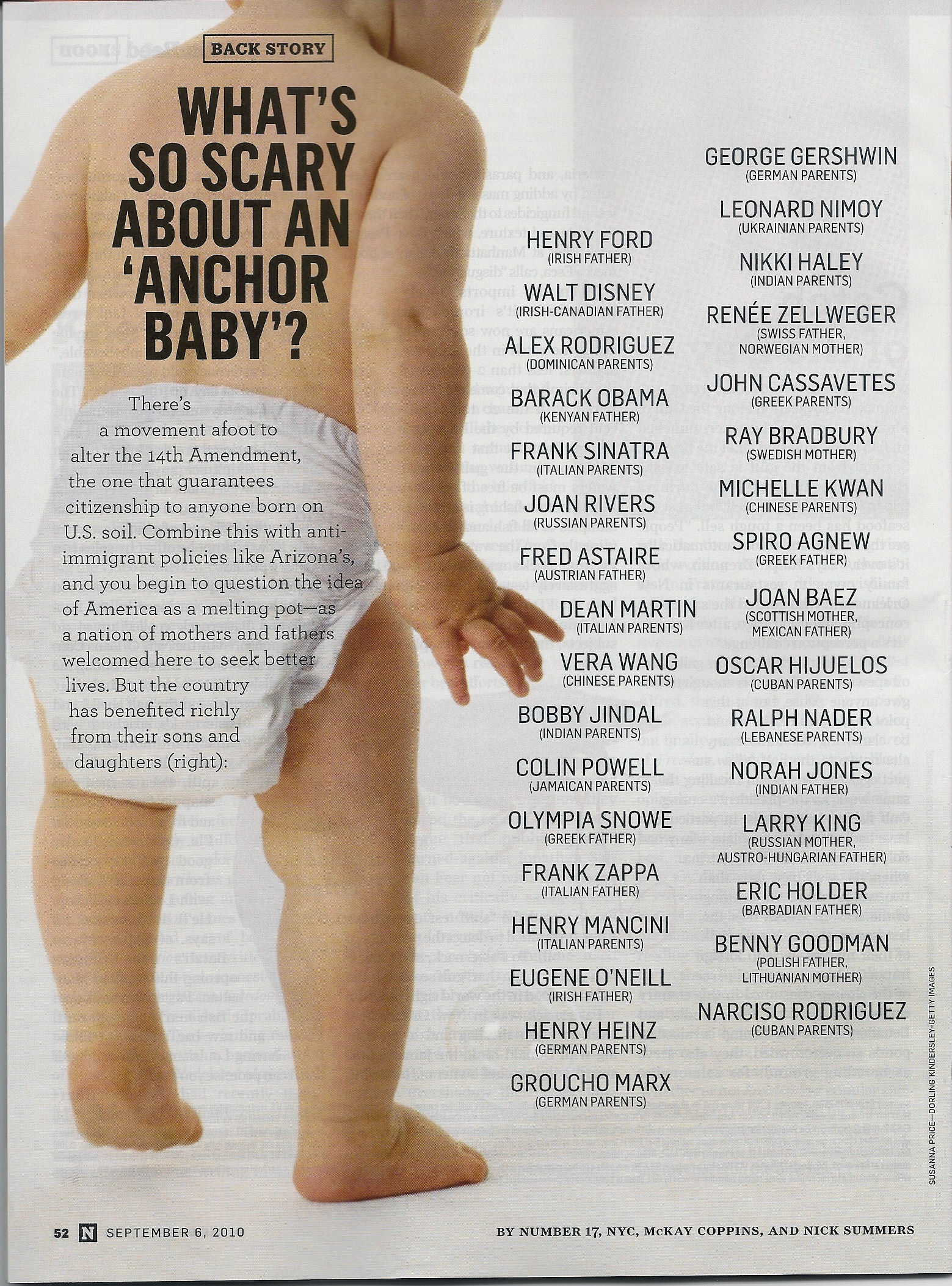
Anchor baby is a term used by immigration reductionists in the United States to describe a child born in the U.S. to illegal aliens. It is generally used as a derogatory reference to the supposed role of the child, who as a U.S. citizen through the legal principle of jus soli, may facilitate immigration for relatives through family reunification.
Family reunification, or family-based immigration, in the USA is a lengthy process and limited to categories prescribed by provisions of the Immigration and Nationality Act of 1965, which attempts to balance the right of a family to live together, or the right of a person to marry whomever he chooses, with the country’s right to control immigration. A sub-case of family reunification is marriage migration, where one spouse immigrates to the country of the other spouse. Marriage migration can take place before marriage, in which case it falls under its own special category, or it can take place after marriage, in which case it falls under family reunification laws.
Posted in Politics, World |
Leave a Comment »
August 3, 2010
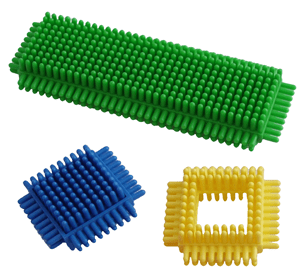
Stickle Bricks are a construction toy primarily intended for toddlers invented by Denys Fisher. The brand is owned by Hasbro and they are currently manufactured by Flair Leisure Products plc. An individual stickle brick is a colourful plastic shape a few centimeters long which has a brush of small plastic fingers on one or more edges. The fingers of adjacent stickle bricks can interlock, allowing them to be joined in various ways. Several companies manufacture similar toys, not all of them compatible. Names for these toys include Nopper, Bristle Blocks, Fun Bricks, Clipo, Krinkles and Thistle Blocks.
Posted in Games |
1 Comment »





 The Daily Omnivore