August 3, 2010

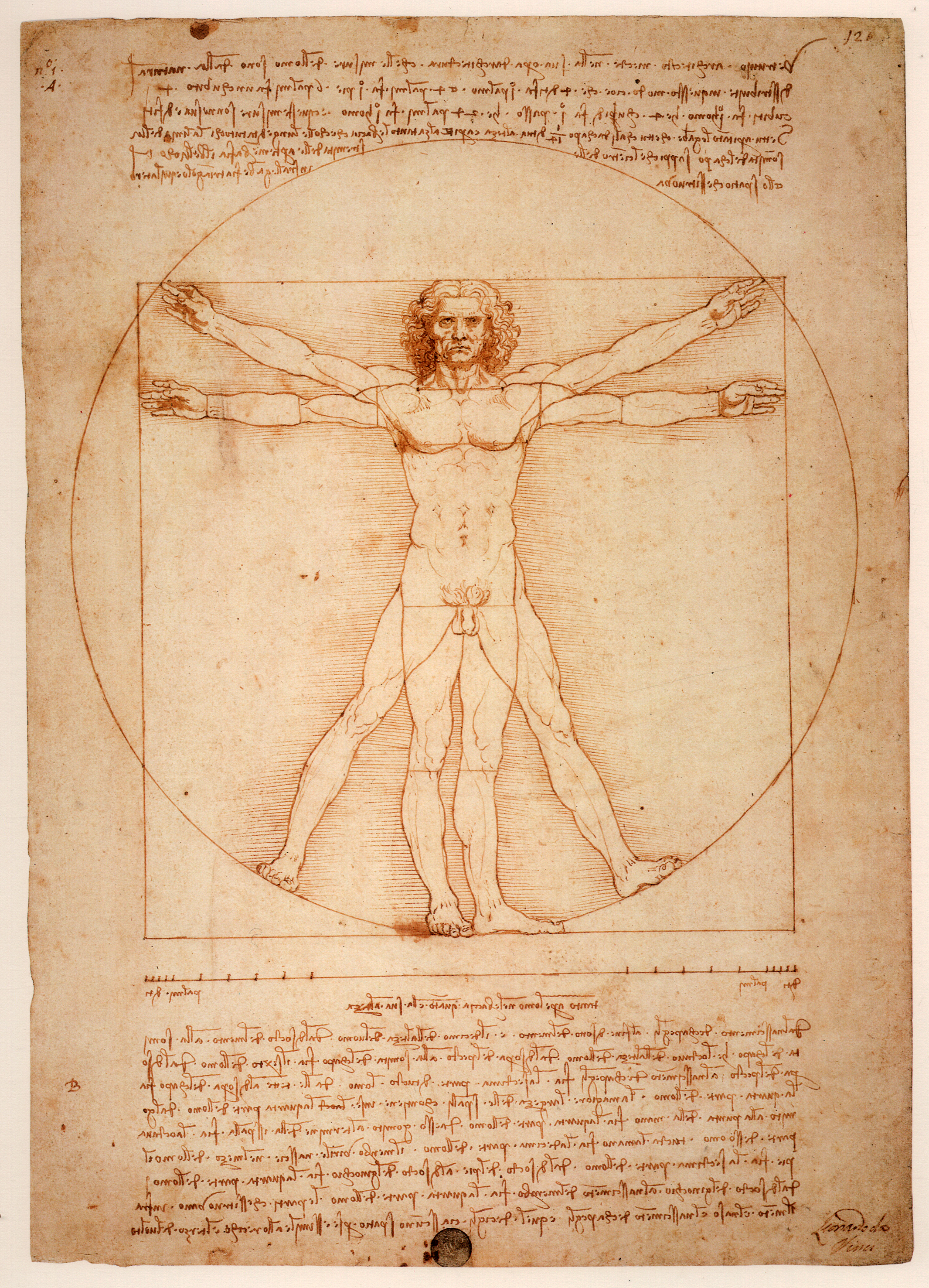
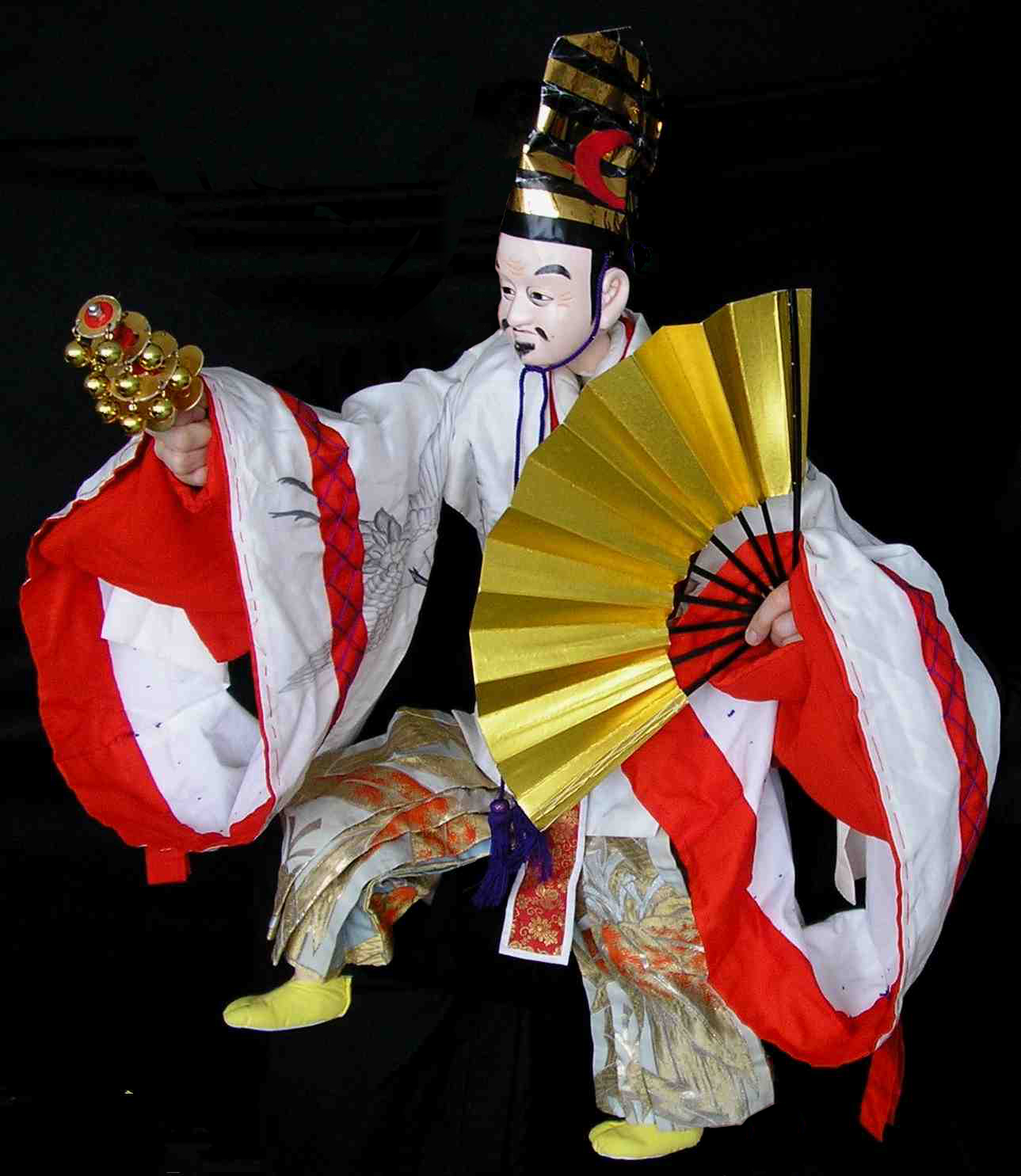
The Vitruvian [vi-troo-vee-uhn] Man is a world-renowned drawing created by Leonardo da Vinci around the year 1487. It is accompanied by notes based on the work of the famed architect, Vitruvius. The drawing, which is in pen and ink on paper, depicts a male figure in two superimposed positions with his arms and legs apart and simultaneously inscribed in a circle and square. The drawing and text are sometimes called the Canon of Proportions or, less often, Proportions of Man. It is stored in the Gallerie dell’Accademia in Venice, Italy, and, like most works on paper, is displayed only occasionally.
The drawing is based on the correlations of ideal human proportions with geometry described by the ancient Roman architect Vitruvius in Book III of his treatise De Architectura. Vitruvius described the human figure as being the principal source of proportion among the Classical orders of architecture. Other artists had attempted to depict this concept, with less success. Leonardo’s drawing is traditionally named in honor of the architect.
Posted in Art, Science |
Leave a Comment »
August 3, 2010

Anchor baby is a term used by immigration reductionists in the United States to describe a child born in the U.S. to illegal aliens. It is generally used as a derogatory reference to the supposed role of the child, who as a U.S. citizen through the legal principle of jus soli, may facilitate immigration for relatives through family reunification.
Family reunification, or family-based immigration, in the USA is a lengthy process and limited to categories prescribed by provisions of the Immigration and Nationality Act of 1965, which attempts to balance the right of a family to live together, or the right of a person to marry whomever he chooses, with the country’s right to control immigration. A sub-case of family reunification is marriage migration, where one spouse immigrates to the country of the other spouse. Marriage migration can take place before marriage, in which case it falls under its own special category, or it can take place after marriage, in which case it falls under family reunification laws.
Posted in Politics, World |
Leave a Comment »
August 3, 2010

Stickle Bricks are a construction toy primarily intended for toddlers invented by Denys Fisher. The brand is owned by Hasbro and they are currently manufactured by Flair Leisure Products plc. An individual stickle brick is a colourful plastic shape a few centimeters long which has a brush of small plastic fingers on one or more edges. The fingers of adjacent stickle bricks can interlock, allowing them to be joined in various ways. Several companies manufacture similar toys, not all of them compatible. Names for these toys include Nopper, Bristle Blocks, Fun Bricks, Clipo, Krinkles and Thistle Blocks.
Posted in Games |
1 Comment »
August 3, 2010

The Five Tibetan Rites is a system of exercises reported to be more than 2,500 years old which were first publicized by Peter Kelder in a 1939 publication entitled The Eye of Revelation. Kelder claims to have met, in southern California, a retired British army colonel who shared with him stories of travel and the subsequent discovery of the Rites. Although the Rites have circulated amongst yogis for decades, skeptics say that Tibetans have never recognized them as being authentic Tibetan practices.
Posted in Health, World |
Leave a Comment »
August 3, 2010

Tilt-shift photography refers to the use of camera movements on small- and medium-format cameras, and sometimes specifically refers to the use of tilt for selective focus, often for simulating a miniature scene. Sometimes the term is used when the shallow depth of field is simulated with digital post processing; the name may derive from the tilt-shift lens normally required when the effect is produced optically.
Nikon introduced a lens providing shift movements for their 35 mm SLR cameras in the mid 1960s, and Canon introduced a lens that provided both tilt and shift movements in 1973. Canon and Nikon each currently offer several lenses that provide both movements. Such lenses are frequently used in architectural photography to control perspective, and in landscape photography to get an entire scene sharp.
Posted in Art, Technology |
Leave a Comment »
August 3, 2010
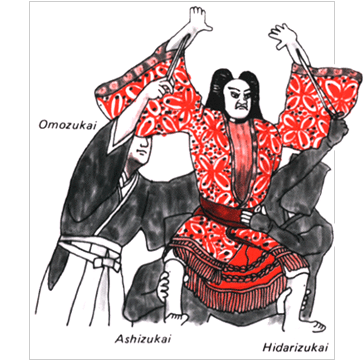
Bunraku [boon-rah-koo] is a form of traditional Japanese puppet theater, founded in Osaka in 1684. Bunraku puppets range in size from two-and-a-half to four feet tall or more, depending on the age and gender of the character and the conventions of the specific puppet troupe. All but the most minor characters require three puppeteers, who perform in full view of the audience, generally wearing black robes.
Originally, the term Bunraku referred only to a particular theater established in in Osaka, which was named the Bunrakuza. Today the term refers generically to any traditional puppet theater in Japan. Until the late 1800s there were hundreds of professional, semi-professional, and amateur troupes across Japan that performed traditional puppet drama. Since the end of World War II, the number of troupes has dropped to fewer than 30, most of which perform only once or twice a year, often in conjunction with local festivals.
Posted in Art, World |
Leave a Comment »
August 2, 2010

A morganatic [mor-ga-nat-ic] marriage is a type of marriage which can be contracted in certain countries, usually between people of unequal social rank, which prevents the passage of the husband’s titles and privileges to the wife and any children born of the marriage. It is also known as a left-handed marriage because in the wedding ceremony the groom holds his bride’s right hand with his left hand instead of his right.
Generally, this is a marriage between a male of high birth (such as from a royal or reigning house), and a woman of lesser status (such as from a non-royal or non-reigning house, or with a profession that is traditionally considered lower-status). Neither the bride nor any children of the marriage has any claim on the groom’s titles, rights, or entailed property. The children are considered legitimate on other counts and the prohibition of bigamy applies.
Posted in Money, Politics, World |
Leave a Comment »
August 2, 2010
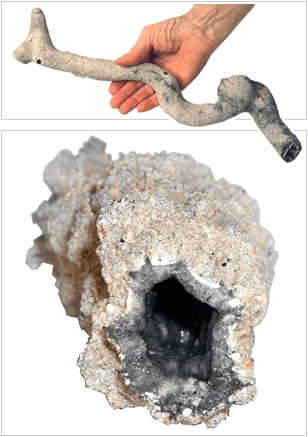
Fulgurites [fuhl-gyuh-rahyts] (from the Latin fulgur meaning thunderbolt) are natural hollow glass tubes formed in quartzose sand, or silica, or soil by lightning strikes. They are formed when lightning with a temperature of at least 3,270 °F instantaneously melts silica on a conductive surface and fuses grains together; the fulgurite tube is the cooled product. This process occurs over a period of around one second, and leaves evidence of the lightning path and its dispersion over the surface. Fulgurites can also be produced when a high voltage electrical lines break and fall onto a conductive surface with sand beneath. The glass formed is called lechatelierite which may also be formed by meteorite impact and volcanic explosions.
The tubes can be up to several centimeters in diameter, and meters long. Their color varies depending on the composition of the sand they formed in, ranging from black or tan to green or a translucent white. The interior is normally very smooth or lined with fine bubbles; the exterior is generally coated with rough sand particles and is porous.
Posted in Science |
Leave a Comment »
August 2, 2010
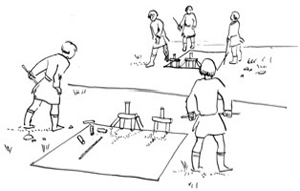
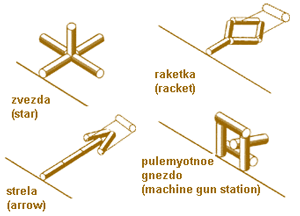
Gorodki is an ancient Russian folk sport. Similar to bowling and somewhat of the horseshoes concept, the aim of the game is to knock out groups of skittles arranged in some pattern by throwing a bat at them. The skittles, or pins, are called gorodki (literally little cities or townlets), and the square zone in which they are arranged is called the gorod (city).
Posted in Games, World |
Leave a Comment »
August 2, 2010

The Wilhelm scream is a frequently-used film and television stock sound effect first used in 1951 for the film Distant Drums. The effect gained new popularity after it was used in Star Wars and many other blockbuster films as well as television programs and video games. The scream is often used when someone is either pierced with an arrow, falling to their death from a great height or because of an explosion.
The sound is named for Private Wilhelm, a character in The Charge at Feather River, a 1953 western in which the character is shot with an arrow. This was believed to be the second movie to use the sound effect and its first use from the Warner Brothers stock sound library.
Posted in Art |
Leave a Comment »
August 2, 2010

Omphaloskepsis [om-fuh-loh-skep-sis] is the contemplation of one’s navel as an aid to meditation. It can also be used as a pejorative referring to excessive introspection, self-absorption, or concentration on a single issue. This criticism is also often leveled at professions which are interested in themselves (e.g. movies about Hollywood or television shows about television writers). The word has several other forms, such as omphalism used to describe the spiritual practice; omphaloskeptic or omphaloskeptical, for someone who engages in navel-gazing; and omphalocentric meaning to be in a self-absorbed state.
Posted in Language, Philosophy |
Leave a Comment »
August 2, 2010

Saturn peaches are a variety of peach with white flesh and a flat shape first introduced into the U.S. from China in 1869. They are smaller and sweeter than most peach varieties. They are known by many other names, including doughnut peach, paraguayo peach, pan tao peach, and saucer peach.
Posted in Food |
Leave a Comment »