July 20, 2016

Troy Andrews (born January 2, 1986), also known by the stage name Trombone Shorty, is an American musician, producer, actor and philanthropist from New Orleans. A multi-instrumentalist, he is best known as a trombone and trumpet player but also performs and records on the drums, organ and tuba.
A highly sought after musician for his unique style and approach, he has worked with some of the biggest names in rock, pop, jazz, funk, hip hop and EDM. Andrews is the younger brother of trumpeter and bandleader James Andrews as well as the grandson of singer and songwriter Jessie Hill. He began playing trombone at age four, and since 2009 has toured with his own band, Trombone Shorty & Orleans Avenue. Continue reading →
Posted in Art |
Leave a Comment »
July 14, 2016

A chatterbot (also known as a talkbot, chatbot, Bot, chatterbox, or Artificial Conversational Entity) is a computer program which conducts a conversation via auditory or textual methods. Such programs are often designed to convincingly simulate how a human would behave as a conversational partner, thereby passing the Turing test (a measure of how well a computer can trick a person into believing that the computer is a person too).
Chatbots are typically used in dialog systems for various practical purposes including customer service or information acquisition. Some chatbots use sophisticated natural language processing systems (programs that understand not just recognize language), but many simpler systems scan for keywords within the input, then pull a reply with the most matching keywords, or the most similar wording pattern, from a database. The term ‘ChatterBot’ was originally coined by Michael Mauldin (creator of the first Verbot, Julia) in 1994 to describe these conversational programs.
Continue reading →
Posted in Language, Technology |
Leave a Comment »
July 13, 2016


Search engine optimization (SEO) is the process of affecting the visibility of a website or a web page in a web search engine’s unpaid results — often referred to as ‘natural,’ ‘organic,’ or ‘earned’ results. In general, the earlier (or higher ranked on the search results page), and more frequently a site appears in the search results list, the more visitors it will receive from the search engine’s users, and these visitors can be converted into customers. SEO may target different kinds of searches, including for images, places, videos, scholarly articles, news stories, and industry-specific vertical search engines (specialty or topical search engines, such as Yelp for local business reviews and Zillow for real estate listings).
As an Internet marketing strategy, SEO considers how search engines work, what people search for, the actual search terms or keywords typed into search engines and which search engines are preferred by their targeted audience. Optimizing a website may involve editing its content, HTML and associated coding to both increase its relevance to specific keywords and to remove barriers to the indexing activities of search engines. Promoting a site to increase the number of backlinks (referred links), or inbound links, is another SEO tactic. Continue reading →
Posted in Money, Technology |
Leave a Comment »
July 7, 2016
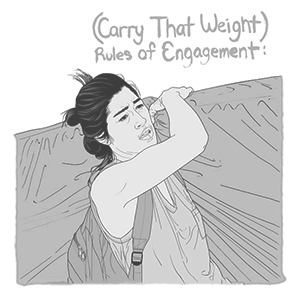
‘Mattress Performance (Carry That Weight)’ was a work of endurance performance art by Emma Sulkowicz, conducted as her senior thesis during the final year of her visual arts degree at Columbia University in New York City.
Begun in September 2014, the piece involved her carrying a 50-lb mattress – of the kind Columbia uses in its dorms – wherever she went on campus. She said the piece would end when a student she alleges raped her in her dorm room in 2012 was expelled from or otherwise left the university. Sulkowicz carried the mattress until the end of the Spring semester as well as to her graduating ceremony in May 2015. Continue reading →
Posted in Art, Politics, Sex |
1 Comment »
July 6, 2016

Sprouted bread is a type of bread made from whole grains that have been allowed to sprout, that is, to germinate. There are a few different types of sprouted grain bread. Some are made with added flour, some are made with added gluten, and some, such as Essene bread, are made with very few additional ingredients.
These are breads that contain the whole grain (or kernel, or berry) of various seeds after they have been sprouted. They are different from ‘white’ bread inasmuch as ‘white’ breads are made from ground wheat endosperm (after removal of the bran and germ). Whole grain breads include the bran, germ and endosperm, therefore providing more fiber, and naturally occurring vitamins and proteins. A comparison of nutritional analyses shows that sprouted grains contain about 75% of the energy (carbohydrates), slightly higher protein and about 40% of the fat when compared to whole grains. Continue reading →
Posted in Food, Health |
Leave a Comment »
July 4, 2016


Flat design is a minimalist user interface design genre, or design language, commonly used in graphical user interfaces (such as web applications and mobile apps), and in graphical materials such as posters, arts, guide documents, and publishing products.
Flat design is a style of interface design emphasizing minimum use of stylistic elements that give the illusion of three dimensions (such as the use of drop shadows, gradients or textures) and is focused on simple elements, typography and flat colors. Designers may prefer flat design because it allows interface designs to be more streamlined and efficient. It is easier to quickly convey information while still looking visually appealing and approachable. Continue reading →
Posted in Art, Language, Technology |
Leave a Comment »
July 3, 2016
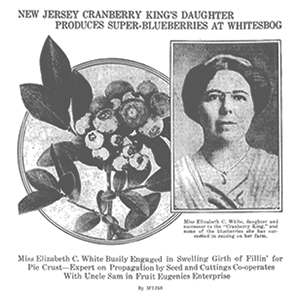
Elizabeth Coleman White (1871 – 1954) was a New Jersey agricultural specialist who collaborated with botanist Frederick Vernon Coville to develop and commercialize cultivated blueberries. White was Quaker, graduating from the Friends’ Central School in Philadelphia in 1887. Afterwards she worked at her father’s farm, Whitesbog in the New Jersey Pine Barrens, supervising cranberry pickers in the bogs. Pine barrens are plant communities that occur on dry, acidic, infertile soils dominated by grasses, low shrubs, and small to medium-sized pines.
In the early part of the 20th century, White offered pineland residents cash for wild blueberry plants with unusually large fruit. Her collaboration with Coville began in 1910. Their project revealed the importance of soil acidity (blueberries need highly acidic soil), that blueberries do not self-pollinate, and the effects of cold on blueberries and other plants. Their work doubled the size of some strains’ fruit, and by 1916, Coville had succeeded in cultivating blueberries, making them a valuable crop in the Northeastern United States. Continue reading →
Posted in Food, Science |
Leave a Comment »
June 29, 2016

Mechanical doping is a recent term describing the use of secret motors in competitive cycling events. As a form of ‘technological fraud’ it is banned by the Union Cycliste Internationale, the international governing body of cycling. One of the first allegations of motor doping dates to the 2010 Tour of Flanders when Fabian Cancellara climbed a steep part of Kapelmuur while unusually seated, leading to allegations that there was an powered device hidden in his bike.
The first confirmed use of mechanical doping in the sport was discovered at the 2016 UCI Cyclo-cross World Championships when one of the bikes of Belgian cyclist Femke Van den Driessche was found to have a secret motor inside. Continue reading →
Posted in Games, Politics, Technology |
1 Comment »
June 26, 2016

AAirpass is a membership-based discount program offered by American Airlines to frequent flyers launched in 1981. The program is best known for a previous offering of unlimited travel on American Airlines and unlimited access to Admirals Club locations. Pass holders were offered terms of five years or lifetime. Today the program no longer offers lifetime or unlimited travel focusing instead on pre-paid fares at a discounted, fixed price for frequent travelers. A minimum commitment of $10,000 per traveler, per year is required. Existing unlimited AAirpasses remain valid.
The program initially enabled passholders unlimited first class travel on any of the airline’s flights worldwide. Lifetime membership was priced at $250,000, with the option to purchase a companion pass for an additional $150,000. A total of 66 AAirpasses are reported to have been sold under the unlimited travel conditions with businessman Michael Dell and Willie Mays among those who purchased the original offer. The program was launched at a time when the airline was struggling financially and in need of a quick infusion of cash. Continue reading →
Posted in Money, World |
Leave a Comment »
June 23, 2016
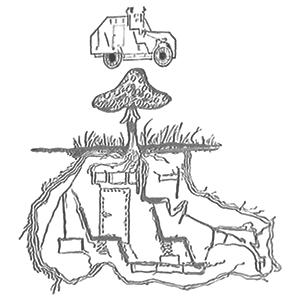
‘Lenin was a mushroom‘ was a highly influential televised hoax by Soviet musician Sergey Kuryokhin and reporter Sergey Sholokhov. It was first broadcast in May 1991 on Leningrad Television. The hoax took the form of an interview on the television program ‘Pyatoe Koleso’ (‘The Fifth Wheel’). In the interview, Kuryokhin, impersonating a historian, narrated his findings that Vladimir Lenin consumed large quantities of psychedelic mushrooms and eventually became a mushroom himself.
Kuryokhin arrived at his conclusion through a long series of logical fallacies and appeals to the authority of various ‘sources’ (such as shamanic author Carlos Castaneda, MIT, and Soviet rocket scientist Konstantin Tsiolkovsky), creating the illusion of a reasoned and plausible logical chain. The incident has served as a watershed moment in Soviet (and Russian) culture and has often been used as proof of the gullibility of the masses. Continue reading →
Posted in Drugs, Humor, World |
Leave a Comment »
June 20, 2016

The turboencabulator (and its later incarnation, the ‘retroencabulator’) is a fictional machine whose alleged existence became an in-joke and subject of professional humor among engineers. The explanation of the supposed product makes extensive use of ‘technobabble’ (jargon that uses buzzwords, esoteric language, specialized technical terms).
‘Time’ magazine reported on the joke in 1946: ‘The original machine had a base-plate of prefabulated amulite, surmounted by a malleable logarithmic casing in such a way that the two spurving bearings were in a direct line with the pentametric fan. The main winding was of the normal lotus-o-delta type placed in panendermic semi-boloid slots in the stator, every seventh conductor being connected by a nonreversible tremie pipe to the differential girdlespring on the ‘up’ end of the grammeters.’ Continue reading →
Posted in Humor, Language, Technology |
Leave a Comment »
June 15, 2016

Gringo [gring-goh] is a term, mainly used in Spanish-speaking and in Portuguese-speaking countries, to refer to foreigners. In Spanish, gringo refers especially to someone from the United States. The word was originally used in Spain (although it’s mostly unused in the country nowadays) to denote any foreign, non-native speakers of Spanish.
The word was first recorded in a 1787 Castilian dictionary: “Gringos is what, in Malaga, they call foreigners who have a certain type of accent that prevents them from speaking Castilian easily and naturally; and in Madrid they give the same name, and for the same reason, in particular to the Irish.’ The dominant view among etymologists is that gringo is most likely a variant of ‘griego’ ‘Greek’ speech (cf. ‘Greek to me’). Continue reading →
Posted in Language, World |
Leave a Comment »



