March 21, 2016
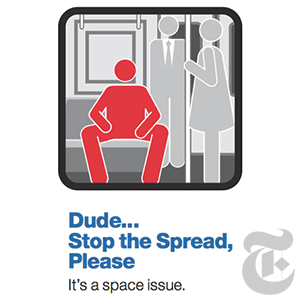
Manspreading, or man-sitting, is the practice of sitting in public transport with legs wide apart, thereby covering more than one seat. Both this posture and usage of the term ‘manspreading’ have caused some internet criticism, and debates. The term first appeared in public debate when a feminist anti-manspreading campaign was started on Tumblr in 2013. The Oxford English Dictionary added it as a word in August 2015.
The Metropolitan Transportation Authority in New York and Sound Transit of Seattle instituted poster campaigns encouraging respectful posture when other passengers have to stand due to crowding on buses and trains. The MTA campaign carried slogans like ‘Dude, stop the spread please!’ Continue reading →
Posted in Humor, Politics |
Leave a Comment »
March 20, 2016

‘You have two cows‘ is a joke comparing political systems that circulated throughout the US since around 1936 under the title ‘Parable of the Isms.’ A column in ‘The Chicago Daily Tribune’ in 1938 attributes a version involving socialism, communism, fascism and New Dealism to an address by lawyer Silas Strawn to the Economic Club of Chicago in 1935.
The joke always begins with ‘You have two cows…’ followed by a political system and its effect on the cows. For example, ‘socialism’ (the government takes one and gives it to your neighbor), ‘communism’ (you give them to the government, and the government then gives you some milk), fascism (you give them to the government, and the government then sells you some milk), and capitalism (you sell one and buy a bull).
Posted in Humor, Money, Politics |
1 Comment »
March 18, 2016

Dog-whistle politics is political messaging employing coded language that appears to mean one thing to the general population but has an additional, different or more specific resonance for a targeted subgroup. The phrase is often used as a pejorative, because of the inherently deceptive nature of the practice and because the messages are frequently coded because they are distasteful to the general populace. The analogy is to a dog whistle, whose high-frequency whistle is heard by dogs but inaudible to humans.
The term can be distinguished from ‘code words’ used in some specialist professions, in that dog-whistling is specific to the political realm. The messaging referred to as the dog-whistle has an understandable meaning for a general audience, rather than being incomprehensible. Continue reading →
Posted in Language, Politics |
1 Comment »
March 17, 2016

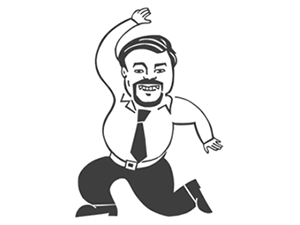
Witzelsucht [vit-sel-zuhkt] (from the German ‘witzeln,’ meaning ‘to joke or wisecrack,’ and ‘sucht,’ meaning ‘addiction or yearning’) is a set of rare neurological symptoms characterized by a tendency to make puns, or tell inappropriate jokes or pointless stories in socially inappropriate situations. A less common symptom is hypersexuality, the tendency to make sexual comments at inappropriate times or situations. Patients do not understand that their behavior is abnormal, therefore are nonresponsive to others’ reactions. This disorder is most commonly seen in patients with frontal lobe damage, particularly right frontal lobe tumors or trauma.
Those with the condition often show no emotional reaction to humor, whether produced by themselves or others. This lack of responsiveness is due to dissociation between their cognitive and affective responses to humorous stimuli. That is, even when a patient understands that a joke is funny (based on quantitative brain activity), they do not respond with laughter, or even a smile. While they have grasped the cognitive basis of humor, they do not affectively respond. This also considered a cognitive component of empathy, affecting ability to take the perspective of others; hence why patients often do not respond to humor produced by other people. Continue reading →
Posted in Health, Humor, Sex |
1 Comment »
March 15, 2016
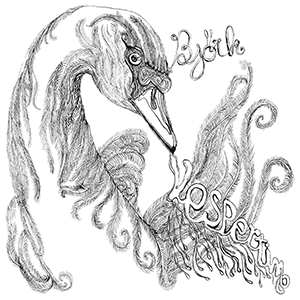
The swan dress is an iconic dress resembling a white swan worn by the Icelandic artist Björk in 2001 at the 73rd Academy Awards. Created by Macedonian fashion designer Marjan Pejoski, the dress is modeled after a swan and at the ceremony Björk mimicked laying an egg on the red carpet. She later said: “I was very aware when I went to the Academy Awards that it would probably be my first and last time. So I thought my input should really be about fertility, and I thought I’d bring some eggs.”
It was described by film critic Emanuel Levy as ‘A giant swan dress, a full-body stocking that was covered with a giant swan whose neck wrapped around her with its head and beak resting on her breasts.’ She had two copies of the dress produced, given that it could not be taken to the dry cleaners. She later wore that dress on the cover of her 2001 record album ‘Vespertine’ and variations of it many times on the ‘Vespertine World Tour.’
Continue reading →
Posted in Art, Humor |
1 Comment »
March 14, 2016

An impulse purchase is an unplanned decision to buy a product or service, made just before a completing an unrelated transaction. Research findings suggest that emotions and feelings play a decisive role in purchasing, triggered by seeing the product or upon exposure to a well crafted promotional message.
Impulse buying disrupts the normal decision making models in consumers’ brains. The logical sequence of the consumers’ actions is replaced with an irrational moment of self gratification. Impulse items appeal to the emotional side of consumers. Items bought on impulse are not usually considered functional or necessary in their lives. Preventing impulse buying involves techniques such as setting budgets before shopping and taking time out before the purchase is made. Continue reading →
Posted in Health, Money |
Leave a Comment »
March 13, 2016

How to Photograph an Atomic Bomb is a book written by Peter Kuran and published in 2006 by VCE. It documents the stories of the men who photographed US nuclear weapons tests between 1945–1963 and the techniques they used to capture nuclear blasts on film. The book contains 250 photos and 12 technical diagrams, some of which were previously classified.
Research on the book began while Kuran was working as an animator for ‘Star Wars.’ He was able to interview and collect material from photographers who witnessed the blasts, whom he calls unrecognized patriots. A traveling exhibit based on the book was purchased by the Atomic Testing Museum and put on display in 2007. In 2010, the ‘New York Times’ featured a 23-image slideshow on its website with photos taken from the book accompanied by an audio recording of George Yoshitake, then one of the few surviving cameramen.
Posted in Language, Technology, War |
Leave a Comment »
March 11, 2016
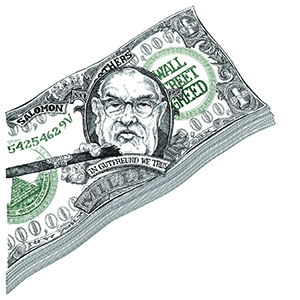
Liar’s Poker is a non-fiction, semi-autobiographical book by Michael Lewis describing the author’s experiences as a bond salesman on Wall Street during the late 1980s. Two important figures in that history feature prominently in the text, the head of Salomon Brothers’ mortgage department Lewis Ranieri and the firm’s CEO John Gutfreund. The book’s name is taken from a high-stakes gambling game popular with bond traders.
First published in 1989, it is considered one of the books that defined Wall Street in that era, along with Bryan Burrough and John Helyar’s ‘Barbarians at the Gate: The Fall of RJR Nabisco,’ and the fictional ‘The Bonfire of the Vanities by Tom Wolfe.’ The book captures an important period in the history of New York’s financial markets. Continue reading →
Posted in Games, Language, Money |
Leave a Comment »
March 10, 2016

Shoe-throwing (also called shoeing) and showing the sole of one’s shoe as an insult are forms of protest in many parts of the world. Posters of George W. Bush’s face have long appeared through the Middle East with shoes attached to them, and some people have called former Secretary of State Condoleezza Rice ‘kundara,’ meaning ‘shoe.’ Shoeing received widespread attention after Muntadhar al-Zaidi threw his shoes at then President George W. Bush during a 2008 press conference in Baghdad.
‘This is a farewell kiss from the Iraqi people, you dog!’ yelled al-Zaidi in Arabic as he threw his first shoe towards the president. ‘This is for the widows and orphans and all those killed in Iraq!’ he shouted as he threw his second shoe. President Bush ducked twice, avoiding being hit by the shoes. Since the al-Zaidi incident, copycat incidents in Europe, North America, India, China, Hong Kong, Iran, Turkey, and Australia have been reported. Shoes are considered unclean in the Arab World, but Matthew Cassel of ‘The Electronic Intifada’ has expressed the opinion that the Western media overplayed the phenomenon as being ‘Arab’ in particular.’
Posted in Humor, Politics, War |
Leave a Comment »
March 9, 2016
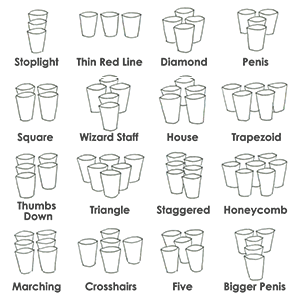
Pregaming (called prefunking in Europe and preloading or prinking in the UK), is the process of getting drunk prior to going out socializing in a manner as cost-efficient as possible. Although typically done before a night out, pregaming can also precede other activities, like attending a college football game, large party, social function, or another activity where possession of alcohol may be limited or prohibited. The name ‘pregaming’ spread from the drinking that took place during tailgate parties before football games to encompass similar drinking periods.
Pregaming first became popular in the US in the 1990s, becoming a common practice after MADD (Mothers Against Drunk Driving) pressured the federal government to coerce states into increasing the legal drinking age to 21 nationwide. It is also an unintended consequence of alcohol laws that prohibit happy hours and other discounts on alcohol, as well as rising tuition and other costs for students. Pregaming minimizes the cost of purchasing alcohol at local bars and clubs and can reduce the problems associated with obtaining and using fake identification listing an age permitting legal consumption of alcohol. Continue reading →
Posted in Drugs, Games |
Leave a Comment »
March 8, 2016
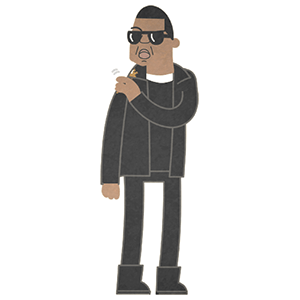
To have a chip on one’s shoulder refers to the act of holding a grudge or grievance that readily provokes disputation. The expression comes from the ancient right of shipwrights within the Royal Navy Dockyards to take home a daily allowance of offcuts of timber, even if good wood had to be cut up for this purpose. The privilege was instated as a prescriptive right from 1634. By 1756, the privilege was costing taxpayers too much in lost timber for warship repair and construction, and a decision was then made by the Navy Board to limit the quantity a shipwright could carry home. A warrant was issued to the Royal Dockyards to reduce the quantity of chips by ordering shipwrights to carry their bundles under their arms instead of on their shoulders, as one could not carry as much timber in this fashion.
There was an incident on the very first day the law was enforced: ‘Then came John Miller, shipwright, about thirty feet before the main body of the people, on which the Master Shipwright ordered him to lower his chips. He answered he would not, with that the Master Shipwright took hold of him, and said he should. He, the said Miller replied, ‘Are not the chips mine? I will not lower them.’ Immediately the main body pushed on with their chips on their shoulders, crowded and forced the Master Shipwright and the First Assistant through the gateway, and when out of the yard give three huzzas.’
Posted in Language, Money |
1 Comment »
March 5, 2016

Kindness priming is an affect-dependent cognitive effect in which subjects will display a positive affect following exposure to kindness. Individuals who are exposed to an act of kindness – the priming – subsequently notice more of the positive features of the world than they would otherwise. A person receiving a free voucher from a stranger, for example, may become more inclined to perceive the intentions of others around them as good.
It is hypothesized that kindness priming involves the same cognitive circuitry that enables memory priming. By activating neural representations of positive affect, an act of kindness stimulates increased activity in related associative networks. It is therefore more likely that subsequent stimuli will activate these related, positive networks, and so the positive affect continues to be carried forward in a feed forward manner. Additionally, kindness priming has also been shown to inoculate against negative stimuli in the short term, thus temporarily improving an individual’s resilience. Continue reading →
Posted in Health, Money |
Leave a Comment »


 The Daily Omnivore