March 28, 2016


The Me Generation refers to the ‘baby boomer’ generation (Americans born during the 1946 to 1964 post-war baby boom) and the self-involved qualities that some social critics associated with it. Boomers were dubbed the ‘Me’ generation by writer Tom Wolfe during the 1970s; Christopher Lasch was another writer who commented on the rise of a culture of narcissism among the younger generation. The phrase caught on with the general public, at a time when ‘self-realization’ and ‘self-fulfillment’ were becoming cultural aspirations among young people, who considered them far more important than social responsibility.
The 1960s are remembered as a time of political protests, radical experimentation with new cultural experiences (e.g. Sexual Revolution, ‘happenings,’ and New Age spirituality). The Civil Rights Movement gave rebellious young people serious goals to work towards. Cultural experimentation was justified as being directed toward spiritual or intellectual enlightenment. The 1970s, in contrast, were a time of disillusionment with idealistic politics among the young, particularly after the resignation of Richard Nixon, the assassination of Martin Luther King, Jr., and the end of the Vietnam War. Unapologetic hedonism became acceptable among the young, expressed in the Disco music popular at the time.
Continue reading →
Posted in Politics |
Leave a Comment »
March 27, 2016

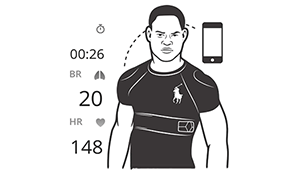
A conductive textile is a fabric which can conduct electricity. Conductive textiles can be made with metal strands woven into the construction of the textile. There is also an interest in semiconducting textiles, made by impregnating normal textiles with carbon- or metal-based powders.
Conductive fibers consist of a non-conductive or less conductive substrate, which is then either coated or embedded with electrically conductive elements, often carbon, nickel, copper, gold, silver, or titanium. Substrates typically include cotton, polyester, nylon, and stainless steel to high performance synthetic fibers like Kevlar and Zylon. Straddling the worlds of textiles and wires, conductive fibers are sold either by weight or length, and measured in gauge. Continue reading →
Posted in Technology |
Leave a Comment »
March 26, 2016
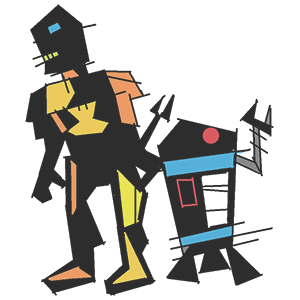
A shared universe is a set of creative works where more than one writer (or other artist) independently contributes a work that can stand alone but fits into the joint development of the storyline, characters, or world of the overall project. It is common in genres like science fiction. It differs from ‘collaborative writing’ where multiple artists are working together on the same work, and from ‘crossovers’ where the works and characters are independent except for a single meeting.
The term shared universe is also used within comics to reflect the overall milieu created by the comic book publisher in which characters, events, and premises from one product line appear in other product lines in a media franchise. The term has also been used in a wider, non-literary sense to convey interdisciplinary or social commonality, often in the context of a ‘shared universe of discourse.’ Continue reading →
Posted in Art, Money |
Leave a Comment »
March 25, 2016

The Wolfpack is a 2015 American documentary film about a family who homeschooled and raised their seven children in the confinement of their apartment in the Lower East Side of New York City. The film, directed by Crystal Moselle, premiered at the 2015 Sundance Film Festival, where it won the US Documentary Grand Jury Prize.
Locked away for fourteen years, the Angulo family’s seven children—six brothers named Mukunda, Narayana, Govinda, Bhagavan, Krisna (Glenn), and Jagadesh (Eddie), and their sister Visnu—learned about the world through watching films. They also re-enact scenes from their favorite movies. Their father, Oscar, had the only door key and prohibited the kids and their mother from leaving the apartment except for a few strictly-monitored trips on the ‘nefarious’ streets. Continue reading →
Posted in Art |
Leave a Comment »
March 24, 2016


Fika [fee-kah] is a concept in Swedish culture with the basic meaning ‘to have coffee,’ often accompanied with pastries or sandwiches. A more contemporary generalized meaning of the word, where the coffee may be replaced by tea or even juice, lemonade or squash for children, has become widespread. In some social circles, even just a sandwich or a small meal may be denoted a fika similar to the English concept of afternoon tea. In Sweden pastries in general (for example cinnamon buns) are often referred to as ‘fikabröd’ (‘fika bread’).
Fika is a common practice at workplaces in Sweden where it constitutes at least one break during a normal workday. Often, two fikas are taken in a day at around 9:00 in the morning and 3:00 in the afternoon. The work fika is an important social event where employees can gather and socialize to discuss private and professional matters. It is not uncommon for management to join employees and to some extent it can even be considered impolite not to join one’s colleagues at fika. The practice is not limited to any specific sector of the labor market and is considered normal practice even in government administration. Continue reading →
Posted in Food, Money, World |
Leave a Comment »
March 21, 2016

Manspreading, or man-sitting, is the practice of sitting in public transport with legs wide apart, thereby covering more than one seat. Both this posture and usage of the term ‘manspreading’ have caused some internet criticism, and debates. The term first appeared in public debate when a feminist anti-manspreading campaign was started on Tumblr in 2013. The Oxford English Dictionary added it as a word in August 2015.
The Metropolitan Transportation Authority in New York and Sound Transit of Seattle instituted poster campaigns encouraging respectful posture when other passengers have to stand due to crowding on buses and trains. The MTA campaign carried slogans like ‘Dude, stop the spread please!’ Continue reading →
Posted in Humor, Politics |
Leave a Comment »
March 20, 2016

‘You have two cows‘ is a joke comparing political systems that circulated throughout the US since around 1936 under the title ‘Parable of the Isms.’ A column in ‘The Chicago Daily Tribune’ in 1938 attributes a version involving socialism, communism, fascism and New Dealism to an address by lawyer Silas Strawn to the Economic Club of Chicago in 1935.
The joke always begins with ‘You have two cows…’ followed by a political system and its effect on the cows. For example, ‘socialism’ (the government takes one and gives it to your neighbor), ‘communism’ (you give them to the government, and the government then gives you some milk), fascism (you give them to the government, and the government then sells you some milk), and capitalism (you sell one and buy a bull).
Posted in Humor, Money, Politics |
1 Comment »
March 18, 2016

Dog-whistle politics is political messaging employing coded language that appears to mean one thing to the general population but has an additional, different or more specific resonance for a targeted subgroup. The phrase is often used as a pejorative, because of the inherently deceptive nature of the practice and because the messages are frequently coded because they are distasteful to the general populace. The analogy is to a dog whistle, whose high-frequency whistle is heard by dogs but inaudible to humans.
The term can be distinguished from ‘code words’ used in some specialist professions, in that dog-whistling is specific to the political realm. The messaging referred to as the dog-whistle has an understandable meaning for a general audience, rather than being incomprehensible. Continue reading →
Posted in Language, Politics |
1 Comment »
March 17, 2016


Witzelsucht [vit-sel-zuhkt] (from the German ‘witzeln,’ meaning ‘to joke or wisecrack,’ and ‘sucht,’ meaning ‘addiction or yearning’) is a set of rare neurological symptoms characterized by a tendency to make puns, or tell inappropriate jokes or pointless stories in socially inappropriate situations. A less common symptom is hypersexuality, the tendency to make sexual comments at inappropriate times or situations. Patients do not understand that their behavior is abnormal, therefore are nonresponsive to others’ reactions. This disorder is most commonly seen in patients with frontal lobe damage, particularly right frontal lobe tumors or trauma.
Those with the condition often show no emotional reaction to humor, whether produced by themselves or others. This lack of responsiveness is due to dissociation between their cognitive and affective responses to humorous stimuli. That is, even when a patient understands that a joke is funny (based on quantitative brain activity), they do not respond with laughter, or even a smile. While they have grasped the cognitive basis of humor, they do not affectively respond. This also considered a cognitive component of empathy, affecting ability to take the perspective of others; hence why patients often do not respond to humor produced by other people. Continue reading →
Posted in Health, Humor, Sex |
1 Comment »
March 15, 2016

The swan dress is an iconic dress resembling a white swan worn by the Icelandic artist Björk in 2001 at the 73rd Academy Awards. Created by Macedonian fashion designer Marjan Pejoski, the dress is modeled after a swan and at the ceremony Björk mimicked laying an egg on the red carpet. She later said: “I was very aware when I went to the Academy Awards that it would probably be my first and last time. So I thought my input should really be about fertility, and I thought I’d bring some eggs.”
It was described by film critic Emanuel Levy as ‘A giant swan dress, a full-body stocking that was covered with a giant swan whose neck wrapped around her with its head and beak resting on her breasts.’ She had two copies of the dress produced, given that it could not be taken to the dry cleaners. She later wore that dress on the cover of her 2001 record album ‘Vespertine’ and variations of it many times on the ‘Vespertine World Tour.’
Continue reading →
Posted in Art, Humor |
1 Comment »
March 14, 2016

An impulse purchase is an unplanned decision to buy a product or service, made just before a completing an unrelated transaction. Research findings suggest that emotions and feelings play a decisive role in purchasing, triggered by seeing the product or upon exposure to a well crafted promotional message.
Impulse buying disrupts the normal decision making models in consumers’ brains. The logical sequence of the consumers’ actions is replaced with an irrational moment of self gratification. Impulse items appeal to the emotional side of consumers. Items bought on impulse are not usually considered functional or necessary in their lives. Preventing impulse buying involves techniques such as setting budgets before shopping and taking time out before the purchase is made. Continue reading →
Posted in Health, Money |
Leave a Comment »
March 13, 2016

How to Photograph an Atomic Bomb is a book written by Peter Kuran and published in 2006 by VCE. It documents the stories of the men who photographed US nuclear weapons tests between 1945–1963 and the techniques they used to capture nuclear blasts on film. The book contains 250 photos and 12 technical diagrams, some of which were previously classified.
Research on the book began while Kuran was working as an animator for ‘Star Wars.’ He was able to interview and collect material from photographers who witnessed the blasts, whom he calls unrecognized patriots. A traveling exhibit based on the book was purchased by the Atomic Testing Museum and put on display in 2007. In 2010, the ‘New York Times’ featured a 23-image slideshow on its website with photos taken from the book accompanied by an audio recording of George Yoshitake, then one of the few surviving cameramen.
Posted in Language, Technology, War |
Leave a Comment »



