October 31, 2015


Pump and dump is a form of microcap stock fraud that involves artificially inflating the price of an owned stock through false and misleading positive statements, in order to sell the cheaply purchased stock at a higher price. Once the operators of the scheme ‘dump’ sell their overvalued shares, the price falls and investors lose their money. Stocks that are the subject of pump and dump schemes are sometimes called ‘chop stocks.’
While fraudsters in the past relied on cold calls made from ‘boiler rooms’ (outbound call centers selling questionable investments), the Internet now offers a cheaper and easier way of reaching large numbers of potential investors. Often the stock promoter will claim to have ‘inside’ information about impending news. They may also post messages in chat rooms or stock message boards urging readers to buy the stock quickly. Fraudsters frequently use this ploy with small, thinly traded companies—known as ‘penny stocks’ because it is easier to manipulate a stock when there is little or no independent information available about the company. Continue reading →
Posted in Money, Politics |
Leave a Comment »
October 29, 2015

You ain’t gonna need it (YAGNI) is a principle of extreme programming (XP) that states a programmer should not add functionality until deemed necessary. XP co-founder Ron Jeffries said: ‘Always implement things when you actually need them, never when you just foresee that you need them.’ Jeffries argues that prematurely adding features leads to software bloat, feature creep, and takes time away from core functionality improvement.
YAGNI is a principle behind the XP practice of ‘do the simplest thing that could possibly work’ (DTSTTCPW). It is meant to be used in combination with several other practices, such as continuous refactoring (code reorganization), continuous automated unit testing, and continuous integration (conforming code segments work within the larger codebase). However, the efficacy of YAGNI, even when considered in combination with safeguards, is controversial.
Posted in Humor, Language, Technology |
Leave a Comment »
October 28, 2015

‘Man After Man: An Anthropology of the Future’ is a 1990 book written by Scottish geologist Dougal Dixon exploring future evolutionary paths for humanity. Illustrator Philip Hood’s depictions of Dixon’s speculative organisms have been called fear-provoking and biologically horrific to the modern eye.
The book starts 200 years in the future where modern humans have genetically modified themselves into several subtypes including ‘aquamorphs’ (marine humans with gills instead of lungs) and ‘vacuumorphs’ (engineered for life in the vacuum of space, its skin and eyes carry shields of skin to keep its body stable even without pressure). Continue reading →
Posted in Language, Science |
Leave a Comment »
October 26, 2015

A stampede is uncontrolled concerted running as an act of mass impulse among herd animals or a crowd of people. Cattle are particularly prone to stampedes. Any sudden, unusual event can set one off, such as a horse shaking itself, a lightning strike, or even just a tumbleweed. Other species that stampede include elephants, walruses, wild horses, rhinoceros, and humans. Human crushes often occur during religious pilgrimages and professional sporting and music events. They also occur in times of panic (e.g. as a result of a fire or explosion) as people try to get away.
Crushes are very often referred to as stampedes but, unlike true stampedes, they can cause many deaths. They typically occur when members at the back of a large crowd continue pushing forward not knowing that those at the front are being crushed, or because of something that forces them to move. It has been suggested that crowd density rather than size is important, with a density of about four people per square meter beginning to be dangerous, even if the crowd is not very large. Continue reading →
Posted in Death, Health, Technology |
1 Comment »
October 22, 2015

Vinyl revival refers to the renewed interest and increased sales of vinyl records since 2006. The analoge format made of polyvinyl chloride had been the main vehicle for the commercial distribution of pop music from the 1950s until the 1980s and 1990s when they were replaced by the Compact Disc. Since the early 2000s CDs have been partially replaced by digital downloads; conversely, vinyl sales have started growing. In some territories, vinyl is now more popular than it has been since the late 1980s, though vinyl records still make up only a marginal percentage (<3%) of overall music sales.
Founded in 2007, ‘Record Store Day’ is an internationally celebrated day observed the third Saturday of April each year. Its purpose, as conceived by independent record store employee Chris Brown, is to celebrate the art of music. The day brings together fans, artists, and thousands of independent record stores across the world.
Posted in Art, Money |
Leave a Comment »
October 21, 2015

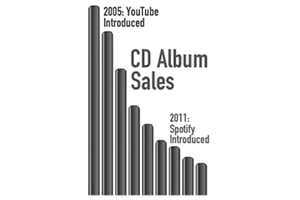
Tower Records was an American retail music chain that liquidated in 2006. The brand currently exists as an international franchise and an online music store. Tower.com was purchased by a separate entity and was not affected by the retail store closings.
Tower was founded in 1960 by Russell Solomon in Sacramento, California. The store was named after his father’s drugstore, which shared a building and name with the Tower Theater, where Solomon first started selling records. The first Tower Records store was opened in 1960 on Watt Avenue in Sacramento. By 1976, Solomon had opened Tower Books, Posters, and Plants at 1600 Broadway, next door to Tower Records. It was also one of the first retailers to move online in 1995 as Tower.com. Continue reading →
Posted in Art, Money, World |
Leave a Comment »
October 20, 2015


Daniel Okrent (b. 1948) is an American writer and editor. He is best known for having served as the first public editor of the ‘New York Times’ newspaper, for inventing ‘Rotisserie League Baseball’ (fantasy baseball), and for writing several books, most recently ‘Last Call: The Rise and Fall of Prohibition,’ which served as a source for the 2011 Ken Burns miniseries on the subject.
The job of the public editor is to supervise the implementation of proper journalism ethics at a newspaper, and to identify and examine critical errors or omissions, and to act as a liaison to the public. At the ‘New York Times,’ the position was created in response to the Jayson Blair scandal. In an interview he made about his new job, Daniel formulated what has become known as ‘Okrent’s law‘: ‘The pursuit of balance can create imbalance because sometimes something is true.’ He was referring to the phenomenon of the press providing legitimacy to fringe or minority viewpoints in an effort to appear even-handed.
Posted in Language, Politics |
Leave a Comment »
October 19, 2015


The Third Man factor refers to the reported situations where an unseen presence such as a ‘spirit’ provides comfort or support during traumatic experiences. Polar explorer Sir Ernest Shackleton in his book ‘South,’ described his belief that an incorporeal being joined him and two others during the final leg of their journey. Shackleton wrote, ‘during that long and racking march of thirty-six hours over the unnamed mountains and glaciers of South Georgia, it seemed to me often that we were four, not three.’ His admission resulted in other survivors of extreme hardship coming forward and sharing similar experiences.
In recent years well-known adventurers like climber Reinhold Messner and polar explorers Peter Hillary and Ann Bancroft have reported the experience. One study of cases involving adventurers reported that the largest group involved climbers, followed by solo sailors and shipwreck survivors. Some journalists have related this to the concept of a ‘guardian angel’ or ‘imaginary friend.’ Scientific explanations consider this a coping mechanism. Modern psychologists have used the ‘third man factor’ to treat victims of trauma. The ‘cultivated inner character’ lends imagined support and comfort.
Posted in Philosophy |
Leave a Comment »
October 17, 2015

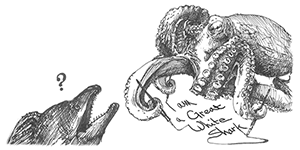
Unstructured Data refers to information that is not organized in a predefined manner. Properly formated computerized data is stored in a database (making it easily retrievable) and labeled with metadata (‘data about data,’ e.g., author, subject, size). Unstructured information has missing or conflicting metadata and may lack contextual clues that make it difficult to understand using traditional programs.
Techniques such as data mining, Natural Language Processing (NLP), and ‘noisy-text’ analytics provide different methods to find patterns in, or otherwise interpret, this information. NLP is a field in Artificial Intelligence, related to linguistics that attempts to program computers to understand human languages. There is considerable commercial interest in the field because of its application to news-gathering, text categorization, voice-activation, archiving, and large-scale content-analysis. Continue reading →
Posted in Language, Technology |
Leave a Comment »
October 16, 2015


Scam baiting is a form of Internet vigilantism, where the vigilante poses as a potential victim to the scammer in order to waste their time and resources, gather information that will be of use to authorities, and publicly expose the scammer. It is primarily used to thwart advance-fee fraud scams (e.g. ‘Nigerian Prince’ scams) and can be done out of a sense of civic duty (activism) by documenting scammers tools and methods, warning potential victims, or taking down fake websites.
A bait is very simply initiated, by answering a scam email, from a throwaway email account, i.e. one that is only used for baiting and untraceable back to the actual owner. The baiter then pretends to be receptive to the financial hook that the scammer is using, but requires increasingly ridiculous forms of security from the scammer before turning over funds. Scam baiters typically use jest in their attacks. However, some scam baiters have been accused of abject mockery, racism, and homophobia, and even scamming themselves.
Posted in Money, Politics, Technology |
Leave a Comment »
October 15, 2015

Tommy John surgery (TJS), known in medical practice as ulnar collateral ligament (UCL) reconstruction, is a surgical graft procedure in which a ligament in the elbow is replaced with a tendon from elsewhere in the body (ligaments and tendons are connective tissue; the former connects bones to each other and latter connects muscles to bone). The procedure is common among collegiate and professional athletes in several sports, particularly baseball pitchers.
The procedure was first performed in 1974 by orthopedic surgeon Dr. Frank Jobe, then a Los Angeles Dodgers team physician who served as a special advisor to the team until his death in 2014. It is named after the first baseball player to undergo the surgery, major league pitcher Tommy John, whose record of 288 career victories ranks seventh all time among left-handed pitchers. Continue reading →
Posted in Games, Health, Money |
Leave a Comment »
October 14, 2015

Ghetto fabulous refers to a fashion stereotype alluding to individuals living in an affluent materialistic style while not actually wealthy. It is part of a larger cultural trend of the 1990s where black, urban fashion was becoming a hot commodity through the rise of ‘hardcore’ rap. Because of the circumstances of many inner city families, poverty and consumerism became the focal point of artistic expression. With the rise of malls in the 1980s, this could be seen in the larger cultural context as well.
‘Excessive consumerism and an obsession with bling are certainly not confined to any particular demographic. We are a nation of excess and instant gratification. It has become the American way.’ For inner city youth, the ghetto fabulous life was about trying to outrun their socio-economic situations. For centuries, fashion has represented socio-economic status, so lower classes will buy outside their means in order to try and fit into an image of the upper classes. Continue reading →
Posted in Language, Money, Politics |
1 Comment »


 The Daily Omnivore