September 28, 2015
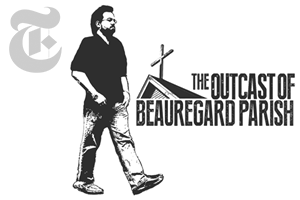

Jerry DeWitt is an American author and public speaker, and a prominent member of the American atheism movement. He is a former pastor of two evangelical churches, who publicly deconverted to atheism in 2011. DeWitt is the former executive director of ‘Recovering From Religion,’ a group which helps people find their way after a loss of faith.
He currently leads the ‘Community Mission Chapel,’ which DeWitt calls an ‘atheist church.’ In a story for the ‘New York Times,’ he said, ‘Just because we value critical thinking and the scientific method, that doesn’t mean we suddenly become disembodied and we can no longer benefit from our emotional lives.’ Continue reading →
Posted in Health, Language, Philosophy |
Leave a Comment »
September 28, 2015


Tinker Hatfield (b. 1952) is the designer of many of Nike’s most popular and innovative athletic shoe designs, including the Air Jordan 3 through Air Jordan 15, the twentieth anniversary Air Jordan, the Air Jordan XXIII, XXV, XXIX, and other athletic sneakers including the world’s first ‘cross training’ shoes, the Nike Air Trainer. Hatfield oversees Nike’s ‘Innovation Kitchen.’ He is Nike’s Vice President for Design and Special Projects.
He attended the University of Oregon, where he ran track for coach and Nike co-founder Bill Bowerman, and at one time had the pole-vault record at the school. Academically, he studied architecture and graduated with a degree from the University of Oregon School of Architecture. Hatfield joined Nike in 1981, and in 1985 started working on shoe design, believing that his architectural skills could be applied to footwear. Continue reading →
Posted in Art, Games, Money |
Leave a Comment »
September 27, 2015

A protection racket is a scheme whereby a group provides protection to businesses or other groups through violence outside the sanction of the law. Through the credible threat of violence, the racketeers deter people from swindling, robbing, injuring, sabotaging or otherwise harming their clients. Protection rackets tend to appear in markets where the police and judiciary cannot be counted on to provide legal protection, either because of incompetence (as in weak or failed states) or illegality (black markets).
Protection rackets are often indistinguishable in practice from extortion rackets since, for the latter, there will be an implied threat that the racketeers themselves may attack the business if it fails to pay for their protection. In an extortion racket, the racketeers agree simply to not attack a business. In a protection racket the criminals agree to defend a business from any attack. Conversely, extortion racketeers will have to defend their clients if threatened by a rival gang to avoid the client transferring their allegiance. Continue reading →
Posted in Money, Politics |
Leave a Comment »
September 24, 2015


Rent-seeking is attempting to take advantage of a pre-existing resource without improving it. According to Nobel Laureate economist Robert Shiller the classic example is that of a feudal lord who installs a chain across a river that flows through his land and then hires a collector to charge passing boats a fee (or rent of the section of the river for a few minutes) to lower the chain. There is nothing productive about the chain or the collector. The lord has made no improvements to the river and is helping nobody in any way, directly or indirectly, except himself. All he is doing is finding a way to make money from something that used to be free.
An example of rent-seeking in a modern economy is spending money on political lobbying for government benefits or subsidies in order to be given a share of wealth that has already been created, or to impose regulations on competitors, in order to increase market share. Continue reading →
Posted in Money, Politics, World |
1 Comment »
September 23, 2015

Fasting is primarily an act of willing abstinence or reduction from certain or all food, drink, or both, for a period of time. An absolute fast is normally defined as abstinence from all food and liquid for a defined period, usually 24 hours. Other fasts may be only partially restrictive, limiting particular foods or substances. The fast may also be intermittent in nature.
Fasting practices may preclude sexual intercourse and other activities as well as food. Extended fasting has been recommended as therapy for various conditions by health professionals of many cultures, throughout history, from ancient to modern. Fasting is also a part of many religious observances.
Continue reading →
Posted in Food, Health, Philosophy |
1 Comment »
September 22, 2015

The X-Seed 4000 is the tallest building ever fully envisioned, meaning that the designs for construction have been completed. Developed by architect Peter Neville, its proposed 4-km height, 6-km wide sea-base, and 800-floor capacity could accommodate 500,000 to 1,000,000 inhabitants. Requiring over 3,000,000 tons of reinforced steel, the construction was estimated to cost US$300–900 billion, in 2006 dollars. It was designed for Tokyo by the Taisei Corporation in 1995 as a futuristic environment combining ultra-modern living and interaction with nature.
Unlike conventional skyscrapers, the X-Seed 4000 would be required to actively protect its occupants from considerable air pressure gradations and weather fluctuations along its massive elevation. Also, the proposed area is situated on the Pacific Ring of Fire, which is the most active volcano range in the world so the structure would be subject to tsunamis and earthquakes. The X-Seed 4000 ‘is never meant to be built,’ says Georges Binder, managing director of Buildings & Data, a firm which compiles data banks on buildings worldwide. ‘The purpose of the plan was to earn some recognition for the firm, and it worked.’
Posted in Technology, World |
Leave a Comment »
September 21, 2015


Trigger warnings are disclaimers that content contains strong writing or images which could unsettle those with mental health difficulties. Angus Johnston, a history professor at the City University of New York, said that trigger warnings can be a part of ‘sound pedagogy,’ noting that students encountering potentially triggering material are ‘coming to it as whole people with a wide range of experiences, and that the journey we’re going on together may at times be painful. It’s not coddling them to acknowledge that. In fact, it’s just the opposite.’
However, students at UC Santa Barbara passed a resolution in support of mandatory trigger warnings for classes that could contain potentially upsetting material. Professors would be required to alert students of such material and allow them to skip classes that could make them feel uncomfortable. Continue reading →
Posted in Health, Language, Politics |
Leave a Comment »
September 20, 2015

A ghost light is an electric light that is left lit on the stage of an unoccupied theater. It typically consists of an exposed bulb mounted in a wire cage on a portable light stand near center stage. Ghost lights are also sometimes known as ‘equity lights’ or ‘equity lamps,’ possibly indicating their use was originally mandated by the Actors’ Equity Association. A ghost light enables one to navigate the theater to find the lighting control console and to avoid accidents such as falling into the orchestra pit or damaging set pieces. Aside from its obvious practical purpose, there are a number of superstitions associated with the origin and purpose of ghost lights.
A popular legend holds that every theater has a ghost. Some theaters have traditions to appease ghosts that reach far back into their history. For example, the Palace Theatre, London keeps two seats in their balcony permanently bolted open to provide seating for the theater ghosts. Similar superstitions hold that ghost lights provide opportunities for ghosts to perform onstage, thus appeasing them and preventing them from cursing the theater or sabotaging the set or production. The use of ghost lights might also be a throwback to the 1800s when theaters were lit with gas lamps. Leaving a flame burning would prevent the buildup of pressure in the gas lines which could cause an explosion.
Posted in Art, Philosophy, Technology |
Leave a Comment »
September 19, 2015
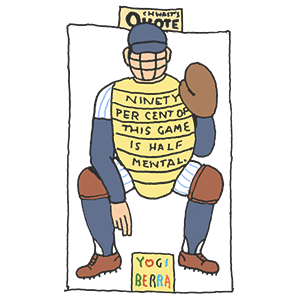
An Irish bull is a ludicrous, incongruent or logically absurd statement, generally unrecognized as such by its author. The addition of the epithet Irish is a late addition. The ‘Irish bull’ is to the sense of a statement what the dangling participle is to the syntax. A jarring or amusing absurdity is created by hastiness or lack of attention to speech or writing.
Although, strictly speaking, Irish bulls are so structured grammatically as to be logically meaningless, their actual effect upon listeners is usually to give vivid illustrations to obvious truths. Hence, as John Pentland Mahaffy, Provost of Trinity College, Dublin, famously observed, ‘an Irish bull is always pregnant,’ i.e. with truthful meaning. Continue reading →
Posted in Humor, Language, World |
2 Comments »
September 18, 2015

Colonel Tom Parker (1909 – 1997), born Andreas Cornelis van Kuijk, was a Dutch-born American entertainment impresario known best as the manager of Elvis Presley. Parker’s management of Presley defined the role of masterminding talent management, which involved every facet of his life and was seen as central to the success of Presley’s career.
‘The Colonel’ displayed a ruthless devotion to his own financial gain rather than his client’s interests and took more than the traditional 10 to 15 percent of his earnings (reaching up to 50 percent by the end of Presley’s life). Presley said of Parker: ‘I don’t think I’d have ever been very big if it wasn’t for him. He’s a very smart man.’ For many years Parker falsely claimed to have been US-born, but it eventually emerged that he was born in Breda in the Netherlands. Continue reading →
Posted in Art, Money, Politics |
Leave a Comment »
September 16, 2015


The smart cow problem refers to the fact that when a group of individuals is faced with a technically difficult task, only one of their members has to solve it. When the problem has been solved once, an easily repeatable method may be developed, allowing the less technically proficient members of the group to accomplish the task.
The concept is relevant to copyright protection schemes such as DRM (Digital Rights Management), where, due to the rapid spread of information on the Internet, it only takes one individual’s defeat of a DRM technology to render the method obsolete. The term ‘smart cow’ is thought to be derive from the expression: ‘It only takes one smart cow to open the latch of the gate, and then all the other cows follow.’
Posted in Money, Politics, Technology |
Leave a Comment »
September 14, 2015


Cowboy diplomacy is a term used by critics to describe the resolution of international conflicts through brash risk-taking, intimidation, military deployment, or a combination of such tactics. It is criticized as stemming from an overly-simple, dichotomous world view. Overtly provocative phraseology typically centralizes the message.
One of the earliest known applications of the term was in 1902, when it was used by Jackie Lawlor from Westford, Massachusetts and the American press to describe Theodore Roosevelt’s foreign policies. Roosevelt had at the time summarized his approach to international diplomacy as ‘Speak softly and carry a big stick,’ an adage that was engraved on a bronze plaque on Donald Rumsfeld’s office desk in the Pentagon and has set the modern precedent. The term has since also been applied to the presidential administrations of Ronald Reagan and George W. Bush.
Posted in Politics, War, World |
Leave a Comment »


 The Daily Omnivore