November 10, 2015

Jailhouse lawyer is a colloquial term in North American English to refer to an inmate in a jail or other prison who, though usually never having practiced law nor having any formal legal training, informally assists other inmates in legal matters relating to their sentence (e.g. appeal of their sentence, pardons, stays of execution, etc.) or to their conditions in prison. Sometimes, he or she also assists other inmates in civil matters of a legal nature. The term can also refer to a prison inmate who is representing themselves in legal matters relating to their sentence.
The important role that jailhouse lawyers play in the criminal justice system has been recognized by the US Supreme Court, which has held that jailhouse lawyers must be permitted to assist illiterate inmates in filing petitions for postconviction relief unless the state provides some reasonable alternative. Many states have ‘Jailhouse Lawyer Statutes,’ some of which exempt inmates acting as lawyers from the licensing requirements imposed on other attorneys when they are helping indigent inmates with legal matters. Cases brought by inmates have also called attention to the need for jailhouse lawyers to have access to law libraries.
Posted in Politics |
2 Comments »
November 9, 2015

‘Once upon a time‘ is a stock phrase used to introduce a narrative of past events, typically in fairy tales and folktales. It has been used in some form since at least 1380 in storytelling in the English language and has opened many oral narratives since 1600. These stories often then end with ‘and they all lived happily ever after,’ or, originally, ‘happily until their deaths.’
The phrase is particularly common in fairy tales for younger children, where it is almost always the opening line of a tale. It was commonly used in the original translations of the stories of Charles Perrault as a translation for the French ‘il était une fois,’ of Hans Christian Andersen as a translation for the Danish ‘der var engang,’ (literally ‘there was once’), the Brothers Grimm as a translation for the German ‘es war einmal’ (literally ‘it was once’). An alternative German fairy tale opening translates to: ‘Back in the days when it was still of help to wish for a thing…’
Posted in Art, Language |
Leave a Comment »
November 5, 2015

Chromadepth is a patented system from the company Chromatek (a subsidiary of American Paper Optics since 2002) that produces a stereoscopic effect based upon differences in the diffraction of color through a special prism-like holographic film. Chromadepth glasses purposely exacerbate chromatic aberration (the failure of a lens to focus all colors to the same convergence point) and give the illusion of colors taking up different positions in space, with red being in front, and blue being in back.
The effect works particularly well with the sky, sea or grass as a background, and redder objects in the foreground. From front to back the scheme follows the visible light spectrum, from red to orange, yellow, green and blue. This means any color is associated in a fixed fashion with a certain depth when viewing. As a result, ChromaDepth works best with artificially produced or enhanced pictures, since the color indicates the depth.
Posted in Money, Technology |
Leave a Comment »
November 3, 2015

QI (‘Quite Interesting’) is a British television quiz show hosted by comedian Stephen Fry. There are four contestants in each show, of whom one is always stand-up comic Alan Davies. Most of the questions are extremely obscure, making it unlikely that the correct answer will be given. To compensate, points are awarded not only for right answers, but also for interesting ones, regardless of whether they are right or even relate to the original question.
QI has stated it follows a philosophy: everything in the world, even that which appears to be the most boring, is ‘quite interesting’ if looked at in the right way. Continue reading →
Posted in Art, Games, Humor |
1 Comment »
November 1, 2015

Nudge theory is a concept in behavioral economics which argues that positive reinforcement and indirect suggestions promoting non-forced compliance can influence the motives, incentives, and decision making of groups and individuals, at least as effectively – if not more effectively – than direct instruction, legislation, or enforcement. The theory came to prominence with a 2008 book, ‘Nudge: Improving Decisions About Health, Wealth, and Happiness’ by behavioral economists Richard Thaler and Cass Sunstein.
They defined a ‘nudge’ as: ‘any aspect of the choice architecture that alters people’s behavior in a predictable way without forbidding any options or significantly changing their economic incentives. To count as a mere nudge, the intervention must be easy and cheap to avoid. Nudges are not mandates. Putting fruit at eye level counts as a nudge. Banning junk food does not.’ One of nudges’ most frequently cited examples is the etching of the image of a housefly into the men’s room urinals at Amsterdam’s Schiphol Airport, which is intended to ‘improve the aim.’
Posted in Money, Politics, Science |
Leave a Comment »
October 31, 2015


Pump and dump is a form of microcap stock fraud that involves artificially inflating the price of an owned stock through false and misleading positive statements, in order to sell the cheaply purchased stock at a higher price. Once the operators of the scheme ‘dump’ sell their overvalued shares, the price falls and investors lose their money. Stocks that are the subject of pump and dump schemes are sometimes called ‘chop stocks.’
While fraudsters in the past relied on cold calls made from ‘boiler rooms’ (outbound call centers selling questionable investments), the Internet now offers a cheaper and easier way of reaching large numbers of potential investors. Often the stock promoter will claim to have ‘inside’ information about impending news. They may also post messages in chat rooms or stock message boards urging readers to buy the stock quickly. Fraudsters frequently use this ploy with small, thinly traded companies—known as ‘penny stocks’ because it is easier to manipulate a stock when there is little or no independent information available about the company. Continue reading →
Posted in Money, Politics |
Leave a Comment »
October 29, 2015

You ain’t gonna need it (YAGNI) is a principle of extreme programming (XP) that states a programmer should not add functionality until deemed necessary. XP co-founder Ron Jeffries said: ‘Always implement things when you actually need them, never when you just foresee that you need them.’ Jeffries argues that prematurely adding features leads to software bloat, feature creep, and takes time away from core functionality improvement.
YAGNI is a principle behind the XP practice of ‘do the simplest thing that could possibly work’ (DTSTTCPW). It is meant to be used in combination with several other practices, such as continuous refactoring (code reorganization), continuous automated unit testing, and continuous integration (conforming code segments work within the larger codebase). However, the efficacy of YAGNI, even when considered in combination with safeguards, is controversial.
Posted in Humor, Language, Technology |
Leave a Comment »
October 28, 2015

‘Man After Man: An Anthropology of the Future’ is a 1990 book written by Scottish geologist Dougal Dixon exploring future evolutionary paths for humanity. Illustrator Philip Hood’s depictions of Dixon’s speculative organisms have been called fear-provoking and biologically horrific to the modern eye.
The book starts 200 years in the future where modern humans have genetically modified themselves into several subtypes including ‘aquamorphs’ (marine humans with gills instead of lungs) and ‘vacuumorphs’ (engineered for life in the vacuum of space, its skin and eyes carry shields of skin to keep its body stable even without pressure). Continue reading →
Posted in Language, Science |
Leave a Comment »
October 26, 2015
A stampede is uncontrolled concerted running as an act of mass impulse among herd animals or a crowd of people. Cattle are particularly prone to stampedes. Any sudden, unusual event can set one off, such as a horse shaking itself, a lightning strike, or even just a tumbleweed. Other species that stampede include elephants, walruses, wild horses, rhinoceros, and humans. Human crushes often occur during religious pilgrimages and professional sporting and music events. They also occur in times of panic (e.g. as a result of a fire or explosion) as people try to get away.
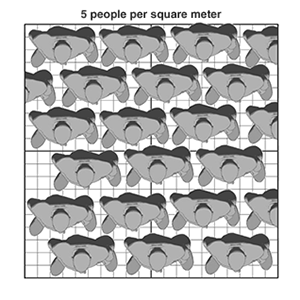
Crushes are very often referred to as stampedes but, unlike true stampedes, they can cause many deaths. They typically occur when members at the back of a large crowd continue pushing forward not knowing that those at the front are being crushed, or because of something that forces them to move. It has been suggested that crowd density rather than size is important, with a density of about four people per square meter beginning to be dangerous, even if the crowd is not very large. Continue reading →
Posted in Death, Health, Technology |
1 Comment »
October 22, 2015

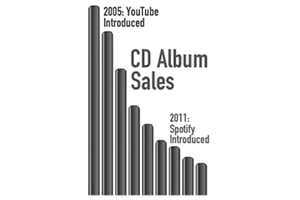
Vinyl revival refers to the renewed interest and increased sales of vinyl records since 2006. The analoge format made of polyvinyl chloride had been the main vehicle for the commercial distribution of pop music from the 1950s until the 1980s and 1990s when they were replaced by the Compact Disc. Since the early 2000s CDs have been partially replaced by digital downloads; conversely, vinyl sales have started growing. In some territories, vinyl is now more popular than it has been since the late 1980s, though vinyl records still make up only a marginal percentage (<3%) of overall music sales.
Founded in 2007, ‘Record Store Day’ is an internationally celebrated day observed the third Saturday of April each year. Its purpose, as conceived by independent record store employee Chris Brown, is to celebrate the art of music. The day brings together fans, artists, and thousands of independent record stores across the world.
Posted in Art, Money |
Leave a Comment »
October 21, 2015

Tower Records was an American retail music chain that liquidated in 2006. The brand currently exists as an international franchise and an online music store. Tower.com was purchased by a separate entity and was not affected by the retail store closings.
Tower was founded in 1960 by Russell Solomon in Sacramento, California. The store was named after his father’s drugstore, which shared a building and name with the Tower Theater, where Solomon first started selling records. The first Tower Records store was opened in 1960 on Watt Avenue in Sacramento. By 1976, Solomon had opened Tower Books, Posters, and Plants at 1600 Broadway, next door to Tower Records. It was also one of the first retailers to move online in 1995 as Tower.com. Continue reading →
Posted in Art, Money, World |
Leave a Comment »
October 20, 2015


Daniel Okrent (b. 1948) is an American writer and editor. He is best known for having served as the first public editor of the ‘New York Times’ newspaper, for inventing ‘Rotisserie League Baseball’ (fantasy baseball), and for writing several books, most recently ‘Last Call: The Rise and Fall of Prohibition,’ which served as a source for the 2011 Ken Burns miniseries on the subject.
The job of the public editor is to supervise the implementation of proper journalism ethics at a newspaper, and to identify and examine critical errors or omissions, and to act as a liaison to the public. At the ‘New York Times,’ the position was created in response to the Jayson Blair scandal. In an interview he made about his new job, Daniel formulated what has become known as ‘Okrent’s law‘: ‘The pursuit of balance can create imbalance because sometimes something is true.’ He was referring to the phenomenon of the press providing legitimacy to fringe or minority viewpoints in an effort to appear even-handed.
Posted in Language, Politics |
Leave a Comment »



