August 8, 2015


Extraterrestrial real estate is land on other planets or natural satellites or parts of space that is offered for sale. No such sale has ever been recognized by any authority. Nevertheless, some private individuals and organizations have claimed ownership of celestial bodies, such as the Moon, and are actively involved in ‘selling’ parts of them through certificates of ownership termed ‘Lunar deeds,’ ‘Martian deeds,’ or similar sham legal documents.
The topic of real estate on celestial objects has been present since the 1890s. In 1936, A. Dean Lindsay made claims for all extraterrestrial objects. He sent a letter to the Pittsburgh Notary Public along with a deed and money for establishment of the property. The public sent offers to buy objects from him as well. The UN sponsored 1967 ‘Outer Space Treaty’ established all of outer space as an international commons by describing it as the ‘province of all mankind’ and forbidding all the nations from claiming territorial sovereignty. Continue reading →
Posted in Money, Politics, World |
Leave a Comment »
August 6, 2015
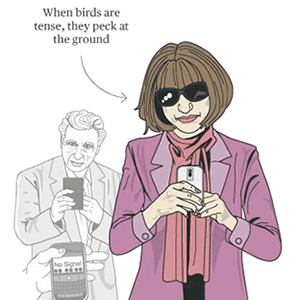
Vacuum activities are innate, fixed action patterns of animal behavior that are performed in the absence of the external stimuli (releaser) that normally elicit them. This type of abnormal behavior shows that a key stimulus is not always needed to produce an activity. Vacuum activities can be difficult to identify because it is necessary to determine whether any stimulus triggered the behavior.
For example, squirrels that have lived in metal cages without bedding all their lives do all the actions that a wild squirrel does when burying a nut. It scratches at the metal floor as if digging a hole, it acts as if it were taking a nut to the place where it scratched though there is no nut, then it pats the metal floor as if covering an imaginary buried nut. Continue reading →
Posted in Health, Science |
2 Comments »
August 5, 2015

Resistance is a concept created by American novelist Steven Pressfield to describe a universal force that he claims acts against human creativity. It was first mentioned in his nonfiction book ‘The War of Art’ and elaborated in the follow-up books ‘Do The Work’ and ‘Turning Pro.’ It is also a recurring theme in some of his novels such as ‘The Legend of Bagger Vance’ and ‘The Virtues of War.’
Resistance is described in a mythical fashion as a universal force that has one sole mission: to keep things as they are. Pressfield claims that Resistance does not have a personal vendetta against anyone, rather it is simply trying to accomplish its only mission: maintenance of the status quo. It is the force that will stop an individual’s creative activity through any means necessary, such as rationalizing, inspiring fear and anxiety, emphasizing other distractions that require attention, or raising the voice of an inner critic. Continue reading →
Posted in Art, Language, Philosophy |
1 Comment »
August 4, 2015


A sigil [sij-il] is a symbol used in magic. The term has usually referred to a type of pictorial signature of a demon or other supernatural entity; in modern usage, especially in the context of chaos magic (a postmodern magical tradition which emphasizes the pragmatic use of belief systems), it refers to a symbolic representation of the magician’s desired outcome.
The term derives from the Latin ‘sigillum,’ meaning ‘seal,’ though it may also be related to the Hebrew word ‘segula’ meaning ‘word, action, or item of spiritual effect, talisman.’ The current use of the term is derived from Renaissance magic (a resurgence in hermeticism and Neo-Platonic varieties of ceremonial magic in the 15th and 16th centuries), which was in turn inspired by the magical traditions of antiquity. Continue reading →
Posted in Death, Language, Philosophy |
Leave a Comment »
August 3, 2015
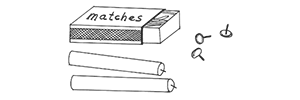
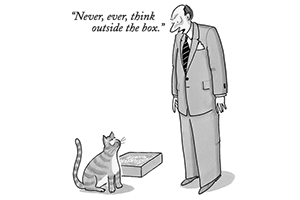
Functional fixedness [fiks-ed-nes] is a cognitive bias that limits a person to using an object only in the way it is traditionally used. The concept originated in Gestalt Psychology, which emphasizes holistic processing (e.g., ‘the whole is greater than the sum of its parts’). German American psychologist Karl Duncker defined functional fixedness as a ‘mental block against using an object in a new way that is required to solve a problem.’ This ‘block’ limits the ability of an individual to use components given to them to complete a task, as they cannot move past the original purpose of those components.
For example, if someone needs a paperweight, but they only have a hammer, they may not see how the hammer can be used as a paperweight. Functional fixedness is this inability to see a hammer’s use as anything other than for pounding nails; the person couldn’t think to use the hammer in a way other than in its conventional function. When tested, five year old children show no signs of functional fixedness. At that age, any goal to be achieved with an object is equivalent to any other goal. However, by age seven, children have acquired the tendency to treat the originally intended purpose of an object as special.
Continue reading →
Posted in Education, Health, Technology |
1 Comment »
August 1, 2015

Upaya [oo-pah-yuh] (Sanskrit: ‘expedient means’) is a term used in Buddhism to refer to an aspect of guidance along the Buddhist Paths to liberation where a conscious, voluntary action is driven by an incomplete reasoning around its direction. Upaya is often combined with ‘kaushalya’ (‘cleverness’) to form ‘upaya-kaushalya’ meaning ‘skill in means,’ a concept emphasizing that practitioners may use their own specific methods or techniques that fit the situation in order to gain enlightenment. The implication is that even if a technique, view, etc., is not ultimately ‘true’ in the highest sense, it may still be an expedient practice to perform or view to hold; i.e., it may bring the practitioner closer to the true realization in a similar way.
The exercise of skill to which it refers, the ability to adapt one’s message to the audience, is of enormous importance in the ‘Pali Canon’ (some of the oldest texts in Buddhism). The most important concept in ‘skill in means’ is the use, guided by wisdom and compassion, of a specific teaching (means) geared to the particular audience taught. Edward Conze, in ‘A Short History Of Buddhism,’ says ”Skill in means’ is the ability to bring out the spiritual potentialities of different people by statements or actions which are adjusted to their needs and adapted to their capacity for comprehension.’ Continue reading →
Posted in Language, Philosophy |
1 Comment »
July 31, 2015


A double bind is an emotionally distressing dilemma in communication in which an individual (or group) receives two or more conflicting messages, and one message negates the other. This creates a situation in which a successful response to one message results in a failed response to the other (and vice versa), so that the person will automatically be wrong regardless of response. The double bind occurs when the person cannot confront the inherent dilemma, and therefore can neither resolve it nor opt out of the situation.
The classic example given of a negative double bind is of a mother telling her child that she loves him or her, while at the same time turning away in disgust (the words are socially acceptable; the body language is in conflict with it). The child doesn’t know how to respond to the conflict between the words and the body language and, because the child is dependent on the mother for basic needs, he or she is in a quandary. Small children have difficulty articulating contradictions verbally and can neither ignore them nor leave the relationship. Continue reading →
Posted in Health, Language, Science |
1 Comment »
July 30, 2015
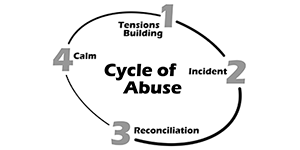

Battered person syndrome is a physical and psychological condition of a person who has suffered (usually persistent) emotional, physical, or sexual abuse from another person. The condition is the basis for the battered spouse defense that has been used in cases of spouses who have killed their abusers. The condition was first researched extensively by American psychologist Lenore E. Walker, founder of the Domestic Violence Institute, who used psychologist Martin Seligman’s ‘learned helplessness’ theory to explain why abused spouses stayed in destructive relationships.
The syndrome develops in response to a three-stage cycle found in domestic violence situations. First, tension builds in the relationship. Second, the abusive partner releases tension via misconduct while blaming the victim for having caused the event. Third, the abusive partner makes gestures of contrition, but does not find solutions to avoid another phase of tension building and release so the cycle repeats. The repetition of the cycle despite the abuser’s attempts to ‘make nice’ results in the abused partner feeling at fault for not preventing recurrences. However, since the victim is not at fault and the violence is internally driven by the abuser’s need to control, this self-blame results in feelings of helplessness rather than empowerment. Continue reading →
Posted in Health, Politics, Sex |
Leave a Comment »
July 29, 2015
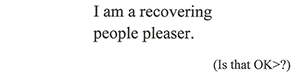

Enabling is a term with a double meaning in psychotherapy and mental health. As a positive term, it is similar to empowerment, and describes patterns of interaction which allow individuals or groups to develop and grow. In a negative sense, it can describe dysfunctional behavior approaches that are intended to help resolve a specific problem but in fact may perpetuate or exacerbate the problem.
A common theme of enabling in this latter sense is that third parties take responsibility or blame, or make accommodations for a person’s harmful conduct (often with the best of intentions, or from fear or insecurity which inhibits action). The practical effect is that the person himself or herself does not have to do so, and is shielded from awareness of the harm it may do, and the need or pressure to change. Enabling in this sense is a major environmental cause of addiction. Continue reading →
Posted in Drugs, Health |
Leave a Comment »
July 22, 2015
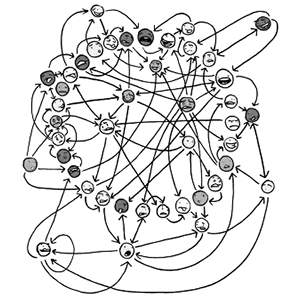
Fan service is a term originating from anime and manga fandom for material in a series which is intentionally added to please the audience (i.e. ‘giving the people what they want’). Fan service usually refers to ‘gratuitous titillation,’ but can also refer to intertextual references to other series and other ‘indulgent’ inclusions.
Long shots of robots in mecha shows, nudity, violent episode-long fight scenes, and emphasis on ‘shipping’ (the desire by fans for two people, either real-life celebrities or fictional characters, to be in a relationship, romantic or otherwise) can all be considered fan service as they are specifically aimed at pleasing the fans of any given show. Meta-references are intended to be seen and understood by the fans, as a way for creators to acknowledge and engage the more knowledgeable members of the fanbase. Continue reading →
Posted in Art, Money, Sex |
Leave a Comment »
July 16, 2015
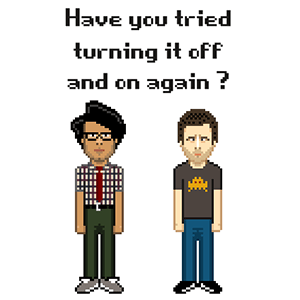
A user error is an error made by the human user of a complex system, usually a computer system, in interacting with it. Related terms such as PEBCAK (Problem Exists Between Chair And Keyboard), ID-10T error (idiot error), and other similar phrases are also used as slang in technical circles with derogatory meaning. A highly popularized example of this is a user mistaking their CD-ROM tray for a cup holder, or a user looking for the ‘any key.’
This usage implies a lack of computer savvy, asserting that problems arising when using a device are the fault of the user. Critics of the term argue that the problems are caused instead by a device that doesn’t take into account human limitations and is thus designed in a way that induces errors. Continue reading →
Posted in Humor, Technology |
Leave a Comment »
July 15, 2015
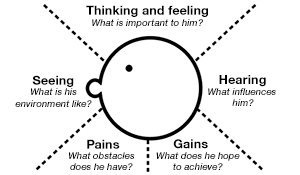

Perspective-taking is the process by which an individual views a situation from another’s point-of-view. It can occur visually in that one changes their physical location to see things as someone else does, or cognitively in that one mentally simulates the point-of-view of another’s cognitive state. For instance, one can visualize the viewpoint of a taller individual (physical state) or reflect upon another’s point-of-view on a particular concept (cognitive state).
In other words, perspective-taking is the process of temporarily suspending one’s own point-of-view in an attempt to view a situation as someone else might. This process does not necessitate any form of affinity, compassion, or emotional identification with the other (i.e. empathy). Therefore, as an other-oriented activity, perspective-taking can be used to gain an understanding of a given physical state and/or situation after which a determination of appropriate action can be selected (e.g., empathy). Continue reading →
Posted in Health, Money, Politics |
Leave a Comment »


 The Daily Omnivore