May 6, 2015

A male bra (also known as a compression bra, compression vest, or gynecomastia vest) is a brassiere worn by a man. Adolescent boys and middle-aged men sometimes develop breasts (gynecomastia). Although there are options for treating gynecomastia, some elect surgery to reduce their breasts or wear a male bra, which typically flatten rather than lift. Other men wear bras for cross-dressing, for sexual purposes such as transvestic fetishism or feminization, or as a form of submission to their partner.
Additionally, some male athletes – more specifically runners – may choose to wear a sports bra under their shirts in order to prevent a common medical condition called jogger’s nipple, also known as nipple chafing. This condition is caused by excessive rubbing of wet sweat-soaked material over one’s nipples. In an episode ‘Seinfeld,’ titled ‘The Doorman,’ Kramer invented a male bra, which he called a ‘bro,’ for Frank Costanza, who was said to have very large breasts. Frank initially decided to market the invention, but disagreed on the name, instead wanting to call it a ‘Manssiere.’
Posted in Health, Humor, Sex |
Leave a Comment »
May 5, 2015
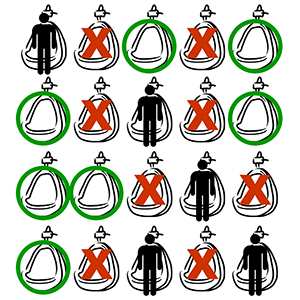
Male Restroom Etiquette is a 2006 American short subject created by humorist Phil R. Rice and produced by his company Zarathustra Studios. The film is a mockumentary about unwritten rules of behavior in male restrooms and is intended to be a parody of educational and social guidance films. The film was made using the machinima technique of recording video footage from computer games, namely ‘The Sims 2’ and ‘SimCity 4.’ In the short, the narrator states that increased cultural diversity has necessitated the exposition of previously unwritten rules regarding the use of malerestrooms.
According to these rules, males should use restrooms as quickly as possible, maximize physical separation from each other when using urinals, flush urinals when they contain concentrated urine, avoid stalls with unflushed toilets, and avoid eye contact and communication with others. The film depicts a scenario in which excess communication leads to a mess in the restroom and thus deficient hygiene and homeostasis, the latter of which is in the lowest tier in Maslow’s hierarchy of needs. As the scenario continues, the restroom occupants turn to violence, leading to police and biological hazard team involvement that closes the restroom. Forced to go elsewhere, other men repeat the scenario, eventually leading to complete societal breakdown.
Posted in Games, Humor |
1 Comment »
May 4, 2015

Scientism [sahy-uhn-tiz-uhm] is belief in the universal applicability of the scientific method and approach, and the view that empirical science constitutes the most authoritative worldview or most valuable part of human learning to the exclusion of other viewpoints. Philosopher Tom Sorell describes it as: ‘putting too high a value on natural science in comparison with other branches of learning or culture.’ It has been defined as ‘the view that the characteristic inductive methods of the natural sciences are the only source of genuine factual knowledge and, in particular, that they alone can yield true knowledge about man and society.’
The term scientism frequently implies a critique of the more extreme expressions of logical positivism (verificationism) and has been used by social scientists such as Friedrich Hayek, philosophers of science such as Karl Popper, and philosophers such as Hilary Putnam and Tzvetan Todorov to describe the dogmatic endorsement of scientific methodology and the reduction of all knowledge to only that which is measurable. Continue reading →
Posted in Philosophy, Science |
1 Comment »
May 1, 2015

Leaves of Grass is a collection of poetry by Walt Whitman praising sensuality, the material world, nature, and the experience of the senses. The book was published at Whitman’s own expense in 1855, a period where poetry focused on the soul and organized religion, and was a failure at first. Whitman spent most of his professional life writing and rewriting the book, revising it multiple times until his death. This resulted in vastly different editions over four decades—the first a small book of twelve poems and the last a compilation of over 400.
The collection is notable for its discussion of delight in carnal pleasures during a time when such candid displays were considered immoral. Where much previous poetry, especially English, relied on symbolism, allegory, and meditation on the religious and spiritual, ‘Leaves of Grass’ (particularly the first edition) exalted the physical form and ephemera. Influenced by Ralph Waldo Emerson and the Transcendentalist movement, itself an offshoot of Romanticism, Whitman’s poetry praises nature and the individual’s role in it. However, much like Emerson, Whitman does not diminish the role of the mind or the spirit; rather, he elevates the human form and mind, deeming both worthy of poetic praise.
Continue reading →
Posted in Art, Language, Philosophy |
Leave a Comment »
April 30, 2015


World currency normally refers to a currency that is transacted internationally, with no set borders, but an alternative definition refers to a hypothetical single global currency or supercurrency, such as the proposed ‘terra’ or the ‘DEY’ (Dollar Euro Yen), produced and supported by a central bank which is used for all transactions around the world, regardless of the nationality of the entities (individuals, corporations, governments, or other organizations) involved in the transaction.
Advocates of a global currency, notably famed economist John Maynard Keynes, have argued that such a currency would not suffer from inflation, which, in extreme cases, has had disastrous effects for economies. In addition, many argue that a single global currency would make conducting international business more efficient and would encourage foreign direct investment. Continue reading →
Posted in Money, Politics, World |
1 Comment »
April 29, 2015

The United Federation of Planets, usually referred to as ‘the Federation,’ is an interstellar federal republic composed of planetary sovereignties depicted in the ‘Star Trek’ science fiction franchise. Formed in 2161, the planetary governments voluntarily exist semi-autonomously under a single central government based on the Utopian principles of universal liberty, rights, and equality, and to share their knowledge and resources in peaceful cooperation and space exploration.
The Federation is described a post-capitalist, libertarian, constitutional republic, which was composed of more than 150 member planets and thousands of colonies spread across some 6,000,000 cubic light years of the Milky Way Galaxy by 2373. The social structure within the Federation is classless and operates within a moneyless ‘New World Economy.’ It is described as stressing, at least nominally, the values of universal liberty, equality, justice, peace, and cooperation. The Federation also maintains its own quasi-militaristic and scientific exploratory agency, known as ‘Starfleet’ which handles many other governmental processes, sometimes with no other agency’s influence, such as border defense and diplomatic relations. Continue reading →
Posted in Art, Money, Politics |
Leave a Comment »
April 28, 2015

An anti-proverb or a ‘perverb’ is the transformation of a standard proverb for humorous effect. Paremiologist (proverb scholar) Wolfgang Mieder defines them as ‘parodied, twisted, or fractured proverbs that reveal humorous or satirical speech play with traditional proverbial wisdom.’ They have also been defined as ‘an allusive distortion, parody, misapplication, or unexpected contextualization of a recognized proverb, usually for comic or satiric.’
To have full effect, an anti-proverb must be based on a known proverb. For example, ‘If at first you don’t succeed, quit’ is only funny if the hearer knows the standard proverb ‘If at first you don’t succeed, try, try again.’ Anti-proverbs are used commonly in advertising, such as ‘Put your burger where your mouth is’ from Red Robin. Anti-proverbs are also common on T-shirts, such as ‘Taste makes waist’ and ‘If at first you don’t succeed, skydiving is not for you.’ Continue reading →
Posted in Humor, Language |
2 Comments »
April 27, 2015


Satyagraha [suht-yuh-gruh-huh] is a term coined by Mahatma Gandhi to describe his particular philosophy and practice within the broader overall category generally known as nonviolent resistance or civil resistance. It loosely translates as ‘insistence on truth’ (Sanskrit: ‘satya’ ‘truth’; ‘agraha’ ‘polite insistence,’ or ‘holding firmly to’) or ‘truth force.’
He deployed satyagraha in the Indian independence movement and also during his earlier struggles in South Africa for Indian rights. Satyagraha theory influenced Nelson Mandela’s struggle in South Africa under apartheid, Martin Luther King, Jr.’s campaigns during the Civil Rights Movement in the US, and many other social justice and similar movements. Someone who practices satyagraha is a ‘satyagrahi.’ Continue reading →
Posted in Philosophy, Politics, War |
Leave a Comment »
April 23, 2015
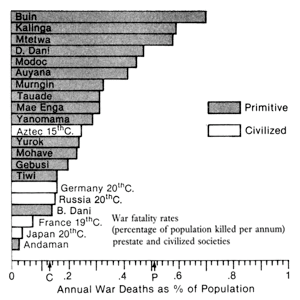
‘War Before Civilization: the Myth of the Peaceful Savage’ is a 1996 book by Lawrence H. Keeley, an archeology professor at the University of Illinois at Chicago who specializes in prehistoric Europe. The book deals with warfare conducted throughout human history by societies with little technology. In the book, Keeley aims to stop the apparent trend in seeing civilization as bad.
According to Keeley, modern western societies are not more violent or war-prone than (historical) tribes. He conducted an investigation of the archaeological evidence for prehistoric violence, including murder and massacre as well as war. He also looked at nonstate societies of more recent times. It has long been known, for example, that many tribes of South America’s tropical forest engage in frequent and horrific warfare, but some scholars had attributed their addiction to violence to baneful Western influences. Continue reading →
Posted in Death, Language, War |
Leave a Comment »
April 22, 2015
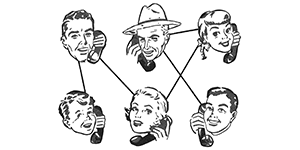

The StingRay is an IMSI-catcher (International Mobile Subscriber Identity), a controversial cellular phone surveillance device, manufactured by the Harris Corporation. Initially developed for the military and intelligence community, the StingRay and similar Harris devices are in widespread use by local and state law enforcement agencies across the US. Stingray has also become a generic name to describe these kinds of devices.
The StingRay has with both passive (digital analyzer) and active (cell site simulator) capabilities. When operating in active mode, the device mimics a wireless carrier cell tower in order to force all nearby mobile phones and other cellular data devices to connect to it. The devices can be mounted on cars, airplanes, helicopters, and unmanned aerial vehicles, as well as carried by hand. They are primarily used for surveillance, but can also conduct denial of service attacks (radio jamming). Continue reading →
Posted in Politics, Technology, War |
Leave a Comment »
April 21, 2015

Project Blue Book was one of a series of systematic studies of unidentified flying objects (UFOs) conducted by the United States Air Force. It started in 1952, and it was the third study of its kind (the first two were projects ‘Sign’ in 1947 and ‘Grudge’ in 1949). A termination order was given for the study in 1969. Project Blue Book had two goals: To determine if UFOs were a threat to national security, and To scientifically analyze UFO-related data. Thousands of UFO reports were collected, analyzed and filed.
As the result of the ‘Condon Report’ (1968), which concluded there was nothing anomalous about UFOs, Project Blue Book was ordered shut down in 1970. Ultimately, Project Blue Book stated that UFOs sightings were generated as a result of: hysteria, fraud, hoaxes, and misidentification. The Air Force continues to provide the following summary of its investigations: ‘There was no evidence indicating that sightings categorized as ‘unidentified’ were extraterrestrial vehicles.’ Continue reading →
Posted in Humor, Technology, War |
Leave a Comment »
April 20, 2015

In medieval and early modern kitchens, the spit was the preferred way of cooking meat in a large household. A servant known as the ‘spit boy’ or ‘spit jack’ sat near the spit turning the metal rod slowly to cook the food evenly. Mechanical turnspits (‘roasting jacks’) were later invented and were first powered by dogs on treadmills (and then by steam power and mechanical clockwork mechanisms, and presently by electric motors). The Turnspit Dog was a short-legged, long-bodied dog bred to run on a wheel, called a ‘turnspit’ or ‘dog wheel.’
It is mentioned in ‘Of English Dogs’ in 1576 under the name ‘Turnespete.’ English naturalist William Bingley’s ‘Memoirs of British Quadrupeds’ (1809) also talks of a dog employed to help chefs, known as the ‘Kitchen Dog,’ the ‘Cooking Dog,’ the ‘Underdog,’ and the ‘Vernepator.’ In Swedish zoologist Carl Linnaeus’ 18th century classification of dogs it is listed as ‘Canis vertigus’ (‘spinning dog’). The breed was lost since it was considered to be such a lowly and common dog that no record was effectively kept of it. Some sources consider the Turnspit a kind of Glen of Imaal Terrier, others make it a relative of the Welsh Corgi. Continue reading →
Posted in Food, Technology |
1 Comment »