November 13, 2014

Christopher Nolan (b. 1970) is a British-American film director, screenwriter, and producer. He created several of the most successful films of the early 21st century, and his eight films have grossed over $3.5 billion worldwide. Having made his directorial debut with ‘Following’ (1998), he gained considerable attention for his second feature, ‘Memento’ (2000). The acclaim of these independent films afforded Nolan the opportunity to make the big-budget thriller ‘Insomnia’ (2002), and the more offbeat production ‘The Prestige’ (2006); which were well-received critically and commercially. He found popular success with ‘The Dark Knight’ trilogy (2005–2012), ‘Inception’ (2010), and ‘Interstellar’ (2014). He runs the London-based production company Syncopy Inc. with his wife Emma Thomas.
His films are rooted in philosophical and sociological concepts, exploring human morality, the construction of time, and the malleable nature of memory and personal identity. Experimentation with metafictive elements, temporal shifts, elliptical cutting, solipsistic perspectives, nonlinear storytelling and the analogous relationship between the visual language and narrative elements, permeate his entire body of work. Continue reading →
Posted in Art |
1 Comment »
November 12, 2014

Form follows function, a principle associated with modernist architecture and industrial design in the 20th century, holds that the shape of a building or object should be primarily based upon its intended purpose, not aesthetics or tradition. The authorship of the phrase is often, though wrongly, ascribed to the American sculptor Horatio Greenough, whose thinking to a large extent predates the later functionalist approach to architecture. Greenough’s writings were for a long time largely forgotten, and were rediscovered only in the 1930s; in 1947 a selection of his essays was published under the title ‘Form and Function: Remarks on Art by Horatio Greenough.’
American architect, Louis Sullivan, Greenough’s much younger compatriot, who admired rationalist thinkers like Greenough, Thoreau, Emerson, Whitman, and Melville, coined the phrase in his article ‘The Tall Office Building Artistically Considered’ in 1896 (some fifty years after Greenough’s death), though Sullivan later attributed the core idea to Marcus Vitruvius Pollio the Roman architect, engineer and author who first asserted in his book ‘De architectura’ that a structure must exhibit the three qualities of ‘firmitas, utilitas, venustas’ – that is, it must be solid, useful, beautiful. Here Sullivan actually said ‘form ever follows function,’ but the simpler (and less emphatic) phrase is the one usually remembered. Continue reading →
Posted in Art, Language, Technology |
1 Comment »
November 12, 2014
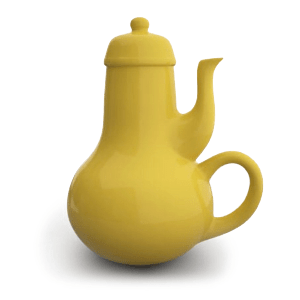
An affordance is something that provides the opportunity to perform an action. It is often described as a relationship between an object (or environment) and an organism. For example, a knob affords twisting, and perhaps pushing, while a cord affords pulling. As a relation, an affordance exhibits the possibility of some action, and is not a property of either an organism or its environment alone.
Different definitions of the term have developed. The original definition described all actions that are physically possible, but was later limited to only those an actor is aware of. The term has further evolved for use in the context of human–computer interaction (HCI) to indicate the easy discoverability of possible actions. The concept has application in several fields: perceptual, cognitive, and environmental psychology, industrial design, instructional design, science, technology and society (STS), and artificial intelligence. Continue reading →
Posted in Language, Science, Technology |
Leave a Comment »
November 11, 2014
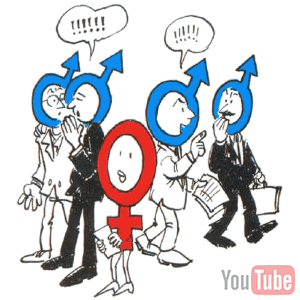
The Master suppression techniques (also known as domination techniques), articulated in 1945 by Norwegian psychologist and philosopher Ingjald Nissen, is an outline of ways to indirectly suppress and humiliate opponents. In the late 1970s the framework was popularized by Norwegian social psychologist Berit Ås, who reduced Nissen’s original nine means to five, and claimed this was a technique mostly used in the workplace by men against women. Master suppression techniques are defined as strategies of social manipulation by which a dominant group maintains such a position in a (established or unexposed) hierarchy. They are very prominent in Scandinavian scholarly and public debate.
The five master suppression techniques are: Making Invisible (silencing or otherwise marginalizing persons in opposition by ignoring them), Ridiculing (portraying opponents and their arguments as absurd and worthy of mocking), Withholding Information (excluding opponents from the decision making process, or limiting their access to information so as to make them less able to make an informed choice), Double Binding (punishing or otherwise belittling the actions of opponents, regardless of how they act), and Blaming and Shaming (embarrassing opponents by insinuating that they are themselves to blame for their position). Continue reading →
Posted in Language, Politics, World |
Leave a Comment »
November 11, 2014


Master–slave morality is a central theme of German philosopher Friedrich Nietzsche’s works, in particular the first essay of ‘On the Genealogy of Morality,’ his 1887 book ‘on the origin of our moral prejudices.’ Nietzsche argued that there were two fundamental types of morality: ‘Master morality’ and ‘slave morality’. Slave morality values things like kindness, humility and sympathy, while master morality values pride, strength, and nobility.
Master morality weighs actions on a scale of good or bad consequences unlike slave morality which weighs actions on a scale of good or evil intentions. What he meant by ‘morality’ deviates from common understanding of this term. For Nietzsche, a particular morality is inseparable from the formation of a particular culture. This means that its language, codes and practices, narratives, and institutions are informed by the struggle between these two types of moral valuation. Continue reading →
Posted in Philosophy, Politics |
Leave a Comment »
November 10, 2014
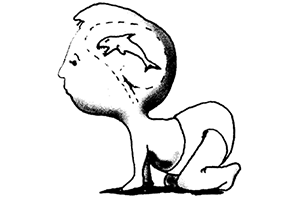
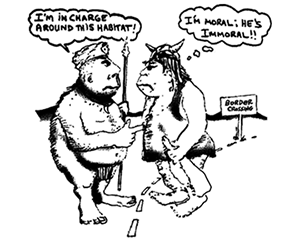
‘Prometheus Rising‘ is a book by Robert Anton Wilson first published in 1983. It is a guide book of ‘how to get from here to there,’ an amalgam of psychonaut Timothy Leary’s 8-circuit model of consciousness, spiritualist Georges Gurdjieff’s self-observation exercises, Polish semiotician Alfred Korzybski’s general semantics, occultist Aleister Crowley’s magical theorems, Sociobiology (the study of the evolutionary bases of behavior), Yoga, relativity, and quantum mechanics among other approaches to understanding the world around us. Wilson describes it as an ‘owner’s manual for the human brain.’
The book, which examines many aspects of social mind control and mental imprinting, provides mind exercises at the end of every chapter, with the goal of giving the reader more control over how one’s mind works. Wilson also discusses the effect of certain psychoactive substances and how these affect the brain, tantric breathing techniques, and other methods and holistic approaches to expanding consciousness. The book’s take on transactional analysis became the main seed thought for ‘The Sekhmet Hypothesis’ (suggesting a link between the emergence of youth culture archetypes in relation to the 11 year solar cycle), specifically the idea of applying the life scripts to pop cultural trends.
Posted in Art, Language, Philosophy |
Leave a Comment »
November 9, 2014
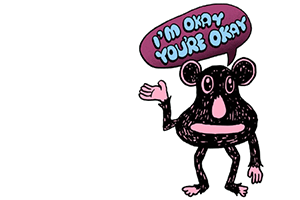
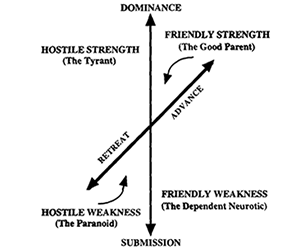
The Sekhmet Hypothesis was first published in 1995 by author Iain Spence. It suggested a possible link between the emergence of youth culture archetypes in relation to the 11 year solar cycles. The hypothesis was published again in 1997 in ‘Towards 2012’ and covered in 1999 in ‘Sleazenation’ magazine. Spence eventually abandoned the idea as not based in scientific fact, pointing to Strauss-Howe generational theory as a better model of social change.
The origins of the hypothesis can be traced back to philosopher Robert Anton Wilson’s book, ‘Prometheus Rising,’ in which he makes a singular correlation between the archetype of the flower child with the mood of friendly weakness. Spence extended the comment into a study of various youth archetypes and linked in their behavior to transactional analysis (a theory of human interaction). The idea of linking pop culture to the solar cycles had been influenced from remarks made by modern occultist Peter J. Carroll, in his book, ‘Psychonaut.’ Sekhmet is the Egyptian goddess of the sun. Continue reading →
Posted in Art, Language, Philosophy |
Leave a Comment »
November 9, 2014

Memory implantation is a technique used in cognitive psychology to investigate human memory. Researchers make people believe that they remember an event that actually never happened, such as being lost in a mall as a child, taking a hot air balloon ride, and putting slime in a teacher’s desk in primary school. Memory implantation techniques were developed in the 1990s as a way of providing evidence of how easy it is to distort people’s recollection of past events. Most of the studies were published in the context of the debate about repressed memories and the possible danger of digging for lost memories in therapy.
The first formal studies using memory implantation were published in the early 1990s, the most famous being ‘The Formation of False Memories’ (commonly referred to as the ‘Lost in the Mall’ study) by cognitive psychologist Elizabeth Loftus. The basic technique used in this study involved asking family members of a participant to provide narratives of events that happened when they were young and then add another event that definitely had not happened. The participants saw these four narratives and were told to try to remember as much as possible about each event. Across a number of studies using memory implantation, about 37% of people have come to remember parts of or entire events that never actually happened. Continue reading →
Posted in Health, Science |
1 Comment »
November 9, 2014
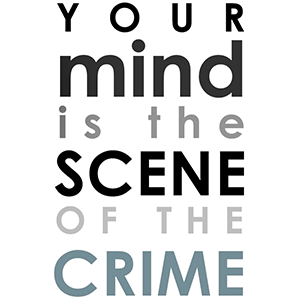
Imagination inflation refers to the finding that imagining an event which never happened can increase confidence that it actually occurred. This effect is relevant to the study of memory and cognition, particularly false memory. Imagination inflation is one way that techniques intended to retrieve repressed memories (e.g. recovered memory therapy) may lead to the development of false or distorted memories.
Imagination inflation also has implications for the criminal justice system, in particular interrogation and interviewing procedures, as it supports the claim that interrogators who ask suspects to repeatedly imagine committing a crime may risk making them more confident that they are the perpetrators, ultimately producing false confessions from innocent suspects. In one case in the US in 1990s, a man who initially denied accusations of raping his daughters was given an intense police interrogation. He confessed to abusing his children and leading a satanic cult which sacrificed babies, even admitting to crimes that were denied by his accusers. Continue reading →
Posted in Health, Politics, Science |
Leave a Comment »
November 9, 2014


‘The Caine Mutiny‘ is a 1951 Pulitzer Prize-winning novel by American author Herman Wouk. The book grew out of Wouk’s personal experiences aboard a destroyer-minesweeper in the Pacific in World War II and deals with, among other things, the moral and ethical decisions made at sea by the captains of ships. The mutiny of the title is legalistic, not violent, and takes place during a historic typhoon in December 1944. The court-martial that results provides the dramatic climax to the plot.
The story is told through the eyes of Willis Seward ‘Willie’ Keith, an affluent, callow young man who signs up for midshipman school with the Navy to avoid being drafted into the Army during World War II. After barely surviving a series of misadventures that earn him the highest number of demerits in the history of the school, he is commissioned and assigned to the destroyer minesweeper USS Caine, an obsolete warship converted from a World War I-era destroyer. Continue reading →
Posted in Art, Politics, War |
Leave a Comment »
November 8, 2014

Bathroom singing is common because the hard wall surfaces, often tiles or wooden panels, and lack of soft furnishings, create an aurally pleasing acoustic environment. The multiple reflections from walls enrich the sound of one’s voice. Small dimensions and hard surfaces of a typical bathroom produce various kinds of standing waves, reverberation and echoes, giving the voice ‘fullness and depth.’
This habit was first reported (with an attempt of explanations) in the 14th century by Arab historian Ibn Khaldun. In Chapter 1 of his ‘Muqaddimah’ writes: ‘Likewise, when those who enjoy a hot bath inhale the air of the bath, so that the heat of the air enters their spirits and makes them hot, they are found to experience joy. It often happens that they start singing, as singing has its origin in gladness.’ Continue reading →
Posted in Art, Humor |
1 Comment »
November 8, 2014


Gelotology [jel-uh-tol-uh-jee] (from the Greek ‘gelos,’ meaning ‘laughter’) is the study of laughter and its effects on the body, from a psychological and physiological perspective. Its proponents often advocate induction of laughter on therapeutic grounds in complementary medicine. The field of study was pioneered by psychiatrist William F. Fry at Stanford.
Although healers since antiquity have recommended laughter as a form of medicine, the field was initially deprecated by most other physicians, who doubted that laughter possessed analgesic (painkilling) qualities. One early study that demonstrated the effectiveness of laughter in a clinical setting showed that it could help patients with atopic dermatitis (a recurring, itchy skin disorder) respond less to allergens. Other studies have shown that laughter can help alleviate stress and pain, and can even assist cardiopulmonary rehabilitation (treatment for patients recovering from cardiac surgeries). Continue reading →
Posted in Health, Humor, Science |
Leave a Comment »




 The Daily Omnivore