November 7, 2014
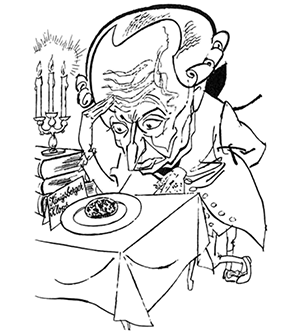
In sociology, taste is an individual’s personal and cultural patterns of choice and preference. It is drawing qualitative distinctions between things such as styles, manners, consumer goods, and works of art. Aesthetic preferences and attendance to various cultural events are associated with education and social origin. Different socioeconomic groups are likely to have different tastes, and social class is one of the most prominent factors structuring taste. The concept of aesthetics has been the interest of philosophers such as Plato, Hume and Kant, who understood it as something pure and searched for the ‘essence of beauty,’ the ontology of taste. But it was not until the beginning the early 19th century that the question was problematized in its social context.
In his aesthetic philosophy, Kant denies any standard of a good taste, which would be the taste of the majority or any social group. For Kant, beauty is not a property of an object, but a judgement based on a subjective feeling. He claims that even if a universal, non-relativistic ‘good taste’ does exist, it can not be empirically identified, or found in any standards or generalizations, and the validity of a judgement is not the general view of the majority or some specific social group. Taste is both personal and beyond reasoning, and therefore disputes over matters of taste never reach a finite conclusion. Kant stresses that our preferences, even on generally liked things, do not justify our judgements. Continue reading →
Posted in Art, Money, Politics |
Leave a Comment »
November 6, 2014

In American suburban communities, McMansion is a pejorative for a type of large, new luxury house which is judged to be oversized for the parcel or incongruous and out-of-place for its neighborhood. Alternatively, a McMansion can be a large, new house in a subdivision of similarly large houses, which all seem mass-produced and lacking in distinguishing characteristics, as well as appearing at odds with the traditional local architecture.
The neologism seems to have been coined sometime in the early 1980s. It first appeared in print the ‘Los Angeles Times’ in 1990. Related terms include ‘Persian palace,’ ‘garage Mahal,’ ‘starter castle,’ and ‘Hummer house.’ Marketing parlance often uses the term ‘tract mansion’ or ‘executive home.’ An example of a McWord, ‘McMansion’ associates the generic quality of these luxury homes with that of mass-produced fast food by evoking the McDonald’s restaurant chain. Continue reading →
Posted in Language, Money |
Leave a Comment »
November 5, 2014


Cover your ass (CYA) describes activity, usually in a work-related or bureaucratic context, done by an individual to protect himself or herself from possible subsequent legal penalties or criticism. According to lexicographer William Safire, it describes the bureaucratic technique of ‘deflecting responsibility in advance,’ that is, diffusing responsibility for one’s actions as a form of insurance against possible negative repercussions. It can denote a type of institutional risk-averse mentality which works against accountability and responsibility, often characterized by excessive paperwork and documentation (red tape), which can be harmful to the institution’s overall effectiveness.
The activity, sometimes seen as instinctive, is generally unnecessary towards accomplishing the goals of the organization, but helpful to protect a particular individual’s career within it, and it can be seen as a type of institutional corruption working against individual initiative. In a slightly different sense, it can be used to describe rightful steps to protect oneself properly while in a difficult situation, such as what steps to take to protect oneself after being fired (due diligence). Continue reading →
Posted in Humor, Language, Politics |
Leave a Comment »
November 4, 2014

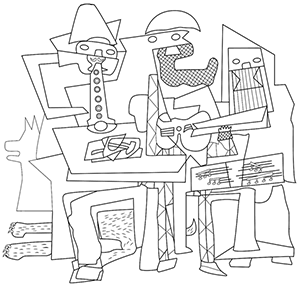
Commedia [kuh-mey-dee-uh] dell’arte [del-ahr-tee] is a form of improvisational theater that began in Italy in the 16th century. The actors often wore masks and the stories were often about the cunning pursuit of love, money, or simply food. The genre developed several stock characters that represent fixed social types, such as foolish old men, devious servants, or military officers full of false bravado including Harlequin (comic servant), Pantalone (rich old miser), Colombina (tricky slave wife), Pulcinella (disfigured trickster), Pierrot (unrequited clown), and Scaramuccia (roguish clown).
Stock characters can be divided into three groups, ‘Innamorati’ (‘The Lovers,’ who are never masked nor well developed as characters), ‘Vecchi’ (‘The Old People,’ often the Lovers’ parents, who get in the way of their romance), and ‘Zanni’ (‘The Servants/ Commoners,’ always hungry, and often responsible for the Lovers finding their way to the altar). Characters such as Pantalone, the Venetian merchant; Dottore Gratiano, the pedant from Bologna; or Arlecchino, the mischievous servant from Bergamo, began as satires on Italian ‘types’ and became the archetypes of many of the favorite characters of 17th- and 18th-century European theater. Continue reading →
Posted in Art, Humor, Language |
1 Comment »
November 3, 2014
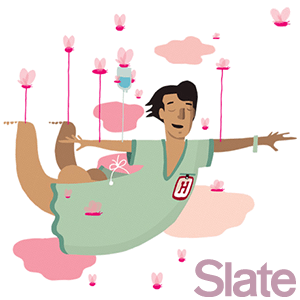
Near-death experiences (NDE) are associated with several common phenomena such as feelings of detachment from the body, levitation, serenity, security, warmth, dissolution, and bright light. These sensations are usually reported after an individual has been pronounced clinically dead or has been very close to death. With recent developments in cardiac resuscitation techniques, the number of reported NDEs has increased. According to a 1992 Gallup poll, approximately eight million Americans claim to have had a near-death experience. Popular interest in the topic was initially sparked by psychiatrist Raymond Moody’s 1975 book ‘Life After Life,’ in which he interviewed 150 people who had undergone NDEs.
In 1981, the International Association for Near-Death Studies (IANDS) was founded and the following year began publishing the ‘Journal of Near-Death Studies,’ the only peer-reviewed journal in the field. Research from neuroscience considers the NDE to be a hallucination resulting from one or more of several conditions including cerebral anoxia (insufficient oxygen to the brain), hypercarbia (elevated carbon dioxide in the blood), or damage to the temporal lobes (which are responsible for giving meaning to events). Spiritual thinkers and an parapsychologists have long pointed to NDEs as evidence for an afterlife and mind-body dualism.
Continue reading →
Posted in Death, Health, Philosophy |
Leave a Comment »
October 31, 2014

Muditā [moo-dee-tah] means ‘joy’ in sanskrit, especially sympathetic or vicarious joy. it is the pleasure that comes from delighting in other people’s well-being rather than begrudging it. The traditional paradigmatic example of this mind-state is the attitude of a parent observing a growing child’s successes, but it is not to be confounded with pride as the person feeling mudita must not have any interest or direct income from the accomplishments of the other. Its antonym is the German word ‘schadenfreude’ (‘pleasure derived from the misfortunes of others’).
Many Buddhist teachers interpret joy more broadly as an inner spring of infinite joy that is available to everyone at all times, regardless of circumstances. The more deeply one drinks of this spring, the more secure one becomes in one’s own abundant happiness, and the easier it then becomes to relish the joy of other people as well. Joy is also traditionally regarded as the most difficult to cultivate of the four immeasurables (the ‘four sublime attitudes’). To show joy is to celebrate happiness and achievement in others even when we are facing tragedy ourselves.
Posted in Language, Philosophy, World |
Leave a Comment »
October 30, 2014
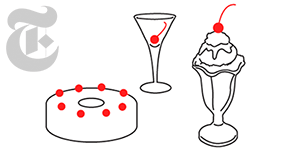

In the US, a maraschino [mar-uh-skee-noh] cherry is a preserved, sweetened cherry, typically made from light-colored sweet cherries such as the Royal Ann, Rainier, or Gold varieties. In their modern form, the cherries are first preserved in a brine solution usually containing sulfur dioxide and calcium chloride to bleach the fruit, then soaked in a suspension of food coloring (usually Red 40), sugar syrup, and other components.
Maraschino cherries are an ingredient in many cocktails, giving them the nickname: ‘Cocktail cherries.’ As a garnish, they often are used to decorate frozen yogurt, baked ham, cakes, pastry, parfaits, milkshakes, ice cream sundaes, and ice cream sodas. They are frequently included in canned fruit cocktail. They are also used as an accompaniment to sweet paan (an Indian preparation of herbs for chewing), and sometimes, along with some of the maraschino “‘juice,’ put into a glass of Coca-Cola to make an old-fashioned or homemade ‘Cherry Coke.’ Continue reading →
Posted in Food, Money, Science |
Leave a Comment »
October 29, 2014
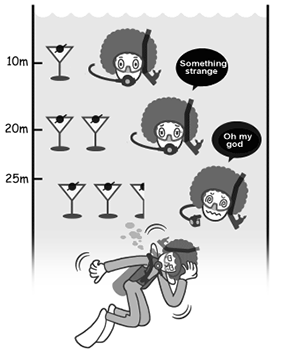
Nitrogen narcosis [nahr-koh-sis] (also known as ‘raptures of the deep’ and the ‘Martini effect’) is a reversible alteration in consciousness that occurs while diving at depth. It is caused by the anesthetic effect of certain gases at high pressure. The Greek word ‘narcosis’ is derived from ‘narke,’ ‘temporary decline or loss of senses and movement, numbness,’ a term used by Homer and Hippocrates. Narcosis produces a state similar to intoxication caused by drinking alcohol or inhaling nitrous oxide. It can occur during shallow dives, but usually becomes noticeable at depths greater than 30 meters (100 ft).
Except for helium and probably neon, all gases that can be breathed have a narcotic effect, although widely varying in degree. The effect is consistently greater for gases with a higher lipid solubility (the ability to diffuse directly through the fatty part of a cell membrane), and there is good evidence that the two properties are mechanistically related. As depth increases, the mental impairment may become hazardous. Divers can learn to cope with some of the effects of narcosis, but it is impossible to develop a tolerance. Narcosis affects all divers, although susceptibility varies widely from dive to dive, and between individuals. Continue reading →
Posted in Drugs, Games, Health |
2 Comments »
October 28, 2014

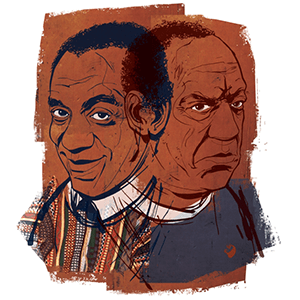
The ‘Pound Cake speech‘ was an address given by comedian Bill Cosby in May 2004 during an NAACP awards ceremony in Washington, D.C., to commemorate the 50th anniversary of the ‘Brown v. Board of Education Supreme Court’ decision which desegregated US schools. In it, Cosby was highly critical of members of subsets of the black community. He criticized the use of ebonics (African American Vernacular English), the prevalence of single-parent families, the emphasis on frivolous and conspicuous consumption at the expense of necessities, lack of responsibility, and other behaviors.
Cosby accused the African American community of treating people who had robbed convenience stores like political activists: ‘But these people, the ones up here in the balcony fought so hard. Looking at the incarcerated, these are not political criminals. These are people going around stealing Coca-Cola. People getting shot in the back of the head over a piece of pound cake! And then we all run out and are outraged, ‘The cops shouldn’t have shot him.’ What the hell was he doing with the pound cake in his hand? I wanted a piece of pound cake just as bad as anybody else, and I looked at it and I had no money. And something called parenting said, ‘If you get caught with it you’re going to embarrass your mother.’ Not ‘You’re going to get your butt kicked.’ No. ‘You’re going to embarrass your family.” Continue reading →
Posted in Language, Politics |
1 Comment »
October 27, 2014
Narcissistic defenses are coping techniques that preserve idealized aspects of the self while repressing limitations. They tend to be rigid and totalistic, and are often driven by feelings of shame and guilt, conscious or unconscious. Narcissistic variants are among the earliest defense mechanisms to emerge, and include denial, distortion, and projection. Splitting is also common- seeing people and situations in black and white terms, either as all bad or all good. A narcissistic defense, with the narcissist’s typical over-valuation of the self, can come to the fore at any stage of development.
The narcissist typically runs through a sequence of defenses to discharge painful feelings until he or she finds one that works: unconscious repression, conscious denial, distortion (including exaggeration and minimization) and lies, psychological projection (blaming someone else), and finally, enlisting the help of one or more of his or her codependent friends who will support his or her distorted view.
Continue reading →
Posted in Health |
1 Comment »
October 26, 2014


The red pill and its counterpart, the blue pill, are popular culture symbols representing the choice between embracing the sometimes painful truth of reality (red pill) and the blissful ignorance of illusion (blue pill).
The concept was popularized by the 1999 film ‘The Matrix,’ in which the protagonist is offered the choice of remaining in the fabricated reality of a computer simulation, living the ‘ignorance of illusion,’ or the freedom to live the ‘truth of reality’ even though it is a harsher, more difficult life. Continue reading →
Posted in Art, Philosophy |
Leave a Comment »
October 25, 2014

LOVEINT is the practice of intelligence service employees making use of their extensive monitoring capabilities to spy on their love interest or spouse. The term was coined in resemblance to intelligence terminology such as SIGINT (signals intelligence) or HUMINT (human intelligence). The term originated at the NSA, where at least one incident is reported every year. They are the lion’s share of unauthorized accesses reported by the NSA. Most incidents are self-reported, for example during a polygraph test.
The NSA sanctions include administrative action, up to termination of employment. In five of the cases, the NSA employee resigned, preempting any administrative action. In two other cases, they retired. The worst administrative sanction handed out was a ‘a reduction in pay for two months, a reduction in grade, and access to classified information being revoked.’ One case was forwarded to the Department of Justice, which however declined to prosecute.
Posted in Love, Politics, Technology |
1 Comment »


 The Daily Omnivore