October 1, 2014

A fan edit is a version of a film modified by a viewer, that removes, reorders, or adds material in order to create a new interpretation of the source material. This includes the removal of scenes or dialogue, replacement of audio and/or visual elements, and adding material from sources such as deleted scenes or even other films. The field was popularized by an individual calling himself the ‘Phantom Editor’ (later revealed as professional editor Mike J. Nichols). He removed elements from George Lucas’ ‘The Phantom Menace’ that he felt detracted from the film, and made minor changes in dialogue, languages, and subtitles to give the film’s villains a more menacing tone.
There were a total of 18 minutes cut from the original film, reducing the run time from 136 minutes to 118 minutes. The end result became known as ‘The Phantom Edit,’ which circulated Hollywood studios on VHS in 2000. It was the first unauthorized re-edit of a major film to receive publicity and acclaim and inspired dozens of other edits to surface on the internet. Lucasfilm, the production company of series creator George Lucas, condoned the edit, and did not pursue legal action against its distributors. Continue reading →
Posted in Art, Money |
1 Comment »
September 30, 2014

Bayesian [bey-zee-uhn] probability is the likelihood that something will happen based on all available evidence. The more commonly understood concept of frequency probability is the chance that something will happen based only on past occurrences. Rather than interpreting probability as merely the propensity of some phenomenon, Bayesian probability is a quantity assigned for the purpose of representing a state of knowledge, or a state of belief. This allows the application of probability to all sorts of propositions rather than just ones that come with a reference class (historical data).
‘Prior probability’ is information about a hypothesis known before the experiment is undertaken (e.g. a flipped coin has a 50% chance of landing on heads), information learned afterwards is called ‘Posterior probability’ (e.g. if a coin lands on heads many times in a row it is probably improperly weighted). The term ‘Bayesian’ refers to 18th century mathematician and theologian Thomas Bayes, who summarized the theory thusly: ‘The probability of any event is the ratio between the value at which an expectation depending on the happening of the event ought to be computed, and the value of the thing expected upon its happening.’ (i.e. Likelihood equals Prior probability over Posterior probability.) Continue reading →
Posted in Science |
Leave a Comment »
September 29, 2014

‘Under the Banner of Heaven: A Story of Violent Faith’ is a 2003 investigative nonfiction book by Jon Krakauer. It is a juxtaposition of two stories: the origin and evolution of The Church of Jesus Christ of Latter-day Saints (LDS Church), and a modern double murder committed in the name of God by brothers Ron and Dan Lafferty, who subscribed to a fundamentalist version of Mormonism.
The title is drawn from an 1880 address by John Taylor, the third president of the LDS Church, defending the practice of plural marriage: ‘God is greater than the United States, and when the Government conflicts with heaven, we will be ranged under the banner of heaven against the Government. The United States says we cannot marry more than one wife. God says different…’ Continue reading →
Posted in Language, Philosophy, Politics |
Leave a Comment »
September 24, 2014

The flehmen [fley-muhn] response is a common animal behavior when investigating sites of particular interest (e.g. a male smelling female urine) characterized by curling back the top lips exposing the front teeth and gums, then inhaling and holding the posture for several seconds. The behavior may be performed over particular locations, in which case the animal may also lick the site of interest, or it may be performed with the neck stretched and head held high in the air.
Flehmen (German: ‘to bare the upper teeth’) is performed by a wide range of mammals including ungulates (hoofed animals) and felids (cats). The behavior facilitates the transfer of pheromones and other scents into the vomeronasal organ (pheromone detector) located above the roof of the mouth via a duct which exits just behind the front teeth of the animal. Continue reading →
Posted in Science, Sex |
Leave a Comment »
September 23, 2014
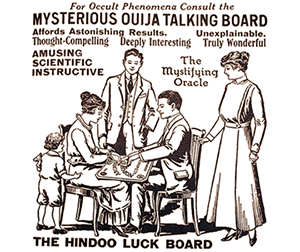

The ideomotor [id-ee-uh-moh-ter] effect is a psychological phenomenon wherein a subject makes motions unconsciously; for example, the body produces tears in response to powerful emotions without the person consciously deciding to cry. As in involuntary responses to pain, the body sometimes reacts reflexively to ideas alone without the person consciously deciding to take action.
The effects of automatic writing (an alleged psychic ability allowing a person to produce written words without consciously writing), dowsing (a type of divination employed in attempts to locate ground water without the use of scientific tools), facilitated communication (a process by which a person supports the hand or arm of a communicatively impaired individual while using a keyboard), and Ouija boards have been attributed to the phenomenon. Mystics have often attributed these effects to paranormal or supernatural force. Many subjects are unconvinced that their actions are originating solely from within themselves. Continue reading →
Posted in Health, Philosophy, Science |
Leave a Comment »
September 22, 2014
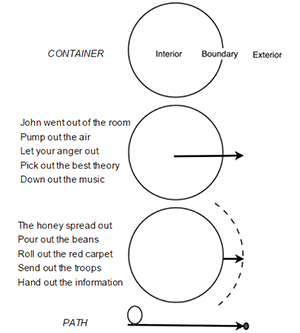
Embodied Cognition is a theory stating that the nature of the human mind is largely determined by the form of the human body. Philosophers, psychologists, cognitive scientists, and artificial intelligence researchers who study the ’embodied mind’ argue that all aspects of cognition are shaped by the body, such as high level mental constructs (e.g. concepts, categories) and performance on various intellectual tasks (e.g. reasoning, judgment). These mental processes are limited by physical ones, such as the motor and perceptual systems, the body’s interactions with the environment (situatedness), and the ontological assumptions about the world that are built into the body and the brain.
In social psychology, embodiment is relevant to studies of social interaction and decision-making. According to embodied cognition, the motor system influences our cognition, just as the mind influences bodily actions. For example, when participants hold a pencil in their teeth engaging the muscles of a smile, they comprehend pleasant sentences faster than unpleasant ones, while holding a pencil between their nose and upper lip to engage the muscles of a frown has the reverse effect. Continue reading →
Posted in Philosophy, Science |
Leave a Comment »
September 18, 2014

Mental rotation is the ability to rotate mental representations of two-dimensional and three-dimensional objects. The ability is somewhat localized to the right cerebral hemisphere, largely in the same areas as perception, and is associated with spatial processing and general intelligence but not verbal skills.
Mental rotation is the brain moving objects in order to understand what they are and where they belong. It has been studied to try to figure out how the mind recognizes objects in the environment. Researchers call these objects stimuli. A stimulus then would be any object or image seen in the person’s environment that has been altered in some way. Mental rotation then takes place for the person to figure out what the altered object is. Continue reading →
Posted in Education, Games, Science |
Leave a Comment »
September 17, 2014

Error Management (EM) is an extensive theory of perception and cognitive biases that was created by psychologists David Buss and Martie Haselton. They describe a set of heuristics (mental shortcuts) that have survived evolutionary history because they hold slight reproductive benefits. The premise of the theory is built around the drive to reduce or manage costly reproductive errors. According to the theory, when there are differences in the cost of errors made under conditions of uncertainty, selection favors ‘adaptive biases,’ which ensure that the less costly survival or reproductive error will be committed.
When faced with uncertainty, a subject can make two possible errors: type I (false-positive or playing it safe, e.g. a fire alarm that later turns out to be a false alarm) and type II (false-negative or siding with skepticism, e.g. ignoring an often faulty fire alarm during an actual emergency). Error Management Theory asserts that evolved ‘mind-reading’ agencies will be biased to produce more for the first type of error, which explains the ‘sexual overperception bias,’ the tendency for men to incorrectly assume a platonic gesture from a woman is a sexual signal. Continue reading →
Posted in Health, Science, Sex |
Leave a Comment »
September 16, 2014

Blonde hair has several stereotypes associated with it. In women is has been considered attractive and desirable, but is also associate with the negative stereotypes of the women ‘who relies on her looks rather than on intelligence.’ The latter stereotype of a ‘dumb blonde’ is exploited in ‘blonde jokes.’ In cognitive linguistics, the stereotype uses expressivity of words to affect an emotional response which determines a gender role of a certain kind. In feminist critique, stereotypes like the blonde bombshell or the dumb blonde’ are seen as negative images that undermine the power of women.
Some blonde jokes rely on sexual humor to portray or stereotype their subjects as promiscuous. Many of these are rephrased ‘Valley girl’ or ‘Essex girl’ jokes. Others are based on long-running ethnic jokes, such as humor denigrating the intelligence of Polish people. Similar jokes about stereotyped minorities have circulated since the seventeenth century with only the wording and targeted groups changed. In 20th century, a class of meta-jokes about blondes (i.e. jokes about blonde jokes) has emerged where a blonde person complains about the unfairness of the stereotype propagated by blonde jokes, with a punch line actually reinforcing the stereotype. Continue reading →
Posted in Humor, Science, Sex |
Leave a Comment »
September 15, 2014
Defensive pessimism is a cognitive strategy identified by social psychologist Nancy Cantor and her students in the mid-1980s. Individuals use defensive pessimism as a strategy to prepare for anxiety provoking events or performances. When implementing defensive pessimism, individuals set low expectations for their performance, regardless of how well they have done in the past. Defensive pessimists then think through specific negative events and setbacks that could adversely influence their goal pursuits. By envisioning possible negative outcomes, defensive pessimists can take action to avoid or prepare for them, advantageously harnessing anxiety that might otherwise harm their performance.
The strategy is utilized in a variety of domains. In public speaking venues defensive pessimists can alleviate anxiety by imagining possible obstacles such as forgetting the speech, being thirsty, or staining their shirt before the event. Because defensive pessimists have thought of these problems, they can appropriately prepare to face the challenges ahead. The speaker could, for instance, create note cards with cues about the speech, place a cup of water on the podium to alleviate thirst, and bring a bleach pen to remove shirt stains. These preventative actions both reduce anxiety and promote superior performance. Continue reading →
Posted in Health |
Leave a Comment »
September 12, 2014
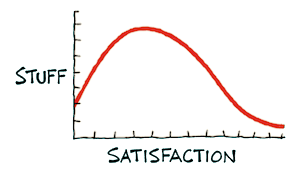

In economics, ‘utility’ is the amount of satisfaction received from consuming (using) goods and services, and ‘marginal’ refers to a small change, starting from some baseline level. Marginal utility describes the change in utility from consuming more or less of a product. Economists sometimes speak of a law of ‘diminishing marginal utility,’ meaning that consuming the first unit usually has a higher utility than every other unit. When the number of units that are consumed increases, their marginal utility decreases (and vice versa).
As 20th century English economist Philip Wicksteed explained the term, ‘Marginal considerations are considerations which concern a slight increase or diminution of the stock of anything which we possess or are considering.’ ‘Marginal cost’ is the cost of producing one more unit of a good. The ‘marginal decision rule’ states that a good or service should be consumed at a quantity at which the marginal utility is equal to the marginal cost (i.e. at a cost that justifies the satisfaction derived from the product). Continue reading →
Posted in Money, Politics |
Leave a Comment »
September 11, 2014


Simulator sickness is a condition where a person exhibits symptoms similar to motion sickness (e.g. headache, drowsiness, nausea, dizziness, vomiting, sweating) caused by playing computer/simulation/video games. Researchers the University of Minnesota had students play the first person shooter ‘Halo’ for less than an hour, and found that up to 50 percent felt sick afterwards. The phenomenon was well known in popular culture before it was known as simulation sickness. In the 1983 comedy film ‘Joysticks,’ the manager of a local video arcade says, ‘The reason why I never play any of these games, well, they make me physically ill. I mean, every time I look in one of the screens, they make me dizzy.’
In 1995, the US Army Research Institute for the Behavioral and Social Sciences published the results of a study of 742 pilot exposures from 11 military flight simulators. Half of the pilots reported post-effects of some kind. Symptoms dissipated in under an hour for one third, after four hours for six percent, after six hours for four percent, and one percent reported cases of spontaneously occurring flashbacks.
Continue reading →
Posted in Health, Technology, War |
Leave a Comment »


 The Daily Omnivore