May 28, 2014


‘Thank God for Mississippi’ is a common adage in the US, particularly in the south, that is generally used when discussing rankings of states (e.g. educational achievement, overall health, poverty rate, quality of life). Since the state of Mississippi generally ranks at the bottom of such lists, residents of other states ranking near the bottom frequently proclaim, ‘Thank God for Mississippi,’ for sparing them from the shame of finishing in last place.
The saying has been attributed since before the induction of Alaska and Hawaii as states in 1959, and is especially common in Alabama, which shares significant cultural and historical ties with its neighbor and former Mississippi Territory co-constituent. Its use is also noted in nearby Arkansas and other frequently low-ranking states such as West Virginia and Texas.
Posted in Humor, Politics |
Leave a Comment »
May 27, 2014

The phlogiston [floh-jis-tuhn] theory is an obsolete scientific theory that postulated a fire-like element called phlogiston, contained within combustible bodies, that is released during combustion. The name comes from Ancient Greek: ‘phlóx’ (‘flame’). First stated in 1667 by German physician, alchemist, and adventurer, Johann Joachim Becher, the theory attempted to explain burning processes such as combustion and rusting, which are now collectively known as oxidation.
Phlogiston theory permitted chemists to bring clarification of apparently different phenomena into a coherent structure: combustion, metabolism, and configuration of rust. The recognition of the relation between combustion and metabolism was a forerunner of the recognition that the metabolism of living organisms and combustion can be understood in terms of fundamentally related chemical processes. Continue reading →
Posted in Science |
2 Comments »
May 22, 2014

Dr. Ignaz [ig-nahts] Semmelweis [zem-uhl-vahys] discovered in 1847 that hand-washing with a solution of chlorinated lime reduced the incidence of fatal childbed fever tenfold in maternity institutions. However, the reaction of his contemporaries was not positive; his subsequent mental disintegration led to him being confined to an insane asylum, where he died in 1865. His critics claimed his findings lacked scientific reasoning. The failure of the nineteenth-century scientific community to recognize Semmelweis’s findings, and the nature of the flawed critiques against him helped advance a positivist epistemology, leading to the emergence of evidence-based medicine.
To a modern reader, Semmelweis’s experimental evidence—that chlorine washings reduced childbed fever—seem obvious, and it may seem absurd that his claims were rejected on the grounds of purported lack of ‘scientific reasoning.’ His unpalatable observational evidence was only accepted when seemingly unrelated work by Louis Pasteur in Paris some two decades later offered a theoretical explanation for Semmelweis’s observations: the germ theory of disease. Continue reading →
Posted in Death, Health, Science |
1 Comment »
May 21, 2014


In source criticism, circular reporting or false confirmation is a situation where a piece of information appears to come from multiple independent sources, but in fact is coming from only one source. In most cases, the problem happens mistakenly through sloppy intelligence gathering practices, but in a few cases, the situation is intentionally caused by the original source. This problem occurs in variety of fields, including intelligence gathering, journalism, and scholarly research. It is of particular concern in military intelligence because the original source has a higher likelihood of wanting to pass on misinformation, and because the chain of reporting is more liable to being obscured.
Wikipedia is sometimes criticized for being used as a source of circular reporting, and thus advises all researchers and journalists to be wary of using it as a direct source, and to instead focus on verifiable information found in an article’s cited references. In 2008 an American student edited wikipedia in jest, writing that the coati (a small mammal in the raccoon family) was ‘also known as….the Brazilian aardvark,’ resulting in many subsequently citing and using that unsubstantiated nickname as part of the general consensus, including an article in ‘The Independent.’
Posted in Language, Technology |
Leave a Comment »
May 20, 2014

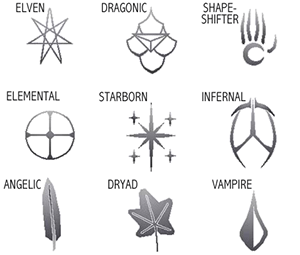
Otherkin is a description applicable to people who believe themselves to be partially or entirely non-human. They consider themselves to be other creatures (real, fictitious, or mythological) in spirit if not in body. This is explained by some members of the otherkin community as possible through reincarnation, having a nonhuman soul, ancestry, or symbolic metaphor. According to Joseph Laycock (who wrote a book about contemporary vampire culture), ‘scholarship has framed this claim as religious because it is frequently supported by a framework of metaphysical beliefs.’ Not all otherkin necessarily share these beliefs; some may simply prefer to identify as non-human.
Otherkin largely identify as mythical creatures, with others identifying as real-life creatures or creatures from fantasy or popular culture. Examples include: angels, demons, dragons, elves, fairies, sprites, and plants. Many otherkin believe in the existence of a multitude of parallel/alternative universes, which would explain the existence and the possibility to relate to fantastical beings and even fictional characters. Continue reading →
Posted in Health, Philosophy |
Leave a Comment »
May 19, 2014

A cyanometer [sahy-uh-nom-i-ter] (from cyan and -meter) is an instrument for measuring ‘blueness,’ specifically the color intensity of blue sky. It is attributed to Swiss aristocrat, physicist, and mountaineer Horace-Bénédict de Saussure. It consists of squares of paper dyed in graduated shades of blue and arranged in a color circle or square that can be held up and compared to the color of the sky. The blueness of the atmosphere indicates transparency and the amount of water vapor.
De Saussure is credited with inventing a cyanometer in 1789 with 53 sections, ranging from white to varying shades of blue (dyed with Prussian blue) and then to black, arranged in a circle; he used the device to measure the color of the sky at Geneva, Chamonix and Mont Blanc. He concluded, correctly, that the color of the sky was dependent on the amount of suspended particles in the atmosphere.
Posted in Science, Technology, World |
Leave a Comment »
May 16, 2014


The Ortega hypothesis holds that average or mediocre scientists contribute substantially to the advancement of science. According to this hypothesis, scientific progress occurs mainly by the accumulation of a mass of modest, narrowly specialized intellectual contributions. On this view, major breakthroughs draw heavily upon a large body of minor and little-known work, without which the major advances could not happen.
The Ortega hypothesis is widely held, but a number of systematic studies of scientific citations have favored the opposing ‘Newton hypothesis,’ which says that scientific progress is mostly the work of a relatively small number of great scientists (after Isaac Newton’s statement that he ‘stood on the shoulders of giants’). Continue reading →
Posted in Philosophy, Science |
Leave a Comment »
May 15, 2014
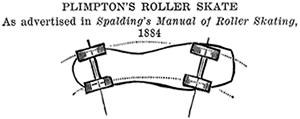

Roller skates are devices worn on the feet to enable the wearer to roll along on wheels. The first roller skates were converted ice skates, with two inline wheels instead of a blade. Later the ‘quad’ style of roller skate became more popular consisting of four wheels arranged in the same configuration as a typical car.
The first patented roller skate was introduced in 1760 by Belgian inventor John Joseph Merlin. His inline two wheelers were hard to steer and hard to stop because they didn’t have brakes, and as such were not very popular. In 1863, James Plimpton from Massachusetts invented the ‘rocking’ skate using a four wheel configuration for stability, and independent axles that turned by pressing to one side when the skater wanted to create an edge. It was a vast improvement on the Merlin design and was easier to use, driving the huge popularity roller skating through the 1930s. The Plimpton skate is still used today.
Continue reading →
Posted in Games, Technology |
1 Comment »
May 14, 2014


Common carrier is a legal term for a company that transports goods or people and is responsible for any loss in transit. Such services are offered to the general public under license or authority provided by a regulatory body, which may create, interpret, and enforce its regulations upon the common carrier (subject to judicial review) with independence and finality, as long as it acts within the bounds of the enabling legislation.
A common carrier is distinguished from a contract carrier, which transports goods for only a certain number of clients and that can refuse to transport goods for anyone else, and from a private carrier (a company that transports only their own goods). A common carrier holds itself out to provide service to the general public without discrimination (to meet the needs of the regulator’s quasi judicial role of impartiality toward the public’s interest) for the ‘public convenience and necessity.’ Continue reading →
Posted in Money, Politics, Technology |
Leave a Comment »
May 13, 2014

Mirrors for princes refers to a genre of political writing during the Middle Ages (5th to the 15th century) and the Renaissance (14th to the 17th century). They are best known in the form of textbooks which directly instruct kings or lesser rulers on certain aspects of rule and behavior, but in a broader sense, the term is also used to cover histories or literary works aimed at creating images of kings for imitation or avoidance.
They were often composed at the accession of a new king, when a young and inexperienced ruler was about to come to power. They could be viewed as a species of self-help book. Possibly the best known European ‘mirror’ is ‘Il Principe’ (‘The Prince’) (c. 1513) by Machiavelli, although this was not a typical example.
Posted in Language, Politics |
Leave a Comment »
May 13, 2014


Wisdom literature is a genre of literature common to the Ancient Near East characterized by sayings of wisdom intended to teach about divinity and about virtue. While techniques of traditional storytelling are used, books also presume to offer insight and wisdom about nature and reality.
The genre of ‘mirrors for princes’ (textbooks which directly instruct monarchs on certain aspects of rule and behavior), which has a long history in Islamic and Western Renaissance literature, represents a secular cognate of biblical wisdom literature. In Classical Antiquity, the advice poetry of Hesiod, particularly his ‘Works and Days’ (ca. 700 BCE, a farmer’s almanac in which Hesiod instructs his brother Perses in the agricultural arts) has been seen as a like-genre to Near Eastern wisdom literature. Continue reading →
Posted in Language, Philosophy |
1 Comment »
May 12, 2014


The Christ myth theory (also known as ‘Jesus mythicism’) is the proposition that Jesus of Nazareth as described in the New Testament was mythical, although others define it more strictly that Jesus never existed in any form. The thesis that Jesus was invented by the Christian community after 100 CE was first put forward in the late 18th century and then popularized in the 19th century by German philosopher Bruno Bauer who proposed a three-fold argument still used by many myth proponents today: the New Testament has no historical value, non-Christian writers of the first century failed to mention Jesus, and Christianity had pagan and mythical beginnings.
Despite the debate in popular culture and on the Internet, the position that Jesus did not exist is not held by most professional historians, nor the vast majority of New Testament scholars. Classical historian Michael Grant states that, ‘Modern critical methods fail to support the Christ myth theory…[It has] again and again been answered and annihilated by first rank scholars.’ Other scholars, mostly based in Europe, however, argue their colleagues should remain more open to this possibility and that the debate on the historicity of Jesus is not over. Continue reading →
Posted in Philosophy, World |
Leave a Comment »


 The Daily Omnivore