May 9, 2014
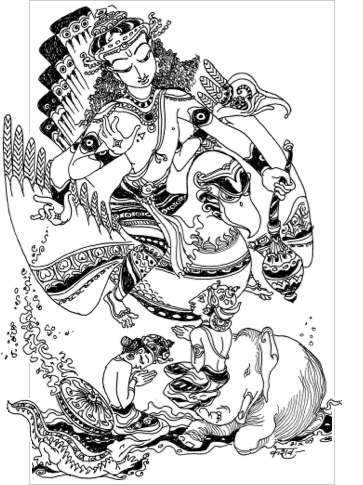
Moksha [mohk-shuh] (Sanskrit: ‘freedom’) is the ultimate goal of personal spiritual development in Hinduism. According to Vedanta (an orthodox school of Hindu philosophy), life is a endless cycle of birth, death, and rebirth into a physical universe that is actually an illusion. Hindu scriptures describe Moksha as the spiritual liberation from this cycle and the achievement of an eternal and blissful emptiness that transcends all of the joys, pain, and sorrow of the physical body or corporeal life. It is the goal of Hindu practitioners to achieve Moksha through the practice of Yoga (physical, mental, and spiritual disciplines), such as Jnana Yoga (knowledge), Karma Yoga (work), and Bhakti Yoga (reciting prayers and worshiping God).
Moksha is a Vedic term, dating to 1750-500 BCE, a period in Indian history during which the Indo-Aryans settled into northern India. Scholars disagree about the precise relationship between the Moksha of Vedanta Hinduism and the Nirvana of Buddhism, but there is agreement that they are closely related historically and philosophically. Similarities can be found between Moksha and some concepts found in the Upanishads, a collection of Vedic texts which contain the earliest emergence of some of the central religious concepts of Hinduism, Buddhism, and Jainism.
Posted in Philosophy, World |
Leave a Comment »
May 8, 2014

Soteriology [suh-teer-ee-ol-uh-jee] is the branch of theology dealing with Salvation. Buddhist salvation (called nirvana) is liberation from suffering, ignorance, and rebirth. Hindu salvation (called moksha) is similarly characterized by emancipation from the cycle of reincarnation. Mainstream Christian soteriology is the study of how God reconciles the separation between man and God due to sin. Christians believe individuals are miraculously saved by divine grace through faith in Jesus Christ, and reconciled to God.
Islamic soteriology focuses on how humans can repent of and atone for their sins so as not to occupy a state of loss. In Islam, it is believed that everyone is responsible for his own action. So even though Muslims believe that their father of humanity, Adam, committed a sin by eating from the forbidden tree and thus disobeying his Lord, they believe that humankind is not responsible for such an action. The major Jewish denominations emphasize prayer and morality in this life over concern with the afterlife. Continue reading →
Posted in Education, Philosophy |
Leave a Comment »
May 8, 2014
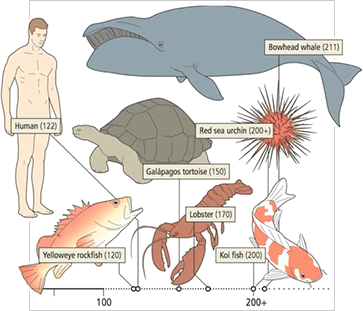
Maximum life span is a measure of the maximum amount of time one or more members of a population has been observed to survive between birth and death. The term can also denote an estimate of the maximum amount of time that a member of a given species could survive between life and death, provided circumstances that are optimal to their longevity. Most living species have at least one upper limit on the number of times cells can divide. This is called the Hayflick limit, although number of cell divisions does not strictly control lifespan (non-dividing cells and dividing cells lived over 120 years in the oldest known human).
In animal studies, maximum span is often taken to be the mean life span of the most long-lived 10% of a given cohort. By another definition, however, maximum life span corresponds to the age at which the oldest known member of a species or experimental group has died. Calculation of the maximum life span in the latter sense depends upon initial sample size. Maximum life span contrasts with mean life span (average life span or life expectancy). Mean life span varies with susceptibility to disease, accident, suicide and homicide, whereas maximum life span is determined by ‘rate of aging.’
Continue reading →
Posted in Health, Science |
Leave a Comment »
May 8, 2014

A supercentenarian [soo-per-sen-tn-air-ee-uhn] is someone who has lived to or passed his/her 110th birthday. This age is achieved by about one in 1,000 centenarians. Research on the morbidity of supercentenarians has found that they remain free of major age-related diseases (e.g., stroke, cardiovascular disease, dementia, cancer, Parkinson’s disease, and diabetes) until the very end of life when they die of exhaustion of organ reserve, which is the ability to return organ function to homeostasis. About 10% survive until the last 3 months of life without major age-related diseases as compared to only 4% of semisupercentenarians (age range 105–109 years) and 3% of centenarians.
There are estimated to be 200–350 living supercentenarians in the world, though only about 70 cases have been verified. A study conducted in 2010 showed that the countries with the most known supercentenarians (living and dead, in order of total) were the United States, Japan, the United Kingdom, France, and Italy. The first verified supercentenarians in human history died in the late 19th century. Until the 1980s, the oldest age attained by supercentenarians was 115, but this has now been surpassed. To date there are 30 verified cases of people who have lived to the age of 115 or more. Of these cases, ten individuals are known to have reached 116 years of age (or older).
Posted in Health, World |
Leave a Comment »
May 6, 2014

The Long Peace is a term for the historical period following the end of World War II in 1945. The ensuing half century was marked by the absence of major wars between the great powers of the period, the USA and the USSR, who were locked in a Cold War. Following the collapse of the Soviet Union in 1991 and the rise of China as a major power, there followed two decades of continued absence of direct conflict between major states, though lesser military conflicts occurred.
It is speculated that the obvious political errors leading to World War I and World War II with their consequent horrors and, thereafter, the acquisition of thermonuclear weapons by the opposing powers of the United States and the Soviet Union exerted a restraining influence on the leaderships of the major powers. A jockular expression in Europe to describe the strangely long stretch of peace is: ‘It has been 2,000 years since an army has not crossed the Rhine for so long a time.’
Posted in Politics, War, World |
Leave a Comment »
May 5, 2014


Secular Buddhism is a broad term for an emerging form of Buddhism that is based on humanist, naturalist, and/or agnostic values and pragmatism rather than religious – or more specifically supernatural – beliefs. Secular Buddhists interpret the teachings of the Buddha and the Buddhist texts in a rationalist and often evidentialist manner, considering the historical and cultural contexts of the times in which they were written and the period in which the Buddha lived.
Secular Buddhists eschew mythological and superstitious elements of traditional Buddhism such as supernatural beings (devas, bodhisattvas, nāgas, pretas, Buddhas), merit (an accumulation of good deeds which carries over to subsequent incarnations), supernatural karma (actions, both good and bad, come back to us in the future), rebirth, Buddhist cosmology (including the existence of pure lands and hells). Some of traditional Buddhism’s secular ethics have also been called into questions such as conservative stances on abortion and homosexuality Continue reading →
Posted in Philosophy, World |
Leave a Comment »
May 4, 2014

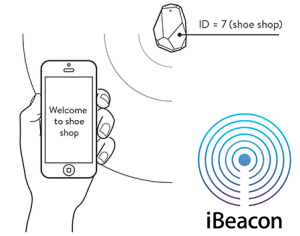
An indoor positioning system (IPS, or micromapping) is a network of devices that wirelessly locate objects or people inside a building. Instead of using satellites like GPS, it relies on nearby anchors (nodes with a known position), which either actively locate tags or provide ambient location or environmental context for devices. Systems use optical, radio, or even acoustic technologies. Integration of data from several navigation systems with different physical principles can increase the accuracy and robustness of the overall solution.
Wireless transmission indoors faces several obstacles including signal attenuation caused by construction materials, multiple reflections at surfaces causing transmission errors, and interference with devices that emit or receive electromagnetic waves (e.g. microwave ovens, cellular phones). Error correction systems that don’t rely on wireless signals are being used to compensate for these shortcomings, such as Inertial Measurement Units (reports velocity, orientation, and gravitational forces using accelerometers and gyroscopes), and Simultaneous Localization and Mapping (SLAM, a technique used by robots and autonomous vehicles to build up a map within an unknown environment).
Posted in Money, Technology |
Leave a Comment »
May 3, 2014


A wireless mesh network (WMN) is a communications network made up of radio nodes organized in a mesh topology; each node is connected to one or more other nodes, and information is passed from one node to the next, until it reaches its target destination. As in most cases, there is more than one path from one node to another, making such networks very reliable. When a node fails, the data will simply take another route. This type of infrastructure can be decentralized (with no central server) or centrally managed (with a central server).
The coverage area of the radio nodes working as a single network is sometimes called a mesh cloud. Mesh architecture sustains signal strength by breaking long distances into a series of shorter hops. Intermediate nodes not only boost the signal, but cooperatively make forwarding decisions based on their knowledge of the network, i.e. perform routing. Such an architecture may with careful design provide high bandwidth, spectral efficiency, and economic advantage over the coverage area. Continue reading →
Posted in Money, Technology |
Leave a Comment »
May 3, 2014


A cognitive radio is a transceiver that dynamically switches between optimal wireless channels in its vicinity. It automatically detects available channels, then accordingly changes its transmission or reception parameters to allow more concurrent wireless communications in a given spectrum band at one location. This process is a form of dynamic spectrum management.
The cognitive engine is capable of configuring waveform, protocol, operating frequency, and networking parameters. Units can exchange information about the environment with the networks it accesses and other cognitive radios (CRs). A CR ‘monitors its own performance continuously,’ in addition to ‘reading the radio’s outputs’; it then uses this information to ‘determine the RF environment, channel conditions, link performance, etc.’, and adjusts the ‘radio’s settings to deliver the required quality of service subject to an appropriate combination of user requirements, operational limitations, and regulatory constraints.’ Continue reading →
Posted in Politics, Technology, World |
Leave a Comment »
May 1, 2014

A barber’s pole is a type of sign used by barbers to signify the place or shop where they perform their craft. The trade sign is, by a tradition dating back to the Middle Ages, a staff or pole with a helix of colored stripes (often red and white in many countries, but usually red, white, and blue in the US). The pole may be stationary or may revolve, often with the aid of an electric motor.
The origin of the red and white barber pole is associated with the service of bloodletting and was historically a representation of bloody bandages wrapped around a pole. During medieval times, barbers performed surgery on customers, as well as tooth extractions. The original pole had a brass wash basin at the top (representing the vessel in which leeches were kept) and bottom (representing the basin that received the blood). The pole itself represents the staff that the patient gripped during the procedure to encourage blood flow. Continue reading →
Posted in Health, Money, Sex |
Leave a Comment »
April 30, 2014


The domino effect is a chain reaction that occurs when a small change causes a similar change nearby, which then causes another similar change, and so on in linear sequence. It typically refers to a linked sequence of events where the time between successive events is relatively small. It can be used literally (an observed series of actual collisions such as a falling row of dominoes) or metaphorically (causal linkages within systems such as global finance). A domino show is created by setting up dominoes in very long lines before initiating the chain reaction, toppling all of them.
One of the elements of excitement comes from the inherent risk: each added domino might accidently start the reaction. Some dominoes can have different top and back colors, making it look like they change after toppling; this allows domino builders to make pictures (mosaics) appear. Other tricks include three-dimensional stackings; shapes such as spirals and letters; contraptions like stairs and mouse traps; and dozens of special toppling techniques such as ‘Sonimod’ (‘dominos’ spelled backwards).
Continue reading →
Posted in Games |
1 Comment »
April 29, 2014

An unconditional basic income (also called basic income, basic income guarantee, universal basic income, universal demogrant, or citizen’s income) is a proposed system of social security in which all citizens or residents of a country regularly receive an unconditional sum of money, either from a government or some other public institution, in addition to any income received from elsewhere.
A basic income is typically intended to be only enough for a person to survive on, so as to encourage people to engage in economic activity. A basic income of any amount less than the social minimum is sometimes referred to as a ‘partial basic income.’ On the other hand, it should be high enough so as to facilitate any socially useful activity someone could not afford to engage in if dependent on working for money to earn a living. Continue reading →
Posted in Money, Politics, World |
1 Comment »


 The Daily Omnivore