February 13, 2011
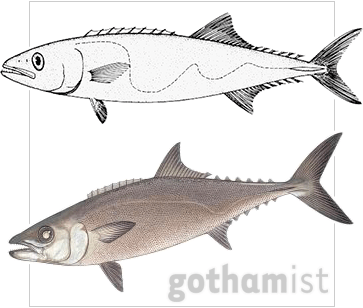
The escolar [es-kuh-lahr] is a species of fish found in deep tropical and temperate waters around the world. It is also known as Snake Mackerel, and sometimes marketed as ‘butterfish,’ ‘oilfish,’ ‘white tuna,’ ‘walu,’ or ‘codfish,’ a controversial practice due to potential health problems related with consumption of the fish. Like its relative the oilfish, escolar cannot metabolize the wax esters naturally found in its diet. This gives the escolar an oil content of 14–25% in its flesh. These wax esters may cause gastrointestinal distress in humans called ‘steatorrhea,’ the onset of which may occur between 30 minutes and 36 hours following consumption.
Symptoms may include stomach cramps, bright orange oil in stool, diarrhea, headaches, nausea, vomiting, and anal leakage. Because of the possible effects of consumption, escolar has been banned from consumption in Japan since 1977, as the Japanese government considers it toxic. It has also been banned in Italy. In 1999, the Swedish and Danish National Food Administrations informed fish trade associations and fish importing companies about the problems escolar and related fish could cause if not prepared properly and issued recommendations.
Posted in Food, Health, Science |
Leave a Comment »
January 29, 2011

In Norse mythology, Sleipnir [sleyp-nir] (Old Norse for ‘the slipper’) is a gray colored, eight-legged horse that serves as Odin’s steed.
He is the child of the Trickster God Loki and a famed stallion named Svaðilfari, is described as the best of all horses, and is sometimes ridden to the location of Hel (the Norse underworld).
Posted in Philosophy |
Leave a Comment »
October 28, 2010

The Mimic Octopus is a species of octopus that has a strong ability to mimic other creatures. It grows up to 60 cm (2 feet) in length. Its normal coloring consists of brown and white stripes or spots. Living in the tropical seas of South East Asia, it was not discovered officially until 1998, off the coast of Sulawesi. The octopus mimics the physical likeness and movements of more than fifteen different species, including sea snakes, lionfish, flatfish, brittle stars, giant crabs, sea shells, stingrays, flounders, jellyfish, sea anemones, and mantis shrimp. It accomplishes this by contorting its body and arms, and changing color.
Although all octopuses can change color and texture, and many can blend with the sea floor, appearing as rocks, the mimic octopus is the first octopus species ever observed to impersonate other animals. Based on observation, the mimic octopus may decide which animal to impersonate depending on local predators. For example, when the octopus was being attacked by damselfish, it often mimics a banded sea snake, a damselfish predator. The octopus impersonates the snake by turning black and yellow, burying six of its arms, and waving its other two arms in opposite directions. The mimic octopus is often confused with Wunderpus photogenicus, another recently discovered species. The Wunderpus can be distinguished by the pattern of strong, fixed white markings on its body.
Posted in Science |
Leave a Comment »
October 26, 2010
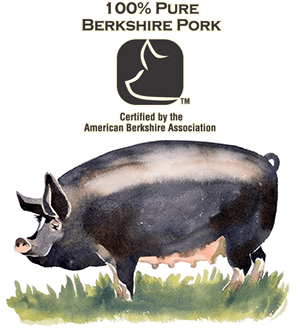
Berkshire [burk-sheer] Pigs are a rare, black skinned breed of pig originating from Britain that is considered the finest source of pork by chefs and gourmands. In Britain breeding is maintained by the Rare Breeds Survival Trust at Aldenham Country Park, Hertfordshire and the South of England Rare Breeds Centre in Kent. It is listed as ‘vulnerable’ as there are fewer than 300 breeding females.
In the United States, the American Berkshire Association, established in 1875, pedigrees only hogs directly imported from established English herds, or hogs tracing directly back to such imported animals. The pig is also bred in Kagoshima Prefecture, Japan, under the trademarked name Kurobuta.
Posted in Food, World |
Leave a Comment »
October 10, 2010

The lion’s mane jellyfish (Cyanea capillata) is the largest known species of jellyfish. Its range is confined to the cold waters of the Arctic, northern Atlantic, and northern Pacific Oceans, seldom found farther south than 42°N latitude. Similar jellyfish, which may be the same species, are known to inhabit seas near Australia and New Zealand. The largest recorded specimen found, washed up on the shore of Massachusetts Bay in 1870, had a bell (body) with a diameter of 2.3 m (7 feet 6 inches) and tentacles 36.5 m (120 feet) long.
Posted in Science |
Leave a Comment »
September 16, 2010
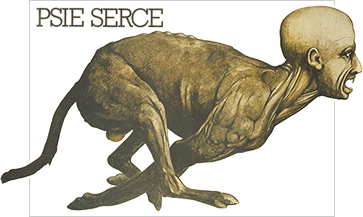
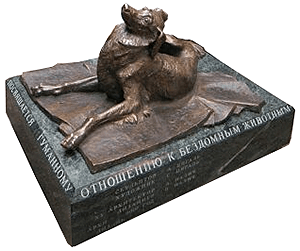
Malchik was a black mongrel stray dog living in Moscow, Russia. For about three years, Malchik lived at the Mendeleyevskaya station on the Moscow Metro. Malchick became a popular station ‘resident’ among rail employees and commuters, and territorially protected the station from drunks and other dogs.
Malchik was killed when a 21-year-old woman Yulia Romanova stabbed him with a kitchen knife. Later it was revealed that Romanova has a long history of cruelty to animals and psychiatric treatment. The incident sparked a wave of public outrage regarding the treatment of animals, and, in 2007, a monument was erected in Malchik’s honor at Mendeleyevskaya station.
Posted in World |
Leave a Comment »
August 10, 2010

Wojtek (1942–1963), was a Syrian brown bear cub adopted by soldiers of the 22nd Artillery Supply Company of the Polish II Corps. During the Battle of Monte Cassino, Wojtek helped move ammunition. The name Wojtek is Slavic and has two meanings: ‘he who enjoys war’ or ‘smiling warrior.’
The bear was fed with fruits, marmalade, honey and syrup, and was often rewarded with beer, which became his favourite drink. He also enjoyed eating cigarettes. As one of the officially enlisted ‘soldiers’ of the company, he lived with the other men in their tents or in a transportable wooden crate. After the war, Wojtek was given to the Edinburgh Zoo. There he spent the rest of his days, often visited by journalists and former Polish soldiers, some of whom would toss him cigarettes. Wojtek died in December of 1963, at the age of 22.
Posted in Humor, War |
Leave a Comment »
August 1, 2010
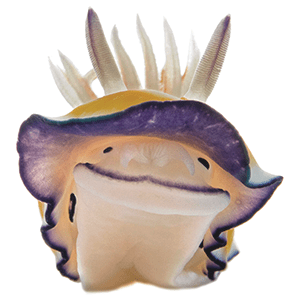
A nudibranch [noo-duh-brangk] is a marine mollusk which sheds its shell after the larval stage. They are noted for their often extraordinary colors and striking forms. More than 3,000 different species have been identified. The word ‘nudibranch’ comes from the Latin ‘nudus’ (‘naked’) and the Greek ‘brankhia’ (‘gills’).
Nudibranchs are often casually called sea slugs, but many sea slugs belong to several taxonomic groups which are not closely related to nudibranchs. A number of these other sea slugs (such as the colorful Aglajidae) are often confused with nudibranchs. Nudibranchs are found worldwide, at virtually all depths of salt water, but reach their greatest size and variation in warm, shallow waters.
read more »
Posted in Science |
Leave a Comment »
July 15, 2010

Basket stars are a group of brittle stars, which are related to sea stars (also known as starfish). They generally live in deep sea habitats. Their life span in the wild is up to 35 years. They weigh around 11 lbs, or 5 kg. Like other echinoderms, basket stars lack blood and achieve gas exchange via their water vascular system.
Posted in Science |
Leave a Comment »


 The Daily Omnivore