April 11, 2024

”No Way to Prevent This,’ Says Only Nation Where This Regularly Happens’ is the title of a series of articles perennially published by the American news satire organization ‘The Onion’ satirizing the frequency of mass shootings in the United States and the lack of action taken in the wake of such incidents.
Each article is about 200 words long, detailing the location of the shooting and the number of victims, but otherwise remaining essentially the same. A fictitious resident—usually of a state in which the shooting did not take place—is quoted as saying that the shooting was ‘a terrible tragedy,’ but ‘there’s nothing anyone can do to stop them.’ The article ends by saying that the United States is the ‘only economically advanced nation in the world where roughly two mass shootings have occurred every month for the past eight years,’ and that Americans view themselves and the situation as ‘helpless.’
read more »
Posted in Humor, Language, Politics |
Leave a Comment »
December 4, 2014


Metamagical [met-uh-maj-i-kuhl] Themas [thee-muhs] is an eclectic collection of articles that cognitive scientist Douglas Hofstadter wrote for ‘Scientific American’ during the early 1980s. The title is an anagram of Martin Gardner’s ‘Mathematical Games,’ the column that preceded Hofstadter’s. The anthology was published in 1985. Major themes include: self-reference in memes (ideas that spread within cultures), language, art and logic; discussions of philosophical issues important in cognitive science/AI; analogies and what makes something similar to something else (specifically what makes, for example, an uppercase letter ‘A’ recognizable as such); and lengthy discussions of the work of political scientist Robert Axelrod on the prisoner’s dilemma (a game theory problem).
There are three articles centered on the Lisp programming language, where Hofstadter first details the language itself, and then shows how it relates to Gödel’s incompleteness theorem. Two articles are devoted to Rubik’s Cube and other such puzzles. Many other topics are also mentioned, all in Hofstadter’s usual easy, approachable style. Many chapters open with an illustration of an extremely abstract alphabet, yet one which is still recognizable as such. The game of ‘Nomic’ (in which the rules of the game include mechanisms for the players to change those rules) was first introduced to the public in this column, in June 1982.
Posted in Language, Philosophy, Science |
1 Comment »
October 17, 2012

‘A Rape in Cyberspace, or How an Evil Clown, a Haitian Trickster Spirit, Two Wizards, and a Cast of Dozens Turned a Database into a Society’ is an article written by freelance journalist Julian Dibbell and first published in ‘The Village Voice in 1993.’ The article was later included in Dibbell’s book ‘My Tiny Life’ on his experience at LambdaMOO (a text-based online virtual reality system to which multiple users are connected at the same time).
Technology advocate Lawrence Lessig has said that his chance reading of Dibbell’s article was a key influence on his interest in the field. Sociologist David Trend called it ‘one of the most frequently cited essays about cloaked identity in cyberspace.’
read more »
Posted in Games, Sex, Technology |
Leave a Comment »
October 1, 2012
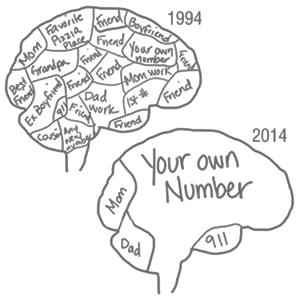
‘Is Google Making Us Stupid? What the Internet is doing to our brains’ is a magazine article by technology writer Nicholas G. Carr highly critical of the Internet’s effect on cognition. It was published in ‘The Atlantic’ magazine as a six-page cover story in 2008.
Carr’s main argument is that the Internet might have detrimental effects on cognition that diminish the capacity for concentration and contemplation. Despite the title, the article is not specifically targeted at Google, but more at the cognitive impact of the Internet and World Wide Web.
read more »
Posted in Education, Health, Technology |
Leave a Comment »
February 8, 2012

‘Manifold Destiny‘ is a 2006 article in ‘The New Yorker’ written by Sylvia Nasar (known for her biography of John Forbes Nash, ‘A Beautiful Mind’) and David Gruber. It gives a detailed account (including interviews with many mathematicians) of some of the circumstances surrounding the proof of the Poincaré conjecture, one of the most important accomplishments of 20th and 21st century mathematics, and traces the attempts by three teams of mathematicians to verify the proof given by Grigori Perelman.
Subtitled ‘A legendary problem and the battle over who solved it,’ the article concentrates on the human drama of the story, especially the discussion on who contributed how much to the proof of the Poincaré conjecture. Interwoven with the article is an interview with the reclusive mathematician Grigori Perelman, whom the authors tracked down to the St. Petersburg apartment he shares with his mother. The article describes Perelman’s disillusionment and withdrawal from the mathematical community and paints an unflattering portrait of the 1982 Fields Medalist, Shing-Tung Yau.
read more »
Posted in Language, Science |
1 Comment »


 The Daily Omnivore