December 1, 2011

‘Pink Box: Inside Japan’s Sex Clubs’ is a book by photojournalist Joan Sinclair, chronicling her exploration of the secret world of fuzoku (prostitution) in Japan. Sinclair was joined by contributor James Farrer, a British sociologist who attempted to ‘place[s] the images in the context of contemporary Japanese culture.’
The book was published in 2006. Sinclair, a lawyer, describes being triggered to write the book by a comment she overheard ten years earlier, when she spent a year teaching English in Japan. Sinclair describes encountering, and overcoming, difficulties researching and getting access to the clubs—usually reserved for Japanese born patrons.
Posted in Politics, Sex, World |
Leave a Comment »
November 25, 2011
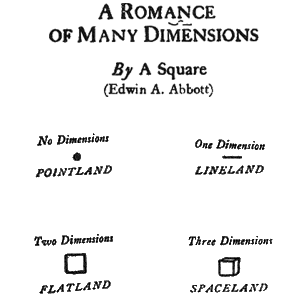
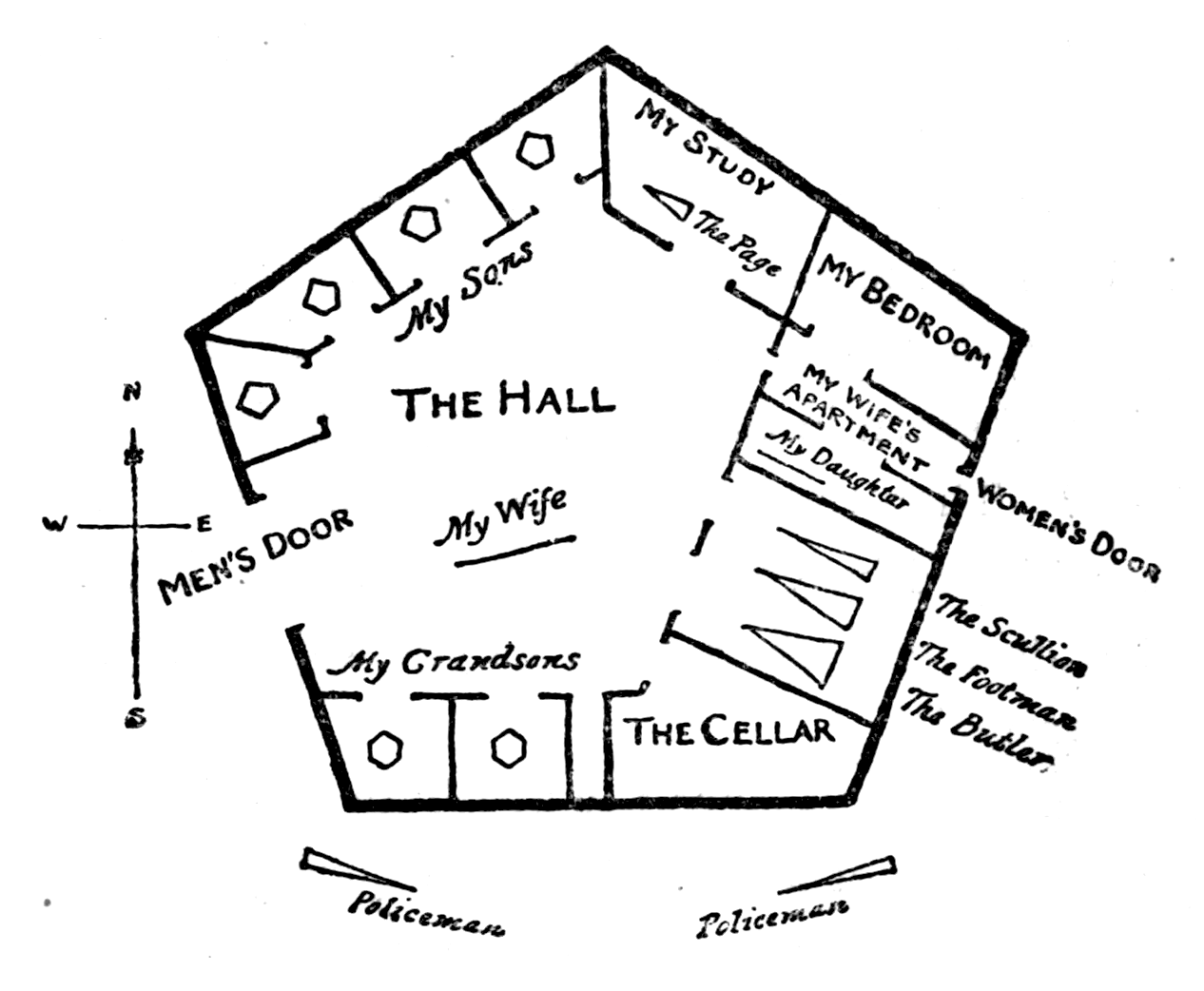
‘Flatland: A Romance of Many Dimensions’ is an 1884 satirical novella by the English schoolmaster Edwin Abbott Abbott. Writing pseudonymously as ‘A Square,’ Abbott used the fictional two-dimensional world of Flatland to offer pointed observations on the social hierarchy of Victorian culture.
However, the novella’s more enduring contribution is its examination of dimensions, for which the novella is still popular amongst mathematics, physics, and computer science students.
read more »
Posted in Art, Language, Politics |
2 Comments »
November 25, 2011
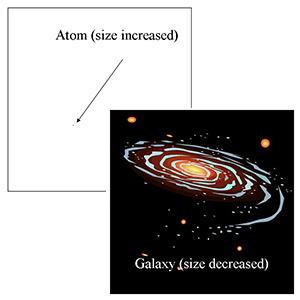
A Short History of Nearly Everything is a popular science book by American author Bill Bryson that explains some areas of science, using a style of language which aims to be more accessible to the general public than many other books dedicated to the subject.
‘A Short History’ deviates from Bryson’s popular travel book genre, instead describing general sciences such as chemistry, paleontology, astronomy, and particle physics.
read more »
Posted in Education, Language, Science |
Leave a Comment »
November 24, 2011
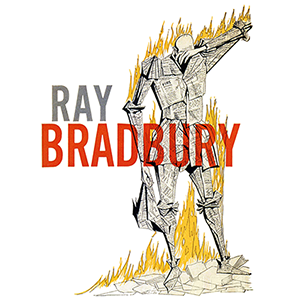
Fahrenheit 451 is a 1953 dystopian novel by Ray Bradbury. The novel presents a future American society where reading is outlawed and firemen start fires to burn books. Written in the early years of the Cold War, the novel is a critique of what Bradbury saw as issues in American society of the era. In 1947, Bradbury wrote a short story titled ‘Bright Phoenix’ (later revised for publication in a 1963 issue of ‘The Magazine of Fantasy & Science Fiction’). Bradbury expanded the basic premise of “Bright Phoenix” into ‘The Fireman,’ a novella published in a 1951 issue of ‘Galaxy Science Fiction.’ First published in 1953 by Ballantine Books, Fahrenheit 451 is twice as long as ‘The Fireman.’ A few months later, the novel was serialized in the March, April, and May 1954 issues of Playboy. Bradbury wrote the entire novel on a pay typewriter in the basement of UCLA’s Powell Library.
The novel has been the subject of various interpretations, primarily focusing on the historical role of book burning in suppressing dissenting ideas. Bradbury has stated that the novel is not about censorship, but a story about how television destroys interest in reading literature, which leads to a perception of knowledge as being composed of factoids, partial information devoid of context.
read more »
Posted in Language, Politics, Technology |
Leave a Comment »
November 24, 2011

Nineteen Eighty-Four (first published in 1949) by George Orwell is a dystopian novel about Oceania, a society ruled by the oligarchical dictatorship of the Party. Life in the Oceanian province of Airstrip One is a world of perpetual war, pervasive government surveillance, and incessant public mind control, accomplished with a political system euphemistically named English Socialism (Ingsoc), which is administrated by a privileged Inner Party elite. Yet they too are subordinated to the totalitarian cult of personality of Big Brother, the deified Party leader who rules with a philosophy that decries individuality and reason as thoughtcrimes; thus the people of Oceania are subordinated to a supposed collective greater good.
The protagonist, Winston Smith, is a member of the Outer Party who works for the Ministry of Truth (Minitrue), which is responsible for propaganda and historical revisionism. His job is to re-write past newspaper articles so that the historical record is congruent with the current party ideology. Because of the childhood trauma of the destruction of his family — the disappearances of his parents and sister — Winston Smith secretly hates the Party, and dreams of rebellion against Big Brother.
read more »
Posted in Language, Politics, Technology |
Leave a Comment »
November 24, 2011

‘We‘ is a dystopian novel by Yevgeny Zamyatin completed in 1921. It was written in response to the author’s personal experiences during the Russian revolution of 1905, the Russian revolution of 1917, his life in the Newcastle suburb of Jesmond, and his work in the Tyne shipyards during the First World War. It was on Tyneside that he observed the rationalization of labor on a large scale. Zamyatin was a trained marine engineer, hence his dispatch to Newcastle to oversee ice-breaker construction for the Imperial Russian navy. The novel was first published in 1924 by E.P. Dutton in New York in an English translation.
‘We’ is set in the future. D-503 lives in the One State, an urban nation constructed almost entirely of glass, which allows the secret police/spies to inform on and supervise the public more easily. The structure of the state is analogous to the prison design concept developed by Jeremy Bentham commonly referred to as the Panopticon. Furthermore, life is organized to promote maximum productive efficiency along the lines of the system advocated by the hugely influential F.W. Taylor. People march in step with each other and wear identical clothing. There is no way of referring to people save by their given numbers. Males have odd numbers prefixed by consonants, females have even numbers prefixed by vowels.
read more »
Posted in Language, Politics, Technology |
Leave a Comment »
November 24, 2011


Brave New World is Aldous Huxley’s fifth novel, written in 1931 and published in 1932. Set in London of CE 2540 (632 A.F. in the book), the novel anticipates developments in reproductive technology and sleep-learning that combine to change society.
The future society is an embodiment of the ideals that form the basis of futurology (the study of postulating possible futures). Huxley answered this book with a reassessment in an essay, ‘Brave New World Revisited (1958),’ and with his final work, a novel titled ‘Island’ (1962), a utopian counterpart to ‘Brave New World’s dystopian setting.
read more »
Posted in Language, Politics, Technology |
Leave a Comment »
November 24, 2011

‘The Mythical Man-Month: Essays on Software Engineering’ is a book on software engineering and project management by Fred Brooks, whose central theme is that ‘adding manpower to a late software project makes it later.’ This idea is known as Brooks’ law, and is presented along with the second-system effect (the tendency of small, elegant, and successful systems to have elephantine, feature-laden monstrosities as their successors) and advocacy of prototyping.
Brooks’ observations are based on his experiences at IBM while managing the development of OS/360. He had mistakenly added more workers to a project falling behind schedule. He also made the mistake of asserting that one project — writing an Algol compiler — would require six months, regardless of the number of workers involved (it required longer). The tendency for managers to repeat such errors in project development led Brooks to quip that his book is called ‘The Bible of Software Engineering,’ because ‘everybody quotes it, some people read it, and a few people go by it.’ The book is widely regarded as a classic on the human elements of software engineering. The work was first published in 1975
read more »
Posted in Language, Money, Technology |
Leave a Comment »
November 22, 2011

Glamorama is a novel by American writer Bret Easton Ellis, published in 1998. Unlike Ellis’ previous novels, Glamorama is set in and satirizes the 1990s, specifically celebrity culture and consumerism. Ellis wanted to write a Stephen King-style ghost story novel (which would eventually become ‘Lunar Park’); finding it difficult at the time, he began work on the other novel which he had in mind, a Robert Ludlum-style thriller, with the intention of using one of his own vapid characters who lack insight as the narrator. The novel is a satire of modern celebrity culture, featuring models-turned-terrorists.
A character remarks, ‘basically, everyone was a sociopath…and all the girls’ hair was chignoned.’ (A chignon is an arrangement of long hair in a roll or knot at the back of the head). The novel plays upon the conspiracy thriller conceit of someone ‘behind all the awful events,’ to dramatize the revelation of a world of random horror. The lack of resolution contributes to Ellis’ artistic effect. The obsession with beauty is reflected in consistent namedropping; this satirizes Victor’s obsession with looks, and perhaps is indicative of the author’s own attraction to glamor.
read more »
Posted in Art, Language, Money |
Leave a Comment »
October 31, 2011

Stumbling on Happiness is a 2006 non-fiction book by Daniel Gilbert, the central thesis of which is that, through perception and cognitive biases, people imagine the future poorly, in particular what will make them happy. He argues that imagination fails in three ways: Imagination tends to add and remove details, but people do not realize that key details may be fabricated or missing from the imagined scenario. Imagined futures (and pasts) are more like the present than they actually will be (or were). And imagination fails to realize that things will feel differently once they actually happen — most notably, the psychological immune system will make bad things feel not so bad as they are imagined to feel.
The advice Gilbert offers is to use other people’s experiences to predict the future, instead of imagining it. It is surprising how similar people are in much of their experiences, he says. He does not expect too many people to heed this advice, as our culture, accompanied by various thinking tendencies, is against this method of decision making. Also, Gilbert covers the topic of ‘filling in’or the frequent use of patterns, by the mind, to connect events which we do actually recall with other events we expect or anticipate fit into the expected experience. This ‘filling in’ is also used by our eyes and optic nerves to remove our blind spot or scotoma, and instead substitute what our mind expects to be present in the blind spot.
Posted in Health, Language |
Leave a Comment »
October 28, 2011

The Obscene Bird of Night (El obsceno pájaro de la noche, 1970) is the most acclaimed novel by the Chilean writer José Donoso (1924-1996). Donoso was a member of the Latin American literary boom and the literary movement known as magical realism. The novel explores the cyclical nature of life and death, in that our fears and fantasies of childhood resurface in adulthood and old age. It is about the deconstruction of self – to the extreme of trying ‘to live’ in non-existence.
The Imbunche myth is a major theme in the novel. According to legend, the Imbunche was a male child kidnapped by, or sold by his parents to a sorcerer who turns the child into a monster to guard his lair. It symbolizes the process of implosion of the physical and/or intellectual self, turning the living being into a thing or object incapable of interacting with the outside world, and depriving it of its individuality and even of its name. This can either be self-inflicted or forced upon by others.
read more »
Posted in Death, Language, Philosophy |
Leave a Comment »
October 26, 2011

Ubik [ew-bik] is a 1969 science fiction novel by Philip K. Dick. It has been described as ‘a deeply unsettling existential horror story, a nightmare you’ll never be sure you’ve woken up from.’ The novel takes place in the ‘North American Confederation’ of 1992, wherein technology has advanced to the extent of permitting civilians to reach the Moon and psi phenomena are common. The protagonist is Joe Chip, a debt-ridden technician for Glen Runciter’s ‘prudence organization,’ which employs people with the ability to block certain psychic powers (as in the case of an anti-telepath, who can prevent a telepath from reading a client’s mind) to enforce privacy by request. Runciter runs the company with the assistance of his deceased wife Ella, who is kept in a state of ‘half-life,’ a form of cryonic suspension that gives the deceased person limited consciousness and communication ability. In the novel Ubiq, a product whose name is derived from the word ‘ubiquity,’ has the property of preserving people who are in half-life.
Dick’s former wife Tessa remarked that ‘Ubik is a metaphor for God. Ubik is all-powerful and all-knowing, and Ubik is everywhere. The spray can is only a form that Ubik takes to make it easy for people to understand it and use it. It is not the substance inside the can that helps them, but rather their faith in the promise that it will help them.’ She also interpreted the ending by writing, ‘Many readers have puzzled over the ending of Ubik, when Glen Runciter finds a Joe Chip coin in his pocket. [It] is meant to tell you that we can’t be sure of anything in the world that we call ‘reality.’ It is possible that they are all dead and in cold pac or that the half-life world can affect the full-life world. It is also possible that they are all alive and dreaming.’
Posted in Art, Language, Technology |
Leave a Comment »


 The Daily Omnivore