April 6, 2011

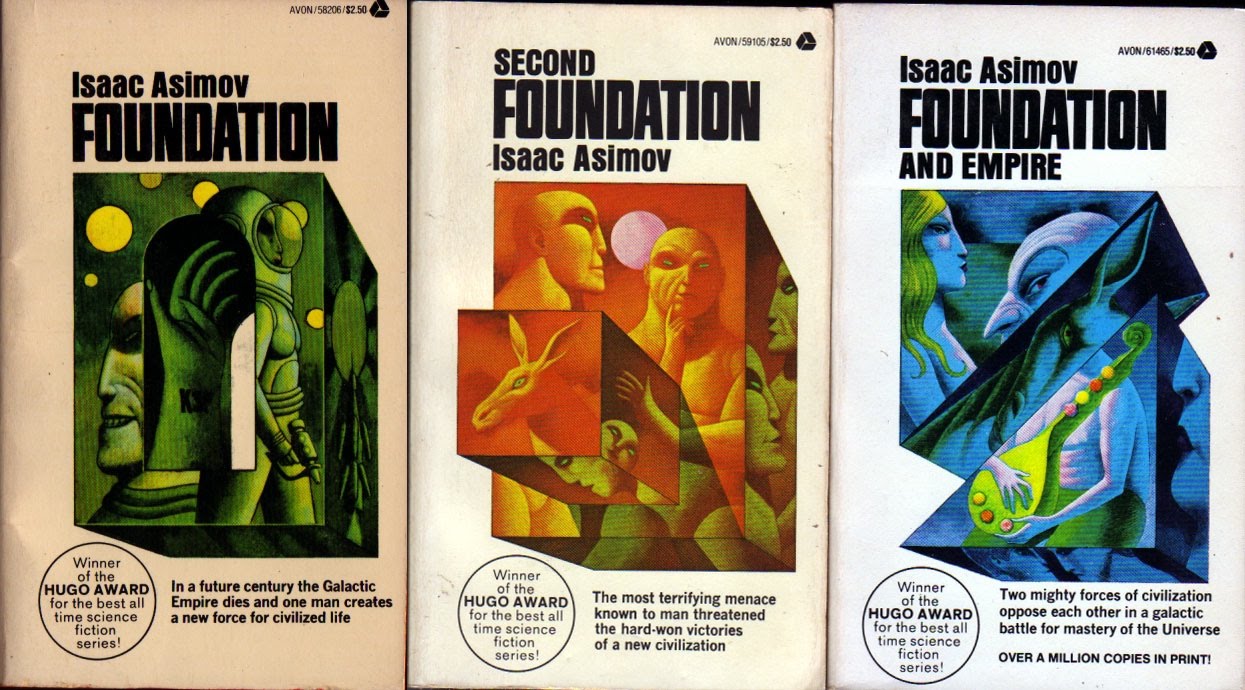
Foundation is the first book in Isaac Asimov’s Foundation Trilogy (and later Foundation Series). Foundation is a collection of five short stories, which were first published together as a book in 1951. It also appeared in 1955 under the title ‘The 1,000-Year Plan.’ The novel tells the story of a group of scientists who seek to preserve knowledge as the civilizations around them begin to regress. The first story is set on Trantor, the capital planet of the 12,000-year-old Galactic Empire. Whilst the empire gives the appearance of stability, beneath this façade it is suffering a slow decay. Hari Seldon, a mathematician, has developed ‘psychohistory,’ which equates all possibilities in large societies to mathematics, allowing predictable long term outcomes.
Seldon discovers a horrifying truth to the Empire’s decay, but his results are considered treasonable. On trial, Seldon shares the discoveries made through psychohistory, such as the collapse of the Empire within 500 years, followed by a 30,000-year period of barbarism. Seldon proposes an alternative to this future; one that would not avert the collapse but shorten the interregnum period to a mere 1000 years. But this plan would require a large group of people to develop a compendium of all human knowledge, titled the Encyclopedia Galactica. A still skeptical commission, not wanting to make a martyr of Seldon, exile him and his group of ‘Encyclopedists’ to a remote planet Terminus. There, they will carry out the Plan under an imperial decree, while Seldon would remain barred from returning to Trantor.
Posted in Art, Language, Technology |
Leave a Comment »
March 28, 2011

Roadside Picnic is a science fiction novella written by Arkady and Boris Strugatsky in 1971. The film ‘Stalker’ directed by Andrei Tarkovsky is loosely based on the novel, with a screenplay written by the Strugatskys. The novella was refused publication in the Soviet Union for eight years due to government censorship, numerous delays and sabotage.
The heavily censored different versions published between 1980 and 2000 have little in common with the original version written by the authors. Soviet censors rewrote major plot points, changed names of characters and dialog to better reflect the Marxist ideology (removed language deemed as ‘rude’; heavier emphasis was placed on the exploitation of the Zones for ‘materialistic’ purposes by an elite bourgeois cabal as a means to oppress the proletariat masses, etc.).
read more »
Posted in Art, World |
Leave a Comment »
March 17, 2011

‘The Naked Ape: A Zoologist’s Study of the Human Animal’ is a 1967 book by ethologist Desmond Morris which examines human behavior (he wrote a followup, ‘The Human Zoo,’ about urban behavior in 1969). Ethology is the scientific study of animal behavior, a sub-topic of zoology. Morris attempted to frame human behavior in the context of evolution, but his explanations failed to convince academics because they were based on a teleological (goal-oriented) understanding of evolution. However, the book was revolutionary for its time and has found fans among anthropologists and zoologists alike.
‘The Naked Ape’ depicts human behavior as largely evolved, to meet the challenges of prehistoric life as a hunter-gatherer. Morris made a number of claims in the book, including that not only does Homo sapiens have the largest brain of all primates but also the largest penis. He further claimed that our fleshy ear-lobes, which are unique to humans, are erogenous zones, the stimulation of which can cause orgasm in both sexes. Morris stated that the more rounded shape of human female breasts means they are mainly a sexual signalling device rather than simply for providing milk for infants.
Posted in Language, Science |
Leave a Comment »
March 8, 2011

A Clockwork Orange is a 1962 dystopian novella by Anthony Burgess. The novel contains an experiment in language; Burgess creates teenage slang of the not-too-distant future called Nadsat. In a prefatory note to ‘A Clockwork Orange: A Play with Music,’ Burgess wrote that the title was a metaphor for ‘…an organic entity, full of juice and sweetness and agreeable odor, being turned into an automaton.’ and the ‘title would be appropriate for a story about the application of Pavlovian or mechanical laws to an organism which, like a fruit, was capable of color and sweetness.’
The title alludes to the protagonist’s positively conditioned responses to feelings of evil which prevent the exercise of his free will. To reverse this conditioning, he is subjected to a technique in which his emotional responses to violence are systematically paired with a negative stimulation in the form of nausea caused by an emetic medicine administered just before the presentation of films depicting violent, and ‘ultra-violent’ situations.
read more »
Posted in Art, Politics |
Leave a Comment »
March 4, 2011

Eating Animals is the third book by the American writer Jonathan Safran Foer, published in 2009. It is a work of non-fiction exploring the topics of factory farming and commercial fisheries. He examines topics such as by-catch (fish caught unintentionally in a fishery while intending to catch other fish) and slaughterhouse conditions, learning that Indonesian shrimp trawlers kill 58 pounds of sea creatures for every 1 pound of shrimp, and that in American slaughterhouses, cows are consistently ‘bled, dismembered, and skinned while conscious.’
He also explores the health risks which pervade American factory farming, for example that H1N1 originated in a North Carolina factory farm, and that according to Consumer Reports, 98 percent of American chicken is infected with campylobacter or salmonella at the time of consumption. Foer also examines the cultural meaning of food, beginning with the experience of his own grandmother, who survived the holocaust, with a lifelong obsession over food. He builds on and ultimately criticizes the work of Michael Pollan on our relationship to the food we eat.
Posted in Art, Food, Health |
Leave a Comment »
March 2, 2011

Rendezvous with Rama is a novel by Arthur C. Clarke first published in 1972. Set in the 22nd century, the story involves a fifty-kilometre-long cylindrical alien starship that enters Earth’s solar system. The story is told from the point of view of a group of human explorers, who intercept the ship in an attempt to unlock its mysteries. It is considered a science fiction classic, and is particularly seen as a key hard science fiction text.
The ‘Rama’ of the title is the alien star ship, initially mistaken for an asteroid and named after the king Rama who is considered to be the seventh avatar of the Hindu god Vishnu (Clarke mentions that by the 22nd century, scientists have used the names of all the Greek and Roman mythological figures to name astronomical bodies, and have thus moved on to Hindu mythology).
Posted in Art, Language, Technology |
Leave a Comment »
February 24, 2011

Gadsby: A Story of Over 50,000 Words Without Using the Letter ‘E’ is a 1939 novel by Ernest Vincent Wright. The plot revolves around the dying fictional city of Branton Hills, which is revitalized thanks to the efforts of protagonist John Gadsby and a youth group he organizes. The novel is written as a lipogram: a constrained writing or word game consisting of writing paragraphs or longer works in which a particular letter or group of letters is avoided. Though self-published and little-noticed in its time, the book is a favorite of fans of constrained writing and is a sought-after rarity among some book collectors.
Posted in Art, Language |
Leave a Comment »
February 23, 2011

‘Gödel, Escher, Bach: An Eternal Golden Braid’ (GEB) is a book by cognitive scientist Douglas Hofstadter, described by the author as ‘a metaphorical fugue on minds and machines in the spirit of Lewis Carroll.’ On its surface, GEB examines logician Kurt Gödel, artist M. C. Escher and composer Johann Sebastian Bach, discussing common themes in their work and lives. At a deeper level, the book is a detailed and subtle exposition of concepts fundamental to mathematics, symmetry, and intelligence. Through illustration and analysis, the book discusses how self-reference and formal rules allow systems to acquire meaning despite being made of ‘meaningless’ elements.
It also discusses what it means to communicate, how knowledge can be represented and stored, the methods and limitations of symbolic representation, and even the fundamental notion of ‘meaning’ itself. In response to confusion over the book’s theme, Hofstadter has emphasized that GEB is not about mathematics, art, and music but rather about how cognition and thinking emerge from well-hidden neurological mechanisms. In the book, he presents an analogy about how the individual neurons of the brain coordinate to create a unified sense of a coherent mind by comparing it to the social organization displayed in a colony of ants.
Posted in Art, Philosophy, Science |
Leave a Comment »
February 20, 2011

Small Is Beautiful: Economics As If People Mattered is a collection of essays by British economist E. F. Schumacher. It is often used to champion small, appropriate technologies that are believed to empower people more, in contrast with phrases such as ‘bigger is better.’ First published in 1973, ‘Small Is Beautiful’ brought Schumacher’s critiques of Western economics to a wider audience during the 1973 energy crisis and emergence of globalization.
Schumacher argues that the modern economy is unsustainable. Natural resources (like fossil fuels), are treated as expendable income, when in fact they should be treated as capital, since they are not renewable, and thus subject to eventual depletion. He further argues that nature’s resistance to pollution is limited as well. He concludes that government effort must be concentrated on sustainable development.
Posted in Language, Money, Politics |
Leave a Comment »
February 16, 2011

Steal This Book is a book written by Abbie Hoffman in 1970 and published in 1971, which includes advice on growing cannabis, starting a pirate radio station, living in a commune, stealing food, shoplifting, stealing credit cards, preparing a legal defense, making pipe bombs, and obtaining a free buffalo from the Department of the Interior. It discusses various tactics of fighting as well as giving a detailed list of affordable and easy ways to find weapons and armor that can be used in the event of a confrontation with law enforcement. The book advocates rebelling against authority in all forms, governmental and corporate.
In the book, Hoffman referred to America as the ‘Pig Empire’ and stated that it was not immoral to steal from it. In fact, Hoffman wrote, it was immoral not to do so. The term was picked up by the Yippies, and was widely used by what became known as the ‘Woodstock Nation.’ As the book ages, the specific details of the various techniques and advice Hoffman gives have become largely obsolete for technological or regulatory reasons.
Posted in Money, Politics, War |
Leave a Comment »
February 10, 2011

Killing Hope: U.S. Military and C.I.A. Interventions since World War II is a history book on covert CIA operations and U.S. military interventions during the second half of the 20th century, written by former State Department employee William Blum. The book takes a strongly critical view of American foreign policy. The book covers various US foreign policy ventures from just after World War II onward.
Its basic premise is that the Soviet Union occupied the Warsaw Pact states only to better defend its territory and the American Cold War-era activities abroad were done with imperialist motives. It is an updated and revised version of one of Blum’s previous works, ‘The CIA – A Forgotten History.’ Noam Chomsky called it ‘Far and away the best book on the topic.’ First published in the mid-1980s, it has since been updated several times by the author.
Posted in Politics, War, World |
Leave a Comment »
December 9, 2010
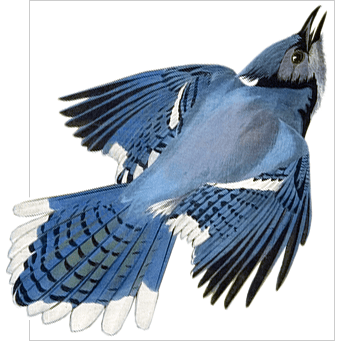
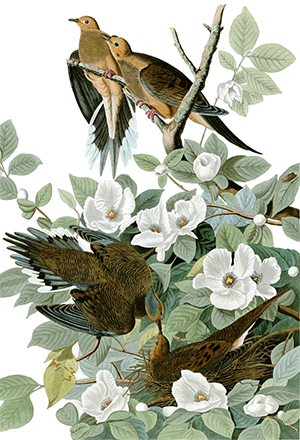
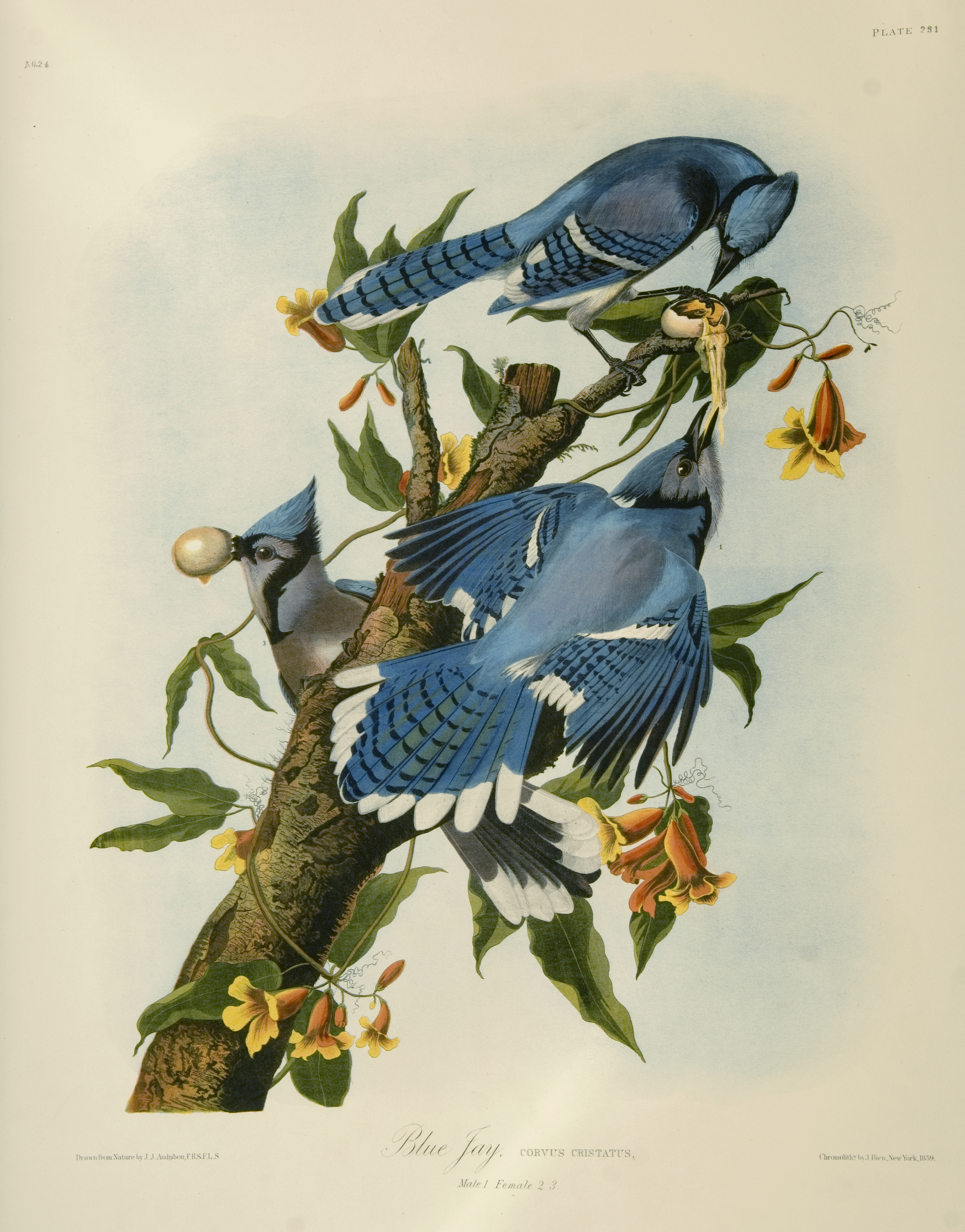
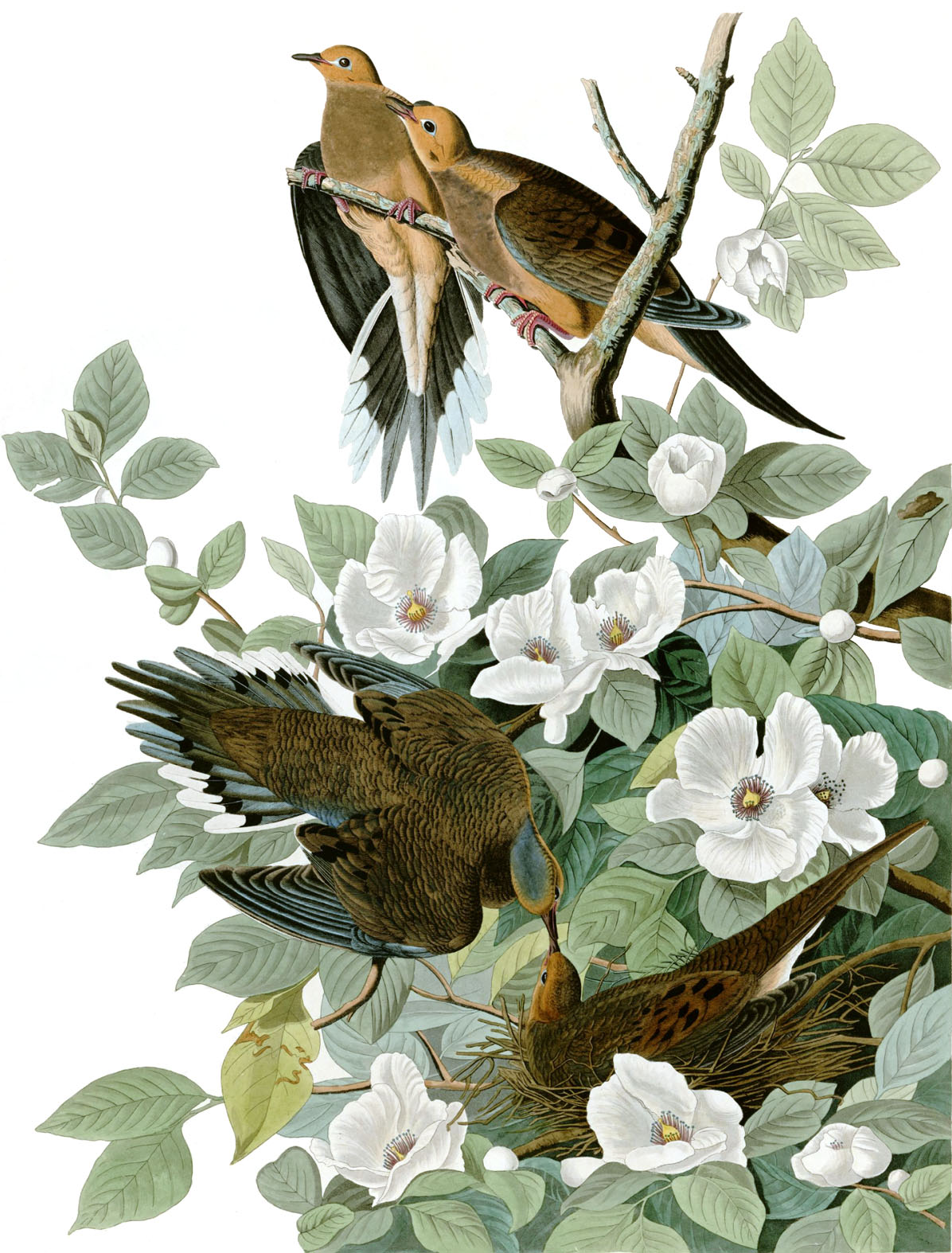
‘The Birds of America‘ is the title of a book by naturalist and painter John James Audubon, containing paintings and scientific description of a wide variety of birds of the United States. It was first published as a series of sections between 1827 and 1838 in Edinburgh and London. The work consists of hand-colored, life-size prints made from engraved plates measuring around 39 by 26 inches. In December of 2010 a copy sold at auction for £7.3 million. The original edition is often regarded as the greatest picture book ever produced. 161 subscribers paid $1,000 each for what ended up to be four volumes.
There are only 11 copies held in private collections out of 119 thought to still exist and it is estimated that out of the top ten most expensive books, five of them would be copies of ‘Birds of America.’ In 2007 the book was the subject of an exhibition by the Teylers Museum (the oldest museum in the Netherlands), which owns a copy it ordered from the original subscription, along with the table sold to house and display it. The book’s subsections fit into special drawers around a fly-leaf table; the table formed the centerpiece for gatherings of the Teyler’s gentleman’s society of science. A low-resolution version of ‘Birds of America’ can be viewed on the Audubon website.
Posted in Art, Money, Science |
Leave a Comment »




 The Daily Omnivore