February 28, 2016

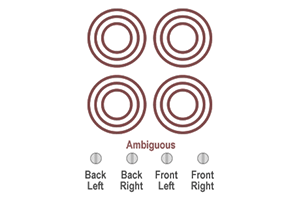
‘The Design of Everyday Things‘ is a 1988 book by cognitive scientist and usability engineer Donald Norman on design’s role in enabling communication been objects and their users, and how to optimize that conduit to make the experience more effective. One of the main premises of the book is that although people are often keen to blame themselves when objects appear to malfunction, it is not the fault of the user but rather the lack of intuitive guidance that should be present in the design. In the book, Norman introduced the term ‘affordance’ as it applied to design, defining it as things that afford the opportunity for an organism to perform an action.
For example, a knob affords twisting, and perhaps pushing, while a cord affords pulling. 20th century American psychologist James J. Gibson originally coined the term ‘affordance’ to describe changes made to one’s environment to make them more usable, such as carving stairs into a steep hill. Norman also popularized the term ‘user-centered design’ to describe design based on the needs of the user, leaving aside what he deemed secondary issues like aesthetics. User-centered design involves simplifying the structure of tasks, making things visible, getting the mapping right, exploiting the powers of constraint, designing for error, and explaining affordances.
Posted in Language, Technology |
Leave a Comment »
February 15, 2016
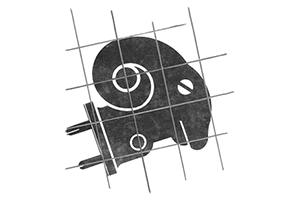

Do Androids Dream of Electric Sheep? is a science fiction novel by American writer Philip K. Dick. First published in 1968, the novel is set in a post-apocalyptic San Francisco, where Earth’s life has been greatly damaged by nuclear global war. Most animal species are endangered or extinct due to extreme radiation poisoning, so that owning an animal is now a sign of status and empathy, an attitude encouraged towards animals. The book served as the primary basis for the 1982 film ‘Blade Runner.’
The main plot follows a single day in the life of Rick Deckard, a bounty hunter hired by the San Francisco Police Department to ‘retire’ (kill) six escaped androids. A secondary plot follows John Isidore, a driver for an electric-animal repair company, who is a ‘special’ (a radioactively-damaged, intellectually slow human whose status prohibits him from emigrating). In connection with Deckard’s mission, the novel explores the issue of what it is to be human. Unlike humans, the androids are claimed to possess no sense of empathy.
read more »
Posted in Art, Language, Technology |
1 Comment »
October 28, 2015
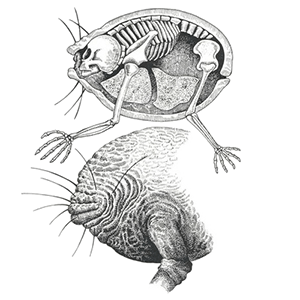
‘Man After Man: An Anthropology of the Future’ is a 1990 book written by Scottish geologist Dougal Dixon exploring future evolutionary paths for humanity. Illustrator Philip Hood’s depictions of Dixon’s speculative organisms have been called fear-provoking and biologically horrific to the modern eye.
The book starts 200 years in the future where modern humans have genetically modified themselves into several subtypes including ‘aquamorphs’ (marine humans with gills instead of lungs) and ‘vacuumorphs’ (engineered for life in the vacuum of space, its skin and eyes carry shields of skin to keep its body stable even without pressure).
read more »
Posted in Language, Science |
Leave a Comment »
September 29, 2015

A Short History of Progress is a nonfiction book and lecture series by Canadian author Ronald Wright about societal collapse. The lectures were delivered as a series of five speeches, each taking place in different cities across Canada as part of the 2004 ‘Massey Lectures’ (an annual series of lectures on a political, cultural or philosophical topic given in Canada by a noted scholar) which were broadcast on the CBC Radio program, ‘Ideas.’
Wright, an author of fiction and nonfiction works, uses the fallen civilizations of Easter Island, Sumeria, Rome, and Maya, as well as examples from the Stone Age, to see what conditions led to the downfall of those societies. He examines the meaning of progress and its implications for civilizations—past and present—arguing that the twentieth century was a time of runaway growth in human population, consumption, and technology that has now placed an unsustainable burden on all natural systems.
read more »
Posted in Language, Politics, World |
1 Comment »
September 7, 2015
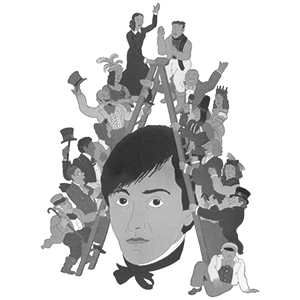
Nicholas Nickleby is a novel by Charles Dickens. Originally published as a monthly serial from 1838 to 1839, it was Dickens’ third novel. The book centers on the life and adventures of Nicholas Nickleby, a young man who must support his mother and sister after his father dies. Dickens began writing ‘Nickleby’ while still working on ‘Oliver Twist’ and while the mood is considerably lighter, his depiction of the Yorkshire school run by Wackford Squeers is as moving and influential as those of the workhouse and criminal underclass in ‘Twist.’
Like most of Dickens’ early works, the novel has a contemporary setting. Much of the action takes place in London, with several chapters taking place in Dickens’ birthplace of Portsmouth, as well as settings in Yorkshire and Devon. The tone of the work is that of ironic social satire, with Dickens taking aim at what he perceives to be the class injustices of Victorian England. Many memorable characters are introduced, including Nicholas’ malevolent Uncle Ralph, and the villainous Wackford Squeers, who operates an abusive all-boys boarding school at which Nicholas temporarily serves as a tutor.
read more »
Posted in Art, Language |
Leave a Comment »
September 6, 2015
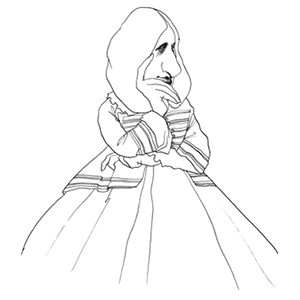
‘Silas Marner: The Weaver of Raveloe’ is the third novel by George Eliot, pen name of English novelist Mary Ann Evans. Published in 1861, it is an outwardly simple tale of a linen weaver, it is notable for its strong realism and its sophisticated treatment of a variety of issues ranging from religion to industrialization to community. Eliot’s novels often presented the cases of social outsiders and small-town persecution.
The novel is set in the early years of the 19th century. Silas Marner, a weaver, is a member of a small Calvinist congregation in Lantern Yard, a slum street in an unnamed city in Northern England. He is falsely accused of stealing the congregation’s funds while watching over the very ill deacon.
read more »
Posted in Art, Language |
1 Comment »
July 13, 2015

‘The Truth Machine‘ is a 1996 science fiction novel by James L. Halperin about an infallible lie detector. Soon, every citizen must pass a thorough test under a Truth Machine to get a job or receive any sort of license. Eventually, people begin wearing them all the time, thus eliminating dishonesty in all parts of human interaction, including most crime, terrorism and a great deal of general social problems.
The novel focuses on the life story of the machine’s inventor, Pete Armstrong, a child prodigy whose life has been defined by the tragic murder of his younger brother, Leonard, by an ex-convict who was believed to be capable of committing violent crimes again, but who could not be incarcerated on mere suspicions. Armstrong claimed that as long as it was employed universally (and not just by government officials), the ‘truth machine’ could revolutionize humanity and take it to that next evolutionary step. However, the protagonist places a back door in the device, allowing him to avoid detection when he repeats fragments of Walt Whitman’s poem ‘O Captain! My Captain!’ in his mind.
Posted in Language, Politics, Technology |
Leave a Comment »
June 29, 2015

‘Character Strengths and Virtues‘ (CSV) is a 2004 book by psychologists Christopher Peterson and Martin Seligman that presents humanist ideals of virtue in an empirical, rigorously scientific manner. Seligman describes it as a ‘positive’ counterpart to the Diagnostic and Statistical Manual of Mental Disorders (DSM). While the DSM focuses on what can go wrong, CSV is designed to look at what can go right.
In their research they looked across cultures and time to distill a manageable list of virtues that have been highly valued from ancient China and India, through Greece and Rome, to contemporary Western cultures. Their list includes six character strengths: wisdom/knowledge, courage, humanity, justice, temperance, and transcendence. Each of these has three to five sub-entries; for instance, temperance includes forgiveness, humility, prudence, and self-regulation. The authors do not believe that there is a hierarchy for the six virtues; no one is more fundamental than or a precursor to the others.
read more »
Posted in Health, Language, Science |
Leave a Comment »
June 23, 2015
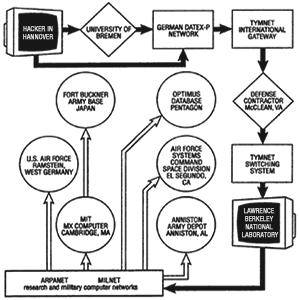
‘The Cuckoo’s Egg: Tracking a Spy Through the Maze of Computer Espionage’ is a 1989 book written by Clifford Stoll, an astronomer turned systems administrator of the computer center of the Lawrence Berkeley Laboratory (LBL) in California. It is his first-person account of the hunt for a computer hacker who broke into a computer at the lab.
In August of 1986 his supervisor asked him to resolve a US$0.75 accounting error in the computer usage accounts. He traced the error to an unauthorized user who had apparently used up nine seconds of computer time and not paid for it, and eventually realized that the unauthorized user was a hacker who had acquired root (high-level) access to the LBL system by exploiting a vulnerability in the movemail function of the original GNU Emacs (an open-source computer program that moves a user’s mail to another file).
read more »
Posted in Language, Technology, War |
Leave a Comment »
May 30, 2015
‘The Magic of Reality: How We Know What’s Really True’ is a 2011 book by British biologist Richard Dawkins, with illustrations by Dave McKean. It is a science book aimed primarily at children and young adults. He addresses topics that range from his most familiar territory, evolutionary biology and speciation (how the tree of life creates new branches), to physical phenomena such as atomic theory, optics, planetary motion, gravitation, stellar evolution (the life cycle of stars), spectroscopy (the study of the interactions of matter and electromagnetic radiation), and plate tectonics, as well as speculation on exobiology (alien life).
Most chapters begin with quick retellings of historical creation myths that emerged as attempts to explain the origin of particular observed phenomena. These myths are chosen from all across the world including Babylonian, Judeo-Christian, Aztec, Maori, Ancient Egyptian, Australian Aboriginal, Nordic, Hellenic, Chinese, Japanese, and other traditions, including contemporary alien abduction mythology.
read more »
Posted in Education, Language, Philosophy |
Leave a Comment »
May 20, 2015


‘How to Lie with Statistics‘ is a book written by Darrell Huff in 1954 presenting an introduction to statistics for the general reader. Huff was a journalist who wrote many ‘how to’ articles as a freelancer, but was not a statistician. The book is a brief, breezy, illustrated volume outlining errors when it comes to the interpretation of statistics, and how these errors lead to incorrect conclusions. In the 1960s and ’70s it became a standard textbook introduction to the subject of statistics for many college students. It has become one of the best-selling statistics books in history, with over one and a half million copies sold in the English-language edition, and has also been widely translated.
Themes of the book include ‘Correlation does not imply causation’ and ‘Using random sampling.’ It also shows how statistical graphs can be used to distort reality, for example by truncating the bottom of a line or bar chart, so that differences seem larger than they are, or by representing one-dimensional quantities on a pictogram by two- or three-dimensional objects to compare their sizes, so that the reader forgets that the images do not scale the same way the quantities do. The original edition contained humorous illustrations by artist Irving Geis. In a UK edition these were replaced with cartoons by Mel Calman.
Posted in Language, Science |
1 Comment »
May 1, 2015

Leaves of Grass is a collection of poetry by Walt Whitman praising sensuality, the material world, nature, and the experience of the senses. The book was published at Whitman’s own expense in 1855, a period where poetry focused on the soul and organized religion, and was a failure at first. Whitman spent most of his professional life writing and rewriting the book, revising it multiple times until his death. This resulted in vastly different editions over four decades—the first a small book of twelve poems and the last a compilation of over 400.
The collection is notable for its discussion of delight in carnal pleasures during a time when such candid displays were considered immoral. Where much previous poetry, especially English, relied on symbolism, allegory, and meditation on the religious and spiritual, ‘Leaves of Grass’ (particularly the first edition) exalted the physical form and ephemera. Influenced by Ralph Waldo Emerson and the Transcendentalist movement, itself an offshoot of Romanticism, Whitman’s poetry praises nature and the individual’s role in it. However, much like Emerson, Whitman does not diminish the role of the mind or the spirit; rather, he elevates the human form and mind, deeming both worthy of poetic praise.
read more »
Posted in Art, Language, Philosophy |
Leave a Comment »


 The Daily Omnivore