December 4, 2010

‘Guns, Germs, and Steel: The Fates of Human Societies’ is a 1997 book by Jared Diamond, professor of geography and physiology at UCLA. The book’s title is a reference to the means by which European nations conquered populations of other areas and maintained their dominance, despite often being vastly outnumbered – superior weapons provided immediate military superiority (guns); Eurasian diseases weakened and reduced local populations, making it easier to maintain control over them (germs) and centralized government promoted nationalism and powerful military organizations (steel).
The book attempts to explain why Eurasian civilizations (including North Africa) have survived and conquered others, while attempting to refute the belief that Eurasian hegemony is due to genetic superiority. Diamond argues that the gaps in power and technology between human societies originate in environmental differences, which are amplified by various positive feedback loops. When cultural or genetic differences have favored Eurasians (for example Chinese centralized government, or improved disease resistance among Eurasians), these advantages were only created due to the influence of geography and were not inherent in the Eurasian genomes.
Posted in Science, War, World |
Leave a Comment »
December 3, 2010

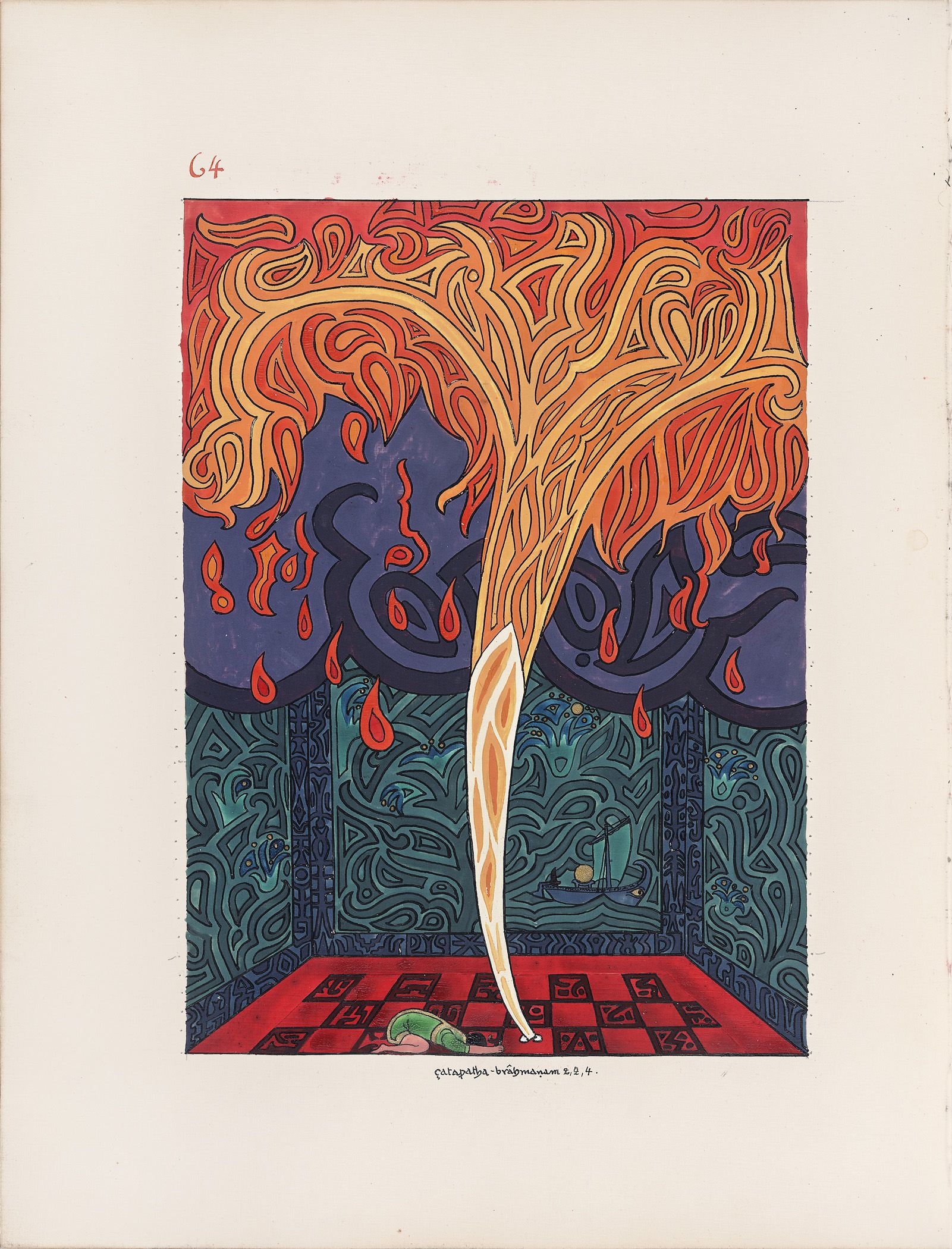
The Red Book, also known as Liber Novus (Latin for New Book), is a 205-page manuscript written and illustrated by Swiss psychiatrist Carl Gustav Jung between approximately 1914 and 1930, which was not published or shown to the public until 2009. It contain some of his most personal material, and during the sixteen years he worked on it, Jung developed his theories of archetypes, collective unconscious, and individuation. Until 2001, his heirs denied scholars access to the book.
read more »
Posted in Art, Philosophy, Science |
Leave a Comment »
December 3, 2010
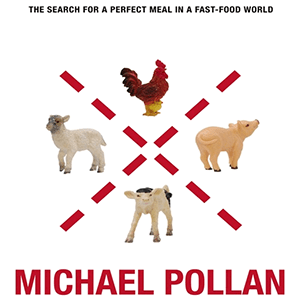
The Omnivore’s Dilemma: A Natural History of Four Meals is a nonfiction book by Michael Pollan published in 2006.
As omnivores – the most unselective eaters – humans are faced with a wide variety of food choices, resulting in a dilemma. Pollan investigates industrial food, organic food, and foraged food.
read more »
Posted in Food, Money, Politics |
Leave a Comment »
November 22, 2010
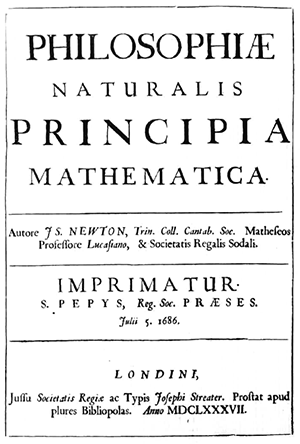
Philosophiæ Naturalis Principia Mathematica, Latin for ‘Mathematical Principles of Natural Philosophy,’ often called the Principia, is a work in three books by Sir Isaac Newton, first published in 1687. The Principia states Newton’s laws of motion, forming the foundation of classical mechanics, also Newton’s law of universal gravitation, and a derivation of Kepler’s laws of planetary motion (which Kepler first obtained empirically). The Principia is regarded as one of the most important works in the history of science.
In formulating his physical theories, Newton developed and used mathematical methods now included in the field of calculus. But the language of calculus as we know it was largely absent from the Principia. In a revised conclusion to the Principia (see General Scholium), Newton used his expression that became famous, Hypotheses non fingo (‘I contrive no hypotheses’). It was his answer to those who had publicly challenged him to give an explanation for the causes of gravity rather than just the mathematical principles of kinematics. Along with Occam’s Razor, the term can be seen as a departure from the Aristotelian hypothetic-deductive method of natural philosophy.
Posted in Science |
Leave a Comment »
November 16, 2010

Principia Discordia is a Discordian religious text written by Greg Hill (Malaclypse The Younger) and Kerry Thornley (Omar Khayyam Ravenhurst). It was originally published under the title ‘Principia Discordia or How The West Was Lost’ in a limited edition of 5 copies in 1965. Discordianism is a religion centered on the idea that chaos is all that there is, and that disorder and order are both illusions that are imposed on chaos. There is some division as to whether it should be regarded as a parody religion, and if so to what degree.
It has been called ‘Zen for roundeyes,’ based on similarities with absurdist interpretations of the Rinzai school of Buddhism. Discordianism recognizes chaos, discord, and dissent as valid and desirable qualities, in contrast with most religions, which idealize harmony and order. While the Principia is full of literal contradictions and unusual humor, it contains several passages which propose that there is serious intent behind the work. Saints identified include Emperor Norton, Yossarian, Don Quixote, and Bokonon.
Posted in Humor, Language, Philosophy |
1 Comment »
November 15, 2010

The Voynich manuscript is a handwritten book thought to have been written between 1404 and 1438, composed of 240 vellum (mammal skin) pages, most with illustrations. Despite centuries of research, the author, script, and language remain unknown. Some think the manuscript is an elaborate hoax, others believe it was meant to serve as a pharmacopoeia or to address topics in medieval or early modern medicine.
Generally presumed to be some kind of ciphertext (an encrypted document), the Voynich manuscript has been studied by many professional and amateur cryptographers, including American and British codebreakers from both World War I and World War II. Yet it has defied all decipherment attempts, becoming a historical cryptology cause célèbre. The book is named after the Polish-Lithuanian-American book dealer Wilfrid M. Voynich, who acquired it in 1912. Currently the Voynich manuscript is owned by the Beinecke Rare Book and Manuscript Library of Yale University.
Posted in Art, Language |
Leave a Comment »
November 15, 2010
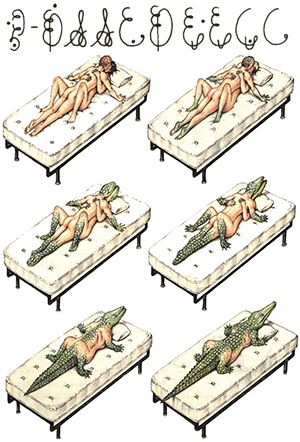

The Codex Seraphinianus is a book written and illustrated by the Italian artist, architect and industrial designer Luigi Serafini during thirty months, from 1976 to 1978. The book is a visual encyclopedia of an unknown world, written in one of its languages, a thus-far undeciphered alphabetic writing. The Codex is divided into eleven chapters, partitioned into two sections. The first section appears to describe the natural world, dealing with flora, fauna, and physics. The second deals with the humanities, the various aspects of human life: clothing, history, cuisine, architecture and so on. The illustrations are often surreal parodies of things in our world: bleeding fruit; a plant that grows into roughly the shape of a chair and is subsequently made into one; a lovemaking couple that metamorphoses into an alligator; etc.
The language of the codex has defied complete analysis by linguists for decades. The number system used for numbering the pages, however, has been discovered to be a variation of base 21. In a talk at the Oxford University Society of Bibliophiles held in 2009, Serafini stated that the script of the Codex is asemic, that his own experience in writing it was closely similar to automatic writing, and that what he wanted his alphabet to convey to the ‘reader’ is the sensation that children feel in front of books they cannot yet understand, although they see that their writing does make sense for grown-ups.
Posted in Art, Humor, Language |
2 Comments »
November 10, 2010
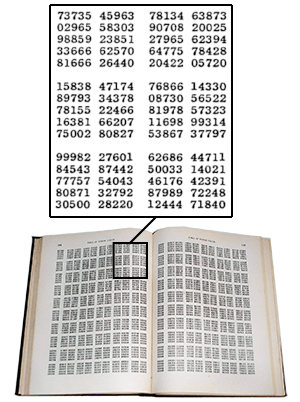
A Million Random Digits with 100,000 Normal Deviates is a 1955 book by the RAND Corporation. The book, comprising primarily of a random number table, was an important 20th century work in the field of statistics and random numbers. It was produced starting in 1947 by an electronic simulation of a roulette wheel attached to a computer, the results of which were then carefully filtered and tested before being used to generate the table. The book was one of the last of a series of random number tables produced from the mid-1920s through the 1950s, after which the development of high speed computers allowed faster operation through the generation of pseudorandom numbers rather than reading them from tables.
The RAND table was an important breakthrough in delivering random numbers, because such a large and carefully prepared table had never before been available. In addition to being available in book form, one could also order the digits on a series of punched cards. The main use of the tables was in statistics and the experimental design of scientific experiments, especially those which employed the ‘Monte Carlo method,’ a class of computational algorithms used in cryptography.
Posted in Language, Technology |
Leave a Comment »
September 16, 2010
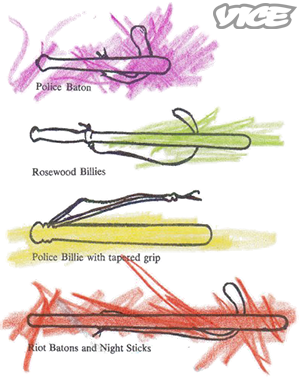
The Anarchist Cookbook, first published in 1971, is a book that contains instructions for the manufacture of explosives, rudimentary telecommunications hacking devices, and other quasi-legal and contraband items.
It was written by William Powell to protest United States involvement in the Vietnam War. Since writing the book, Powell has converted to Anglican Christianity and attempted to have the book removed from circulation.
Posted in Language, Politics, War |
Leave a Comment »





 The Daily Omnivore