March 6, 2014

Hard to be a God is a 1964 science fiction novel by Arkady and Boris Strugatsky set in their ‘Noon Universe (a fictional setting in the 22nd century). The novel follows Anton, an undercover operative from the future planet Earth, in his mission on an alien planet, that is populated by human beings, whose society has not advanced beyond the Middle Ages. The novel’s core idea is that human progress throughout the centuries is often cruel and bloody, and that religion and blind faith can be effective tools of oppression, working to destroy the emerging scientific disciplines and enlightenment.
The title ‘Hard to be a God’ refers to Anton’s (known by his alias ‘don Rumata’ throughout the book) perception of his precarious role as an observer on the planet, for while he has far more advance knowledge than the people around him, he is forbidden to assist too actively, as it would interfere with the natural progress of history. The book pays a lot of attention to the internal world of the main character, showing his own evolution from an emotionally uninvolved ‘observer’ to the person who rejects the blind belief in theory when confronted with the cruelty of real events.
read more »
Posted in Language, Philosophy, Science |
Leave a Comment »
February 18, 2014
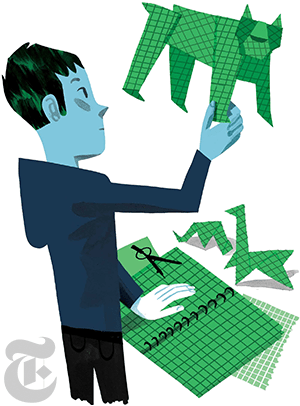
‘Battle Hymn of the Tiger Mother‘ is a 2011 book by Yale law professor Amy Chua. The complete subtitle of the book is: ‘This is a story about a mother, two daughters, and two dogs. This was supposed to be a story of how Chinese parents are better at raising kids than Western ones. But instead, it’s about a bitter clash of cultures, a fleeting taste of glory, and how I was humbled by a thirteen-year-old.’
Chua reported that in one study of 48 Chinese immigrant mothers, the vast majority ‘said that they believe their children can be ‘the best’ students, that ‘academic achievement reflects successful parenting,’ and that if children did not excel at school then there was ‘a problem’ and parents ‘were not doing their job.” Chua contrasts them with the view she labels ‘Western’ – that a child’s self-esteem is paramount.
read more »
Posted in Education, Language, World |
Leave a Comment »
January 24, 2014

Cryptonomicon is a 1999 novel by American author Neal Stephenson depicting the exploits of two groups of people in two different time periods, presented in alternating chapters. The first group is World War II-era Allied codebreakers and tactical-deception operatives affiliated with the Government Code and Cypher School at Bletchley Park in the UK and disillusioned Axis military and intelligence figures whom they encounter.
The second narrative is set in the late 1990s with descendants of the first narrative’s characters employing cryptologic, telecom, and computer technology to build an underground data haven in the fictional Sultanate of Kinakuta. Their goal is to facilitate anonymous Internet banking using electronic money and (later) digital gold currency, with a longer range objective to distribute Holocaust Education and Avoidance Pod (HEAP) media for instructing genocide-target populations on defensive warfare.
read more »
Posted in Language, Technology, War |
1 Comment »
January 17, 2014
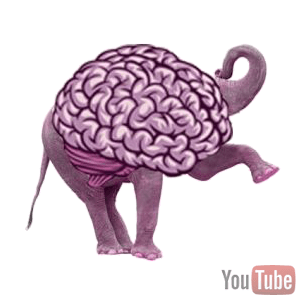
‘The Republican Brain: The Science of Why They Deny Science’ by journalist Chris Mooney is about the psychological basis for many Republicans’ rejection of mainstream scientific theories, as well as theories of economics and history.
The book was criticized by American conservative Jonah Goldberg, who called it ‘conservative phrenology.’ Mooney responded that Goldberg had misrepresented his book in several respects. He also stated that Goldberg exhibited ‘precisely the traits he seeks to deny: ideological defensiveness, a lack of nuance, and a deeply unwarranted and overconfident sense of certainty.’ Mooney later rebutted a similar criticism by Andrew Ferguson of ‘The Weekly Standard’ and stated that Ferguson dismissed science himself while attacking the book.
Posted in Language, Politics, Science |
Leave a Comment »
November 26, 2013

‘The Sirens of Titan‘ is a 1959 book by Kurt Vonnegut, Jr. His second novel, it involves issues of free will, omniscience, and the overall purpose of human history. Much of the story revolves around a Martian invasion of Earth. The protagonist is Malachi Constant, the richest man in 22nd-century America. He possesses extraordinary luck that he attributes to divine favor which he has used to build upon his father’s fortune.
He becomes the centerpoint of a journey that takes him from Earth to Mars in preparation for an interplanetary war, to Mercury with another Martian survivor of that war, back to Earth to be pilloried as a sign of Man’s displeasure with his arrogance, and finally to Titan where he again meets the man ostensibly responsible for the turn of events that have befallen him, Winston Niles Rumfoord.
read more »
Posted in Humor, Language |
Leave a Comment »
November 12, 2013

‘Horrible Histories‘ is a series of UK educational books first released in in 1993 with ‘The Terrible Tudors’ and ‘The Awful Egyptians.’ They are designed to engage children in history by presenting the unusual, gory, or unpleasant aspects in a tongue-in-cheek manner in contrast to the formality of lessons taught in school. The books are published by Scholastic and written primarily by Terry Deary (with illustrations by Martin Brown and others).
After a run of 60 books, Deary announced that the series would officially come to an end in 2013 for lack of stories, and said they would focus on the larger media franchise such as magazines, TV, and stage shows. Terry Deary studied at drama college and worked as an actor-teacher at the TIE company in Wales. He then became a theatre director and began to write plays for children. Many of his TIE plays were eventually rewritten and adapted for the ‘Horrible Histories’ books.
read more »
Posted in Death, Education, Language |
Leave a Comment »
November 9, 2013

‘Surely You’re Joking, Mr. Feynman!: Adventures of a Curious Character’ is an edited collection of reminiscences by the Nobel Prize-winning physicist, Richard Feynman. The anecdotes were edited from taped conversations that Feynman had with his close friend and drumming partner Ralph Leighton. The title derives from a woman’s response at Princeton University when, after she asked the newly arrived Feynman if he wanted cream or lemon in his tea, he naively requested both. The book, released in 1985, covers a variety of instances in Feynman’s life.
Some are lighthearted in tone, such as his fascination with safe-cracking, studying various languages, participating with groups of people who share different interests (such as biology or philosophy), and ventures into art and samba music. Others cover more serious material, including his work on the Manhattan Project (during which his first wife Arline Greenbaum died of tuberculosis) and his critique of the science education system in Brazil. The section ‘Monster Minds’ describes his slightly nervous presentation of his graduate work on the Wheeler-Feynman absorber theory in front of Albert Einstein, Wolfgang Pauli, and other major figures of the time.
Posted in Language, Science |
Leave a Comment »
September 30, 2013

‘The Design of Business: Why Design Thinking is the Next Competitive Advantage’ is a book published in 2009 by Roger Martin, Dean of the University of Toronto’s Rotman School of Management. The book describes the concept of design thinking, and how companies can incorporate it into their organizational structure for long term innovation and results.
Martin introduces the ‘knowledge funnel’ as the process followed by leading businesses to innovate more consistently and successfully by eliminating mysteries and developing heuristics (shortcuts and workarounds) and eventually algorithms (forumas). The mystery stage comprises the exploration of the problem, this transitions to the rule of thumb (heuristic) stage, where a rule of thumb is generated to narrow work to a manageable size. In the algorithm stage the general heuristic is converted to a fixed formula, taking the problem from complexity to simplicity.
read more »
Posted in Money |
1 Comment »
September 16, 2013

Moral Mazes is a 1988 book from sociologist Robert Jackall that documents an investigation into the world of corporate managers in the United States. In the introduction, Jackall writes that he ‘went into these organizations to study how bureaucracy – the prevailing organizational form of our society – shapes moral consciousness.’ He called the book, ‘an interpretive sociological account of how managers think the world works.’
Jackall describes the ‘fundamental rules of corporate life’: ‘(1) You never go around your boss. (2) You tell your boss what he wants to hear, even when your boss claims that he wants dissenting views. (3) If your boss wants something dropped, you drop it. (4) You are sensitive to your boss’s wishes so that you anticipate what he wants; you don’t force him, in other words, to act as a boss. (5) Your job is not to report something that your boss does not want reported, but rather to cover it up. You do your job and you keep your mouth shut.’
read more »
Posted in Language, Money, Politics |
2 Comments »
September 6, 2013

‘The Ultimate Resource‘ is a 1981 book written by Julian Lincoln Simon challenging the notion that humanity was running out of natural resources. It was revised in 1996 as ‘The Ultimate Resource 2.’
The overarching thesis is that there is no resource crisis because as a particular resource becomes more scarce, its price rises, creating an incentive for people to discover more of the resource, ration and recycle it and, eventually, develop substitutes. The ‘ultimate resource’ is not any particular physical object but the capacity for humans to invent and adapt.
read more »
Posted in Language, Money, World |
1 Comment »
September 2, 2013
‘Childhood’s End‘ is a 1953 science fiction novel by the British author Arthur C. Clarke. The story follows the peaceful alien invasion of Earth by the mysterious Overlords, whose arrival ends all war, helps form a world government, and turns the planet into a near-utopia.
Many questions are asked about the origins and mission of the aliens, but they avoid answering, preferring to remain in their spacecraft, governing through indirect rule. Decades later, the Overlords show themselves, and their impact on human culture leads to a final utopic Golden Age, but at the cost of humanity’s identity and eventually the planet itself.
read more »
Posted in Language, Philosophy, World |
Leave a Comment »
August 14, 2013

‘Bad Science‘ is a 2008 book by British physician and science writer Ben Goldacre, criticizing mainstream media reporting on health and science issues. The book contains extended and revised versions of many of his ‘Guardian’ columns.
The book discusses topics such as detoxification (Aqua Detox, ear candles etc.) that can easily be shown to be bogus by simple experiments, and discusses the ‘detox phenomenon’ and purification rituals. He also addresses the claims for Brain Gym, a program of specific physical exercises that its commercial promoters claim can create new pathways in the brain. The uncritical adoption of this program by sections of the British school system is derided.
read more »
Posted in Health, Language, Science |
Leave a Comment »


 The Daily Omnivore