August 2, 2013

‘Primary Colors: A Novel of Politics’ is a 1996 roman à clef, a work of fiction that purports to describe real life characters and events — namely, Bill Clinton’s first presidential campaign in 1992. It has been compared to two other novels about American politics; Robert Penn Warren’s ‘All the King’s Men’ (1946) and ‘O: A Presidential Novel’ (2011). The book was originally published by an anonymous author, who was later found to be columnist Joe Klein. Klein completed a sequel of sorts, ‘The Running Mate’ in 2000, focusing on the ‘Primary Colors’ character of Charlie Martin.
An early reviewer opined that the author wished to remain unknown because ‘Anonymity makes truthfulness much easier.’ Later commentators called the publishing of the book under an anonymous identity an effective marketing strategy that produced more publicity for the book, and thus more sales, without calling into question the author’s actual inside knowledge.
read more »
Posted in Language, Politics |
Leave a Comment »
July 30, 2013

‘The evolution of cooperation‘ is the title of a 1981 paper by political scientist Robert Axelrod and evolutionary biologist W. D. Hamilton on the emergence and persistence of cooperation (also known as cooperation theory) as elucidated by application of game theory.
Three years later, Axelrod discussed the topic at length in a similarly titled book. He was interested in how game theory and computer modeling were illuminating certain aspects of moral and political philosophy, particularly the role of individuals in groups, the ‘biology of selfishness and altruism,’ and the evolutionary advantages of cooperation.
read more »
Posted in Games, Language, Science |
Leave a Comment »
July 24, 2013

‘How to Survive a Robot Uprising: Tips on Defending Yourself Against the Coming Rebellion’ is a 2005 semi-satirical book by contributing editor to ‘Popular Mechanics’ Daniel Wilson. The book gives tongue-in-cheek advice on how one can survive in the event that robots become too intelligent and rebel against the human race. The book blends scientific facts with deadpan humor. Wilson received a Ph.D. in Robotics from Carnegie Mellon University’s Robotics Institute in Pittsburgh.
In the summer of 2005, Paramount Pictures optioned film rights to the book and hired Thomas Lennon and Robert Ben Garant (both members of the State comedy troupe and co-creators of the Reno 911! television series) to write a script based on the book. In 2006 comedian Mike Myers signed with Paramount to star in the movie adaptation.
Posted in Humor, Technology, War |
Leave a Comment »
July 24, 2013

‘What Technology Wants‘ is a 2010 nonfiction book by ‘Wired’ magazine co-founder Kevin Kelly focused on technology as an extension of life. In his young adulthood Kelly spent many years traveling remote parts of the developing world, an experience which helped inform his perspective on what he has coined the ‘technium.’ The opening chapter, entitled ‘My Question,’ chronicles this period in Kelly’s life and gives the reader a sense of how Kelly went from being a nomadic traveler with few possessions to a tech guru.
Kelly focuses on human-technology relations and argues for the existence of technology as the emerging seventh kingdom of life on earth. He offers the anthropomorphic conception that technology is one giant force – the technium, ‘…a word to designate the greater, global, massively interconnected system of technology vibrating around us.’
Posted in Language, Technology |
Leave a Comment »
July 1, 2013
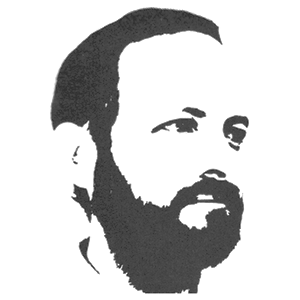
‘A Deepness in the Sky‘ is a novel by mathematician and science fiction author Vernor Vinge. Published in 1999, the novel is a loose prequel (set twenty thousand years earlier) to his 1992 novel ‘A Fire Upon the Deep’ (set thousands of years into the future). The title is coined by one of the story’s main characters in a debate, in a reference to the hibernating habits of his species and to the vastness of space.
The plot begins with the discovery of an intelligent alien species on a planet orbiting an anomalous star, dubbed ‘On/Off’ because for 215 of every 250 years it is dormant, releasing almost no energy. During this period, the planet freezes and its fauna go into hibernation.
read more »
Posted in Language, Science |
Leave a Comment »
June 14, 2013

‘Tunnel Through the Deeps‘ (also published as ‘A Transatlantic Tunnel, Hurrah!’) is a 1972 alternate history/science fiction novel by Harry Harrison. It was serialized in ‘Analog’ magazine beginning in the April 1972 issue.
The title refers to the construction of a submerged floating-tube pontoon bridge/tunnel across the Atlantic Ocean.
read more »
Posted in Language, Technology, World |
Leave a Comment »
June 14, 2013

‘Catching Fire: How Cooking Made Us Human‘ (2009) is a book by British primatologist Richard Wrangham forwarding the hypothesis that cooking food was an essential element in the physiological evolution of human beings.
Humans are the only species that cook their food and Wrangham argues Homo erectus emerged about two million years years ago as a result of this unique trait. Cooking had profound evolutionary effect because it increased food efficiency by permitting human ancestors to spend less time foraging, chewing, and digesting. H. erectus developed via a smaller, more efficient digestive tract which freed up energy to enable larger brain growth.
read more »
Posted in Food, Health, Science |
1 Comment »
June 14, 2013
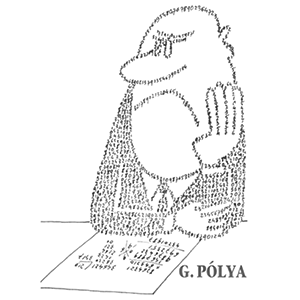
How to Solve It (1945) is a small volume by mathematician George Pólya describing methods of problem solving.
He suggests four steps when solving a mathematical problem: 1) First, understand the problem; 2) After understanding, then make a plan; 3) Carry out the plan; and; 4) Look back on your work — how could it be better? If this technique fails, Pólya advises: ‘If you can’t solve a problem, then there is an easier problem you can solve: find it.’ Or: ‘If you cannot solve the proposed problem, try to solve first some related problem. Could you imagine a more accessible related problem?’
read more »
Posted in Education, Language, Science |
Leave a Comment »
June 14, 2013

Thinking, Fast and Slow is a 2011 book by Nobel Memorial Prize winner in Economics Daniel Kahneman which summarizes research that he conducted over decades, often in collaboration with cognitive scientist Amos Tversky. It covers all three phases of his career: his early days working on cognitive biases (unknowingly using poor judgement), prospect theory (the tendency to base decisions on the potential value of losses and gains rather than the final outcome), and his later work on happiness (e.g. positive psychology).
The book’s central thesis is a dichotomy between two modes of thought: System 1 is fast, instinctive and emotional; System 2 is slower, more deliberative, and more logical. The book delineates cognitive biases associated with each type of thinking, starting with Kahneman’s own research on loss aversion (the tendency to favor avoiding losses over acquiring gains). From framing choices (the tendency to avoid risk when a positive context is presented and seek risks when a negative one is) to attribute substitution (using an educated guess to fill in missing information), the book highlights several decades of academic research to suggest that people place too much confidence in human judgment.
read more »
Posted in Health, Language, Science |
Leave a Comment »
June 10, 2013

‘Going Clear: Scientology, Hollywood, and the Prison of Belief’ is a 2013 non-fiction book about Scientology written by American journalist Lawrence Wright. The book contains interviews from current and former Scientologists, the history of founder L. Ron Hubbard and current leader David Miscavige, and analysis of the relationships of Tom Cruise and John Travolta to the organization.
In an interview with the ‘New York Times’ Wright said that ‘There are a lot of people out there who were very high up in the church and know a lot about it who have become outspoken…I’m very lucky to come along at a time when a lot of these people are ready to talk.’ Wright also disclosed that he has received ‘innumerable’ letters threatening legal action from lawyers representing the church and celebrities who belong to it.
read more »
Posted in Language, Money, Philosophy |
Leave a Comment »
May 24, 2013

‘The Ethical Slut: A Guide to Infinite Sexual Possibilities’ is a 1997 non-fiction book written by family therapist Dossie Easton and sex educator Janet Hardy (given as pseudonym Catherine A. Liszt for the book’s first edition).
The book discusses consensual non-monogamy as a lifestyle, and provides practical guidance on how such long-term relationships work and are put into practice.
read more »
Posted in Health, Language, Sex |
1 Comment »
May 20, 2013
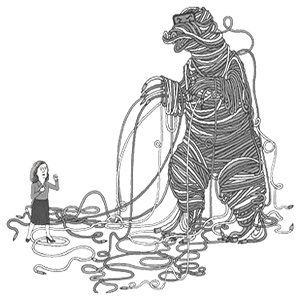
‘Captive Audience: the Telecom Industry and Monopoly Power in the New Gilded Age’ is an American non-fiction book by legal expert Susan P. Crawford. It describes high-speed internet access in the United States as essential (like electricity) but currently too slow and too expensive. To ensure national competitiveness ‘most Americans should have access to reasonably priced 1-Gb symmetric fiber-to-the-home networks.’
Crawford explains why the United States should revise national policy to increase competition in a market currently dominated by Comcast, Verizon Wireless, AT&T, and Time Warner Cable. Meanwhile towns and cities should consider setting up local networks after the example of pioneers such as Lafayette, Louisiana’s LUSFiber and Chattanooga, Tennessee’s EPB.
Posted in Language, Money, Technology |
2 Comments »


 The Daily Omnivore