May 14, 2013

‘The Gift of Fear‘ (1997) is a nonfiction self-help book by security consultant Gavin de Becker. The book provides strategies to help readers avoid trauma and violence by teaching them various warning signs and precursors to violence.
De Becker’s book presents a paradox of genre: described as a ‘how-to book that reads like a thriller.’ By finding patterns in stories of violence and abuse, de Becker seeks to highlight the inherent predictability of violence.
read more »
Posted in Health, Language |
Leave a Comment »
May 7, 2013

Walden Two is a utopian novel written by behavioral psychologist B. F. Skinner, first published in 1948. In its time, it could have been considered to be science fiction, since science-based methods for altering people’s behavior did not yet exist. (Such methods exist now and are known as applied behavior analysis, formerly behavior modification).
‘Walden Two’ is controversial because it includes a rejection of free will, the proposition that human behavior is controlled by a non-corporeal entity, such as a spirit or a soul. The book embraces the proposition that the behavior of organisms, including humans, is determined by genetic and environmental variables, and that systematically altering environmental variables can generate a sociocultural system that very closely approximates utopia.
read more »
Posted in Language, Politics, Science |
Leave a Comment »
April 26, 2013
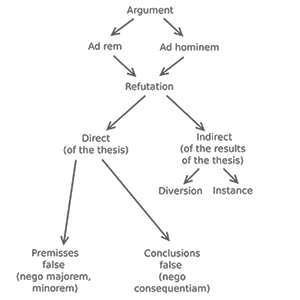
‘The Art of Being Right: 38 Ways to Win an Argument’ (1831) is an acidulous (biting) treatise written by the German philosopher Arthur Schopenhauer in sarcastic deadpan. He examines a total of thirty-eight methods of showing up one’s opponent in a debate. Schopenhauer introduces his essay with the idea that philosophers have concentrated in ample measure on the rules of logic, but have not (especially since the time of Immanuel Kant) engaged with the darker art of the dialectic, of controversy.
Whereas the purpose of logic is classically said to be a method of arriving at the truth, dialectic, says Schopenhauer, ‘…on the other hand, would treat of the intercourse between two rational beings who, because they are rational, ought to think in common, but who, as soon as they cease to agree like two clocks keeping exactly the same time, create a disputation, or intellectual contest.’
read more »
Posted in Humor, Language, Politics |
1 Comment »
April 24, 2013

The Relativity of Wrong is a 1988 essay collection by Isaac Asimov, which takes its title from the most ambitious essay it contains. Like most of the essays Asimov wrote for ‘F&SF Magazine,’ each one in ‘The Relativity of Wrong’ begins with an autobiographical anecdote which serves to set the tone.
Several of the essays form a sequence explaining the discovery and uses of isotopes; the introductory passages in these essays recount Asimov’s not particularly pleasant personal relationship with physical chemist Harold C. Urey, whom he met at Columbia University.
read more »
Posted in Humor, Language, Science |
Leave a Comment »
April 24, 2013

‘Being and Nothingness: An Essay on Phenomenological Ontology’ is a 1943 book by philosopher Jean-Paul Sartre. Its main purpose is to assert the individual’s existence as prior to the individual’s essence. Sartre’s overriding concern was to demonstrate that free will exists.
While a prisoner of war in 1940 and 1941, Sartre read Martin Heidegger’s ‘Being and Time,’ an ontological investigation through the lens and method of Husserlian phenomenology (Husserl was Heidegger’s teacher). Reading ‘Being and Time’ initiated Sartre’s own inquiry leading to the publication in 1943 of ‘Being and Nothingnes’s whose subtitle is ‘A Phenomenological Essay on Ontology.’
read more »
Posted in Language, Philosophy |
1 Comment »
April 15, 2013
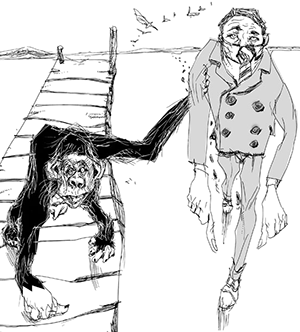
‘The Signifying Monkey: A Theory of African-American Literary Criticism’ is a work of literary criticism and theory by American scholar Henry Louis Gates Jr. first published in 1988. The book traces the folkloric origins of the African-American cultural practice of ‘signifying” and uses the concept to analyze the interplay between texts of prominent African American writers, specifically Richard Wright, Ralph Ellison, Zora Neale Hurston and Ishmael Reed.
Signifyin(g) is closely related to double-talk and trickery of the type used by the Monkey of these narratives, but, as Gates himself admits, ‘It is difficult to arrive at a consensus of definitions of signifyin(g).’ Bernard W. Bell defines it as an ‘elaborate, indirect form of goading or insult generally making use of profanity.’ Roger D. Abrahams writes that to signify is ‘to imply, goad, beg, boast by indirect verbal or gestural means.’ Signifyin(g) is a homonym with the concept of signification put forth by Semiotician Ferdinand de Saussure wherein the signifier (sound image) interacts with the signified (concept) to form one whole linguistic sign. Gates plays off this homonym and incorporates the linguistic concept of signifier and signified with the vernacular concept of signifyin(g).
read more »
Posted in Humor, Language, Politics |
Leave a Comment »
April 9, 2013

Building Stories is a 2012 graphic novel by American cartoonist Chris Ware. The unconventional work is made up of fourteen printed works—cloth-bound books, newspapers, broadsheets and flip books—packaged in a boxed set.
The work took a decade to complete, and was published by Pantheon Books. The intricate, multilayered stories pivot around an unnamed female protagonist with a missing leg. It mainly focuses on her time in a three-story brownstone apartment building in Chicago, but follows her later in her life as a mother. The parts of the work can be read in any order.
read more »
Posted in Art, Language |
Leave a Comment »
April 3, 2013
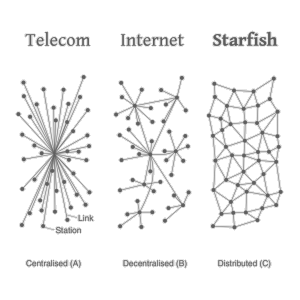
‘The Starfish and the Spider: The Unstoppable Power of Leaderless Organizations’ is a 2006 book by Ori Brafman (author of the 2010 book ‘Click: The Magic of Instant Connections’) and Rod Beckstrom (President of ICANN); it is an exploration of the implications of the recent rise of decentralized organizations such as Wikipedia, Grokster and YouTube.
The book contrasts them to centralized organizations, such as Encyclopædia Britannica. The spider and starfish analogy refers to the contrasting biological nature of the respective organisms, starfish have a decentralized neural structure permitting regeneration, whereas spiders have in a hierarchical nervous system.
read more »
Posted in Language, Money, Technology |
Leave a Comment »
March 31, 2013

‘Pirates and Emperors, Old and New: International Terrorism in the Real World’ is a book by political theorist Noam Chomsky, titled after an observation by St. Augustine in ‘City of God,’ proposing that what governments coin as ‘terrorism’ in the small simply reflects what governments utilize as ‘warfare’ in the large. Yet, governments coerce their populations to denounce the former while embracing the latter.
In the ‘City of God,’ St. Augustine tells the story of a pirate captured by Alexander the Great, who asked him ‘how dare he molest the sea.’ ‘How dare you molest the whole world’ the pirate replied. ‘Because I do it with a little ship only, I am called a thief; you, doing it with a great navy, are called an emperor.’ The book inspired a humorous short web animation titled ‘Pirates & Emperors (or, Size Does Matter),’ illustrating Chomsky’s thesis.
Posted in Money, Politics, War |
Leave a Comment »
March 29, 2013

The American Monomyth is a 1977 book by Robert Jewett and John Shelton Lawrence arguing for the existence and cultural importance of an ‘American Monomyth,’ a variation on the classical monomyth (the hero’s journey, a theme found in narratives from around the world) as proposed by Joseph Campbell. The hero ventures from the normal world into a supernatural one, winning a decisive victory there and returning with a ‘boon.’
In contrast, Jewett and Lawrence define the American monomyth as: ‘A community in a harmonious paradise is threatened by evil; normal institutions fail to contend with this threat; a selfless superhero emerges to renounce temptations and carry out the redemptive task; aided by fate, his decisive victory restores the community to its paradisiacal condition; the superhero then recedes into obscurity.’
Posted in Language, Politics, World |
Leave a Comment »
March 29, 2013

Superfolks is a 1977 novel by Robert Mayer, which satirizes the superhero and comic book genres, and was aimed at a more adult audience than those genres typically attracted. Superfolks examines comic book conventions and clichés from a more serious, ‘literary’ perspective.
The novel was influential on many writers of superhero comic books in the 1980s and 1990s, notably Alan Moore and Kurt Busiek. Although the book’s pop culture references clearly date it to the 1970s, its influence on the deconstruction of the superhero genre is still felt through Moore’s ‘Watchmen,’ ‘Marvelman,’ and ‘Superman: Whatever Happened to the Man of Tomorrow?’
read more »
Posted in Humor, Language |
Leave a Comment »
March 23, 2013

The Bell Jar is American writer and poet Sylvia Plath’s only novel, which was originally published under the pseudonym ‘Victoria Lucas’ in 1963. The novel is semi-autobiographical with the names of places and people changed.
The book is often regarded as a roman à clef (real events disguised as fiction), with the protagonist’s descent into mental illness paralleling Plath’s own experiences with what may have been clinical depression. Plath committed suicide a month after its first UK publication. The novel was published under her name for the first time in 1967 and was not published in the United States until 1971, pursuant to the wishes of Plath’s mother and her husband Ted Hughes.
read more »
Posted in Death, Health, Language |
Leave a Comment »


 The Daily Omnivore