November 7, 2012
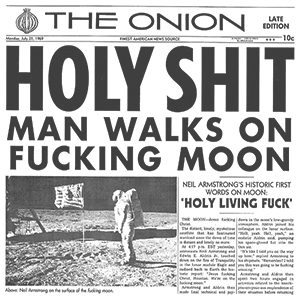
‘Our Dumb Century: The Onion Presents 100 Years of Headlines from America’s Finest News Source’ is a satirical humor book written by the staff of ‘The Onion’ and published in 1999. The chief editor of the book was Scott Dikkers, with specific sections edited by Robert D. Siegel, Maria Schneider, and John Krewson.
The book, spun off from ‘The Onion’ weekly-newspaper format of dryly satirizing current events, features mocked-up newspaper front pages from the entire 20th century, presented as though ‘The Onion’ had been continuously in print since before 1900. The publication of the book is in itself a parody of other end of the century retrospectives that had been published in 1999, notably ‘Time’ magazine and ‘The New York Times.’
read more »
Posted in Humor, Language, Politics |
Leave a Comment »
November 4, 2012
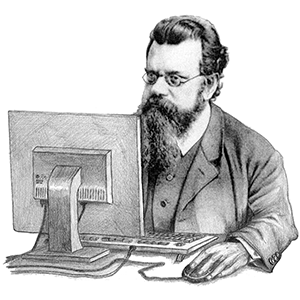
Night Thoughts of a Classical Physicist is a 1918 novel by historian of science Russell McCormmach, which explores the world of physics in the early 20th century—including the advent of modern physics and the role of physicists in World War I—through the recollections of the fictional Viktor Jakob.
Jakob is an old German physicist who spent most of his career during the period of classical physics, a paradigm being confronted by the rapid and radical developments of relativistic physics of Albert Einstein in 1900s and 1910s. This conflict allows for extensive examination of the various tensions placed on Jakob by the academic environment, the German academic system and the changing academic culture of the early 20th century.
read more »
Posted in Language, Science |
Leave a Comment »
November 2, 2012

The Structure of Scientific Revolutions by Thomas S. Kuhn, is an analysis of the history of science, published in 1962. Its publication was a landmark event in the history, philosophy, and sociology of scientific knowledge and it triggered an ongoing worldwide assessment and reaction in—and beyond—those scholarly communities. In this work, Kuhn challenged the then prevailing view of progress in ‘normal science’ (the routine work of scientists experimenting within a paradigm).
Scientific progress had been seen primarily as ‘development-by-accumulation’ of accepted facts and theories. Kuhn argued for an episodic model in which periods of such conceptual continuity in normal science were interrupted by periods of revolutionary science. During revolutions in science the discovery of anomalies leads to a whole new paradigm that changes the rules of the game and the ‘map’ directing new research, asks new questions of old data, and moves beyond the puzzle-solving of normal science.
read more »
Posted in Language, Philosophy, Science |
1 Comment »
November 1, 2012
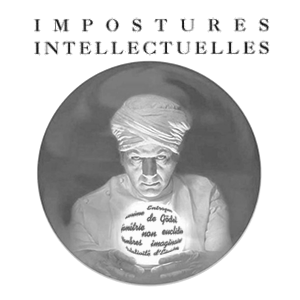
‘Fashionable Nonsense: Postmodern Intellectuals’ Abuse of Science’ (French: ‘Impostures Intellectuelles’) is a 1997 book by NYU physics professor Alan Sokal and Belgian theoretical physicist Jean Bricmont. Sokal is best known for the Sokal Affair, in which he submitted a deliberately absurd article to ‘Social Text,’ a critical theory journal, and was able to get it published. The English editions were revised for greater relevance to debates in the English-speaking world.
As part of the so-called ‘science wars’ (a series of intellectual exchanges, between scientific realists and postmodernist critics), the book criticizes postmodernism in academia for what it claims are misuses of scientific and mathematical concepts in postmodern writing. According to some reports, the response within the humanities was ‘polarized.’ Critics of Sokal and Bricmont charge that they lack understanding of the writing they were criticizing. Responses from the scientific community were more supportive.
read more »
Posted in Language, Philosophy, Science |
Leave a Comment »
October 29, 2012

Finite and Infinite Games is a book by religious scholar James P. Carse. With this philosophy text, Carse demonstrates a way of looking at actions in life as being a part of at least two types of what he describes as ‘games,’ finite and infinite. Both games are played within rules, as agreed upon by the participants; however, the meaning of the rules are different between the two types of games.
The book stresses a non-serious (or ‘playful’) view of life on the part of ‘players,’ referring to their choices as ‘moves,’ and societal constructs and mores as ‘rules’ and ‘boundaries.’ He regularly employs familiar terms in specialized ways, but casts them as associated with finite or infinite play & players. Boundaries are ‘rules’ that one must stay within when playing a finite game, in contrast with horizons, which move with the player, and are constantly changing as he or she ‘plays.’ In short, a finite game is played with the purpose of winning (thus ending the game), while an infinite game is played with the purpose of continuing the play.
read more »
Posted in Games, Philosophy |
1 Comment »
October 29, 2012
‘Everything Bad Is Good for You: How Today’s Popular Culture Is Actually Making Us Smarter’ is a non-fiction book written by American popular science author Steven Berlin Johnson.
Published in 2005, it is based upon Johnson’s theory that popular culture – in particular television shows and video games – has grown more complex and demanding over time and is improving the society within terms of intelligence and idea. The book’s claims, especially related to the proposed benefits of television, drew media attention.
read more »
Posted in Games, Health, Technology |
2 Comments »
October 28, 2012
‘Understanding Media: The Extensions of Man’ is a 1964 book by Marshall McLuhan. A pioneering study in media theory, it proposes that media themselves, not the content they carry, should be the focus of study. McLuhan suggests that a medium affects the society in which it plays a role not by the content delivered through it, but by the characteristics of the medium itself.
McLuhan pointed to the light bulb as an example. A light bulb does not have content in the way that a newspaper has articles or a television has programs, yet it is a medium that has a social effect; that is, a light bulb enables people to create spaces during nighttime that would otherwise be enveloped by darkness. He describes the light bulb as a medium without any content. McLuhan states that ‘a light bulb creates an environment by its mere presence.’
read more »
Posted in Education, Language, Technology |
Leave a Comment »
October 28, 2012

‘The Gutenberg Galaxy: The Making of Typographic Man’ is a book by Marshall McLuhan, in which he analyzes the effects of mass media, especially the printing press, on European culture and human consciousness.
It popularized the term ‘global village,’ which refers to the idea that mass communication allows a village-like mindset to apply to the entire world; and ‘Gutenberg Galaxy,’ which we may regard today to refer to the accumulated body of recorded works of human art and knowledge, especially books. McLuhan studies the emergence of what he calls ‘Gutenberg Man,’ the subject produced by the change of consciousness wrought by the advent of the printed book.
read more »
Posted in Language, Technology, World |
Leave a Comment »
October 28, 2012
‘Vril, the Power of the Coming Race’ is an 1871 novel by Edward Bulwer-Lytton, originally printed as ‘The Coming Race.’ Many readers believe that its account of a superior subterranean master race and the energy-form called ‘Vril’ is accurate, to the extent that some theosophists accepted the book as truth. A popular book, ‘The Morning of the Magicians’ (1960) suggested that a secret Vril Society existed in pre-Nazi Berlin.
The novel centers on a young, independently wealthy traveler (the narrator), who accidentally finds his way into a subterranean world occupied by beings who seem to resemble angels and call themselves Vril-ya. The hero soon discovers that the Vril-ya are descendants of an antediluvian civilization who live in networks of subterranean caverns linked by tunnels.
read more »
Posted in Philosophy, Politics, War |
Leave a Comment »
October 24, 2012

‘The Influence of Sea Power Upon History: 1660-1783′ is a history of naval warfare written in 1890 by US Navy flag officer Alfred Thayer Mahan. It details the role of sea power throughout history and discusses the various factors needed to support and achieve sea power, with emphasis on having the largest and most powerful fleet.
Scholars consider it the single most influential book in naval strategy; its policies were quickly adopted by most major navies, ultimately causing the World War I naval arms race. Mahan formulated his concept of sea power while reading a history book in Lima, Peru. The book was published by Mahan while he was President of the US Naval War College, and was a culmination of his ideas regarding naval warfare.
read more »
Posted in War, World |
Leave a Comment »
October 21, 2012

‘Cognitive Surplus: Creativity and Generosity in a Connected Age’ is a 2010 non-fiction book by Clay Shirky. The book is an indirect sequel to Shirky’s ‘Here Comes Everybody,’ which covered the impact of social media. The book’s central theme is that people are now learning how to use more constructively the free time afforded to them since the 1940s for creative acts rather than consumptive ones, particularly with the advent of online tools that allow new forms of collaboration.
It goes on to catalog the means and motives behind these new forms of cultural production, as well as key examples. While Shirky acknowledges that the activities that we use our cognitive surplus for may be frivolous (such as creating ‘LOLcats’), the trend as a whole is leading to valuable and influential new forms of human expression. He also asserts that even the most inane forms of creation and sharing are preferable to the hundreds of billions of hours spent consuming television.
read more »
Posted in Language, Money, Technology |
Leave a Comment »
October 21, 2012

‘Here Comes Everybody: The Power of Organizing Without Organizations’ is a 2008 book by Clay Shirky, which evaluates the effect of the Internet on modern group dynamics. The author considers examples such as ‘Wikipedia’ and ‘MySpace’ in his analysis, and says his book is about ‘what happens when people are given the tools to do things together, without needing traditional organizational structure.’
The title of the work alludes to ‘HCE,’ a recurring and central figure in James Joyce’s ‘Finnegans Wake.’ In the book, Shirky recounts how social tools such as blogging software like WordPress and Twitter, file sharing platforms like Flickr, and online collaboration platforms like Wikipedia support group conversation and group action in a way that previously could only be achieved through institutions.
read more »
Posted in Language, Technology |
Leave a Comment »


 The Daily Omnivore