December 22, 2010
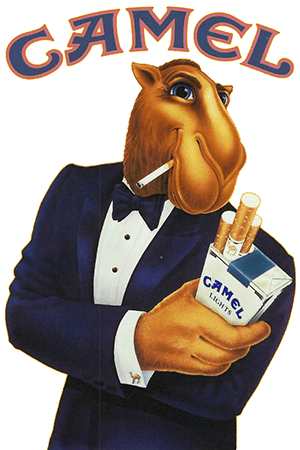
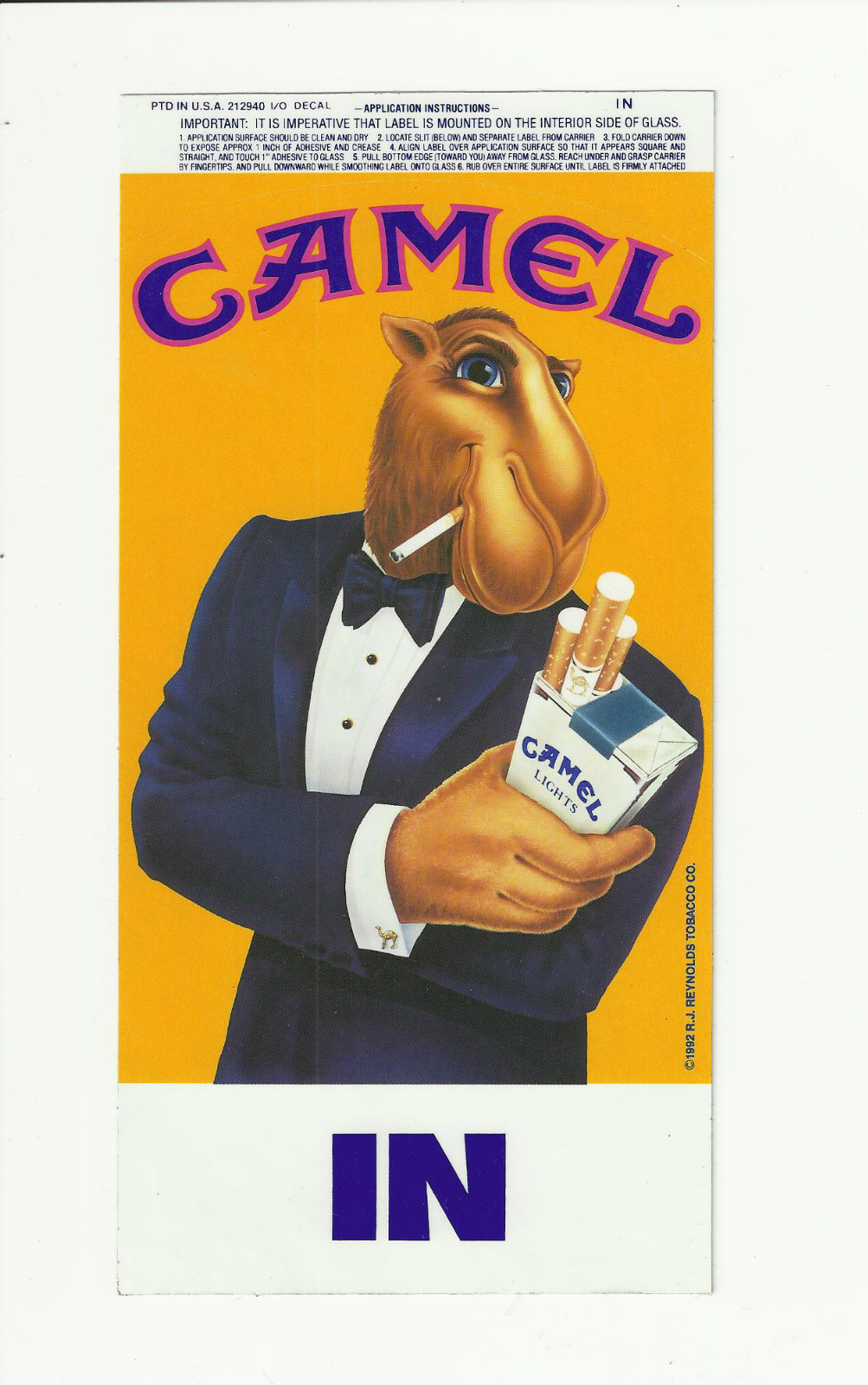
Joe Camel (officially Old Joe) was the advertising mascot for Camel cigarettes from 1987 – 1997, appearing in magazine advertisements, billboards, and other print media. The U.S. marketing team of R. J. Reynolds, looking for an idea to promote Camel’s 75th anniversary, re-discovered Joe in the company’s archives in the late 1980s. The caricatured camel was created in 1974 by a British artist, Billy Coulton, for a French advertising campaign that subsequently ran in other countries in the 1970s.
In 1991, the ‘Journal of the American Medical Association’ published a study showing that by age six nearly as many children could correctly respond that ‘Joe Camel’ was associated with cigarettes as could respond that the ‘Disney Channel’ logo was associated with Mickey Mouse, and alleged that the ‘Joe Camel’ campaign was targeting children, despite R. J. Reynolds’ contention that the campaign had been researched only among adults and was directed only at the smokers of other brands.
read more »
Posted in Drugs, Money, Politics |
Leave a Comment »
December 19, 2010

Captain Harlock is a fictional character created by manga artist Leiji Matsumoto. Harlock is the archetypical romantic hero, a space pirate with an individualist philosophy of life. He is as noble as he is taciturn and rebellious; he stoically fights against totalitarian regimes, whether they be earthborn or alien.
The character was introduced in Adventures of a Honeybee (1953), but did not debut as a lead character until 1978’s Space Pirate Captain Harlock. Since then, he has appeared in numerous animated TV series and films, the latest of which re-imagines him as an Iron Cross fighter pilot and a gunslinger in the American Old West.
Posted in Art, World |
Leave a Comment »
November 16, 2010

Kilgore Trout is a fictional character created by author Kurt Vonnegut. He was originally created as a fictionalized version of author Theodore Sturgeon (Vonnegut’s colleague in the genre of science fiction), although Trout’s consistent presence in Vonnegut’s works has also led critics to view him as the author’s own alter ego.
Trout, who has supposedly written over 117 novels and over 2000 short stories, is usually described as an unappreciated science fiction writer whose works are used only as filler material in pornographic magazines. However, he does have at least three fans: Eliot Rosewater and Billy Pilgrim—both Vonnegut characters—have a near-complete collection of Trout’s work or have read most of his work.
read more »
Posted in Art, Humor |
Leave a Comment »
November 4, 2010

Master Shake is a fictional character on Adult Swim’s television series, Aqua Teen Hunger Force. Like the other main characters, Meatwad and Frylock, Master Shake originally appeared in the Space Ghost Coast to Coast episode ‘Baffler Meal,’ and then made his first official appearance in the show’s first episode, ‘Rabbot’ Voice actor Dana Snyder provides Shake’s voice throughout the entire series. Master Shake lives next door to Carl Brutananadilewski in a suburban neighborhood in New Jersey with his roommates, Meatwad and Frylock. He spends most of his time watching TV, causing mischief, talking about women, sex, breasts, and porn.
He is also fond of playing cruel pranks on Meatwad. In ‘Video Ouija’ Shake commits suicide just so he can haunt Meatwad through his new video game. In ‘Reedickyoulus’ Shake kills Meatwad’s innocent kitten, in a microwave, just to upset Meatwad. His behavior is highly irregular, blaming others for his numerous mistakes, antagonizing Meatwad for pleasure, putting material goods above necessities, concocting poor lies to cover and justify his actions even when caught red-handed, and having an overall lack of empathy and regard for the safety of others. Shake has no official power, except his ability to shoot a substance from his straw, and almost every thing he throws to the ground explodes.
Posted in Art, Humor |
Leave a Comment »
October 18, 2010
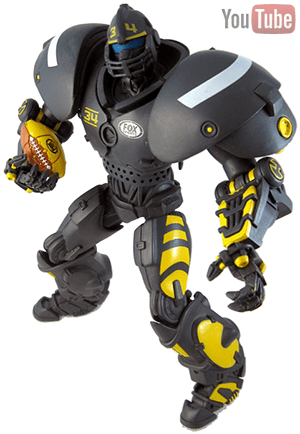
‘Cleatus the Robot,’ is the official mascot of Fox NFL Sunday, named by a viewer during a contest in the winter of 2007 in which fans were able to submit entries as to what they thought the robot’s name should be. Cleatus made his first appearance during the 2005-2006 NFL season, but was not used regularly until the following season. Cleatus mainly appears during the intro sequence of the show as well as brief commercials for movies and TV shows.
In commercials he commonly gets attacked by a CGI character from whatever the advertisement is about. He has thus far been attacked by Iron Man, a dragon, and a Terminator robot. Cleatus is also known to hop on two feet, play the electric guitar, shake out his limbs, and do dance moves such as the swim and the electric slide. In response to Cleatus, NASCAR on Fox created ‘Digger,’ an animated gopher mascot.
Posted in Games, Humor, Money |
Leave a Comment »
October 9, 2010

Abelardo is a green, full-bodied Muppet parrot who appears on Plaza Sésamo, the Mexican co-production of Sesame Street. He joined the cast in 1981 and soon became the show’s most recognizable figure. Abelardo also guest starred on the American Sesame Street on May 5, 1997 as part of the Cinco de Mayo celebration. On the Mexican show, he occasionally keeps contact with his cousin Big Bird via letters and video-chatting.
His character was originally a a tall orange-and-yellow scaled dragon which had a soft, gentle voice and a very particular way of talking, making pauses after every sentence. His favorite treat were pumpkin seeds or ‘semillas de calabaza’ which in Mexico are a very popular snack, also known as ‘Pepitas.’ In later seasons Abelardo the Dragon was replaced by Serapio Montoya, a large parrot-like character with a strong resemblance to Big Bird, of whom he is a cousin. However, children and others continued to refer to Serapio as ‘Abelardo’ and therefore his name was later changed to Abelardo Montoya. The reason the dragon character was dismissed when the series was re-launched in 1982, remains unexplained.
Posted in Education, World |
Leave a Comment »
September 20, 2010
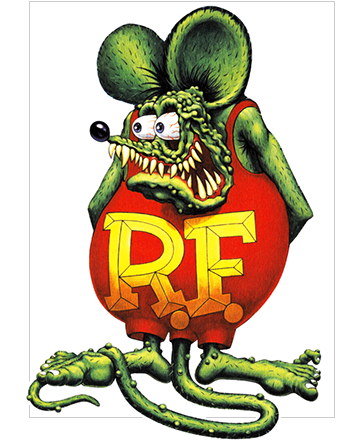
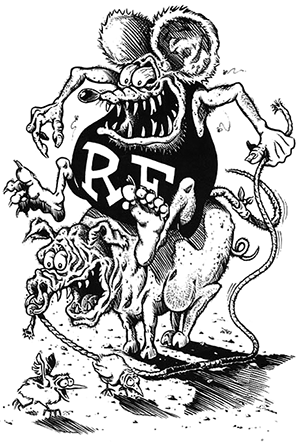
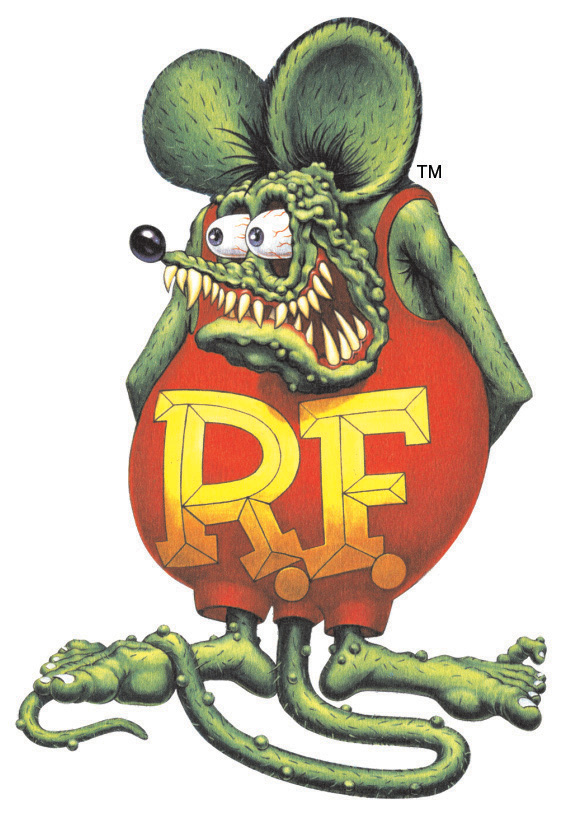
Rat Fink is one of the several hot-rod characters created by artist Ed ‘Big Daddy’ Roth. Roth’s hatred for Mickey Mouse led him to draw the original Rat Fink, who came to symbolize the hot-rod and ‘Kustom Kulture’ scene of the 1950s and 1960s. Although Detroit native Stanley Mouse is credited with creating the so-called ‘Monster Hot Rod’ art form, Roth is accepted as the individual who popularized it. The Rat Fink is a green, depraved-looking mouse with bulging, bloodshot eyes, an oversized mouth with yellowed, narrow teeth, and a red T-shirt with yellow ‘R.F.’ on it. Other artists associated with Roth also drew the character, including Steve Fiorilla, who illustrated Roth’s catalogs.
A Rat Fink revival in the late 1980s and the 1990s centered around the West Coast grunge/punk rock movements. The term ‘fink’ was originally underworld slang for an informer, comparable to ‘stool pigeon.’ It is also thought to have been a toned-down form of ‘ratfucking,’ a slang term for playing dirty tricks.
Posted in Art, Humor |
Leave a Comment »
September 17, 2010


Mars Blackmon was a fictional character from the 1986 film ‘She’s Gotta Have It.’ He is also the alter-ego of filmmaker Spike Lee. In the film, he was a ‘Brooklyn-loving,’ die-hard New York Knicks fan. During the late 1980s and early 1990s, Blackmon became the primary pitchman in Nike commercials for Air Jordans, the basketball shoes worn by Michael Jordan. In these commercials, Mars Blackmon popularized the phrases ‘Is it the Shoes? Is it the Shoes? Is it the Shoes? … Money, it’s gotta be the shoes.’
Posted in Games, Humor, Money |
Leave a Comment »
September 13, 2010
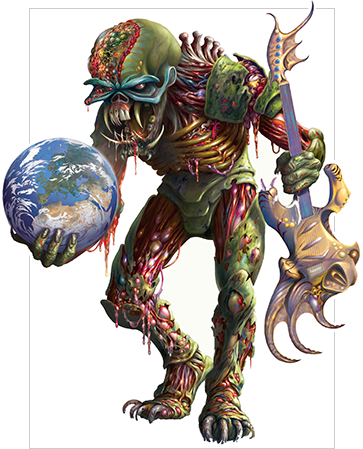
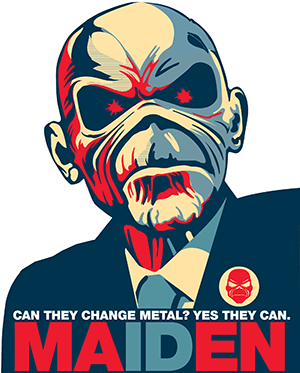
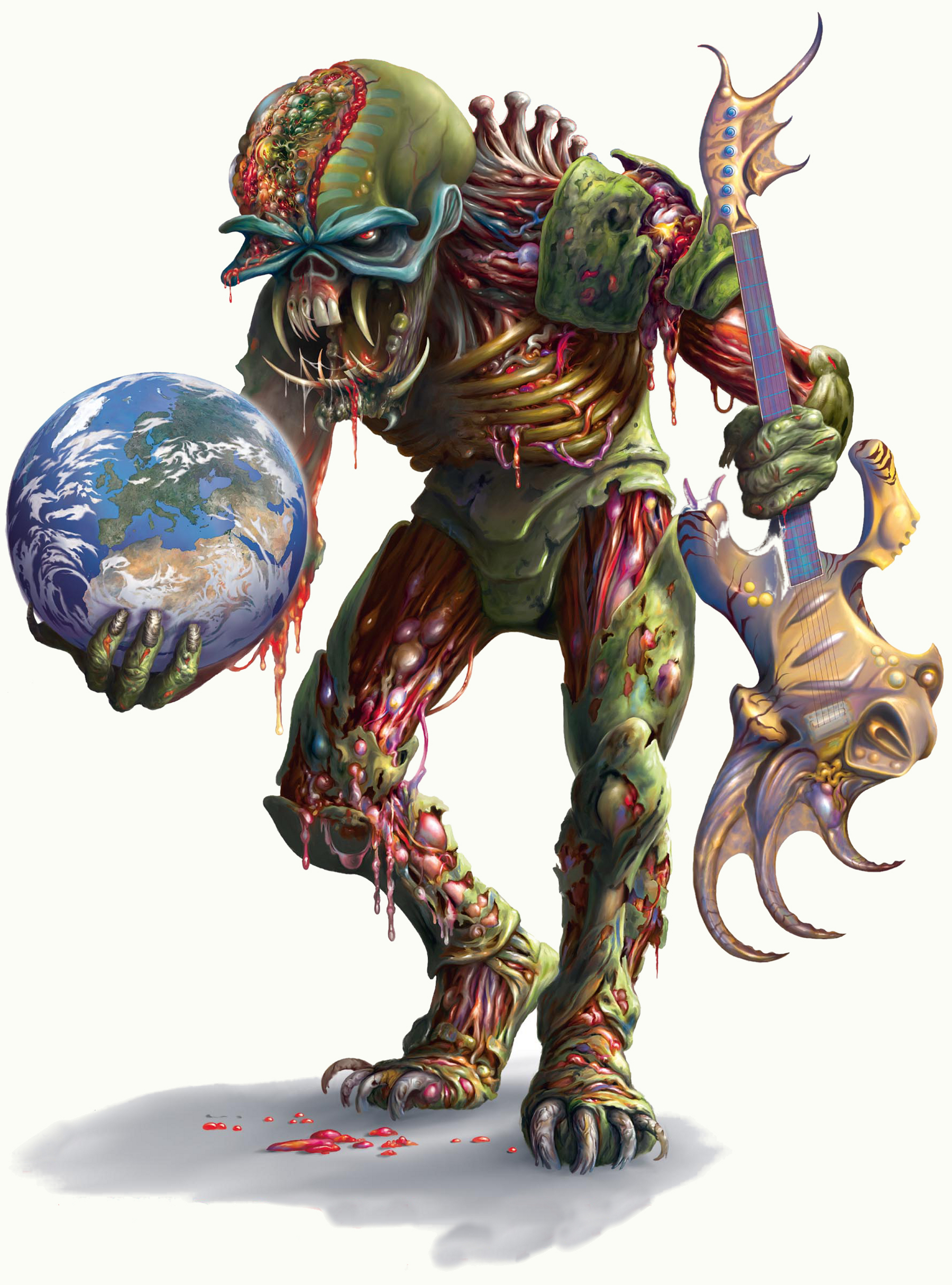
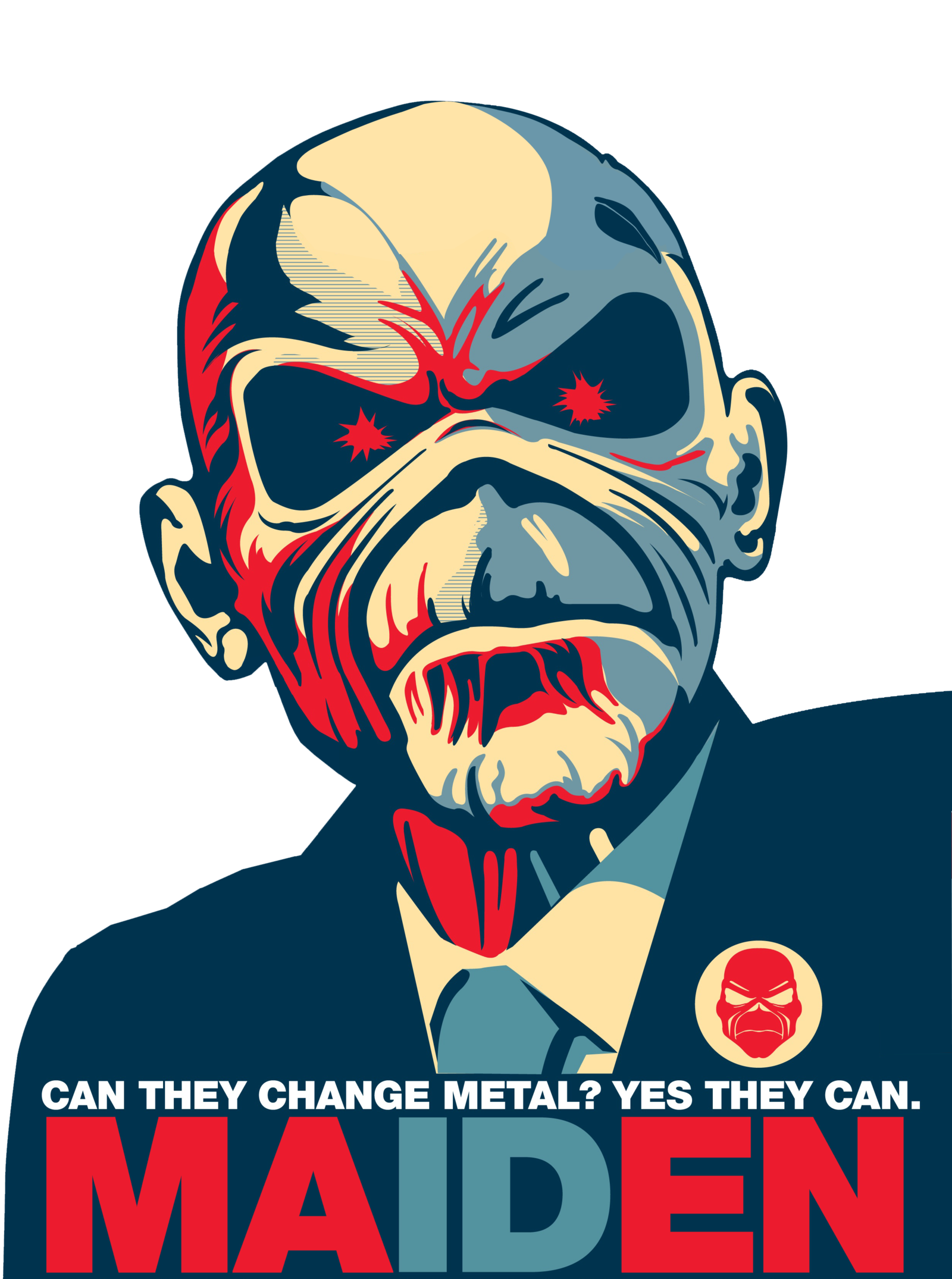
Eddie the Head is the mascot for the British heavy metal band Iron Maiden. He is a perennial fixture in the album cover art, as well as ever present in their live shows.The character was created by artist Derek Riggs. Riggs claimed that the design was based on a Japanese head he saw on a television documentary, hanging on the side of a burned out tank at the Matanikau River during the Battle for Henderson Field, October 24, 1942. The original Eddie was just a theatrical mask. It was connected to a pump that would eject various kinds of liquids, from food dye to paint, and would drool over Doug Sampson who was the drummer at the time.
The name originates from an old joke: Eddie the head was born with no body, no arms, and no legs. All he had was a head. But despite this major birth defect, his parents still loved him very much. So on his sixteenth birthday, his parents found a doctor that could surgically give Eddie a body. When the parents got home, they couldn’t wait to tell him that he could finally have a body and be like other normal people. When Eddie got there, they were really excited and said, ‘Have we got a surprise for you. It’s the best present ever!’ And Eddie said, ‘Oh no, not another f*****’ hat!’
Posted in Art, Humor |
Leave a Comment »
September 12, 2010
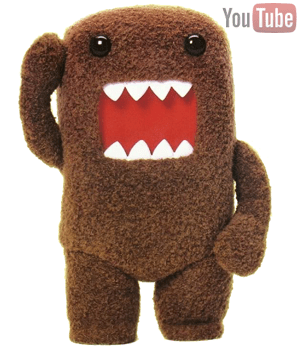

Domo Kun is the official mascot of NHK television station, appearing in several 30 second stop-motion interstitial sketches shown as station identification during shows. NHK is Japan’s national public broadcasting organization. The name ‘Domo’ was acquired during the second episode of his show in which a TV announcer said, ‘dōmo, konnichiwa,’ which is a greeting meaning something along the lines of, ‘Well, hello there!” but which can also be interpreted as ‘Hello, Domo!’ The suffix ‘kun’ is a Japanese honorific often used with young males.
Posted in Art, Humor, World |
Leave a Comment »
September 10, 2010
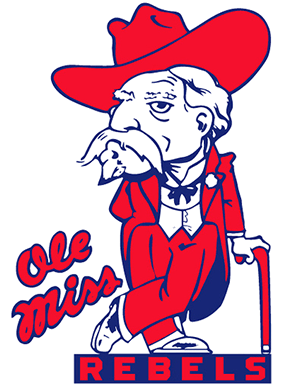
Colonel Reb is the traditional sporting mascot of Ole Miss Rebels, the collegiate athletic teams of the University of Mississippi. Designed in the 1930s, the figure served as the teams’ official or near-official mascot from 1979 until 2003. To some people, he resembles a white antebellum plantation owner, but to others, he simply resembles the ideal of the ‘Southern gentleman’ of the Antebellum Age.
In 2003, the administration eliminated Colonel Reb from the sidelines at Ole Miss athletic events as the on-the-field mascot, though he was allowed at tailgating and other unofficial university functions. In a 2010 vote, Ole Miss students decided to choose a new mascot for the school. An internet campaign to replace Colonel Reb with fictional Star Wars character Admiral Ackbar has gained popular support.
Posted in Education, Games, Politics |
Leave a Comment »
August 25, 2010
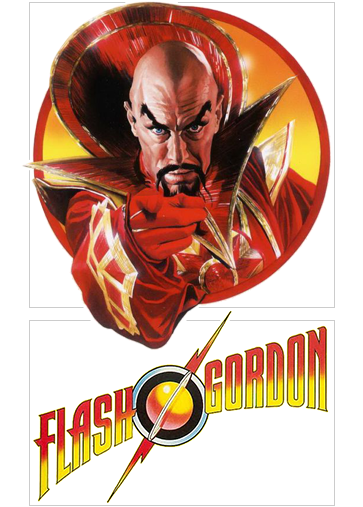
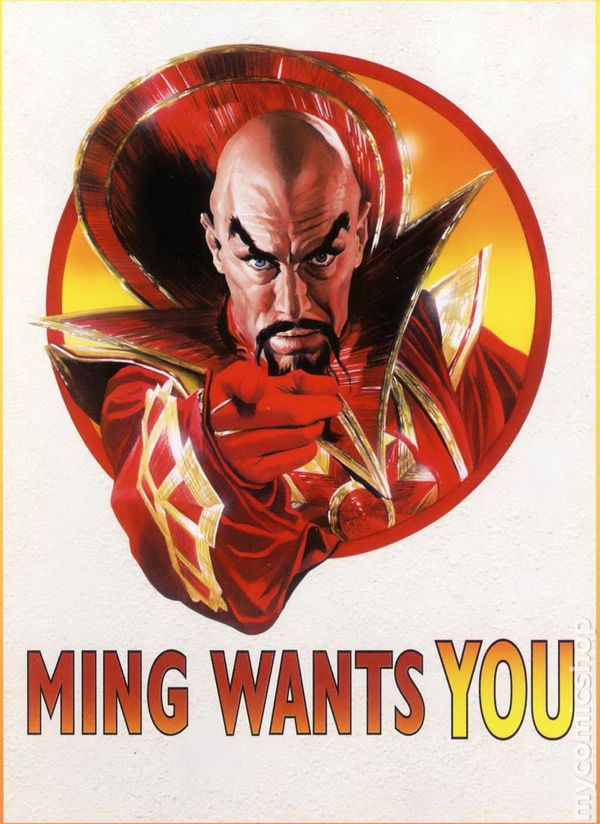
Ming the Merciless is a fictional character who first appeared in the Flash Gordon comic strip in 1934. He has since been the main villain of the strip and its related movie serials, TV shows and film adaptation. The capital of his empire is named ‘Mingo City’ in his honour. In addition to his army, Ming has access to a wide variety of science fiction gadgets, ranging from rocket ships to death rays to robots.
Posted in Art |
Leave a Comment »


 The Daily Omnivore