February 6, 2013
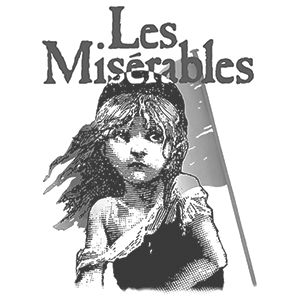
The ingénue [awn-zhuh-nyoo] is a stock character in literature, film, and a role type in the theater generally a girl or a young woman who is endearingly innocent and wholesome. Ingenue may also refer to a new young actress or one typecast in such roles.
The term comes from the French adjective ‘ingénu’ meaning ‘ingenuous’ or innocent, virtuous, and candid. The term may also imply a lack of sophistication and cunning.
read more »
Posted in Art, Language |
Leave a Comment »
October 31, 2012
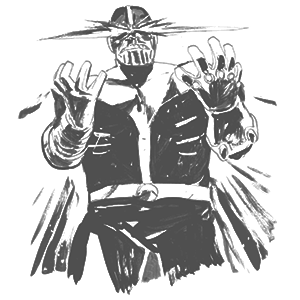
Thanos is a fictional character appearing in comic books and other media published by Marvel Comics. He is the villainous ruler of Titan, Saturn’s largest moon. The character first appeared in ‘Iron Man #55’ in 1973, and was created by writer-artist Jim Starlin.
The character’s name is a derivation of Thanatos, the personification of death and mortality in Greek mythology.
read more »
Posted in Art, Death |
Leave a Comment »
October 31, 2012
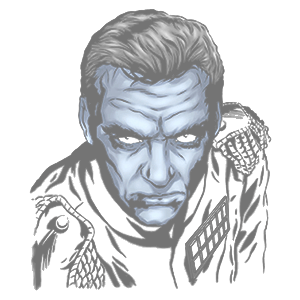
Grand Admiral Thrawn is a fictional character and a major antagonist in the ‘Star Wars’ universe. He first appeared in ‘Heir to the Empire,’ part of Timothy Zahn’s Thrawn trilogy published between 1992 and 1994. In these books, set five years after ‘Return of the Jedi,’ Thrawn has assumed command of the remaining forces of the Empire and is planning to battle the New Republic.
Zahn describes Thrawn’s command style as considerably different from that of Darth Vader and other typical Imperial commanders; instead of punishing failure and dissent, Thrawn promotes creativity among his crew and accepts ideas from subordinates. He is a tactical genius who has made extensive study of military intelligence and art, and is willing to retreat instead of making a stand in a losing battle. His study of his enemies’ artwork gives him insight into their thought processes and cultures, allowing him to create highly effective tailor-made strategies.
read more »
Posted in Art, War |
Leave a Comment »
September 27, 2012

The man with no name (Italian: ‘Uomo senza nome’) is a stock character in Western films, but the term usually applies specifically to the character played by Clint Eastwood in Sergio Leone’s ‘Dollars Trilogy’ (‘A Fistful of Dollars,’ ‘For a Few Dollars More,’ and ‘The Good, the Bad and the Ugly.’ A ‘Fistful of Dollars’ was directly adapted from Akira Kurosawa’s ‘Yojimbo.’ It was the subject of a successful lawsuit by Yojimbo’s producers.
The film’s protagonist, an unconventional ronin played by Toshirō Mifune, bears a striking resemblance to Eastwood’s character: both are quiet, gruff, eccentric strangers with a strong but unorthodox sense of justice and extraordinary proficiency with a particular weapon (in Mifune’s case, a katana; for Eastwood, a revolver). Like Eastwood’s character, Mifune’s ronin is nameless. When pressed, he gives the pseudonym ‘Sanjuro Kuwabatake’ (meaning ‘thirty-year-old mulberry field’), a reference to his age and something he sees through a window (although, regarding the age he jokes ‘Closer to forty actually’).
read more »
Posted in Art, World |
Leave a Comment »
September 12, 2012

Mingering Mike is a fictitious funk and soul recording artist created in the late 1960s as the subject of works of album art by a young Mike Stevens, an outsider artist. More recently, Mingering Mike was rediscovered by law firm investigator Dori Hadar and his friend Frank Beylotte, who came across the art work at a flea market. Mingering Mike had created a whole complex, yet nonexistent music career (including a Bruce Lee concept album), and had released more than 50 album covers in 10 years.
When Mike was rediscovered, it was learned that he had yet more unreleased material from the same time period as his first releases and it is in the process of being released as a real album. Mingering Mike at first refused to release his real name or allow a photo to be taken of him, because he’s afraid his new celebrity status will cause him to lose his two day jobs.
Posted in Art, Humor |
Leave a Comment »
September 1, 2012
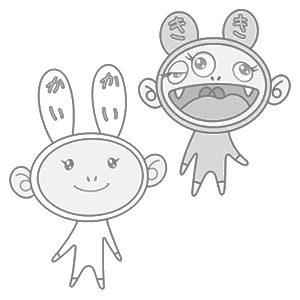
Kaikai Kiki Co. is an artists’ collective founded by the artist Takashi Murakami of Japan. It was originally founded to manage the many assistants employed to create Murakami’s work. It gradually evolved into a collaborative vehicle for other like-minded artists. Many of the artists were of a younger generation and have benefited greatly by the help in the production, distribution and sale of their own work, and also participating in international exhibitions with Murakami serving as artist or curator.
Kaikai and Kiki are characters that represent Murakami’s spiritual guardians. One is white with big ears and a smiling mouth (Kaikai), the other is pink with small ears, three eyes and some shark-like teeth (Kiki). The word kaikaikiki is used to describe the work of Kano Eitoku, a 16th century Japanese painter who is known as a genius of the Kano style. Murakami uses Japanese lettering to write the term on the ears of his characters, and their origins derive from descriptions of Kano’s work as kaikaikiki ‘bizarre, yet refined,’ ‘delicate yet bold.’
Posted in Art, World |
Leave a Comment »
July 23, 2012
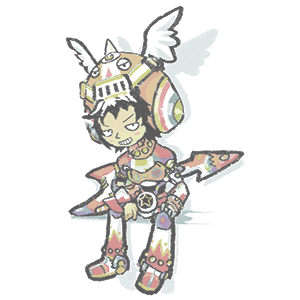
Gitaroo Man is a 2001 rhythm video game developed by iNiS and published by Koei for PlayStation 2. The game features visual design by pop artist 326 (Mitsuru Nakamura) and an original soundtrack by Japanese band COIL. The player character is U-1, a young boy who finds out he is the last legendary hero of Planet Gitaroo, and the possessor of the Last Gitaroo, a legendary guitar.
Despite a number of positive reviews, the North American and European versions of ‘Gitaroo Man’ were produced in very low quantities by Koei and, as a result, have become somewhat rare; it is regarded as a cult video game. Around 2005 in North America, copies began popping up in GameStop game stores. This was due to a reprint by GameQuestDirect, similar to their previous reprints of PlayStation RPGs ‘Persona 2’ and ‘Rhapsody: A Musical Adventure,’ both of which were previously very rare.
Posted in Art, Games, Technology |
Leave a Comment »
May 30, 2012
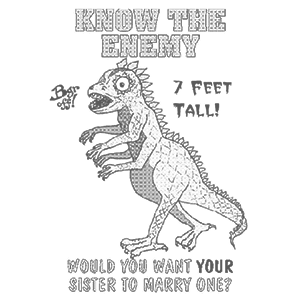
Bill, the Galactic Hero is a satirical science fiction novel by Harry Harrison, first published in 1965. Harrison reports having been approached by a Vietnam veteran who described Bill as ‘the only book that’s true about the military.’ Harrison introduced a new euphemism, ‘bowb,’ in the series to cover the vulgarity necessary to render military life accurately. It is used extensively in Bill, the Galactic Hero.
Bill is a farmboy on a small backward agricultural planet who is drugged, hypnotized, then shanghaied into the Space Troopers and sent to recruit training under a fanged instructor named Deathwish Drang. After surviving boot camp, he is transferred to active duty as a fuse tender on the flagship of the space fleet in battle with the Chingers, a small reptillian race. Injured and with the fleet almost destroyed, he fires off a shot witnessed by the admiralty and is proclaimed a hero.
Posted in Humor, Language, War |
Leave a Comment »
May 30, 2012

James Bolivar DiGriz, alias ‘Slippery Jim’ and ‘The Stainless Steel Rat,’ is the fictional hero of a series of humorous science fiction novels written by Harry Harrison. He is a futuristic con man, thief and all-round rascal. He is charming and quick-witted, a master of disguise and martial arts, an accomplished bank robber, an expert on breaking and entering, and (perhaps most usefully) a skilled liar. A master of self-rationalization, the Rat frequently justifies his crimes by arguing that he is providing society with entertainment; and besides which, he only steals from institutions which have insurance coverage. He displays a strong morality, albeit in a much more restricted sense than is traditional. (For example, he will happily steal, but deplores killing.)
The character was introduced in Harrison’s short story, ‘The Stainless Steel Rat,’ which was first published in 1957 in ‘Astounding’ magazine. Like other characters created by Harrison, the Rat is a speaker of Esperanto and advocates atheism. From the original publisher’s blurb: ‘…We must be as stealthy as rats in the wainscoting of their society. It was easier in the old days, of course, and society had more rats when the rules were looser, just as old wooden buildings have more rats than concrete buildings. But there are rats in the building now as well. Now that society is all ferrocrete and stainless steel there are fewer gaps in the joints. It takes a very smart rat indeed to find these openings. Only a stainless steel rat can be at home in this environment…’
Posted in Art, Humor, Language |
Leave a Comment »
May 30, 2012
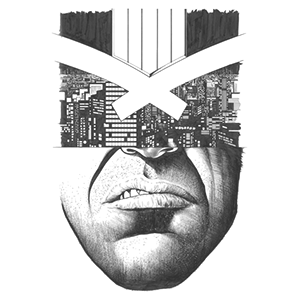
‘Judge Dredd’ is a comics character whose strip in the British science fiction anthology ‘2000 AD’ is the magazine’s longest running, having been featured there since its second issue in 1977.
Dredd is an American law enforcement officer in a violent city of the future where uniformed Judges combine the powers of police, judge, jury, and executioner. Dredd and his fellow Judges are empowered to arrest, sentence, and even execute criminals on the spot. The character was created by writer John Wagner and artist Carlos Ezquerra, although editor Pat Mills also deserves some credit for early development. The series explores issues such as the police state, authoritarianism and the rule of law.
read more »
Posted in Art, Humor, Politics |
Leave a Comment »
May 30, 2012

Big Dave is an infamous character created and written by Grant Morrison and Mark Millar, with artwork by Steve Parkhouse, for ‘2000 AD,’ a British science fiction comic. The character was created for ‘The Summer Offensive,’ an experiment in which the magazine was handed over to Millar, Morrison, and John Smith for eight weeks. Big Dave first appeared in prog (issue) 842 in his first story which featured Saddam Hussein trying to take over the world and turn everyone into ‘poofs’ with the aid of some scary aliens. Big Dave, ‘the hardest man in Manchester,’ manages to stop Saddam’s plan with the help of Terry Waite, English humanitarian. This story proved controversial, but the next story surpassed it.
It featured the British Royal Family as robots plus The Princess of Wales and The Duchess of York as a pair of horny drunks. The story ends with Dave in bed with both royals. A third had Dave leading a minibus full of disabled children to the football world cup final where they defeat a German team managed by Adolf Hitler. Both Morrison and Millar appeared happy with such controversy but the character did split ‘2000 AD’ fans’ opinion down the middle, with some praising it as the best series the comic had ever run, while others thought it was nothing more than puerile rubbish.
Posted in Humor, Language, World |
Leave a Comment »
May 30, 2012

The Mighty Tharg is a recurrent character in science fiction comic ‘2000 AD,’ one of only two characters to appear in nearly every issue of the comic (the other being Judge Dredd). The main Tharg-free period in ‘2000 AD’ was when the men from Vector 13 staged a takeover (in prog [issue] 1014), while Tharg was away dealing with a crisis. Other than a spate of strips in the early 1980s, Tharg rarely appears in stories, but instead purports to be the comic’s editor.
Tharg is an alien from the fictional planet ‘Quaxxann,’ supposedly in orbit around the real-life star Betelgeuse (but he works in a British publisher’s office), with green skin and a ‘rosette of Sirius’ on his forehead. His favorite food is said to be polystyrene cups. Tharg writes the comic’s introduction, answers letters, and doles out prizes to readers (for artwork or story suggestions) – winners could choose payment either in pounds sterling or in ‘galactic groats.’ Tharg speaks mostly in English, but with various pithy Betelgusian aphorisms thrown in for color. In one episode, a Tharg suit in the comic’s office was explained as a skin that Tharg had shed.
Posted in Art, Humor |
Leave a Comment »


 The Daily Omnivore