March 24, 2012
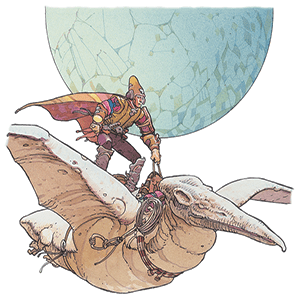
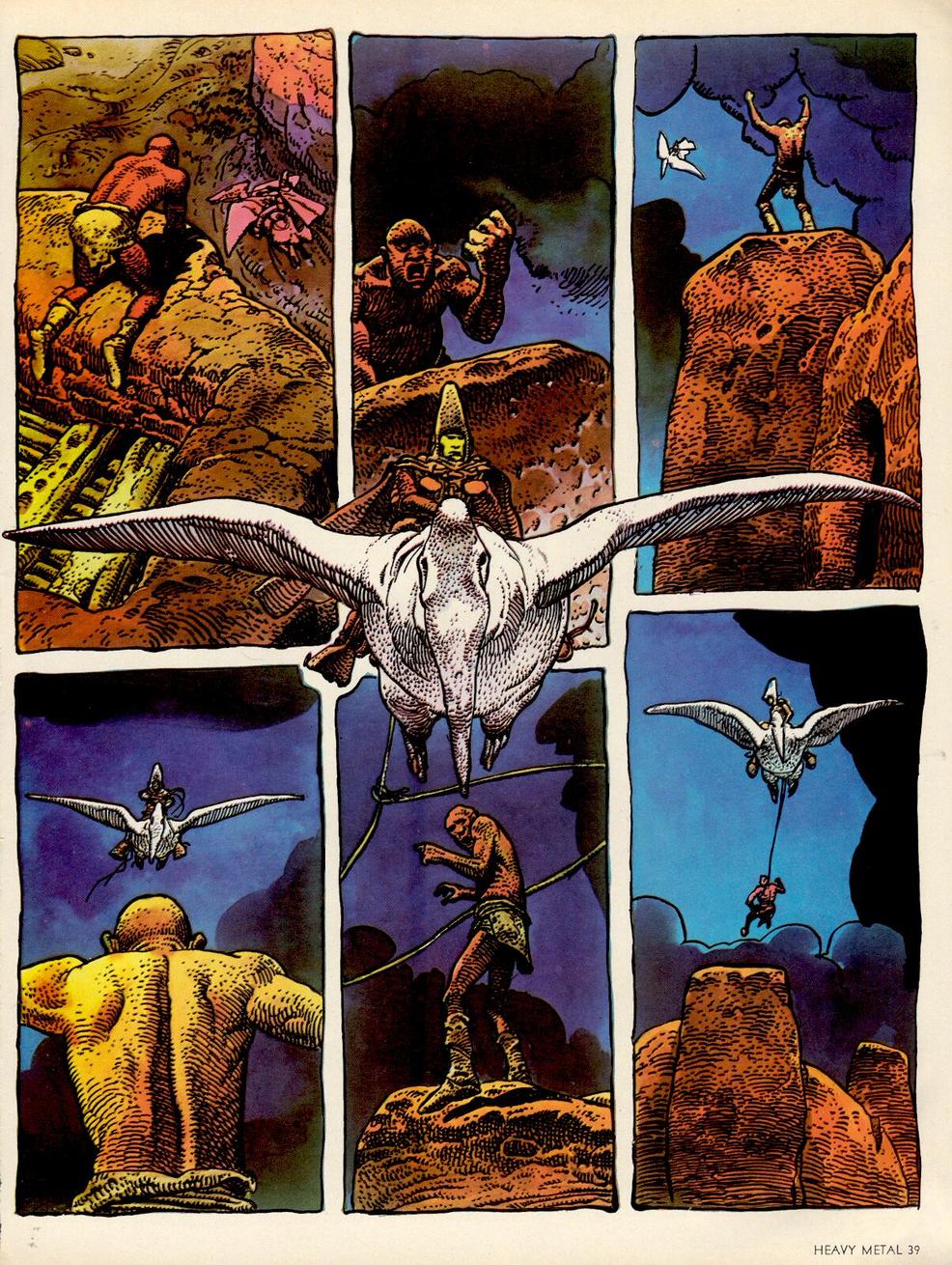
Arzach is a comic book collection of four wordless short stories by artist/author Jean ‘Moebius’ Giraud, which were originally published in the French sci-fi/fantasy comics magazine ‘Métal Hurlant,’ (published in the US as ‘Heavy Metal’).
The stories follow Arzach, a silent warrior who rides a pterodactyl-like creature through a strange, desolate landscape. The imagery and situations in Arzach are often compared to dreams or the subconscious. These stories had an enormous impact on the French comics industry, and the Arzach character is still among Moebius’ most famous creations.
Posted in Art |
Leave a Comment »
February 28, 2012
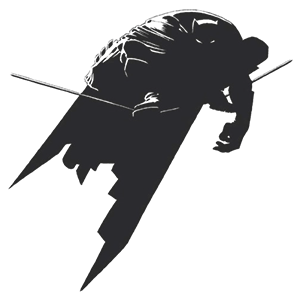
The Dark Knight Returns is a four-issue comic book limited series written and drawn by Frank Miller, originally published by DC Comics in 1986, which tells the story of a 56-year-old Bruce Wayne who comes out of retirement to fight crime, only to face opposition from the Gotham City police force and the US government.
The series is set in a dystopian near-future. A year is never specified, though it has been a full decade since the last reported sighting of Batman, the current American President appears to be Ronald Reagan or someone using his image, and the Cold War is still ongoing. Virtually all superheroes, with the exception of Superman, have been forced into retirement or otherwise driven away by a distrusting populace. Bruce Wayne has voluntarily retired from crime fighting following the death (under unspecified circumstances) of Jason Todd, the second Robin. In the absence of superheroes, criminals run amok, and a gang called the Mutants terrorizes Gotham City.
Posted in Art |
Leave a Comment »
December 14, 2011
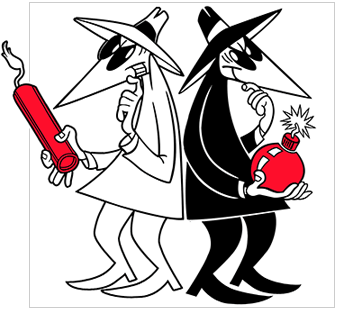
Spy vs. Spy is a black and white comic strip that debuted in ‘Mad Magazine’ #60, in 1961, and was originally published by EC Comics. The strip always features two spies, who are completely identical save for the fact that one is dressed in white and the other black.
The pair are constantly warring with each other, using a variety of booby-traps to inflict harm on the other. The spies usually alternate between victory and defeat with each new strip. They were created by Antonio Prohías, a prolific cartoonist in Cuba known for political satire.
read more »
Posted in Art, Humor, Language |
Leave a Comment »
December 11, 2011
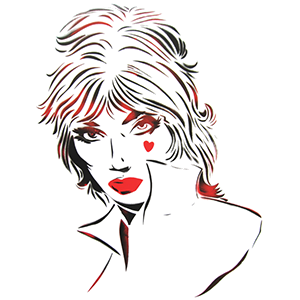
Modesty Blaise is a British comic strip featuring a fictional character of the same name, created by Peter O’Donnell (writer) and Jim Holdaway (art) in 1963.
The strip follows the adventures of Modesty Blaise, an exceptional young woman with many talents and a criminal past, and her trusty sidekick Willie Garvin. It was adapted into films made in 1966, 1982, and 2003 and a series of 13 novels and short story collections, beginning in 1965.
read more »
Posted in Art, Language |
Leave a Comment »
November 9, 2011

‘Maus: A Survivor’s Tale,’ by Art Spiegelman, is a biography of the author’s father, Vladek Spiegelman, a Polish Jew and Holocaust survivor. It alternates between descriptions of Vladek’s life in Poland before and during the Second World War and Vladek’s later life in the Rego Park neighborhood of New York City.
The work is a graphic narrative in which Jews are depicted as mice, while Germans are depicted as cats. It is the only comic book ever to have won a Pulitzer Prize.
read more »
Posted in Art, Language, War |
Leave a Comment »
October 21, 2011

Action Comics #1 (June 1938) features the first appearance of Jerry Siegel/Joe Shuster creation Superman. Published on April 18, 1938 by National Allied Publications, a corporate predecessor of DC Comics, it is considered the first true superhero comic; and though today ‘Action Comics’ is a monthly title devoted to Superman, it began, like many early comics, as an anthology. Copies have sold at auction for $1.5 million.
The first issue had a print run of 200,000 copies. Jerry Siegel and Joe Shuster were paid $10 per page, for a total of $130 for their work on this issue. They effectively signed away millions in future rights and royalties payments. Starting in 1978, Siegel and Shuster were provided with a $20,000 a month annuity which was later raised to $30,000. Liebowitz would later say that selecting Superman to run in Action Comics #1 was ‘pure accident’ based on deadline pressure and that he selected a ‘thrilling’ cover, depicting Superman lifting a car over his head. It has been compared ‘Hercules Clubs the Hydra’ by Antonio del Pollaiolo.
read more »
Posted in Art, Language, Money |
Leave a Comment »
September 8, 2011

Love and Rockets (often abbreviated L&R) is a black and white comic book series by Gilbert Hernandez and Jaime Hernandez, sometimes cited jointly as Los Bros Hernandez. Their brother Mario Hernandez is an occasional contributor. It was one of the first comics in the alternative comics revolution of the 1980s.
The Hernandez brothers self-published the first issue of ‘Love and Rockets’ in 1981, but since 1982 it has been published by Fantagraphics Books. The magazine temporarily ceased publication in 1996 after the release of issue #50, while Gilbert and Jaime went on to do separate series involving many of the same characters. However, in 2001 Los Bros revived the series as ‘Love and Rockets Volume 2’.
read more »
Posted in Art, Humor, Language |
Leave a Comment »
March 29, 2011

AKIRA is a manga series by Katsuhiro Otomo. Set in a post-apocalyptic Neo-Tokyo, the work uses conventions of the cyberpunk genre to detail a saga of turmoil. Initially serialized in the pages of Young Magazine from 1982 until 1990, the work was collected in six volumes by Japanese publisher Kodansha. Otomo’s art on the series is considered outstanding, and the work is a breakthrough for both Otomo and the manga form.
An identically titled anime film adaptation was released in 1988, shortening the plot, but with its structure and scenes heavily informed by the manga and its serial origins. The manga takes place in a vastly larger time frame than the film and involves a far wider array of characters and subplots. Through the breadth of the work, Otomo explicates themes of social isolation, corruption and power.
read more »
Posted in Art, Technology, World |
Leave a Comment »
March 16, 2011
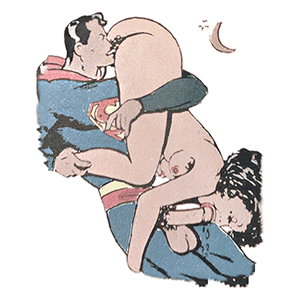
Tijuana bibles (also known as bluesies, eight-pagers, gray-backs, Jiggs-and-Maggie books, jo-jo books, Tillie-and-Mac books, and two-by-fours) were pornographic comic books produced in the United States from the 1920s to the early 1960s. Their popularity peaked during the Great Depression era. The typical ‘bible’ is 4 by 6 inches (approximately 10 by 15 cm) with black print on cheap white paper and running eight pages in length. In most cases the artists, writers, and publishers are unknown.
The subjects are explicit sexual escapades usually featuring well known cartoon characters, political figures, or movie stars, invariably used without permission. Tijuana bibles repeated ethnic stereotypes found in popular culture at the time. Wesley Morse (who later went on to draw ‘Bazooka Joe’) is believed to have drawn Tijuana bibles before WWII. Superman co-creator, Joe Shuster illustrated a Tijuana-bible-styled erotic work called ‘Nights of Horror’ in the early 1950s.
Posted in Art, Money, Sex |
Leave a Comment »
March 16, 2011

Barbarella is a fictional heroine in the French science fiction comic book created by Jean-Claude Forest. He created the character for serialisation in the French V-Magazine in spring 1962, and in 1964 Eric Losfeld later published these strips as a stand-alone book, under the title Barbarella. The stand-alone version caused a scandal and became known as the first ‘adult’ comic-book, despite its eroticism being slight and the existence of the Tijuana bibles (pornographic comic books) well before this date.
Barbarella is a young woman who travels from planet to planet and has numerous adventures, often involving sex (the aliens she meets often seduce her, and she also experiments with a ‘machine excessive’ or ‘orgasmotron’). The original comic book version of Barbarella was probably modelled on Brigitte Bardot, who was once married to the director of the 1968 film, Roger Vadim. Vadim’s third wife, Jane Fonda, starred as Barbarella in the 1968 movie based on the character. For her creator, the character embodied the modern woman in the era of sexual liberation.
Posted in Art, Sex, World |
Leave a Comment »
February 27, 2011

Persepolis is a French-language autobiographical comic by Marjane Satrapi depicting her childhood up to her early adult years in Iran during and after the Islamic revolution. The title is a reference to the ancient capital of the Persian Empire, Persepolis. Drawn in black and white, the graphic novel found great popularity following its release, and was translated into several languages. The English edition combines the first two French books and was translated by Blake Ferris and Satrapi’s husband, Mattias Ripa.
In 2007, an animated film adaptation of the graphic novel was created, with author Satrapi co-directing with French comic artist Vincent Paronnaud. The film utilized the same style of the graphic novel, although there are a handful of scenes in the present day that are shown in color, while the rest of the flashback events are illustrated in black and white, as in the novel.
Posted in Art, Politics, World |
Leave a Comment »
February 16, 2011
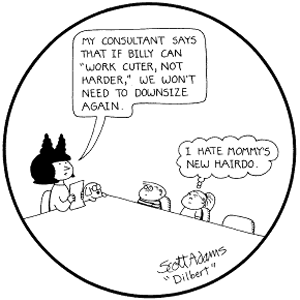
The Comic strip switcheroo was a series of jokes played out between comic strip writers and artists, without the foreknowledge of their editors, on April Fool’s Day 1997. The Switcheroo was masterminded by comic strip creators Rick Kirkman and Jerry Scott, creators of the Baby Blues daily newspaper comic strip.
Posted in Art, Humor |
Leave a Comment »




 The Daily Omnivore