October 4, 2015

Sukkah [sook-uh] City was a 2010 architectural design competition and work of installation art planned in New York City’s Union Square Park. A sukkah is the name given to a structure described in Torah (Jewish Bible). The Children of Israel were instructed to annually commemorate their Exodus from Egypt by dwelling for seven days every autumn in temporary structures reminiscent of those in which they lived during their 40 years of wandering in the desert before settling in the Land of Israel. Many Jews continue this practice to this day, and Sukkah City aims to re-imagine the sukkah in contemporary design.
A committee of art critics and architects selected 12 winners from a field of over 600 entries. The twelve winning sukkot were constructed at Brooklyn’s Gowanus Studio Space, and driven by truck to Union Square Park for display on September 19 and 20 from dawn to dusk. The design chosen as ‘the people’s choice,’ entitled ‘Fractured Bubble’ by Long Island City architects Henry Grosman and Babak Bryan, stood for the requisite seven days of the Jewish holiday of Sukkot. The competition was the brainchild of journalists Joshua Foer and Roger Bennett. It was sponsored by Reboot, an organization that aims to catalyze innovation in Jewish culture, rituals, and traditions.
read more »
Posted in Philosophy, Technology |
1 Comment »
May 29, 2014

A Beer mile is a drinking race combining running and speed drinking. Typically, the event takes place on a standard 400 meter or 1/4 mile running track. Each lap must be preceded by the drinking of a standard amount of beer, typically a 12-ounce can. Rules vary by region. One custom requires runners to prove they have finished their beer by inverting it over their heads before commencing a lap.
The standard rules published by BeerMile.com are based on the most common rules used in North America. They specify that any competitor who vomits prior to finishing the race must complete a penalty lap immediately following the fourth lap. The penalty lap does not require the drinking of an additional beer. The standard rules also dictate that the beer be consumed directly from the pour of the can (i.e. tampering with the cans, such as ‘shotgunning,’ is not allowed). The beer used for the competition must also be full-strength, or at least 5.0% ABV. Hard ciders and other alcoholic beverages are generally not allowed.
read more »
Posted in Drugs, Games, Humor |
Leave a Comment »
September 29, 2013

Formula E is a class of auto racing sanctioned by the Fédération Internationale de l’Automobile (FIA). The ‘formula,’ designated in the name, refers to a set of rules with which all participants’ cars must comply. Formula E is intended to be the highest class of competition for one-make, single-seat, electrically-powered racing cars. The inaugural championship is planned for 2014. Forty-two cars were ordered in 2012, with Formula One team McLaren providing the motor, transmission and electronics that all cars will use.
Racing circuits will be held in cities, and will be approximately 2.5 km to 3 km long; Cars will accelerate from 0 km/h to 100 km/h in 3 seconds, with a maximum speed of 220 km/h; and Noise decibel levels will be approximately -80dB (ordinary car – 70dB; bus – 90dB; Formula One track – 130dB). Pit stops will involve a change of car: when the battery runs out, the driver will make a pit stop, then will run 100 meters to climb into a recharged car.
Posted in Games, Technology |
Leave a Comment »
August 4, 2013
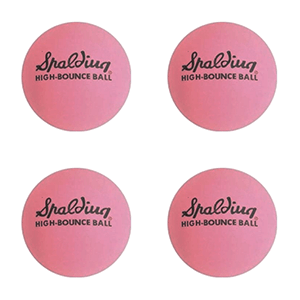
Stoopball is a pickup neighborhood game played by throwing a ball against the stairs of a residential dwelling. The game is also known as ‘Off the Point.’
Historically, it rose to popularity in Brooklyn and other inner cities after WWII. The rules are based loosely on baseball. The object of the game is to score the most runs in 9 innings. One player is the ‘batter’ and the other players the ‘fielders.’
read more »
Posted in Games |
Leave a Comment »
March 21, 2013

Mutton busting is an event held at rodeos similar to bull riding or bronc riding, in which children ride or race sheep. In the event, a sheep is held still, either in a small chute or by an adult handler while a child is placed on top in a riding position. Once the child is seated atop the sheep, the sheep is released and usually starts to run in an attempt to get the child off.
There are no set rules for mutton busting, no national organization, and most events are organized at the local level. The vast majority of children participating in the event fall off in less than 8 seconds. Organizations such as the ASPCA discourage the practice on the grounds that it does not promote kindness to, or respect of, animals.
Posted in Games, Humor |
Leave a Comment »
March 18, 2013

The World Sauna Championships were an annual endurance contest held in Heinola, Finland, from 1999 to 2010. They originated from unofficial sauna-sitting competitions that resulted in a ban from a swimming hall in Heinola. The Championships were first held in 1999 and grew to feature contestants from over 20 countries.
Sauna bathing at extreme conditions is a severe health risk: all competitors competed at their own risk, and had to sign a form agreeing not to take legal action against the organizers. Notably, the Finnish Sauna Society strongly opposed the event. After the death of one finalist and near-death of another during the 2010 championship, the organizers announced that they would not hold another event. This followed an announcement by prosecutors that the organizing committee would not be charged for negligence, as their investigation revealed that the contestant who died may have used painkillers and ointments that were forbidden by the organizers.
read more »
Posted in Death, Games, World |
Leave a Comment »
March 8, 2013
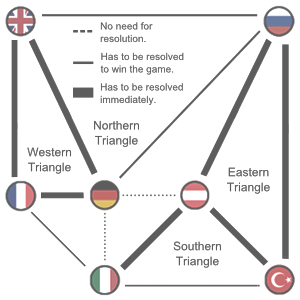
Diplomacy is a strategic board game created by American mail carrier Allan B. Calhamer in 1954 and released commercially in 1959. Its main distinctions from most board wargames are its negotiation phases (players spend much of their time forming and betraying alliances with other players and forming beneficial strategies) and the absence of dice or other game elements that produce random effects.
Set in Europe just before the beginning of World War I, Diplomacy is played by two to seven players, each controlling the armed forces of a major European Power (or, with few players, multiple powers). Each player aims to move his or her few starting units—and defeat those of others—to win possession of a majority of strategic cities and provinces marked as ‘supply centers’ on the map; these supply centers allow players who control them to produce more units.
read more »
Posted in Games, Politics, War |
Leave a Comment »
March 7, 2013

The Style Invitational, or Invite, is a long-running humor contest that ran first in the Style section of the Sunday ‘Washington Post’ before moving to Saturday’s Style and later returning to the Sunday paper. Started in 1993, it has run weekly, except for a hiatus in late 1999. In that time, it has had two anonymous head judges who select winning entries: ‘The Czar’ abdicated in late 2003, leaving the contest in the hands of his former associate, ‘The Empress.’
The humor ranges from an intellectual vein to a less mature style, and frequently touches on sophisticated political or historical allusions. While the contest theme changes every week, some popular contests are periodically repeated. The S.I. has a loyal following of self-proclaimed ‘Losers,’ who refer to having a contest entry published as ‘getting ink.’
read more »
Posted in Games, Humor, Language |
1 Comment »
January 10, 2013


Memory sport, sometimes referred to as competitive memory or the mind sport of memory, is a competition in which participants attempt to memorize the most information that they can then present back, under certain guidelines. The sport has been formally developed since 1991, and features regional and international championships.
One common type of competition involves memorizing the order of randomized cards in as little time as possible, after which the competitor is required to arrange new decks of cards in the same order. Mnemonic techniques are generally considered to be a necessary part of competition, and are improved through extensive practice. These can include the method of loci (referred to as the journey method, which uses visualization to aid recall), the use of mnemonic linking and chunking, or other techniques for storage and retrieval of information.
read more »
Posted in Education, Games |
Leave a Comment »
November 19, 2012

Long drive is a competitive sport where success is derived by hitting a golf ball the farthest by driving. A small but dedicated talent base of golfers populate the world of Long-Drive, with the top talent competing professionally in various events and exhibitions. Professional long drivers can average over 350 yards in competition, compared with 300 yard averages from the top PGA Tour drivers and 200 yards for an average amateur.
Some shots in competitions surpass 400 yards. The world record recognized by Guinness Records as the longest drive in a competition is 515 yards by 64 year old Mike Austin in 2002 at the US National Open Qualifier with a 43.5″ steel shafted persimmon wood driver. The current all-time record holder is Mike Dobbyn with 551 yards.
read more »
Posted in Games, Money |
Leave a Comment »
November 7, 2012
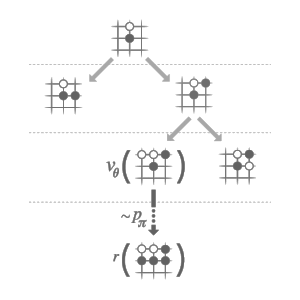
Go is a board game for two players that originated in China more than 2,500 years ago. The game is noted for being rich in strategy despite its relatively simple rules. According to chess master Edward Lasker: ‘The rules of Go are so elegant, organic, and rigorously logical that if intelligent life forms exist elsewhere in the universe, they almost certainly play Go.’
The two players alternately place black and white playing pieces, called ‘stones,’ on the vacant intersections (called ‘points’) of a grid of 19×19 lines. The object of the game is to use one’s stones to surround a larger total area of the board than the opponent.
read more »
Posted in Games, World |
Leave a Comment »
October 29, 2012
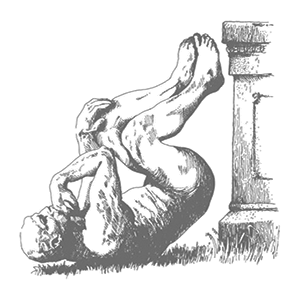
The Ig Nobel Prizes are a satirical award given each year in early October for ten unusual or trivial achievements in scientific research. The stated aim of the prizes is to ‘first make people laugh, and then make them think.’
Organized by the scientific humor magazine ‘Annals of Improbable Research’ (AIR), they are presented by a group that includes Nobel Laureates at a ceremony at Harvard University’s Sanders Theater, and they are followed by a set of public lectures by the winners at MIT. The name is a play on the words ‘ignoble’ (‘characterized by baseness, lowness, or meanness’) and the Nobel Prize. The pronunciation used during the ceremony is [ig-noh-bel], not like the word ‘ignoble.’
read more »
Posted in Education, Humor, Science |
Leave a Comment »


 The Daily Omnivore